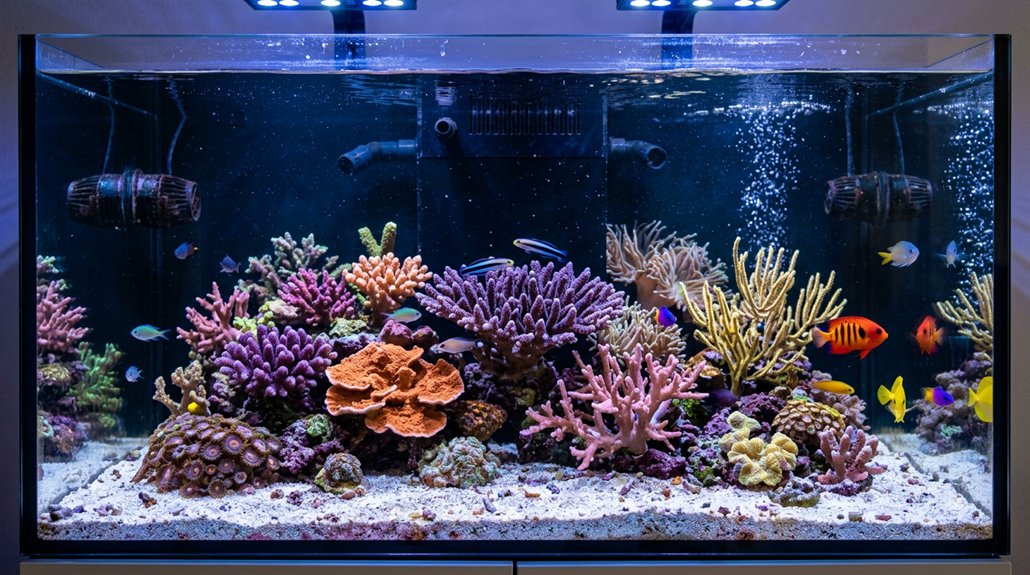
A saltwater aquarium is not inherently hard to maintain, but you do need more consistent monitoring than with freshwater. You’ll track salinity, temperature, ammonia, nitrite, nitrate, and pH, and reef tanks also need calcium and alkalinity control. Daily care is simple: feed, inspect equipment, top off with RO/DI water, and watch livestock closely. Weekly testing and water changes keep things stable, and the right gear makes the system much easier to manage, especially once you add corals.
Key Takeaways
- Saltwater aquariums are not inherently hard, but they need more consistent monitoring than freshwater tanks.
- You must regularly test salinity, temperature, ammonia, nitrite, nitrate, and pH to keep the system stable.
- Maintenance includes weekly water changes, RO/DI top-offs, skimmer cleaning, and checking pumps, heaters, and plumbing.
- Saltwater setups cost more initially because they need equipment like protein skimmers, live rock, and strong circulation.
- Larger tanks are easier to keep stable, while small nano tanks change faster and are less forgiving.
Is a Saltwater Aquarium Hard to Maintain?
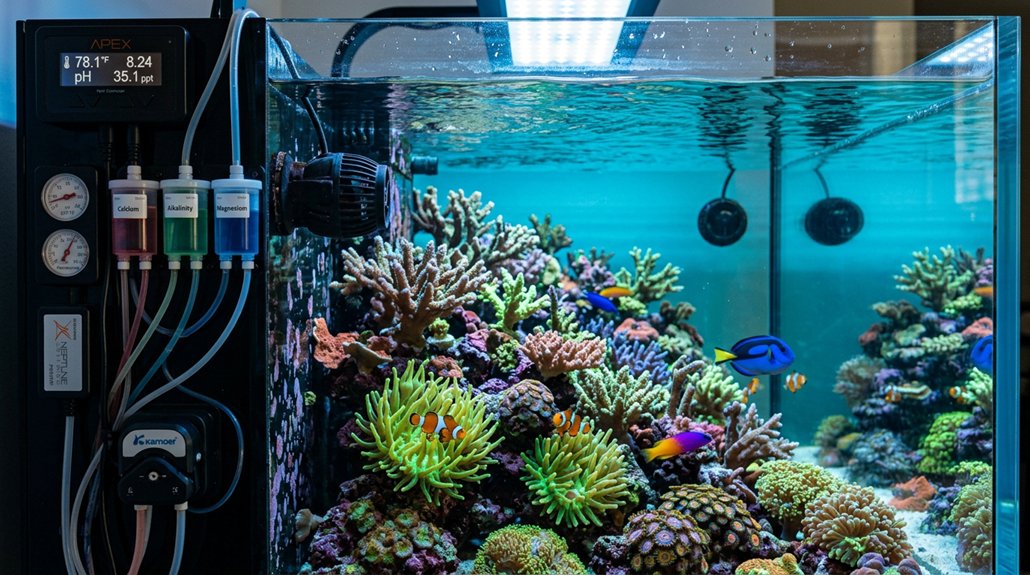
A saltwater aquarium isn’t inherently hard to maintain, but it does demand more consistent monitoring than a typical freshwater tank. You’ll track salinity, temperature, ammonia, nitrite, nitrate, and pH; reef systems also need calcium and alkalinity testing. The initial cost is higher because you need a protein skimmer, live rock, aragonite substrate, heater, and strong circulation, but those tools make stability easier. For a modest tank, upkeep is often about 30 minutes a week, with quick checks, water changes, and top-offs using RO/DI water. Larger aquariums are usually more stable than nanos, though they cycle slower. If you’re keeping coral, expect added dosing, lighting, and phosphate control. It’s less about difficulty than about sustained mental commitment.
What Daily Saltwater Tank Care Looks Like
Each day, you should feed your fish 1–2 times, watch all livestock for stress or disease, and confirm that heaters, pumps, lights, and the protein skimmer are operating normally. During daily observation, you’ll also top off evaporated water with RO/DI freshwater and check specific gravity so salinity stays in range. Empty and rinse the skimmer cup as needed; this skimmer maintenance keeps foam production efficient and limits dissolved organics. Wipe salt creep from equipment and cords, then inspect plumbing, fittings, and hoses for leaks or blockages. Record any changes in behavior, appetite, or measured parameters so you can respond quickly. This routine takes only a few minutes, but it gives you early warning of equipment faults and water-quality drift before they affect livestock.
What Weekly Saltwater Maintenance Prevents Problems?
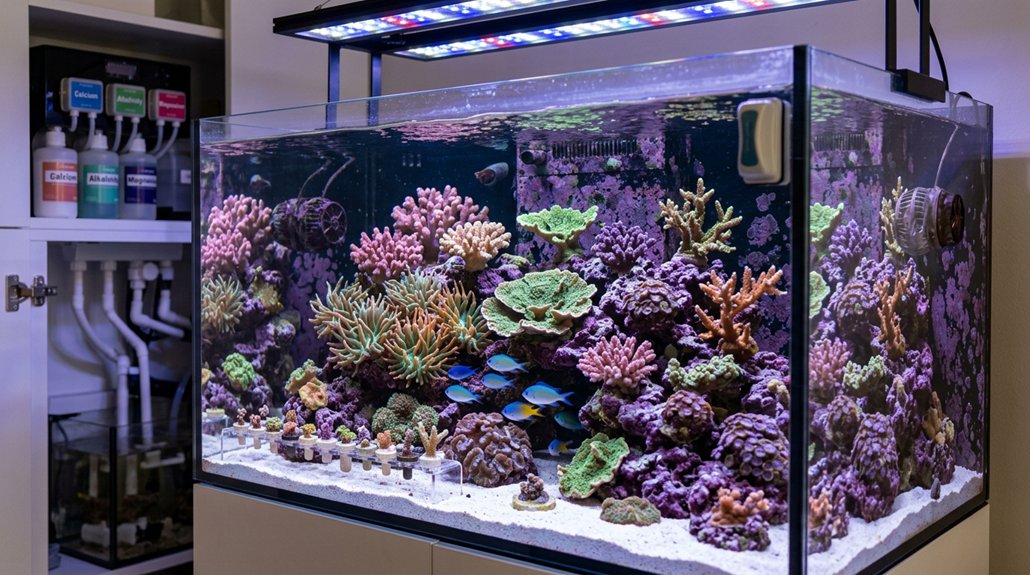
Weekly maintenance prevents most saltwater tank problems by catching water-quality drift before it becomes a crisis. You should do Water testing for ammonia, nitrite, nitrate, and pH at least weekly; stable systems can stretch to biweekly, but you still need to verify 0 ppm ammonia and nitrite, with nitrate under 20 ppm for fish-only tanks. Check specific gravity with a refractometer after topping off evaporation with RO/DI freshwater, not saltwater. A 10% water change each week removes dissolved waste and helps replace trace elements. Skimmer maintenance matters too: empty and rinse the cup, then wipe the neck to keep foam output consistent. Finish by cleaning the glass, removing detritus, and replacing mechanical media on schedule so flow and filtration stay efficient.
How Saltwater Chemistry Stays Stable?
Saltwater chemistry stays stable when you control salinity, major ions, and waste accumulation before they drift out of range. You should keep specific gravity near 1.020–1.025, or about 1.025 for reefs, by mixing marine salt with RO/DI water and checking it with a refractometer or hydrometer. Evaporation raises salinity, so top off only with fresh RO/DI water, not saltwater. You’ll also need to maintain buffer systems by testing alkalinity, calcium, and magnesium, then dosing as needed so corals and other photosynthetic invertebrates don’t deplete them. Regular tests for ammonia, nitrite, and nitrate, plus partial water changes, limit dissolved pollutants. Live rock, circulation, and ion exchange from biological filtration help keep nutrients and nitrogen compounds stable.
Which Equipment Makes Saltwater Tanks Easier?
The right gear can take a saltwater tank from hard to manageable by stabilizing water quality and cutting down on manual corrections. You’ll get the biggest gains from tools that reduce waste, improve filtration, and keep parameters steady.
- A protein skimmer strips dissolved organics before they break down, boosts oxygen, and helps keep pH from swinging.
- Live rock adds biological filtration, supports nitrifying and denitrifying bacteria, and gives you natural pod habitat.
- A sump with a return pump and powerheads increases water volume, hides equipment, and improves gas exchange.
- RO/DI filtration gives you pure source water, so you’re not fighting contaminants.
With accurate test kits and stable dosing, you won’t be guessing, and your maintenance becomes routine rather than reactive.
What Changes When You Add Corals or Larger Fish?
Once you add photosynthetic corals or larger fish, your maintenance routine gets more demanding because you’re managing both higher biological load and tighter parameter control. Corals need lighting upgrades to reef-grade fixtures with the right PAR and spectrum, plus weekly tests for calcium, alkalinity, and magnesium. Because these ions drop continuously, you’ll often dose a three-part supplement or run calcium/alkalinity reactors to prevent swings. You also need to plan placement carefully, since corals compete for light, flow, and space, and can sting or chemically inhibit each other. Larger fish increase waste and territorial dynamics, so you may need a bigger tank, stronger circulation, and 10-20% biweekly water changes. Expect more skimmer cleaning, monthly hose maintenance, and tighter control of dissolved organics overall.
Frequently Asked Questions
Are Saltwater Tanks High Maintenance?
Yes, they can be. You’ll spend time on water testing, top-offs, and equipment checks; reef systems need more dosing. Marine cleanup and coral fragging add work, but skimmers and live rock cut it.
What Is the Average Lifespan of a Saltwater Aquarium?
A well-kept saltwater aquarium can last 10–30+ years; you’ve got about a 4–8 week setup period first. With stable saltwater filtration and careful marine biodiversity management, your system can run for decades.
What Are the Common Problems With Saltwater Aquariums?
You’ll commonly face algae outbreaks, salinity swings, ammonia or nitrite spikes, equipment failure, and coral chemistry drift. You should test water weekly, top off evaporated water, clean filtration, and quarantine livestock to prevent losses.
Is a Saltwater Tank Good for Beginners?
Yes—if you start small and careful, you can succeed. A fish-only reef setup with live rock is beginner-friendly. You’ll still test chemistry, mix saltwater, and do weekly changes, but it’s not rocket science.
Conclusion
In the end, a saltwater aquarium is not inherently hard to maintain, but it does reward consistency. When you test water, top off evaporation, and clean equipment on schedule, you prevent most problems before they start. That’s no coincidence; stable habits create stable chemistry. With reliable filtration, proper lighting, and careful stocking, you’ll make upkeep predictable rather than difficult. Keep your routine tight, and your tank will stay healthier, longer.