
Prioritize meeting your cat’s basic needs by providing easy access to food, water, and safe spaces. Respect their personal space, allowing independence and decompression in low-traffic areas. Engage in play that reflects natural hunting instincts using interactive toys. Communicate effectively by interpreting vocalizations and body language cues. Establish a routine to enhance emotional stability and trust, reducing stress. By integrating these strategies, you’ll discover deeper insights into building a strong bond with your feline friend.
Key Takeaways
- Establish a consistent routine to enhance your cat’s sense of security and emotional stability.
- Respect your cat’s personal space and let them initiate interactions to build trust.
- Use engaging play sessions with toys that mimic hunting behaviors to strengthen your connection.
- Interpret your cat’s body language and vocalizations to meet their needs and increase comfort.
- Provide cozy hiding spots and resting areas to create a tranquil and comfortable environment.
Begin With Trust-Building Basics

When building a bond with your cat, start by meeting their basic needs, as this is vital for trust-building. Guarantee easy access to food, water, and a litter box in designated safety zones, ideally low-traffic areas, to reduce stress. Allocate an exclusive space where your cat can decompress following adoption; this gradual exposure enables them to reveal their personality over approximately two weeks. Independence is significant, so let your cat initiate interactions, respecting their boundaries. Monitor and interpret their body language for cues, guaranteeing you’ve got the correct read on comfort levels. Engage in interactive play sessions with toys emulating natural hunting behaviors to establish positive associations. Regular sensory-appropriate interaction strengthens trust and deepens the human-feline relationship over time.
Create a Cozy and Inviting Home
After establishing trust, enhancing your home environment is key to maintaining and deepening your bond with your cat. Start by designating safe spaces for essentials like food, water, and litter boxes in low-traffic areas to minimize stress and promote tranquility. Integrate environmental enrichment by installing vertical spaces such as shelves or cat trees; these cater to your cat’s innate climbing instincts and offer secure vantage points. Create cozy hiding spots using blankets or cardboard boxes to allow your cat to retreat when overwhelmed, ensuring a heightened sense of security. Multiple resting areas equipped with soft bedding foster relaxation. Finally, incorporate personal items with your scent, like clothing or blankets, to help your cat acclimate to you, reinforcing trust and comfort.
Play: Key to a Happy Cat
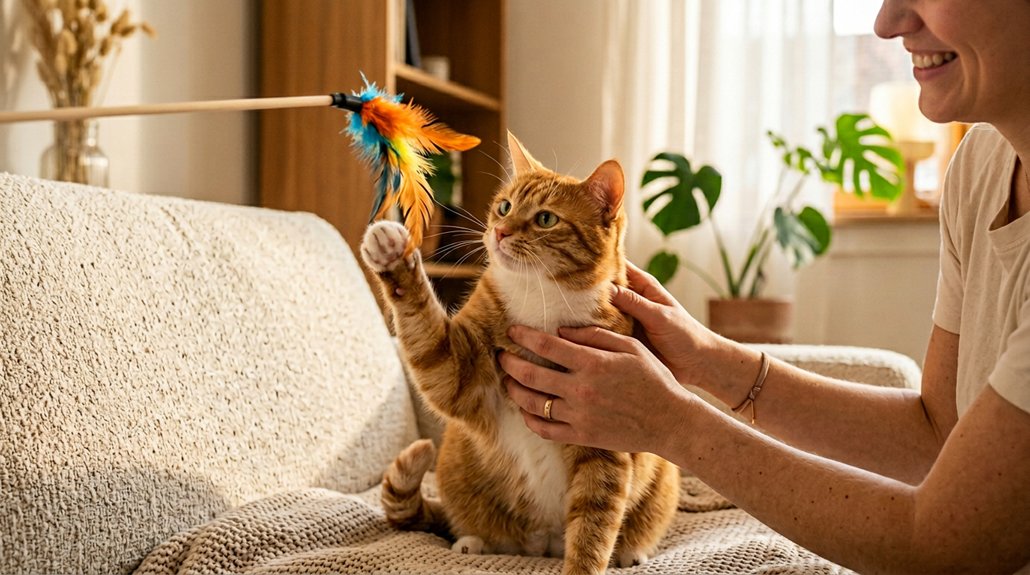
Incorporating play into your cat’s daily routine isn’t just fun—it’s vital for their mental and physical health. By using toys that mimic hunting behavior, such as feather wands, you provide an outlet for their natural instincts and deepen your bond. Regularly rotating toys prevents boredom and keeps their cognitive skills sharp, which can greatly enhance their well-being.
Mimic Hunting Behavior
Activate your cat’s innate hunting instincts by engaging them in interactive play sessions that mimic natural prey activities. Utilizing toys such as feather wands or fishing rods effectively taps into their prey instincts, offering essential hunting stimulation. These activities not only serve as physical exercise but are vital for emotional well-being, facilitating the release of ‘feel good’ hormones. Short, frequent play sessions, ideally lasting between 5-15 minutes throughout the day, maintain your cat’s interest and improve overall mental health. Incorporating puzzle feeders can further enrich this experience by combining mental activity with foraging instincts, making mealtime an engaging challenge. By observing and adjusting to their play preferences, you create positive associations, nurturing a stronger bond with your feline companion.
Rotate Toys Regularly
One way to maintain your cat’s mental health and happiness is by regularly rotating their toys. Toy rotation is essential to prevent boredom and stimulate natural hunting instincts. Cats often lose interest in toys that are continuously available, so introducing new or hidden toys every few days maintains enthusiasm. Incorporate play variety by using interactive toys like feather wands and puzzle feeders; these mimic the unpredictability of hunting and keep your cat engaged. This method not only encourages exploration of different play patterns but also fosters a stronger bond through increased playtime. The release of endorphins during interactive play promotes positive associations, enhancing overall well-being. Regularly changing your cat’s toy selection is an evidence-based strategy to optimize their happiness and mental health.
The Power of Personal Space
Understanding the importance of personal space is essential when nurturing a bond with your cat. Cats have an inherent need to maintain their cat territory, making it crucial to respect boundaries. Excessive attention can lead to stress and anxiety, disrupting the bond you’re trying to build. Adhering to the “invisible spot rule” is beneficial; by allowing cats to retreat undisturbed into their cozy areas, you’re fostering security and encouraging voluntary interactions. It’s imperative to observe body language—such as tail thrashing—as indicators for space needs, preventing overstimulation. During the initial two-week adjustment period, allowing decompression reveals true personality traits. Empowering a cat to engage on their terms promotes independence and strengthens your relationship through mutual respect.
Speak Your Cat’s Language

To effectively communicate with your cat, it’s crucial to understand their vocalizations and interpret their subtle body language cues such as tail position and ear orientation. Research indicates that reciprocating head bunting and adopting behaviors like slow blinking can strengthen the emotional connection you share. By aligning your interactions with your cat’s preferences and respecting their boundaries, you not only improve communication but also contribute to a healthier, more trusting relationship.
Understand Feline Vocalizations
While it may seem like your cat’s vocalizations are arbitrary, they actually communicate a range of emotions and intentions that can greatly impact your relationship with your feline companion. Vocal variation such as meows, purrs, and hisses serve as critical communication cues. Understanding these subtle emotional expressions and sound sensitivity can enhance pet-owner interactions.
| Vocalization | Meaning | Action |
|---|---|---|
| Soft Meow | Interaction Requests | Provide attention or engagement |
| Purring | Contentment/Stress Signal | Assess comfort, or need for care |
| Hissing | Fear/Annoyance | Respect space, avoid provocation |
For example, rapid meowing might indicate excitement or urgency. Being attuned to these expressions and responding appropriately not only satisfies your cat’s emotional needs but also strengthens your bond.
Interpret Body Language
Recognizing feline vocalizations can markedly enhance your understanding of your cat’s needs, but decoding their body language is equally informative for building a stronger bond. Tail signals provide critical insights; an upright tail exudes confidence, whereas flicking suggests irritation. Ear cues are pivotal too—forward-facing ears denote curiosity, while flattened ears warn of discomfort. Blinking behavior, especially slow blinking, indicates trust; reciprocating can foster emotional connection. Eye positions offer further clues: wide eyes signify alertness, while half-closed eyes reflect contentment. Identifying stress signals, like retreating or hiding habits, aids in addressing their need for space or reassurance. Observing these nuances guarantees your cat’s well-being, contributing to a healthier, enduring relationship grounded in mutual understanding.
Recognize Preferred Interactions
Ever wonder why your cat seems to have specific preferences during interactions? By recognizing their preferred petting spots, like cheeks and neck, and avoiding sensitive areas, you enhance your cat’s comfort through gentle strokes. Attention to your cat’s emotional cues—like slow blinking or head bunting—helps you engage positively, promoting trust and security. Use interactive toys that mimic hunting to trigger sensory experiences essential for emotional bonding. Prioritize bonding activities that allow your cat to approach you within their safe zones, reinforcing respect and voluntary participation. Consistent positive reinforcement, through treats and play, establishes predictability and routine. Understanding these dynamics fosters a secure environment, critical for your cat’s well-being, strengthening the human-feline bond.
Why Routine Builds Trust
A consistent daily routine greatly enhances your cat’s sense of security, as predictable feeding, play, and interaction times diminish anxiety and uncertainty. Scheduled feeding creates a reliable framework, which aligns with your cat’s natural instincts. The predictability benefits of a structured schedule manifest in reduced stress and increased trust. When your cat can anticipate daily events, it feels more comfortable in its environment, leading to enhanced emotional well-being. Research indicates that such routine minimizes stress responses and fosters deep connections. By implementing regular interaction times, you reinforce stability, instilling positive associations with your presence. Ultimately, your commitment to maintaining predictability cultivates a harmonious relationship, ensuring your cat thrives both emotionally and physically in a safe, trustworthy environment.
Frequently Asked Questions
How Do I Deepen My Bond With My Cat?
To deepen your bond, engage in interactive play using toys that encourage hunting behavior. Utilize positive reinforcement, like treats, during these sessions to build trust, improve cognitive health, and reinforce a strong connection with your cat.
What Is the 3-3-3 Rule With Cats?
Imagine adopting Luna; she’d hide initially, exemplifying the 3-3-3 rule: three days to acclimate, three weeks to show personality, three months to trust fully. Understanding cat behavior and feline communication promotes healthy, evidence-based bonding.
What Is “I Love You” in Cat Language?
“I love you” in cat language involves feline body language cues like head bunting and slow blinking. Purring signals comfort and contentment, while gentle meows indicate social bonding needs. These behaviors express their affection and trust towards you.
How to Build a Strong Relationship With a Cat?
Engage in daily playtime activities, like interactive wand toys, to stimulate instincts while integrating trust building techniques. A real case shows cats expressing relaxed behavior post-play, indicating reduced stress and stronger bonds, essential for their emotional well-being.
Conclusion
Forging a robust bond with your feline companion is akin to weaving a delicate tapestry, where trust threads seamlessly with affection and understanding. By laying a foundation of trust, crafting a sanctuary, engaging in playful escapades, respecting personal spaces, and learning their unique dialect, you’re nurturing not just a relationship, but a thriving ecosystem of mutual well-being. Remember, consistency is the golden key—much like regular exercise for a healthy heart, routine fortifies trust, enhancing your cat’s life quality, and yours.