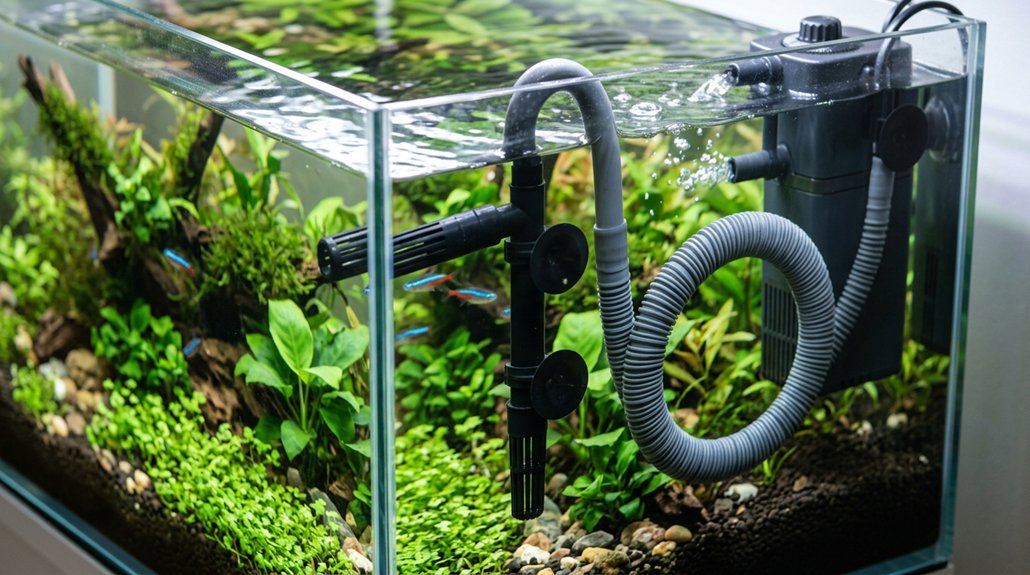
Common aquarium filter mistakes to avoid include choosing a filter by tank size alone, underestimating fish biomass, and running too little turnover for the bioload. You should size filtration a bit above bare volume, match flow to species, and use multiple filters or more media for heavy stocking. Don’t rinse media in tap water or replace everything at once. Plants help, but they don’t replace filtration or water changes, and there’s more to fine-tune ahead.
Key Takeaways
- Don’t underfilter; choose a filter rated above tank volume, especially for heavy-stocked or messy fish setups.
- Match flow to species; strong current can stress bettas and fry, while weak flow leaves dead zones.
- Rinse sponges and media in removed tank water, not tap water, to preserve beneficial bacteria.
- Never replace all media at once; stagger changes and seed new media to avoid bacterial crashes.
- Keep up with water changes and testing, since filters can’t fully remove dissolved waste, nitrate, or phosphate.
Choose the Right Filter Size
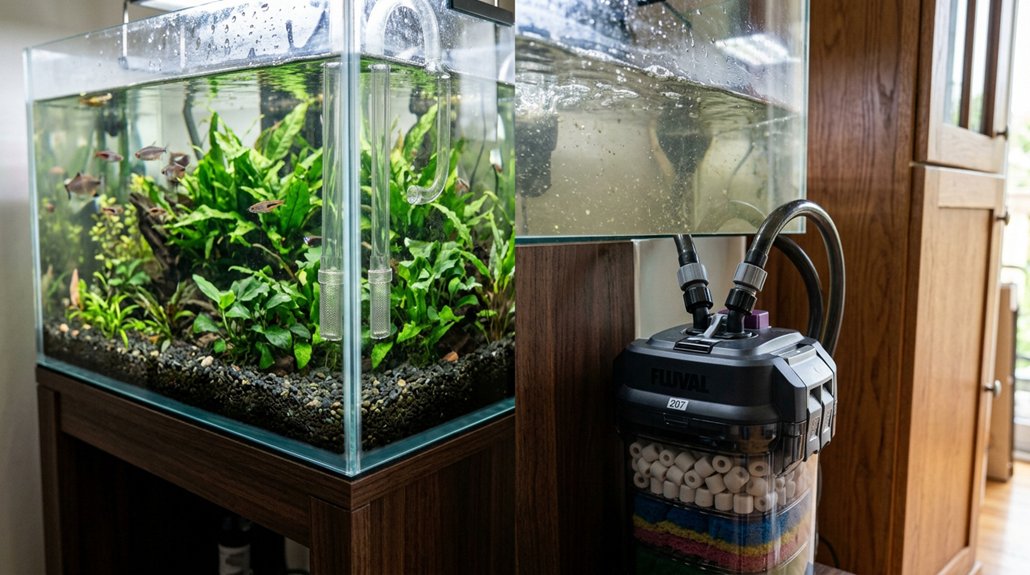
Choosing the right filter size starts with matching flow rate to tank volume: for a typical community aquarium, aim for a filter rated at about 4–6× the tank’s volume per hour, so a 20-gallon tank needs roughly 80–120 GPH. You should size up slightly if possible, because extra media volume increases biological capacity and helps keep water chemistry stable between cleanings. In taller or planted tanks, check flow direction and surface agitation, not just advertised GPH, so circulation reaches every zone. For heavily stocked systems, you’ll often need 8–10× turnover or more than one filter. In small tanks under 15 gallons, two sponge filters or a sponge plus HOB can provide better filtration than one undersized unit, since biological support matters more than raw flow.
Match the Filter to Your Fish
The best filter for your aquarium depends on the fish you keep, not just the tank size: a 20–30 gallon tank with messy or fast-growing fish like goldfish or oscars often does better with a filter rated for 30–40 gallons to handle the heavier bioload. You should apply flow matching to the species: low-flow sponge filters or baffled outlets suit fry, shrimp, bettas, and shy fish, while danios and barbs usually need stronger canister or power-filter flow. Add intake protection for small or delicate animals. Adult size and biomass matter too; a single pleco or large cichlid can demand more filtration than several tetras. Choose media that fits the load, and upsize filtration before adding larger fish.
Avoid Underfiltration in Stocked Tanks
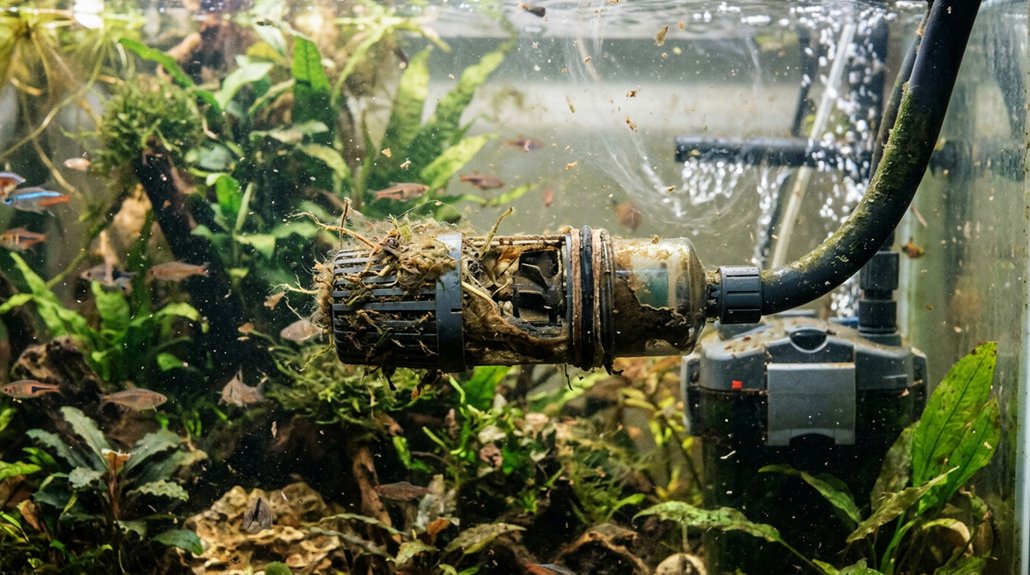
Undersizing your filter is one of the fastest ways to create unstable water in a stocked tank, so you should rate filtration above the bare tank volume and not just match it exactly. For a medium bioload, choose a filter rated at 1.5–2× your tank’s gallonage; a 40-gallon tank often does better with a 50–75 GPH canister or equivalent. Heavy bioloads need 4–6× turnover per hour, and multiple filters can add media surface area for nitrifying bacteria. Don’t trust flow alone: inadequate turnover and limited media volume let waste accumulate and create biofilm hotspots. Match the filter type to the load—sponge for fry, HOB for moderate tanks, canister for high waste or planted systems. Oversized media stabilizes chemistry longer between cleanings.
Clean Filter Media Without Killing Bacteria
Rinsing filter media correctly keeps your bacterial colony intact while removing trapped debris. Use bucket water from the tank, or dechlorinated tap water cooled to tank temperature, for gentle media rinsing. Squeeze sponge or biological media until the water runs clear; don’t scrub, boil, or blast it under straight tap water, since chlorine, chloramine, and shear can wipe out most nitrifiers. If media is heavily loaded, swirl it in a separate container of tank water and return it immediately. Use staggered media replacement, changing only part of the media over several weeks so mature colonies persist. After maintenance, restart the filter and test ammonia and nitrite daily for 7–10 days. If either rises above 0.25–0.5 ppm, do partial water changes promptly.
Don’t Rely on Plants or Low Flow Alone
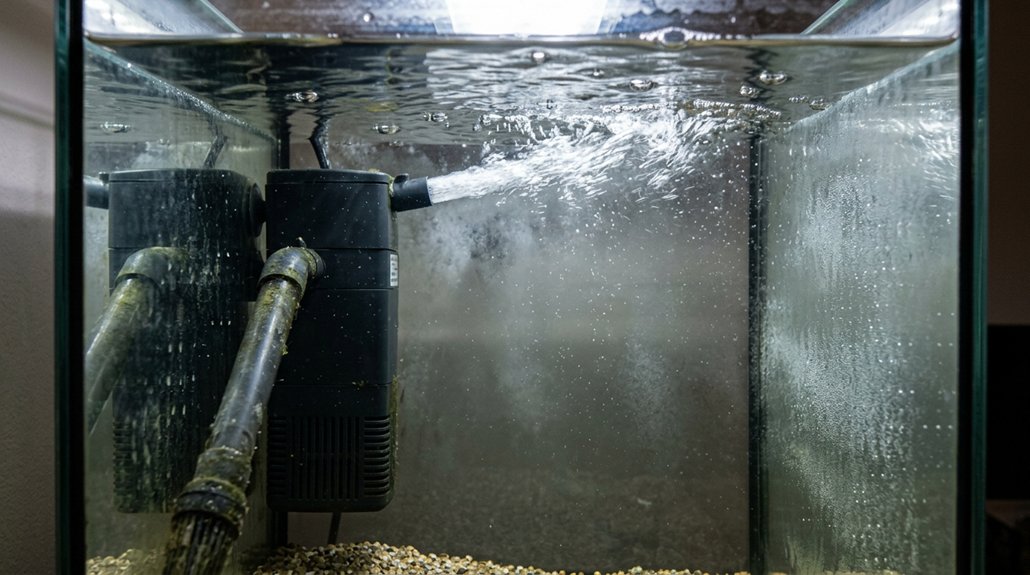
You can’t count on live plants alone to handle your aquarium’s waste load, because they absorb only part of the ammonia, nitrite, and nitrate while the filter still has to provide mechanical removal and nitrifying capacity. Low flow can also reduce oxygen exchange and leave waste breaking down in localized hot spots, so you should aim for adequate turnover and media contact rather than minimal circulation. Match your filter size and type to the tank’s volume and stocking level, and use larger media volume or added circulation if you’re running a planted, low-flow setup.
Plants Need Real Filtration
Plants can help with nutrient uptake, but they can’t replace proper filtration in a stocked aquarium. You still need a correctly sized mechanical and biological filter to process waste and trap uneaten food before it decomposes. Live plants absorb only a fraction of the ammonia, nitrite, and nitrate from fish load, so they’re support, not a primary treatment system. Even in dense plantings, you should maintain about 4–6× tank turnover per hour so detritus reaches filter media and beneficial bacteria stay established. Without that circulation, you risk oxygen depletion and ammonia/nitrite spikes in substrate and root zones. If you keep shrimp or fry, use sponge filters or baffles to preserve gentle flow without sacrificing real filtration capacity.
Low Flow Can Fail
Low flow can quietly undermine an aquarium by reducing oxygen exchange and leaving dead zones where ammonia, nitrite, and detritus accumulate; for heavily stocked or warm-water community tanks, aim for at least 4–6× tank turnover per hour. You shouldn’t depend on plants alone, because they absorb nutrients but don’t detoxify waste fast enough. You still need mechanical and biological media to support nitrifying bacteria and trap debris. Check behind decor and under caves for circulation gaps, since stagnant pockets can collect sludge and create anaerobic zones that may release hydrogen sulfide. If your filter is only a sponge or low-output unit, it may suit a shrimp tank, but not a heavier bioload. Add a powerhead or stronger filter, and clean media regularly to limit algae.
Match Filter To Stocking
A filter should be matched to the fish, not just the tank size, because stocking density and full-grown biomass determine how much waste the system has to process. You should choose a unit rated for a tank slightly larger than yours to preserve media volume and biological capacity. A dozen small tetras create far less load than a few goldfish or a pleco, so fish biomass matters more than appearance. Plants help with nutrient uptake, but they don’t replace mechanical or biological filtration, and you still need 4–6x turnover for oxygenation and detritus suspension. For heavy bioloads, upsize to canister or multiple filters and target 8–10x turnover. For fry or shrimp, use a sponge filter that maintains tank compatibility without excessive flow.
Prioritize Water Changes and Maintenance
You still need regular water changes even with a properly sized filter, since filtration doesn’t remove dissolved waste like nitrate and phosphate; use about 10–25% weekly or 25–30% every two weeks, adjusted to your bioload. Don’t rely on evaporation top-offs alone, because they concentrate pollutants and can gradually reduce alkalinity and pH. When you clean filter media, rinse sponges or biomedia gently in tank water, and keep each maintenance change under roughly 40% to avoid disrupting water chemistry and filter bacteria.
Regular Water Changes
Regular water changes are essential for keeping an aquarium filter effective, because they remove dissolved nutrients, nitrates, phosphates, and organic waste that topping off water alone cannot eliminate. You should use seasonal adjustments and evaporation management to decide whether you need 10% weekly for small tanks, 25–30% every two weeks for community tanks, or 30%+ multiple times weekly for high-tech planted systems. Don’t rely on top-offs; they only restore volume. During each change, siphon the substrate with a gravel vacuum to remove detritus, uneaten food, and waste. Keep routine exchanges below about 40% unless you’re handling an emergency. Treat new water with dechlorinator, and match temperature, hardness, and alkalinity as closely as possible to protect fish and preserve beneficial bacteria.
Prevent Waste Buildup
Preventing waste buildup starts with true water changes, not just topping off evaporation, because only partial water replacement removes dissolved organics, nitrates, and phosphates that filters can’t eliminate. You should change 10–25% weekly, or 30–40% in small, heavily stocked tanks. Use evaporation monitoring so you don’t mistake volume loss for export.
- Replace water, don’t merely refill.
- Rinse mechanical media in removed tank water, not tap water.
- Refresh chemical media on schedule to avoid chemical residue.
- Test nitrate and phosphate after changes; if nitrate stays above 40 ppm, increase volume or frequency.
This routine lowers nutrient load, limits algae, and keeps waste from accumulating where your filter can’t reach.
Maintain Filter Balance
Balance starts with keeping the filter biologically stable through routine water changes and careful media maintenance. You should change 10–30% of the water weekly, adjusting for tank size and stocking, so nitrate and phosphate don’t overwhelm biological capacity. Rinse sponge or media in a bucket of tank water during water changes; never use tap water, and stagger deep cleanings so you don’t replace all media at once. Match maintenance to bioload: lightly stocked tanks may need monthly rinsing, while heavy loads often need gentle service every 2–3 weeks. If you upgrade media, seed the new material in the old filter or tank water for several days. Watch flow rate; a 25% drop means you should inspect pre-filters, impellers, and intakes to preserve filter equilibrium and bacterial harmony.
Frequently Asked Questions
What Are the Common Problems With Aquarium Filters?
You’ll commonly see filter clogging, inadequate turnover, weak biological capacity, dead zones, and flow noise. You can also lose bacteria from improper cleaning, causing ammonia spikes. Regular maintenance and correctly sized media prevent these failures.
What Mistakes Do Beginner Fish Owners Make?
You often rush aquarium cycling and choose underpowered filters, so your tank stays unstable. You’ll also ignore filter noise, overclean media, and skip water changes. Better sizing, gentler maintenance, and monitoring prevent ammonia spikes and stress.
Can a Fish Tank Be Too Filtered?
Yes, your tank can be too filtered if strong current causes over filtering stress, especially for slow fish or shrimp. You’ll want to avoid flow deadzones, redirect outflow, and keep oxygenation balanced with tank needs.
What Is the Easiest Aquarium Filter to Maintain?
Sponge filters are easiest: you’ll usually rinse them every 2–4 weeks, and they keep beneficial bacteria intact. By comparison, many tanks need 50% more upkeep with hang on maintenance and media swaps than sponges.
Conclusion
Avoiding common aquarium filter mistakes keeps your tank stable and your fish healthier. When you choose the right filter size, match it to your livestock, and prevent underfiltration in crowded systems, you reduce waste buildup and oxygen stress. Clean media gently so you preserve beneficial bacteria, and don’t assume plants or low flow can replace filtration. After all, wouldn’t you rather see clear water and active fish than a cloudy tank fighting imbalance? Prioritize maintenance every week.