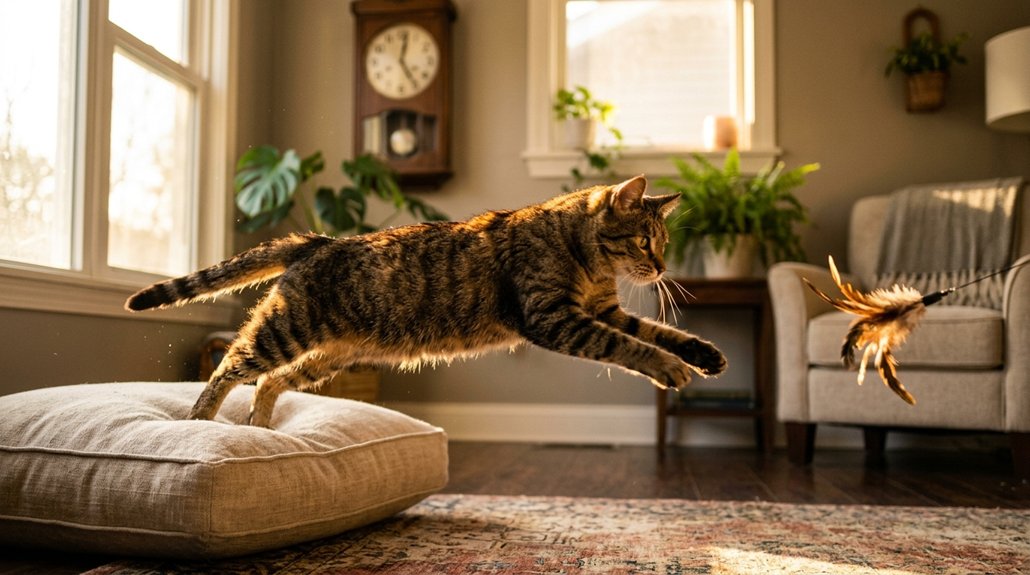
Cats experience sudden bursts of energy, known as zoomies, due to instinctual behaviors and energy management. These bursts often follow periods of rest when cats release stored energy. As crepuscular creatures, their activity peaks during dusk and dawn, mirroring their predatory instincts. Environmental factors like play, routine changes, or litter box use can trigger these episodes. Understanding these patterns can help manage your cat’s energy levels effectively and keep you informed about potential underlying issues.
Key Takeaways
- Sudden energy bursts, or zoomies, help cats manage excess energy, often occurring after rest periods.
- Cats’ crepuscular nature makes them more active at dawn and dusk, reflecting natural hunting instincts.
- Young cats, especially kittens, exhibit more frequent, energetic zoomies due to their high energy levels and agility.
- Environmental changes, interactive play, and litter box use can trigger these energetic episodes in cats.
- Playful energy bursts are normal, while erratic movements might indicate anxiety, needing observation and possibly veterinary advice.
Understanding Cat Zoomies
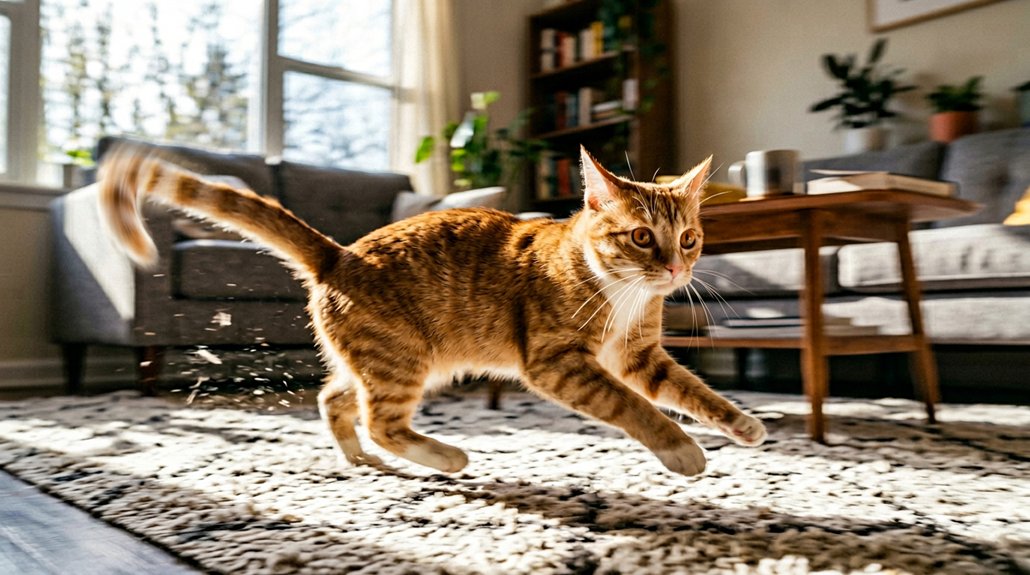
Why do cats suddenly and energetically dash around the house? Understanding feline behavior reveals that these episodes, known as cat zoomies or frenetic random activity periods (FRAPs), serve as a mechanism for energy management. Cats are crepuscular creatures, meaning they’re naturally more active during dawn and dusk. Zoomies happen often after rest, capitalizing on stored energy and aligning with this instinctual activity pattern. For many cats, using the litter box can trigger zoomies, partly due to stimulation of the vagus nerve, leading to playful energy discharge. Young cats have higher energy levels, making zoomies more frequent and vibrant compared to their senior counterparts. While typical zoomies represent healthy behavior, always watch for unusual signs that necessitate consulting a veterinary professional.
Causes of Cat Zoomies
You’re likely to notice your cat’s sudden energy surges, often caused by their natural hunting instincts that replicate pouncing and sprinting behaviors used in the wild. These bursts, known as zoomies, can occur as your cat releases pent-up energy accumulated during periods of rest. Additionally, nocturnal behavior patterns may lead to increased night-time activity as cats instinctively engage in more active behaviors during the darkness when they are naturally most alert.
Natural Hunting Instincts
Although domestic cats have adapted to life in our homes, they still have strong natural hunting instincts that manifest during what’s often termed as ‘zoomies’. This instinctual behavior drives them to engage in hunting play, characterized by high-energy activities like sprinting and pouncing, which simulate prey chase dynamics. You’ll observe your cat’s zoomies typically at dusk or dawn, mirroring the active hunting periods of their wild ancestors. These bursts are often triggered by environmental stimuli or structured play sessions. Using interactive toys that mimic prey movements can provide essential mental and physical stimulation. By recognizing these behaviors, you help fulfill your cat’s natural impulses, promoting their well-being and effectively channeling their energy into healthy, satisfying outlets.
Pent-Up Energy Release
When considering the phenomenon of cat zoomies, a primary cause is the release of pent-up energy, which accumulates during extended periods of rest as cats sleep approximately 12-16 hours daily. This energy surplus often manifests in playful and sporadic activity to facilitate energy distribution and tension release. After a rejuvenating nap, cats feel invigorated and instinctively engage in behaviors such as sprinting and pouncing.
To understand the role of pent-up energy in zoomies:
- Rejuvenation: Cats awaken ready to distribute stored energy.
- Energy Outlet: Zoomies act as a medium for tension release.
- Behavioral Health: Regular zoomies reflect a cat’s happy state.
Interactive play sessions can strategically manage this natural pattern, reducing the frequency by providing controlled energy outlets.
Nocturnal Behavior Patterns
Some may wonder why their feline companions experience sudden bursts of energy at night. Cats are crepuscular, meaning they’re biologically wired to be most active during dawn and dusk. This timing aligns perfectly with their instinctual hunting drives. Nighttime exploration taps into a cat’s natural curiosity, and the tranquility of these hours often encourages playful behavior. After a lengthy nap—anywhere from 12 to 16 hours—cats may wake with pent-up energy, leading to zoomies. Additionally, environmental factors like nocturnal wildlife activity or unexpected noises can trigger their inherent instinct to chase and pounce. You’ll notice your cat mimicking ancestral hunting routines, as increased activity levels reflect natural behavior patterns finely tuned for times when prey is most active.
Predatory Instincts and Zoomies
Cats’ sudden bursts of energy, commonly known as zoomies, are a manifestation of their strong predatory instincts. For indoor cats, zoomies are vital for energy management and provide necessary indoor stimulation. These energy surges mimic playful predation, simulating hunting scenarios essential for a cat’s well-being. To harness these natural instincts effectively, incorporate the following:
- Hunting Simulation: Use toys that mimic prey to engage your cat in stimulating exercises.
- Stimulation Variety: Rotate toys and activities to prevent boredom and maintain activity balance.
- Feline Exercise: Facilitate areas for safe running and jumping to manage play aggression.
Understanding cat behavior and providing an environment conducive to these zoomies guarantees your feline remains both physically and mentally stimulated, offering an important boredom relief.
Impact of Sleep Patterns on Zoomies
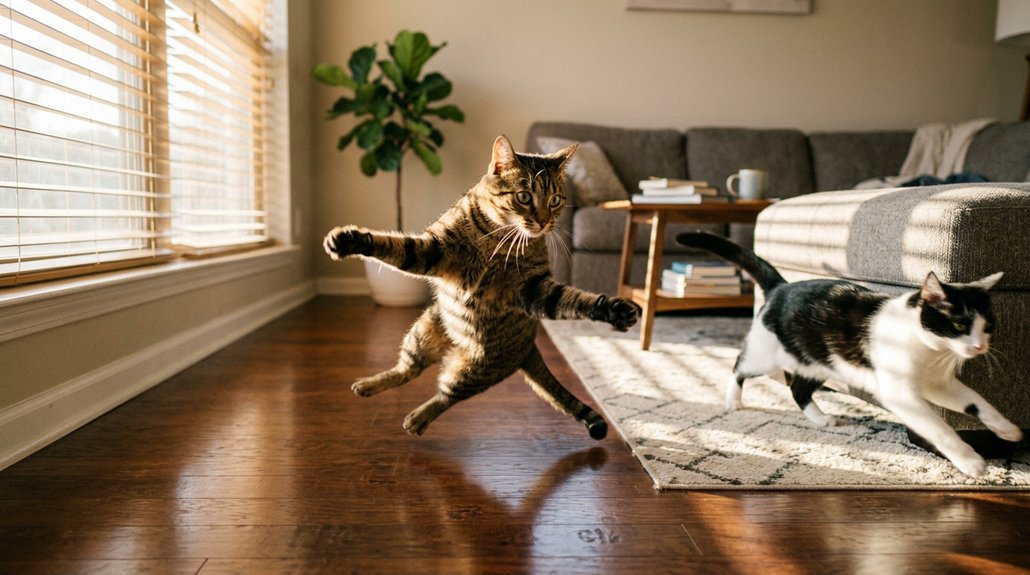
Although cats are often perceived as lazy due to their penchant for sleeping up to 16 hours a day, these extensive rest periods critically influence the surges of energy known as zoomies. Sleep quality and nap frequency considerably impact a cat’s energy cycles. A restful slumber allows for robust energy levels, while any sleep disturbance can alter the activity balance. Daytime habits and environmental factors further shape these patterns, with cats tapping into their crepuscular instincts. This natural predisposition guarantees pent-up energy can be released post-nap. Understanding your cat’s sleep habits can help predict their zoomies. As a result, you can effectively adapt their surroundings to accommodate their instinctual need for high-energy activities, guaranteeing a harmonious household dynamic.
What Triggers Cat Zoomies?
Recognizing the direct influence of sleep patterns on energy bursts, it’s important to understand what specifically triggers those energetic episodes known as cat zoomies. Daily cat behavior reflects their natural crepuscular tendencies, meaning they’re often more active during dawn and dusk. To manage their energy effectively, you should consider:
- Pent-up Energy Release: Cats sleep 12-16 hours a day. Upon waking, this built-up energy demands release, often triggering zoomies.
- Bowel Movements: Post-litter box activity stimulates the vagus nerve, occasionally leading to spontaneous running.
- Environmental Stimuli: Factors like catnip exposure, loud noises, or interactions with other pets can provoke zoomie episodes.
Understanding these triggers enhances effective energy management and helps cater to your cat’s natural behavioral instincts.
Age Influence on Zoomie Intensity
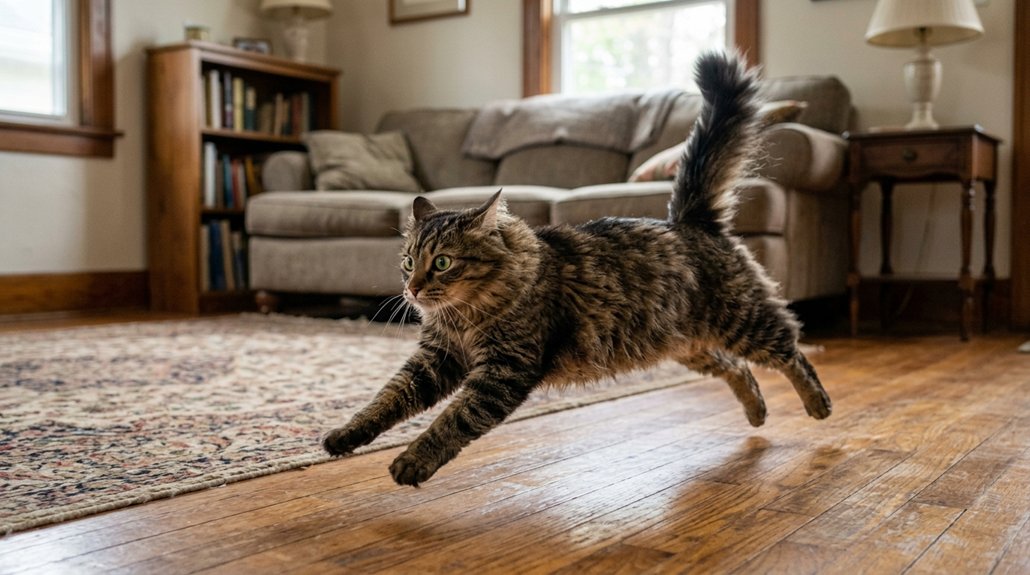
In understanding the age influence on zoomie intensity, you’ll find that kittens exhibit frequent and vigorous bursts of energy due to their naturally high activity levels and curiosity. As cats mature, you’ll notice a gradual reduction in these energetic episodes, driven by a decrease in overall activity and the mellowing effects of age. However, individual health conditions and personality traits can lead to deviations in these patterns, especially in senior cats.
Energy Dynamics in Kittens
When observing kittens’ energy dynamics, their age considerably influences the intensity of their zoomies. At this developmental stage, kittens demonstrate exceptional high energy and playfulness due to rapid growth and evolving motor skills. Their zoomies are characterized by intense bursts, driven by their exploration of the environment and practice of hunting behaviors. Here’s how this plays out:
- High Energy Levels: Kittens exhibit more frequent zoomies, leveraging their youthful energy to explore and practice agility.
- Kitten Playfulness: Zoomies mimic predatory behaviors such as stalking and pouncing, necessary for their growth.
- Activity Spikes: Post-nap rejuvenation often leads to multiple episodes of energetic play daily.
Mellowing With Age Effects
As cats progress from kittenhood to their senior years, the intensity and frequency of zoomies diminish due to natural declines in energy levels. With aging awareness, it’s important to understand these changes are part of senior wellness. Older cats exhibit less frequent and intense zoomies because of increased sleep patterns and reduced agility. Age-related cognitive changes can affect zoomie timing, leading to unexpected bursts, often spurred by environmental stimuli or routine changes. Monitoring each cat’s personality and health is essential, as these factors influence zoomie persistence. Even though senior cats may still experience zoomies, they are typically less wild. By appreciating these shifts, you can better cater to an aging cat’s activity needs, ensuring a comfortable senior life.
Differentiating Playful From Anxious Zoomies
- Behavior Signs: Document running and jumping for playfulness. Frantic, uncoordinated movements suggest anxiety.
- Vocalizations: Playful zoomies rarely involve concerning vocalizations, while erratic motions or avoidance might signal discomfort.
- Consultation: If interpretation is unclear, consult a vet to rule out health or behavioral issues impacting your cat’s energy bursts.
Managing Nighttime Cat Zoomies
Although nighttime zoomies can be amusing, they often disrupt household peace and signal an imbalance in your cat’s activities. Implementing a structured nighttime routine is essential for effective behavioral management. Start by engaging in interactive play sessions during the evening to tire them out. Feeding your cat their main meal closer to bedtime fosters satiety and encourages sleepiness, helping them settle for the night. Incorporate puzzle toys and treat dispensers to provide mental stimulation, reducing the likelihood of nighttime energy bursts. Establish a consistent routine for feeding and play with regular intervals to regulate energy levels effectively. Creating a calming environment with cozy sleeping areas and minimizing external stimuli also plays a crucial role in managing nighttime zoomies.
Turning Zoomies Into Constructive Play
To transform your cat’s zoomies into constructive playtime, utilize interactive toys like feather wands and laser pointers to engage their natural hunting instincts. Creating a safe activity space with climbing structures such as cat trees promotes exploration and offers a conducive environment for physical play. Additionally, scheduled play sessions and puzzle feeders are effective tools to redirect energy and entertain your cat mentally and physically during peak frenzied periods.
Enhancing Interactive Playtime
When your cat’s zoomies strike, transforming these sudden bursts of energy into structured play can be both rewarding and beneficial. By honing their energy with interactive games and structured routines, you can enrich your cat’s life considerably. Here’s how:
- Interactive Games: Utilize feather wands or laser pointers to stimulate your cat’s predatory instincts, promoting physical and mental engagement.
- Structured Routines: Establish a schedule for play sessions, especially during peak activity hours like dawn and dusk, to channel your cat’s energy into positive outlets.
- Environmental Enrichment: Introduce climbing structures, scratching posts, and puzzle feeders to create a stimulating atmosphere. This not only entertains but also reduces boredom-induced zoomies, keeping your cat calm and engaged.
Engaging Toys and Tools
Harnessing the vibrant energy of a cat experiencing zoomies can be remarkably productive when equipped with the right engaging toys and tools. Interactive play using feather wands and laser pointers stimulates a cat’s hunting instincts, transforming bursts of activity into focused play sessions. For continued mental engagement, puzzle feeders slow down eating while encouraging constructive playtime. Additionally, cat trees and climbing structures provide safe vertical spaces, catering to your cat’s need for exercise and exploration. Incorporate interactive toys that dispense treats or make sounds to capture their attention, redirecting chaotic energy towards engaging activities. Regular toy rotation is essential, introducing new challenges that prevent boredom and excessive zoomies, ensuring that your cat’s environment remains mentally and physically stimulating.
Safe Activity Spaces
Although cats may experience sudden bursts of energy known as zoomies, guaranteeing their play areas are safe and constructive transforms these high-energy moments into beneficial exercise. Creating effective safe zones involves careful planning to mitigate potential dangers and maximize exploration. Implementing vertical elements such as cat trees or shelving enhances playful spaces by promoting climbing and discovery. To further safeguard your feline friend, focus on these essential strategies:
- Surface Safety: Utilize soft, non-slip materials to prevent accidental slips during those energetic pounces.
- Interactive Engagement: Place toys like feather wands and lasers within designated areas to channel energy into stimulating play.
- Varietal Challenges: Keep play spaces dynamic by regularly rotating toys to guarantee mental stimulation and prevent destructive behaviors.
These components help turn frenetic zoomies into constructive and safe exploration.
Is It Time to Consult a Vet?
Ever wonder if your cat’s sudden bursts of energy justify a visit to the vet? Effective health monitoring involves observing behavioral signs like weight loss, excessive vocalization, or changes in litter box habits. These could indicate underlying health issues. If zoomies are accompanied by frantic or uncoordinated movements, distress may be present, suggesting a vet consultation. Observe cats exhibiting zoomies post-litter box use; discomfort might reflect health concerns. Additionally, frequent or prolonged zoomies may justify a check-up to dismiss potential issues. Elderly cats showing unusual zooming patterns, such as increased energy or disrupted sleep, could have age-related health changes. Consulting a veterinarian helps promote your cat’s well-being and identifies any potential medical conditions needing attention.
Frequently Asked Questions
Why Does My Cat Have a Sudden Outburst of Energy?
Your cat’s sudden outburst of energy is likely due to playful behavior reflecting its natural predatory instincts. These bursts of feline energy can be triggered by factors like waking from sleep, environmental changes, or engaging interactions with stimuli.
What Is “I Love You” in Cat Language?
In cat language, “I love you” manifests as feline behaviors like purring, head butting, and slow blinking. These cat expressions reveal affection, with gestures like kneading or grooming indicating they’re comfortable around you and forming trust.
What Is the 3-3-3 Rule for Cats?
The 3-3-3 rule guides you through your new cat’s adjustment: the first three days are stressful, three weeks show gradual comfort, and in three months, cat behavior, socializing, and energy bursts normalize.
Why Is My Cat Suddenly More Energetic?
Your cat’s sudden energetic behavior might stem from its playful behavior driven by nocturnal instincts. Cats often exhibit bursts of energy due to their crepuscular nature, coupled with stimuli or social interactions, encouraging active engagement during certain times.
Conclusion
You’ve explored the fascinating world of cat zoomies, those sudden bursts of energy that can leave you both amused and perplexed. It’s intriguing to note that about 52% of cat owners report their felines experience zoomies regularly, highlighting it’s a common behavior. Understanding the underlying causes and triggers, like predatory instincts and sleep patterns, helps manage them better. Always guarantee your cat’s health by consulting a vet if zoomies seem excessive or anxiety-driven.