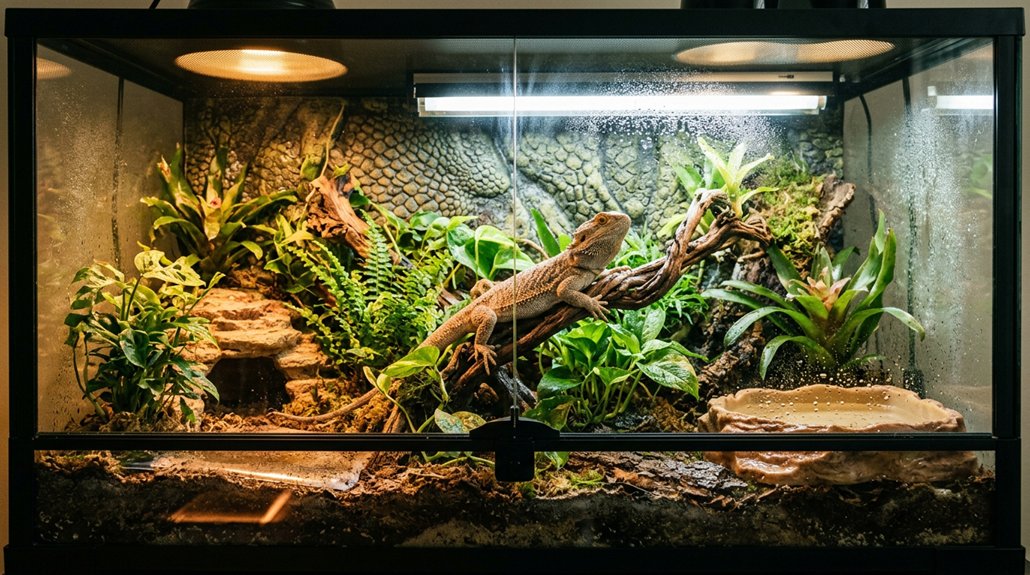
When setting up a reptile habitat, guarantee precise heat gradients with basking spots reaching 95-104°F and cooler zones at 72-80°F. Use T5 HO fluorescent tubes for UVB lighting, crucial for vitamin D3 synthesis. Maintain humidity between 60-80%, peaking nocturnally. Select substrates matching the reptile’s natural environment to foster instinctive behaviors and avoid ingestion risks. Accurate monitoring tools for temperature, lighting, and humidity are fundamental to optimize reptile health—there’s much more to explore in this setup.
Key Takeaways
- Create effective heat gradients with basking spots reaching 95-104°F and cooler zones at 72-80°F to prevent overheating.
- Use UVB T5 HO fluorescent tubes for vitamin D3 synthesis and maintain a 12-hour light cycle for natural conditions.
- Maintain humidity levels between 60-80% and use digital hygrometers for accurate monitoring and automated misting systems for consistency.
- Replicate the reptile’s natural habitat with appropriate substrates and live plants to enhance humidity and aesthetics.
- Regularly check temperature, light, and humidity levels to align with reptile health needs and adjust as necessary.
Identifying Essential Reptile Habitat Needs
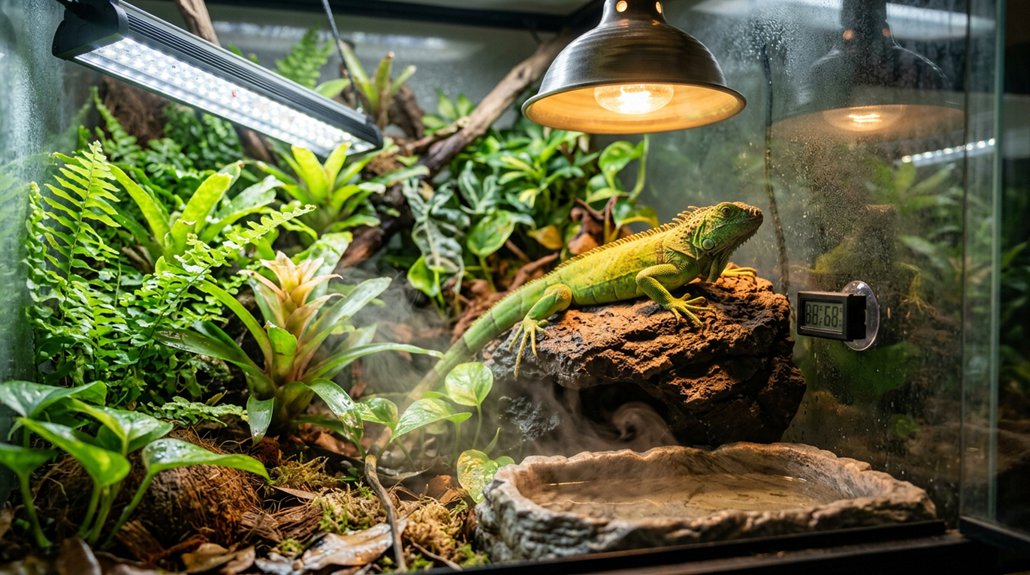
To guarantee your reptile thrives in captivity, it’s essential to create a habitat that mimics its natural environment—this involves understanding several key components. Habitat enrichment plays a significant role, promoting diverse stimuli through the incorporation of elements such as live plants. These not only enhance visual appeal but help regulate humidity, a critical factor for reptile health, maintained at 60-80% with nighttime spikes. Temperature fluctuations are important; establish a thermal gradient with basking spots at 95-104°F and cooler zones between 72-80°F to support thermoregulatory behavior. Use substrates like coconut coir or slate based on your reptile’s natural habitat to provide comfort and health. Guarantee UVB lighting with T5 HO fluorescent tubes for necessary vitamin D3 synthesis.
Select a Fitting Terrarium Size and Style
When selecting a terrarium, it’s essential to guarantee its size is 1.5 to 2 times the length of your adult reptile, which provides ample space for physical activity and environmental enrichment. Glass terrariums are advantageous for visibility and humidity control, while PVC aquariums offer superior thermal regulation and stability. The material and design choice not only influence your reptile’s ability to thrive but also play a significant role in minimizing stress by meeting both their movement and privacy requirements.
Optimal Enclosure Dimensions
Determining the ideal enclosure dimensions for your reptile is essential for ensuring their health and comfort. Selecting proper enclosure materials is important as it affects temperature and humidity control. Glass terrariums offer excellent visibility and humidity maintenance, while PVC provides reliable heating. Remember, any enclosure should be 1.5 to 2 times your reptile’s length. Vertical space is significant for species that are arboreal, allowing them to climb and exercise naturally. For terrestrial reptiles, prioritize ground area.
| Factor | Importance |
|---|---|
| Enclosure Size | 1.5 to 2 times reptile’s length |
| Enclosure Type | Glass for humidity, PVC for heat |
| Vertical Space | Essential for active species |
Secure ventilation prevents moisture buildup, ensuring proper airflow. Integrate climbing structures and hiding spots, important for stimulating natural behaviors and providing habitats that reflect their ecological niches.
Material and Design Choices
Choosing the right material and design for your reptile’s terrarium is pivotal when creating an environment that meets both aesthetic and functional needs. Aim for a terrarium 1.5 to 2 times your reptile’s length to foster movement and exercise. Glass terrariums excel in terrarium aesthetics and humidity control, while PVC enclosures offer superior enclosure durability and even heating. Design with verticality in mind—include structures for climbing and shelters to allow natural behavior and stress reduction. These features are essential for replicating a habitat that promotes physical health. Use substrates like slate for arid-loving reptiles or coconut coir for moisture-preferring species to reflect their natural habitats, enhancing comfort and safety. These choices are critical for supporting your reptile’s well-being.
Create Effective Heat Gradients
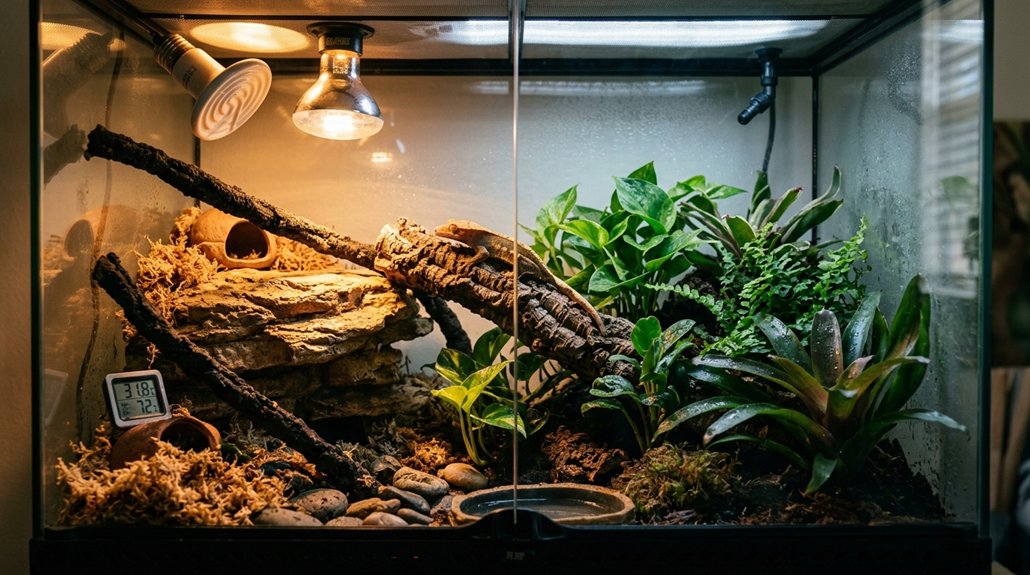
To establish effective heat gradients within a reptile habitat, it’s essential to evaluate both environmental and physiological needs of the reptile species. Proper habitat heating is important for thermal regulation and ensuring reptilian health. Here’s how you can achieve ideal gradients:
Evaluating environmental and physiological needs is key to creating effective heat gradients for reptile habitats.
- Basking Spot: Utilize overhead heating sources like basking bulbs to create a secluded area with temperatures of 95-104°F (35-40°C). This zone is crucial for promoting digestion and thermoregulation.
- Cool Zone: Designate an area maintaining 72-80°F (22-27°C) as a refuge from excessive heat, necessary for preventing stress and overheating.
- Monitoring and Control: Place multiple thermometers to assess temperatures and use thermostats or rheostats to maintain steady thermal conditions, avoiding harmful fluctuations within the enclosure.
Choose the Right Substrate for Your Reptile
When choosing a substrate for your reptile, aligning with their natural habitat is essential, ensuring the terrain supports their instinctive behaviors. For species from arid environments, opt for substrates like slate or ceramic, which provide both traction and comfort, while hydrophilic species require moisture-retaining mediums such as coconut coir to maintain an ideal humidity gradient. Prioritizing safety is important as certain loose substrates pose ingestion risks, and using easily sanitized options like paper towels or reptile carpet in quarantine settings offers a practical and hygienic solution.
Select Natural Habitat Material
- Dry-climate species thrive on hard substrates like slate or ceramic tiles. These provide traction and mimic arid, rocky terrains.
- Humidity-loving reptiles need moisture-retaining materials such as coconut coir. This keeps humidity levels stable and supports their biological needs.
- If you’re concerned about ingestion risks, especially for species prone to impaction, opt for paper towels or reptile carpet. These substrates are easy to clean, reducing health risks during quarantine setups.
Regularly check substrate suitability to ascertain it’s aligned with your reptile’s health.
Prioritize Safety and Comfort
Selecting an appropriate substrate is essential for balancing your reptile’s safety and comfort. Safe substrate options are imperative in mimicking the natural habitat while minimizing risks. Dry-climate species require hard surfaces, like slate or ceramic, ensuring adequate traction and reducing moisture retention. Moisture-loving reptiles, however, thrive on humidity-retaining substrates such as coconut coir. Exercise caution with loose substrates due to ingestion risks, especially for species that may consume their bedding. For quarantine setups, use paper towels or carpet for ease of cleaning and monitoring waste. Substrate depth considerations are vital; burrowing reptiles need deeper substrates for digging behavior, while maintaining proper depth supports temperature gradients and humidity. These considerations greatly impact your reptile’s health and comfort in their enclosure.
Consider Moisture and Traction
Understanding the interplay between moisture and traction in your reptile’s habitat is crucial for replicating their natural environment and ensuring safety. Substrate selection should mirror their native conditions with a focus on moisture retention and traction balance to support natural behaviors. For instance:
- Moisture-loving species benefit from substrates like coconut coir, which provide high moisture retention and enable digging behaviors.
- Arid environment dwellers typically need hard, non-porous surfaces such as slate or ceramic for ideal traction without moisture accumulation.
- Climbing species require textured substrates that promote exercise and encourage movement, enhancing their natural climbing instincts.
Opt for non-loose substrates when possible to prevent ingestion risks and prioritize easy-to-clean options. Regularly inspect and replace substrates to prevent bacteria proliferation.
Maximize UVB and Lighting Benefits
To effectively maximize UVB and lighting benefits for reptiles like Ball Pythons, understanding the precise requirements of UVB exposure is vital. UVB bulb technology plays a significant role; select high-output bulbs such as the 22-inch T5 HO fluorescent tubes from Arcadia or ZooMed, which offer superior efficiency over coil variants. Proper lighting position is essential to guarantee unobstructed light penetration. For example, you should place the Arcadia 6% T5 HO bulb 11-13 inches above the mesh to facilitate ideal UVB exposure. Implementing a 12-hour on, 12-hour off lighting schedule mimics Ball Pythons’ natural crepuscular habitat conditions. Regular bulb replacement every 6 to 12 months is necessary to prevent diminished UV output, supporting efficient vitamin D3 synthesis and safeguarding your reptile’s well-being.
Maintain Your Ideal Humidity Levels
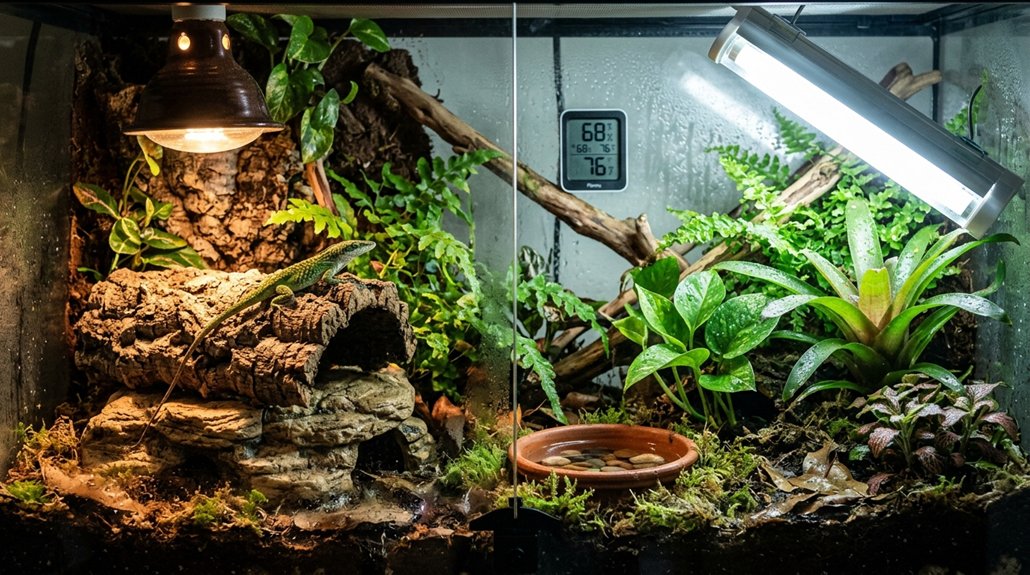
To maintain ideal humidity levels, utilize a digital hygrometer for precise monitoring within the recommended 60-80% range, adjusting as needed for nocturnal spikes up to 100%. Incorporating live plants into your setup can greatly aid in humidity regulation, as their transpiration process introduces moisture into the air while enhancing the habitat’s visual appeal. Additionally, a misting system is essential for directly supplying moisture when levels fall below the desired threshold, ensuring a stable environment conducive to your reptile’s health.
Effective Humidity Monitoring
- Digital Hygrometer: Install a digital hygrometer to guarantee accurate real-time humidity readings, preventing dips or spikes that may harm your reptiles.
- Misting Systems: Consider automated misting systems to maintain consistent humidity levels, eliminating the need for manual intervention.
- Routine Calibration: Regularly calibrate your humidity sensors to verify ongoing precision, adapting their sensitivity as needed to reflect exact moisture conditions within your enclosure.
Live Plants for Regulation
After verifying accurate humidity monitoring with tools like digital hygrometers and misting systems, the addition of live plants can be an effective strategy for maintaining desired humidity levels within your reptile enclosure. Live plants release moisture through transpiration, contributing to natural humidity control. To optimize this, select plant species that thrive in humid conditions. A sufficient density, such as 1-2 plants per enclosure, can form a canopy that retains moisture beneath and enhances the microclimate. This strategic planting not only advances humidity regulation but also improves air circulation and provides enrichment. Regular humidity checks, aiming for levels between 60-80%, will confirm the effectiveness of your plant choices. Proper selection and arrangement guarantee a conducive environment for your reptiles’ well-being.
Misting System Benefits
While essential for maintaining an ideal living environment for moisture-dependent critters, misting systems offer an effective solution for elevating and sustaining humidity levels in reptile enclosures. They’re vital for species like tropical reptiles and amphibians. By adhering to precise misting schedules, you can guarantee consistent humidity levels of 60-80%, with nighttime humidity spikes reaching up to 100%, catering to your reptile’s hydration and shedding requirements.
Consider these key benefits:
- Synergistic Ecosystem: Pairing misting systems with live plants enhances humidity retention and elevates air quality.
- System Efficiency: Regular maintenance prevents clogging, ensuring maximum function and stable habitat conditions.
- Enhanced Control: Integrating advanced devices like foggers complements misting systems, allowing tailored humidity control for specific species.
Customize a Lighting Schedule for Health
How can a well-tailored lighting schedule contribute to the overall health of your reptile? For Ball Pythons, replicating their natural environment with a 12-hour on and 12-hour off cycle is essential for maintaining circadian rhythms. Utilize lighting automation to guarantee consistent cycles, minimizing stress and metabolic disturbances. Incorporate full-spectrum UVB lighting, such as a 22″ T5 HO fluorescent tube, to facilitate vitamin D3 synthesis, vital for calcium metabolism and bone health. Proper seasonal adjustments can further mimic environmental changes, supporting hormonal regulation. During the day, maintain a basking area of 95-104°F (35-40°C) with appropriate bulbs, while nighttime heating should involve ceramic heat emitters or radiant heat panels to keep temperatures between 70-78°F (21-26°C) without light interference.
Equip With Tools for Precise Condition Monitoring
Understanding the intricacies of a reptile’s lighting schedule is just one aspect of creating a thriving habitat; monitoring tools are equally vital in maintaining precise environmental conditions. Accurate temperature and humidity management is essential, and you can’t overlook the importance of high-quality thermometers and hygrometers. Here’s how you guarantee ideal conditions:
- Temperature Variations: Utilize multiple thermometers to evaluate temperature in various habitat zones, facilitating the establishment of beneficial heat gradients.
- Humidity Fluctuations: Employ digital hygrometers to carefully track humidity levels, essential for sustaining a range between 60-80%.
- Automate Consistency: Implement light timers to automate lighting and heating, mimicking natural cycles while easing your management duties.
Regular maintenance and calibration guard against erroneous readings, ensuring a favorable microenvironment for your reptiles.
Ensure Safe Heating and Lighting
Crafting a safe heating and lighting setup is essential for maintaining your reptile’s health and well-being. Begin by integrating heat sources like radiant heat panels and under-tank heaters with overhead heating to guarantee ideal temperature gradients. Always use safety measures by positioning basking or incandescent bulbs with protective screens to prevent burns. Keep devices out of direct contact with reptiles. Employ thermostats for precise temperature regulation and rheostats for fine-tuning. Lighting types, including UVB bulbs, should mimic natural cycles; position them correctly for effectiveness.
| Element | Consideration |
|---|---|
| Heat Sources | Use thermostats and rheostats |
| Lighting Types | Mimic natural light cycles |
| Safety Measures | Employ screens, position wisely |
Regularly monitor conditions using quality thermometers and timers to sustain ideal health environments.
Troubleshoot Common Reptile Habitat Issues
- Install Live Plants: Use 1-2 plants to create a microclimate, enhancing aesthetics and moisture retention.
- Ensure Ideal Temperatures: Verify your basking surface temperature is 95-104°F (35-40°C) and adjust your heating solutions if necessary.
- Engage with Peers: For troubleshooting, connect with experienced reptile owners for community-driven insights, promoting behavioral enrichment and enhancing care techniques.
Always tailor changes to your reptile’s specific needs for perfect environmental conditions.
Frequently Asked Questions
What Should the Humidity Be in a Reptile Enclosure?
Humidity levels should range between 60%-80%, depending on the reptile species. For aquatic reptiles, humidity control demands even 100% at night. Utilize a digital hygrometer and consider humidity-retaining substrates or misting systems for precise management.
Can You Put a Heat Lamp in a Reptile Tank?
Absolutely, you can use a heat lamp in a reptile tank. Properly position it above the enclosure guarantees ideal use of reptile heat sources, avoiding burns while sustaining essential basking temperatures through exact lamp positioning for your species.
Can You Leave a Heat Lamp on 24/7 for Bearded Dragon?
No, don’t leave a heat lamp on 24/7 for your bearded dragon. It’s essential for their health to follow a 12-hour schedule to prevent health issues. Use methods ensuring heat lamp safety and support nocturnal temperature drops.
What Are the Common Reptile Enclosure Mistakes?
You’re likely to encounter mistakes like choosing the wrong substrate, which risks impaction, and not providing adequate enclosure size, leading to stress. Guarantee proper substrate selection and allocate space 1.5 to 2 times the adult reptile’s length.
Conclusion
Crafting a reptile habitat isn’t just an art; it’s a precise science requiring your keen attention to detail. By addressing size, substrate, heat, and light, you’re not only meeting but exceeding your reptile’s needs. Equipped with the right tools, you’ll create a safe and thriving environment. Remember, a well-designed habitat translates to a healthy, happy reptile. So why wait? Immerse yourself in this rewarding endeavor and turn your reptile’s home into a sanctuary of comfort and care.