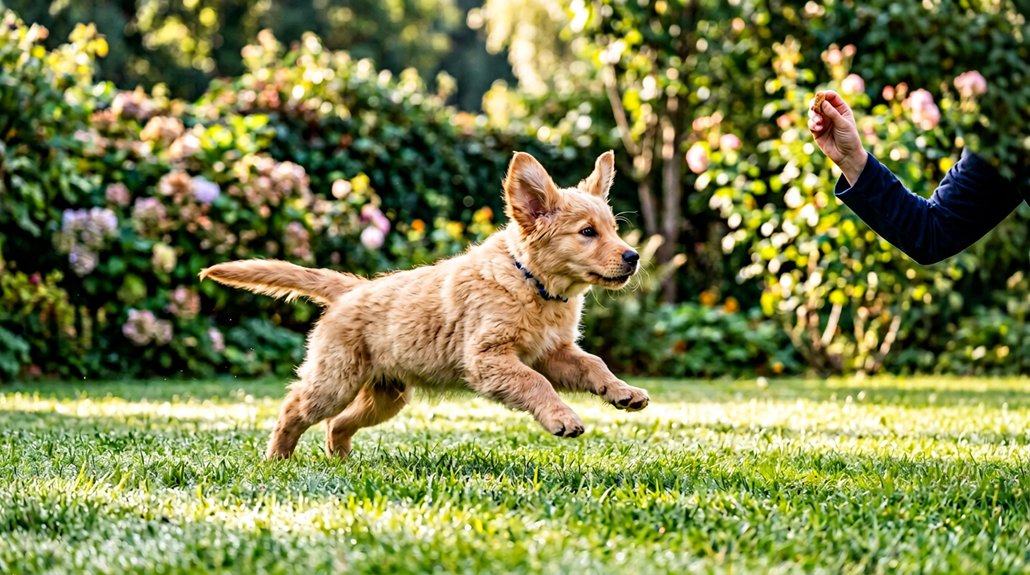
To train your puppy to come when called, establish a cue with a cheerful tone and use high-value treats for positive reinforcement. Begin with minimal distractions and increase distance as they learn. Consistency in commands and rewarding immediate responses strengthens the association. Avoid negative contexts to prevent confusion, and practice in varied environments for generalized behavior. Integrate fun games to maintain engagement. With patience and methodical steps, further insights can illuminate the training process.
Key Takeaways
- Use a specific word like “come” in a cheerful tone to establish cue recognition.
- Start training in a minimal-distraction environment and gradually increase distance and distractions.
- Provide immediate high-value rewards when the puppy responds correctly to reinforce positive behavior.
- Conduct frequent, structured recall sessions with consistent commands and tone to build reliable association.
- Incorporate fun games to maintain excitement and enhance the puppy’s enthusiasm for responding.
Basics of Recall Training
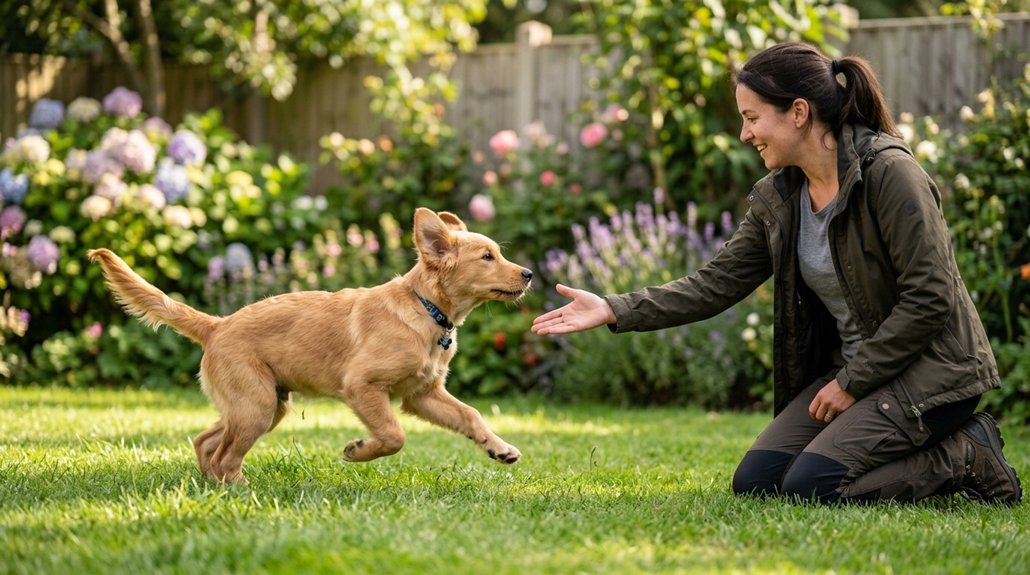
When beginning recall training for your puppy, understanding the essential elements is crucial to setting a strong foundation. Start with cue recognition to establish a reliable response. Consistently use a specific word, like “come,” in a cheerful tone to prompt your puppy. Proximity is key; initiate training just a few feet away, ensuring minimal distraction to bolster the puppy’s focus. Gradually increase the distance as your puppy becomes adept at associating the cue with the desired action—this process is known as distance progression. Incorporate high-value rewards to incentivize obedience. By methodically enhancing distance while reinforcing cue recognition, your puppy will build the necessary confidence and reliability in recall situations, leading to more successful off-leash expeditions in diverse environments.
Creating Positive Associations
While training your puppy, developing positive associations with the recall command is essential for fostering enthusiastic compliance. Begin by using high-value treats your puppy loves. This creates positive experiences with the command, making it enjoyable and rewarding. Precise reward timing is critical; deliver the treat immediately as your puppy reaches you. This quick reinforcement solidifies the connection between the action and the positive outcome. Your vocal inflection and body language should be playful and inviting, which enhances their willingness to respond. Avoid using the recall command in negative contexts, like before a bath or ending playtime, as this can weaken your training efforts. Instead, consistently pair the recall with favorable outcomes to strengthen the puppy’s recall response.
Expanding Distance and Difficulty Gradually
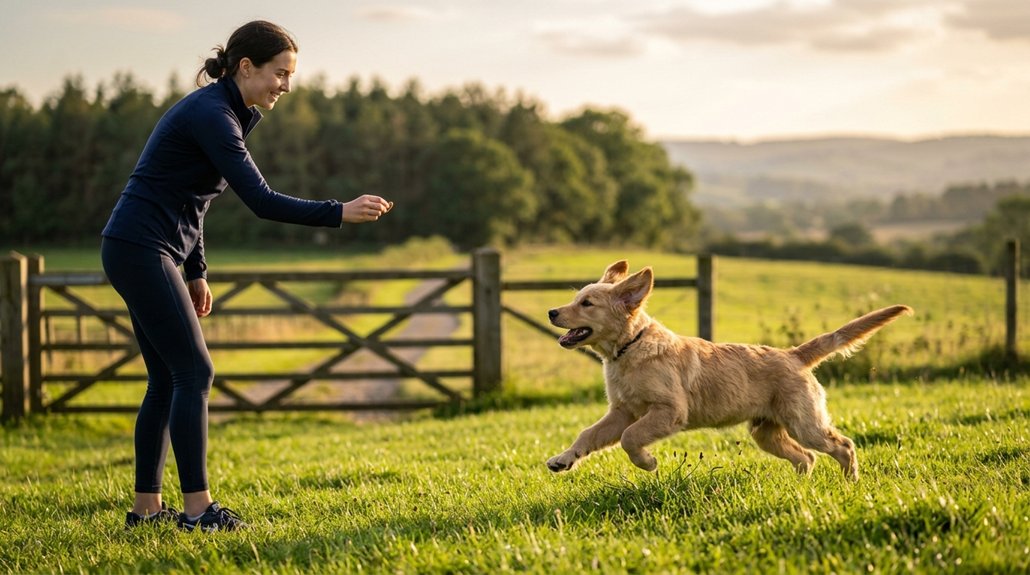
As your puppy becomes more consistent in their recall response, you’ll want to increase the complexity of their training by expanding both distance and environmental difficulty gradually. Initiate the distance progression by starting with short recalls, gradually extending your puppy’s response range to 5-10 feet. Employing a long training lead of 20-30 feet is essential; it allows your puppy exploration freedom while ensuring you’re still in control. For effective distraction management, initially introduce distractions close by, then incrementally upsurge the challenge while maintaining focus on the recall cue. Practicing in diverse locations—familiar and new—enables the reinforcement of recall commands despite fluctuating distraction levels. Conclude each session positively with rewards, fostering enthusiasm and strengthening your puppy’s recall reliability.
Choosing High-Value Rewards
Determining high-value rewards is essential for successful puppy recall training. These reward types are typically what your puppy finds most enticing, like bits of cooked chicken, cheese, or a squeaky toy. Using engaging rewards increases the likelihood of a positive response to the “come” command. It’s vital to observe their reactions to pinpoint the most motivating rewards. Integrate diverse options to maintain excitement and prevent desensitization.
| Reward Types | Engaging Rewards |
|---|---|
| Treats | Cooked chicken, cheese |
| Toys | Favorite squeaky toy |
| Variations | Rotate to maintain interest |
Each successful recall should be reinforced with these high-value rewards, solidifying the connection between compliance and positive outcomes. This structured approach will enhance your puppy’s responsiveness over time.
Solving Common Recall Training Problems
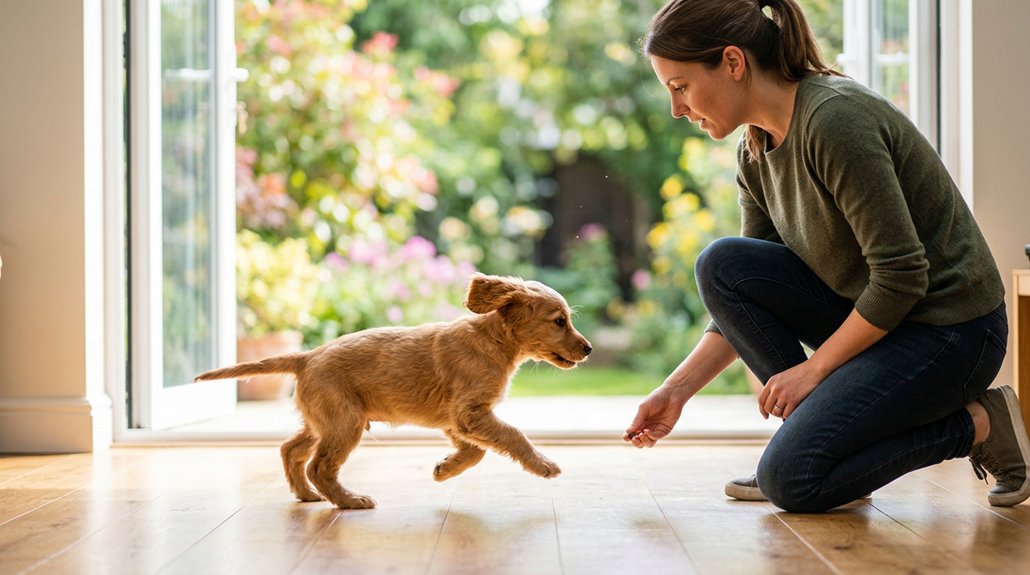
Building on the notion of using high-value rewards, you’ll often encounter challenges during recall training that require strategic solutions. Addressing these issues effectively involves understanding your puppy’s current training level and managing recall distractions within varying training environments.
- Avoid Overestimation: Make sure your puppy reliably responds to the recall cue before increasing complexity, as overestimating their abilities may cause failure.
- Positive Reinforcement: Never scold or punish them upon return. Instead, reinforce recall success with high-value rewards to maintain motivation and trust.
- Diversified Practice: Practice regularly in diverse environments, incrementally introducing distractions to generalize the recall behavior.
Incorporate explicit, distinct verbal cues, like “come” or “here,” that aren’t used for other commands, improving response consistency across different contexts.
Enhancing Recall With Fun Games
Whether you’re advancing your puppy’s recall skills or just beginning, integrating fun, interactive games into your training regimen can greatly enhance their ability to respond consistently. Engage your puppy with Tag Games by calling them as you move away, capitalizing on their chase instinct while reinforcing the command. Flying Treats provide a rewarding mechanism as you toss treats their way, ensuring the recall remains exhilarating. Implement Ping Pong with a partner, alternating calls and leveraging treats to promote energetic back-and-forth runs. The Restrained Recall game, with a friend holding your puppy, sharpens their focus as they learn to respond enthusiastically to your excited summons. Limit sessions to five dynamic repetitions, ensuring sustained interest and elevating recall reliability.
Avoiding Training Mistakes
To successfully cultivate reliable recall in your puppy, understanding common training mistakes is essential. Avoid creating negative associations with the recall cue. Here are three key practices to remember:
- Refrain from negative consequences: Avoid calling your puppy only for unpleasant tasks. If they associate the recall with negative outcomes, they’re less likely to respond reliably.
- Eliminate scolding consequences: Never scold your puppy upon arrival. Instead, always reward them with praise to encourage trust and cooperation.
- Match training to skill level: Don’t rush into high-distraction environments too soon. This overestimation can lead to failures and weaken recall.
Why Consistency and Patience Matter
Consistency and patience are pivotal in puppy training; they build trust and establish a reliable behavioral framework. By adhering to a consistent schedule of commands and using unwavering positive reinforcement techniques, you reinforce positive behaviors and lay a solid foundation for your puppy’s learning. Ensuring that your cues and actions remain uniform helps prevent training inconsistencies that could undermine your pup’s development and responsiveness.
Building Trust With Routine
Establishing a consistent training routine with your puppy is undeniably pivotal in building trust. Trust building hinges on routine reinforcement, ensuring your puppy comprehends expectations and develops confidence in responding to commands like “come.” Consistency simplifies the learning process as reliable scenarios become predictable frameworks for your puppy.
Consider the following expert insights for optimizing training:
- Routine Reinforcement: Perform training sessions at regular intervals, as familiarity breeds security and enhances focus.
- Multifaceted Exposure: Practice recall commands in various environments to help generalize and reinforce behaviors. This methodical approach broadens your puppy’s adaptive responses.
- Exercise Patience: Give your puppy ample time to grasp recall through repetition, acknowledging that this is a developmental journey requiring understanding and commitment.
Reinforcing Positive Behaviors
When reinforcing positive behaviors, ensuring uniformity in verbal cues and reinforcement methods is essential for effective puppy training. Consistency in verbal cues solidifies the puppy’s command association, leading to reliable recall. Implementing precise reward timing reinforces desired behaviors immediately, making high-value praise and treats impactful. Each reward delivered promptly bridges the command-action-reinforcement cycle, vital for behavioral learning. Consistent verbal cues coupled with strategic reward timing form the backbone of a robust training regimen. Remember, every puppy learns at their own pace; patience is important to avoid cognitive overload. Integrate random recall exercises into daily routine to diversify stimuli and elevate response reliability. This systematic approach cultivates a trusting environment, motivating your puppy toward enthusiastic and predictable recall responses.
Avoiding Training Inconsistencies
Building on the foundation of positive reinforcement, addressing potential training inconsistencies is equally integral to your puppy’s successful learning. Consistency in verbal cues and tone is essential to solidify the association between cue variations and your puppy coming when called. Practicing structured recall sessions multiple times daily—approximately ten reiterations—enhances this association despite various training distractions.
Avoid calling your puppy if you’re uncertain of their response. Such inconsistencies may undermine the trust your puppy has in the cue and create confusion, detracting from your training objectives. To maintain consistency, consider the following:
- Always use the same words and tone for commands.
- Confirm training distractions are minimal during structured sessions.
- Regularly incorporate recall exercises in varied contexts for thorough learning.
Frequently Asked Questions
How Do You Get a Stubborn Puppy to Come When Called?
To get a stubborn puppy to come, use positive reinforcement during recall training. Start in a controlled training environment, progress gradually, and implement distraction techniques. Consistently associating the command with rewards enhances compliance and reinforces desired behavior.
What Is the 7 7 7 Rule for Puppies?
The 7-7-7 rule involves using puppy recall techniques through seven weekly training sessions, each lasting seven minutes. Positive reinforcement methods guarantee effective learning. This structured approach balances training with play, aligning with a puppy’s developmental needs.
What Is “I Love You” in Dog Language?
How does a dog say “I love you”? It’s through canine affection and dog communication: wagging tails, playful bounces, gentle nudges, following closely, and bringing toys. Observing these signals reveals their profound, nonverbal expressions of love.
What Is a Red Flag Puppy’s Behavior?
In evaluating red flag behaviors in puppies, watch for aggressive growling, excessive barking, submissive peeing, and fear-based reactions. Look for resource guarding, flimsy focus, jumping up, and avoidance behavior as indicators needing immediate, methodical intervention and expert analysis.
Conclusion
You’ve just started on the oh-so-simple journey of training your puppy to come when called. Of course, it’s not like it takes endless patience, consistency, and understanding of canine psychology. And surely, every pup will immediately grasp the concept without the need for strategic rewards or fun games. But on the off chance that your puppy doesn’t become a recall genius overnight, remember: methodical training paired with high-value rewards can actually work wonders. So stay persistent!