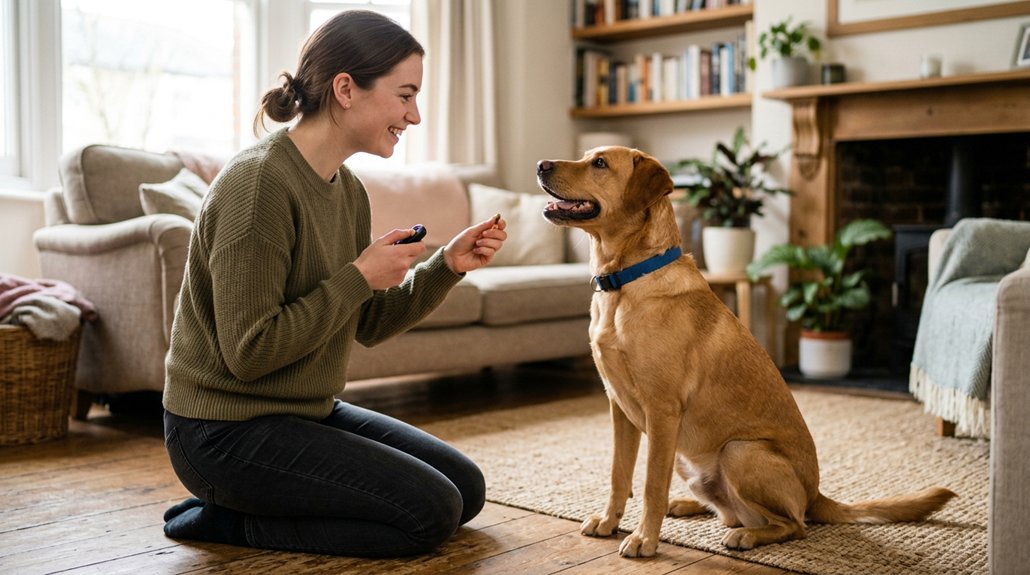
For beginners looking for easy-to-train dog breeds, consider Labrador Retrievers, Golden Retrievers, and Poodles. These breeds excel due to their intelligence, willingness to please, and responsiveness to positive reinforcement techniques. Labradors and Goldens thrive on family interaction and exercise, while Poodles offer an added hypoallergenic benefit across their size varieties. Each breed’s unique qualities make training a rewarding experience. Explore further to find the perfect match for your lifestyle and training goals.
Key Takeaways
- Labrador Retrievers are highly intelligent and responsive to treat-based training, making them ideal for beginners.
- Golden Retrievers combine high trainability with a gentle demeanor, aiding effortless training for novice owners.
- Poodles, known for exceptional intelligence, learn obedience commands quickly across all sizes, suitable for beginners.
- German Shepherds’ loyalty and intelligence enhance trainability when consistent training and early socialization are provided.
- Papillons rank among the most trainable breeds due to their intelligence and eagerness to please new owners.
What Makes a Dog Easy to Train?
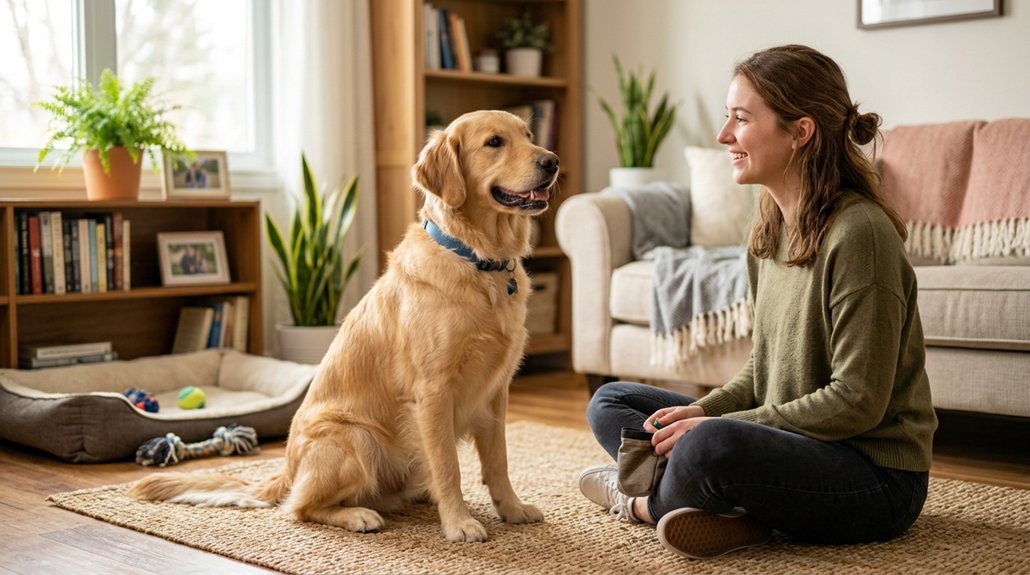
Ever wonder why some dog breeds learn new tricks effortlessly while others take a bit more time? It often comes down to their training motivation and learning style. Dogs with high obedience intelligence, like Labradors and Golden Retrievers, excel because they’re naturally inclined to respond to cues quickly, driven by strong food motivation. This means a tasty treat can work wonders in keeping them focused and enthusiastic. Ensuring short, engaging training sessions of 10–15 minutes optimizes their concentration. Exposure to various environments bolsters their adaptive intelligence, making them more competent command-followers. Positive reinforcement is the cornerstone of effective dog learning, establishing trust and forging a strong bond between you and your furry friend, turning training into an enjoyable experience.
Why Labrador Retrievers Suit Beginners Best
Due to their remarkable intelligence and enthusiasm to please, Labrador Retrievers are considered one of the best breeds for novice dog owners. Their intelligent and friendly Labrador temperament makes them exceptionally easy to train. Here’s why they suit beginners so well:
- High Intelligence: Labradors have a keen ability to understand commands quickly, making training sessions effective and rewarding.
- Positive Reinforcement: With a natural food drive, they respond well to treats, allowing simple and successful training techniques.
- Adaptability: Labradors adjust smoothly to various living environments, making them ideal for families and different home settings.
- Exercise Enthusiasm: Regular activity is essential for their health, and Labradors’ love for fun can transform training into an enjoyable bonding exercise.
Why Golden Retrievers Excel as Family Pets
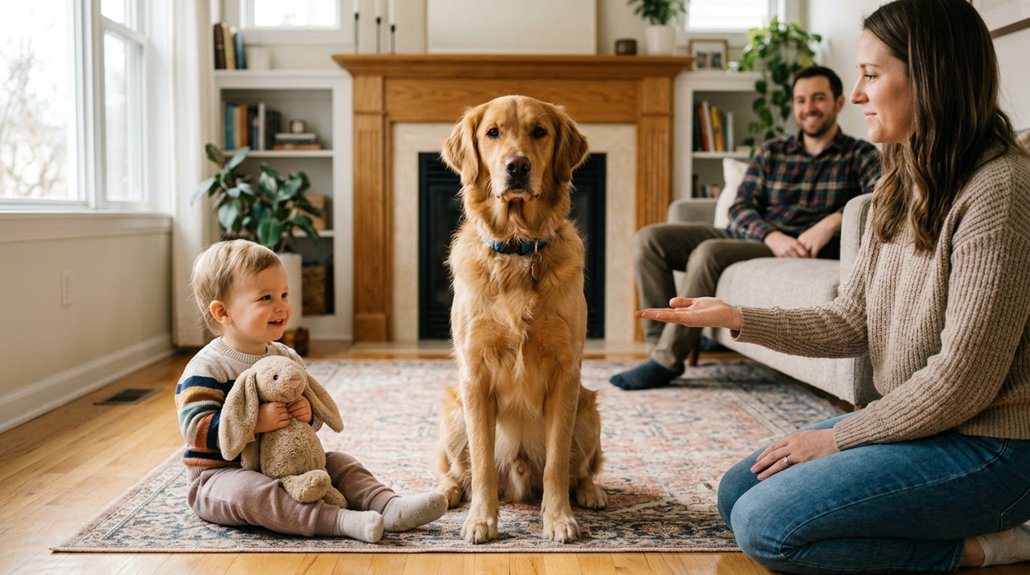
Golden Retrievers are often hailed as premier family pets, thanks to their remarkable trainability and gentle demeanor. If you’re looking for a dog with a consistently friendly and patient attitude, the Golden Retriever’s temperament fits perfectly. They’re particularly responsive to commands, making training straightforward—ideal for beginners. Their willingness to please enhances family bonding, as they thrive on interaction and companionship. Golden Retrievers excel as companions for children, encouraging socialization and instilling confidence. Active families will appreciate their need for regular exercise, making them great partners for outdoor fun. Additionally, their sociability and adaptability mean they adjust well to various living environments, whether spacious homes or cozy apartments. Incorporating a Golden Retriever into your family promises a loyal, versatile friend for years.
Poodles: Intelligence in Multiple Sizes
Poodles, available in three distinct sizes—Standard, Miniature, and Toy—are universally recognized for their exceptional intelligence, making them extraordinarily adaptable companions. Their high intelligence, combined with a Poodle’s versatility, allows them to excel in various environments. If you’re considering a Poodle, you’ll find:
Poodles’ intelligence and versatility make them exceptionally adaptable companions across various environments.
- Strong Desire to Please: Poodles are enthusiastic learners, keen to master new commands through a few repetitions.
- Obedience Excellence: Perfect for beginners seeking obedience, their quick responsiveness makes training a breeze.
- Hypoallergenic Poodle Coat: Their coat benefits allergy-sensitive families, adding to their beginner-friendly appeal.
- Engagement Requirement: Regular mental and physical stimulation keeps Poodles happy and well-adjusted.
Poodles provide both adaptability and adeptness, making them a smart choice for any dog-lover.
Cavaliers: Small Dogs With Big Hearts

Cavalier King Charles Spaniels, often fondly referred to as Cavaliers, are beloved for their small size and enormous hearts. Known for their affectionate and gentle nature, Cavaliers make ideal companions for families and individuals. Their Cavalier personality traits include being highly intelligent and keen to please, which makes them easy to train with positive reinforcement. Weighing between 13 to 18 pounds, they fit well in various living environments. With moderate energy levels, they enjoy daily walks and playtime but are perfectly happy to relax with you.
Don’t forget about their Cavalier grooming needs—these dogs boast beautiful, silky coats that require regular grooming. You’ll need to prevent tangles and maintain their charming appearance, ensuring they remain the heartwarming pets you adore.
Navigating German Shepherd Loyalty
When you’re steering through the remarkable loyalty of a German Shepherd, building a strong trust foundation is essential to maximize your bond. By addressing their natural guarding instincts and enhancing this connection through consistent training, you’ll nurture a relationship defined by mutual respect and understanding. Your investment in early socialization and clear communication will guarantee your German Shepherd becomes a devoted and reliable family companion.
Building Trust Foundations
Loyalty is the cornerstone of a German Shepherd’s relationship with its owner, fostering deep trust and enhancing their trainability. To cultivate such a bond, you’ll need effective trust-building techniques and loyalty reinforcement. Here’s a guide to build these foundations:
- Consistent Training: Stick to a regular training schedule using positive reinforcement to encourage desired behaviors and establish trust.
- Early Socialization: Introduce your German Shepherd to various environments and people early on to guarantee they’re well-adjusted and loyal to family.
- Regular Exercise: Provide ample opportunities for physical activity to reduce anxiety and keep them focused and obedient.
- Engage in Interactive Play: Activities like obedience games strengthen your bond, making your dog more responsive and trustworthy.
These strategies support a strong and enduring relationship.
Managing Guarding Instincts
While owning a German Shepherd can mean having a loyal and protective companion, managing their natural guarding instincts requires deliberate effort and understanding. You need to focus on early socialization techniques to guarantee your dog learns appropriate behavior around strangers and other animals. Consistent obedience training and behavior modification with positive reinforcement will channel their instincts effectively. Establish yourself as a confident leader to prevent dominant guarding tendencies. Regular physical and mental exercises are essential to reduce boredom and unnecessary guarding.
Here’s a helpful table for managing guarding instincts:
| Essential Steps | Benefits | Tips |
|---|---|---|
| Early Socialization | Reduces overprotectiveness | Introduce to various environments |
| Consistent Training | Strengthens obedience | Use positive reinforcement |
| Confidence Leadership | Prevents dominance | Set clear boundaries and rules |
| Mental/Physical Exercise | Alleviates boredom | Engage in daily walks and activities |
Enhancing Bond Through Training
Building a strong bond with your German Shepherd is a natural progression from managing their guarding instincts effectively. Their loyalty shines through when you engage them with positive reinforcement and clear communication techniques. Their intelligence means they’ll pick up commands quickly, fostering a bond as you both learn and grow. Here’s how to enhance your connection:
- Positive reinforcement: Reward correct behavior promptly with treats or praise.
- Clear communication techniques: Use consistent commands and body language so they understand expectations.
- Regular exercise: Provide mental and physical stimulation through walks and interactive play.
- Early socialization: Expose your pup to various environments, people, and animals from a young age to manage guarding tendencies.
Investing time in these practices will keep your German Shepherd happy and engaged.
Papillons: Surprising Intelligence in Compact Form
Papillons, with their butterfly-like ears and expressive eyes, might seem like just another small, fluffy companion, but they’re packed with intelligence beyond their size. Ranking among the top breeds for trainability, they’re quick learners, enthusiastic to master commands and tricks. Their alertness and desire to please make training sessions enjoyable and successful. In dog sports, Papillon agility shines as these spirited dogs navigate courses with speed and precision. They thrive on mental challenges, making them excellent at Papillon problem solving. Despite their compact stature, they’re highly responsive to various training methods. Early socialization and consistent training magnify their innate abilities, turning them into delightful companions. Papillons’ adaptability and intellect make them an ideal choice for first-time dog owners seeking an engaging, smart pet.
Training Tips for Easy Breeds
Many new dog owners find training easy-going breeds to be a rewarding experience when done with the right approach. A proper training environment and reward systems are essential for these breeds. Here’s how to set yourself and your pup up for success:
Training easy-going dog breeds with the right approach leads to a rewarding experience for new owners.
- Start Early: Begin training between 8-10 weeks to establish good habits and socialization early on.
- Utilize Positive Reinforcement: Reward systems like treats and praise encourage desired actions, strengthening your bond.
- Keep Sessions Short: Limit training to 10-15 minutes to keep your dog’s attention and enthusiasm, vital in maintaining an effective training environment.
- Consistency is Key: Use consistent commands and signals to reinforce learning through repetition, ensuring your dog understands your expectations.
Focus on these strategies to nurture a well-behaved companion.
Match Your Lifestyle With the Right Dog
Once you’ve honed your training skills with easy-going breeds, it’s important to find a dog that aligns with your lifestyle. Conduct a lifestyle assessment by considering your space, time, and family dynamics to guarantee breed compatibility. If you have limited space, smaller breeds like Pugs adapt well, whereas larger breeds thrive with room to roam. Active breeds need substantial exercise, so evaluate your schedule. Additionally, consider children’s ages—gentle breeds like Labradors are ideal for younger kids.
| Lifestyle Factor | Ideal Breed Suggestions |
|---|---|
| Space | Small: Pugs; Large: Labradors |
| Activity Level | High: Beagles; Moderate: Shih Tzus |
| Family with Children | Young Kids: Golden Retrievers |
| Grooming Needs | Low-Maintenance: Miniature Schnauzers, Poodles |
Analyze these elements for the perfect furry fit!
Frequently Asked Questions
What Is the Most Easiest Dog Breed to Train?
The Labrador Retriever’s known for its enthusiastic-to-please attitude and intelligence, making it the easiest breed to train. You’ll find positive reinforcement and consistent training techniques particularly effective, ensuring quick learning and a rewarding bond.
What Is the 7 7 7 Rule for Dogs?
The 7-7-7 rule for dogs emphasizes gradual adjustment post-adoption. In week one, expect stress; week seven, establish routines with positive reinforcement; month seven, reinforce dog training techniques for socialization, ensuring patience and consistency.
What Is the Easiest Dog Breed for Beginners?
You’ll find best beginner breeds like Labrador Retrievers, Golden Retrievers, and Cavaliers are easiest for new owners. Embrace consistent training techniques using positive reinforcement, ensuring you build a strong, cooperative bond with your new furry friend.
How Do Dogs Say “I Love You”?
Did you know 94% of dog owners feel loved by their pets? Dogs express “I love you” through their body by tail wagging, leaning into you, and maintaining eye contact, strengthening the bond you both share.
Conclusion
In the journey of dog companionship, choosing the right breed is like selecting the perfect key for a lock. For beginners, breeds like Labrador Retrievers, Golden Retrievers, and Poodles provide an open door to a harmonious relationship, thanks to their intelligence and adaptability. Cavaliers and Papillons offer affectionate, compact options, while German Shepherds bring steadfast loyalty. Matching your lifestyle with the right breed guarantees a fulfilling bond, paving the way for a rewarding training adventure.