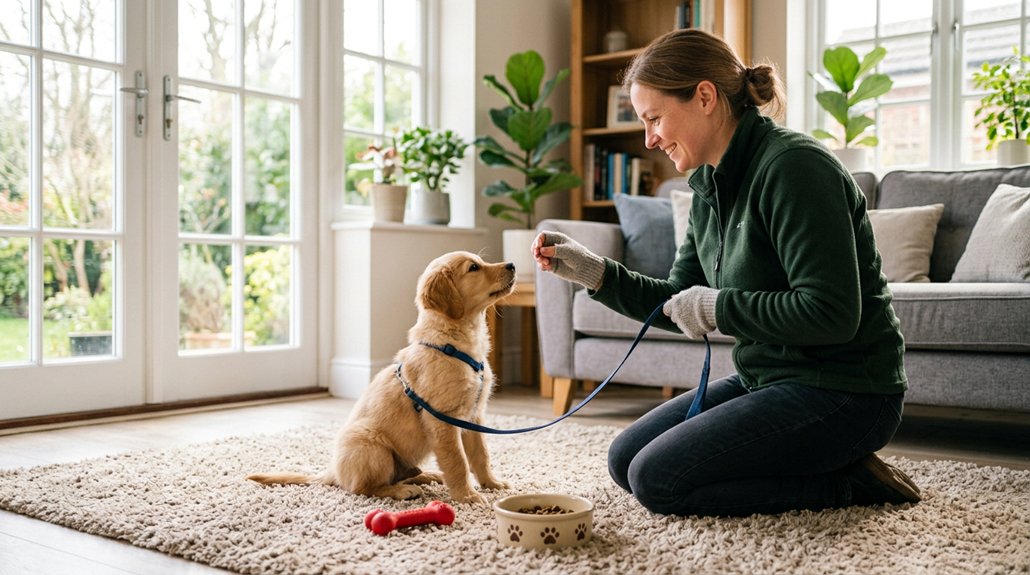
Begin basic puppy training at 8 weeks using positive reinforcement like treats and praise. Keep sessions brief to maintain focus and establish consistency. Prioritize early socialization by exposing your puppy to various environments and beings, ensuring experiences remain positive. Start potty training and crate use early to build strong habits. Teach key commands gradually, maintaining a calm setting. Proper gear introduction and short, pleasant car rides will ease adjustment. Explore specific techniques for a well-rounded puppy development.
Key Takeaways
- Begin training at 8 weeks using positive reinforcement with treats, praise, or play to encourage desired behaviors.
- Maintain short training sessions of about 5 minutes to enhance focus and learning.
- Ensure early socialization between 12-16 weeks to build confidence and adaptability in diverse environments.
- Establish a consistent routine for potty training and reward successful outdoor eliminations.
- Gradually introduce and positively reinforce the use of training gear in a stress-free environment.
Starting Puppy Training: What You Must Know Now
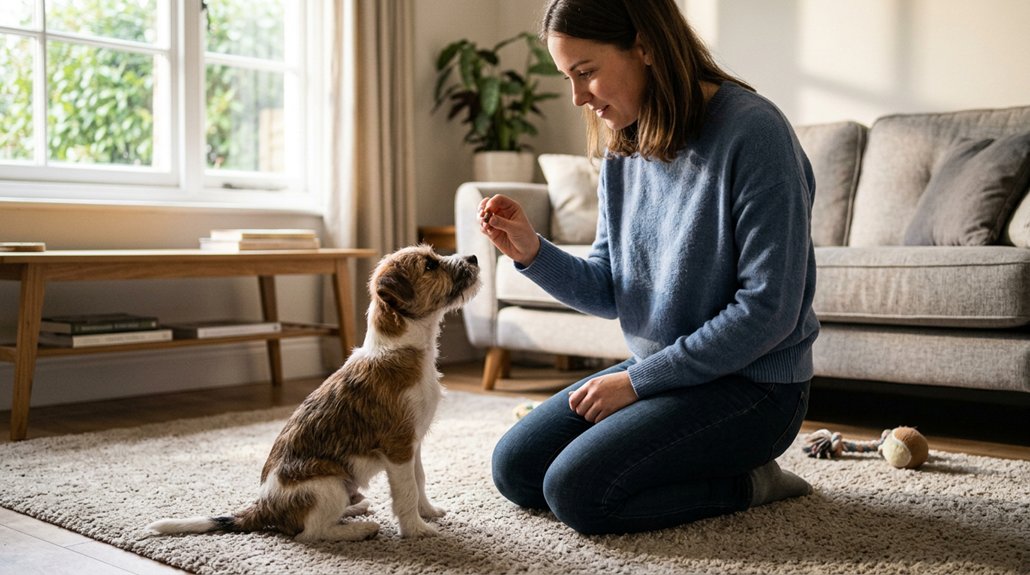
When undertaking the journey of training your new puppy, it’s important to understand the basics to guarantee both success and a positive bonding experience. Begin training your puppy as soon as they arrive home, ideally at 8 weeks old, to make the most of the critical learning period between 6 to 16 weeks. Implement effective training techniques by employing positive reinforcement exclusively; offer treats, praise, or play when they display desired behavior. This approach will engage your puppy and enhance their learning experience. Maintain short training sessions of about 5 minutes to hold their attention and improve command retention. Consistency is key; establish a regular puppy training timeline and reinforcement schedule, creating a secure environment that boosts your puppy’s confidence and understanding.
Prioritize Early Socialization for Your Puppy’s Success
It’s essential to focus on socializing your puppy during the critical window of 12-16 weeks to shape their future behavior and confidence. During this time, expose your pup to various environments, people, and objects, ensuring experiences are positive and diverse to encourage adaptability. Remember, gentle, rewarding interactions during these formative weeks can prevent future anxiety and lead to a well-rounded and happy adult dog.
Timing Matters for Socialization
A critical window of opportunity exists between 8 and 16 weeks of age where your puppy is most open to new experiences and interactions, making early socialization paramount. During this stage, socialization techniques are essential in shaping your puppy’s temperament and fostering a well-rounded dog. Begin by introducing your puppy to various environments, people, and gentle animals. This exposure helps them develop confidence and adaptability. Always guarantee these interactions are positive, as they influence how your puppy views the world. Avoid situations that might overwhelm or frighten them, as negative experiences can lead to aversions. By investing in early socialization, you’re laying down the groundwork for a well-adjusted companion who can navigate life’s challenges without fear or anxiety.
Diverse Experiences Are Critical
Building on the importance of timing, it’s just as essential to focus on providing your puppy with a variety of experiences early on. Early exposure variety not only helps prevent behavioral issues but also fosters interaction confidence. To guarantee a well-adjusted puppy, consider these points:
- Meet Diverse Individuals and Animals: Encourage your puppy to interact with different people and dogs. This builds social confidence and reduces anxiety.
- Explore Varied Environments: Introduce your puppy to new settings, sights, and sounds through short, supervised outings. This promotes adaptability and curiosity.
- Offer Positive Encounters: Make each experience calm and pleasant to avoid long-lasting fears.
Get Puppy Potty Training Right From the Start
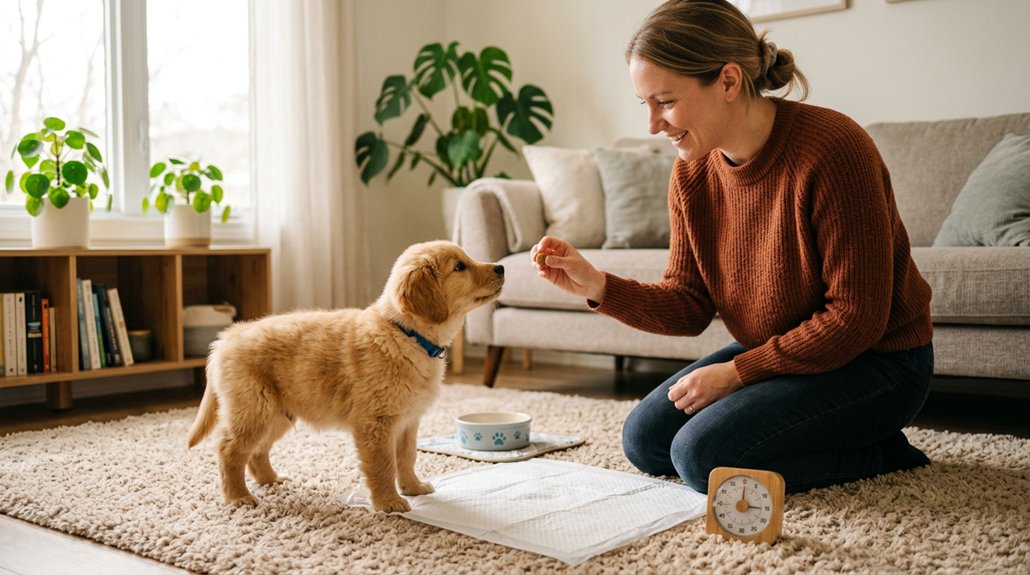
Starting potty training with your puppy at around 8 weeks is essential, and consistency will support their learning process. Take them outside frequently and watch for signs like sniffing or circling, offering praise when they successfully go in the right spot. Avoid potty pads, as they can confuse your puppy and delay their understanding of where to eliminate.
Focus on Consistent Routine
When adapting your puppy to their new home environment, establishing a consistent routine is crucial, especially when it comes to potty training. Early training, typically between 8 to 12 weeks, lays the groundwork for developing strong habits. Consistency offers numerous routine benefits:
- Regular Timing: Take your puppy outside every 30 minutes and after key activities like meals, play, and naps. This routine prevents accidents and strengthens outside associations.
- Designated Spot: Choose a specific outdoor area for potty breaks. This teaches your puppy where it’s appropriate to relieve themselves, enhancing their understanding.
- Observation: Watch for sniffing or circling behaviors. Acting promptly guarantees accidents are minimized and reinforces the importance of going outside.
Implementing these strategies fosters successful training outcomes and a harmonious home environment.
Eliminate Potty Pad Usage
Quite often, the well-intentioned use of potty pads can inadvertently hinder effective potty training. While it’s tempting to rely on them, they can confuse your puppy about acceptable elimination areas. By focusing on outdoor routines from the start, you create a clear, lasting potty training habit. Consistent outdoor potty training helps develop bladder control, typically achieved by 12 to 16 weeks.
A regular schedule is essential:
| Situation | Outdoor Action |
|---|---|
| First thing in the morning | Take puppy outside immediately |
| After meals | Walk outside straight after eating |
| After play | Head outside post-playtime |
| Before bed | Last trip outside at night |
| Accidental messes | Gently redirect to outdoors |
Remember to reward your puppy when they eliminate outdoors, reinforcing their understanding of the correct behavior.
Teaching Key Commands: Sit, Stay, and Come for Better Behavior
As you commence on the journey of teaching your puppy key commands like “Sit,” “Stay,” and “Come,” it’s important to remember that patience and consistency are your greatest allies. Knowing effective training techniques is essential in embedding these commands into your puppy’s behavior. First, teach “Sit” by rewarding sitting naturally or luring them with a treat—start in a calm setting to manage distractions. Second, for “Stay,” position your puppy in “Sit,” command, and slowly increase the distance before rewarding. Thirdly, a quiet space is ideal for the “Come” command, using treats to encourage their return. Remember:
- Use positive reinforcement.
- Practice in short, engaging sessions.
- Increase complexity gradually.
Your persistence will build trust and strong command responsiveness.
Teach Your Puppy Loose-Leash Walking
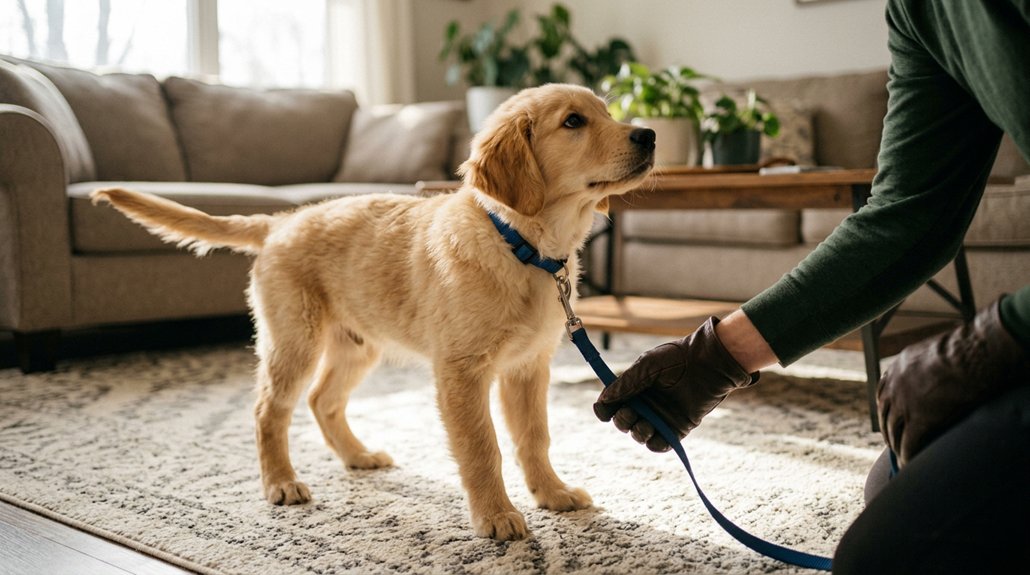
Introducing your puppy to loose-leash walking is an essential step in their training and forms the foundation for enjoyable walks. Start in a distraction-free environment, which helps with effective distraction management. Use a consistent cue, like “let’s go,” paired with reward timing, to reinforce when they walk beside you. When your puppy pulls, stop or turn to bring their focus back. This teaches that a slack leash leads to rewards.
| Training Step | Key Focus |
|---|---|
| Start in a calm environment | Distraction management |
| Use a cue (“let’s go”) | Consistent communication |
| Stop when the puppy pulls | Encourage leash slack |
| Gradually increase complexity | Focus and engagement |
Allow brief exploration but reward slack leash behavior. Vary pace and direction to maintain their attention.
Help Your Puppy Love Their Gear and Car Rides
With your puppy now getting the hang of loose-leash walking, it’s time to focus on helping them feel comfortable with their gear and enjoy car rides. Start with gear acclimatization by introducing collars and leashes gradually. Let them experience these during play or feeding, reinforcing with treats for a positive association. As for car ride tips, begin with short, stress-free trips, progressively increasing length. Here’s how to make the process smooth:
Help your puppy feel at ease with gear and car rides using gradual introductions and positive experiences.
- Comfort Essentials: Allow your puppy to wear gear briefly while engaged in activities they love.
- Motivational Tools: Use positive reinforcement during gear introduction and car rides to guarantee they’re pleasant experiences.
- Distraction Techniques: Employ food-stuffed toys during car journeys to minimize anxiety, monitoring for any signs of stress.
Consistency and Positive Reinforcement: Keys to Success
If you want your puppy to thrive in basic training, consistency and positive reinforcement are essential elements that guarantee success. Establishing a clear training environment with set expectations reduces confusion and promotes faster learning. Keep sessions short, around five minutes, to maintain focus and enthusiasm.
Here’s a quick guide:
| Consistency | Positive Reinforcement | Family Involvement |
|---|---|---|
| Clear Commands | Treats or Praise | Uniform Expectations |
| Routine Training | Immediate Rewards | Consistent Reinforcement |
| Short Sessions | Positive Environment | Unified Communication |
| Regular Practice | Celebrating Success | Shared Responsibility |
| Predictable Schedules | Encouraging Words | Avoid Mixed Signals |
Routine aids stability, thereby fostering confidence. As each family member consistently reinforces training, the puppy enjoys a secure learning experience devoid of mixed signals. Your dedication shapes a well-behaved companion.
Building Confidence Through Confinement and Crate Training
Crate training is an essential tool in building your puppy’s confidence, providing them a safe and secure retreat that reduces anxiety in unfamiliar situations. Start with gradual introduction techniques to develop positive crate associations. This encourages voluntary use, boosting their comfort and self-soothing skills. Try these three steps:
Building your puppy’s confidence begins with crate training, providing a safe retreat and reducing anxiety with positive crate associations.
- Positive Reinforcement: Offer treats and praise when your puppy enters the crate willingly. Positive experiences create a sense of belonging.
- Confined Relaxation: Allow short, calm periods of rest inside to teach relaxation. It helps them adapt, increasing emergency readiness.
- Crate Comfort: Make certain your puppy’s crate is spacious and cozy. A welcoming environment reinforces that it’s a safe space.
Approach crating gently and patiently, nurturing your puppy’s confidence and emotional resilience.
Frequently Asked Questions
What Is the 3-3-3 Rule With Puppies?
The 3-3-3 rule highlights the shift stages puppies experience: 3 days to adapt, 3 weeks to establish routine, and 3 months to feel secure. Focus on socialization’s importance and use positive reinforcement throughout this process.
What Is the First Thing You Should Train a Puppy to Do?
Start with the “sit” command to establish clear communication. You can gradually incorporate leash training, potty training, and socialization skills. Keep sessions short and consistent, rewarding them with treats and praise to reinforce positive behaviors effectively.
What Is the 7 7 7 Rule for Puppies?
Imagine your puppy’s first weeks as a canvas of discovery. The 7 7 7 rule paints their socialization milestones, guiding you to introduce seven people, environments, and experiences. This gentle approach employs training techniques to nurture confidence.
When to Start Basic Training a Puppy?
Start basic training around 8 weeks when puppy readiness signals align with training age milestones. Emphasize short sessions, focusing on commands like “sit” and “stay,” fostering a lifelong learning foundation. Patience and consistency will guarantee your puppy’s success.
Conclusion
Remember, patience is key when training your puppy. Early socialization, consistent potty training, and teaching commands like sit, stay, and come will lay the groundwork for a well-behaved companion. Introduce them to loose-leash walking and help them feel comfortable with their gear and car rides. As the saying goes, “Rome wasn’t built in a day.” By using positive reinforcement and building confidence through crate training, you’re setting your puppy up for success. You’re not just training a pet—you’re nurturing a lifelong friend.