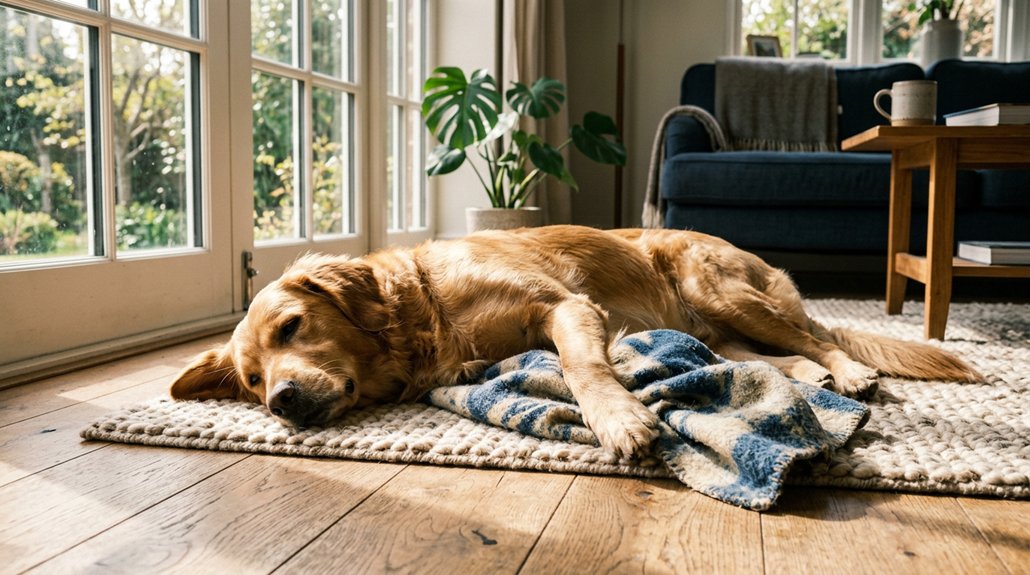
You’ll know your dog is comfortable in your home when you observe relaxed body language, such as a softened posture and natural tail position. They seek affection and exhibit energetic play behaviors, like zoomies or toy interactions, indicating emotional security. Consistent eating habits and restful sleep patterns are key indicators of their comfort level. Engaging in social interactions and affectionate gestures reflects strong emotional bonds. Understanding these signs will deepen your insight into your dog’s well-being and happiness.
Key Takeaways
- Relaxed body language and natural tail position suggest comfort at home.
- Playful behavior and toy engagement indicate a secure and accepting environment.
- Consistent eating habits without food guarding denote trust in surroundings.
- Enthusiastic greetings and affection-seeking show emotional bonding with the owner.
- Restful sleep with closed eyes and calm posture reflects safety and security.
How to Tell if Your Newly Adopted Dog Is Adjusting Well

When analyzing your newly adopted dog’s adjustment to its new home, you’d want to focus on several key behaviors that indicate comfort and security. Observing relaxed body language, like a softened posture and natural tail position, provides invaluable insight into their emotional state. Incorporate socialization strategies by facilitating enthusiastic greetings with wagging tails and playful vocalizations; these interactions are essential for strengthening bonds. Examine their approach to meals—consistent, unhesitant eating with a healthy appetite reflects stability. Environment enrichment is vital; a dog’s engagement in play and curiosity signifies growing confidence. Finally, restful periods with closed eyes and relaxed posture confirm trust and safety. Together, these observations form a robust framework for evaluating successful adaptation and well-being in your dog’s new environment.
Spotting Relaxed Dog Language
Recognizing relaxed dog language enables owners to assess their pet’s comfort and integration into a new environment. Dogs communicate contentment through subtle cues observable in their behavior and physiology. You should pay attention to key indicators:
Understanding a dog’s relaxed cues helps owners gauge their pet’s comfort in new settings.
- Calm Posture: A dog at ease will adopt a soft, unguarded body position, often complemented by a gentle tail wag, revealing a sense of security.
- Relaxed Ears: Look for ears resting in their natural state, free from tension, paired with a tranquil facial expression and a slightly parted mouth.
- Sleeping Positions: When your dog curls up or lies on its side, it reflects deep-rooted trust and safety in their surroundings.
- Engaging Behavior: The inclination to seek affection and stay close to you confirms their comfort and familial bond.
Understanding Playfulness and Exploration Needs
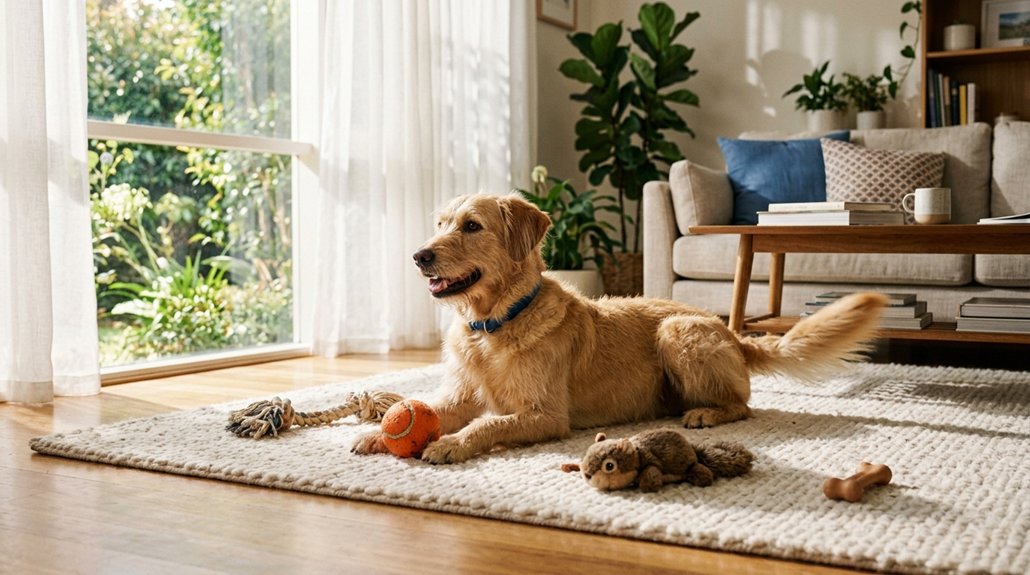
While observing your dog’s behavior, it’s crucial to understand that playfulness and exploration are important indicators of their comfort and well-being. Engaging with interactive toys signals an accepting environment, boosting their security levels. Dogs that pursue playful activities like tug-of-war or entice you into a game of chase are demonstrating emotional security and joyfulness. Energetic bursts, often known as zoomies, and playful barking signify that your dog feels at ease, both physically and mentally. Encourage exploration by providing safe spaces within your home for exploration and interaction. Through observational insights, assess their interaction intensity and their affinity towards exploring various safe zones, ensuring a harmonious environment conducive to forming a strong bond.
| Observational Insight | Behavioral Indicator |
|---|---|
| Engagement with toys | Demonstrates comfort |
| Initiates play | Shows emotional security |
| Energetic play | Positive mental state |
| Exploration in safe zones | Indicates security and ease |
Keep an Eye on Their Eating Habits
A keen observation of your dog’s eating habits can provide numerous insights into their comfort and overall well-being. Dogs with a healthy appetite, who enthusiastically partake in meals without residue, exhibit signs of contentment. It’s crucial to notice their meal preferences and feeding routines, as these can indicate their level of comfort in their surroundings. Look for:
Observing your dog’s eating habits reveals insights into their comfort and contentment.
- Relaxed body language: Loose posture indicates they feel secure during mealtime.
- Absence of food guarding: Consuming food without anxiety shows trust in you and their environment.
- Consistent eating schedule: Regular meal times without interruption denote familiarity and comfort.
- Sudden changes in appetite: A loss of appetite may highlight discomfort or health issues, necessitating veterinary advice.
Monitoring Restful Sleep Patterns
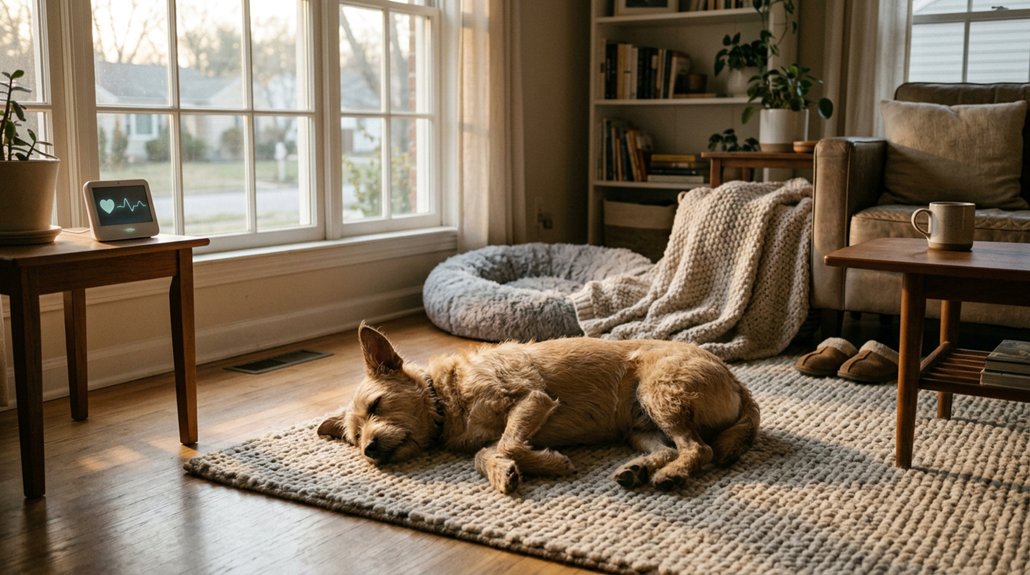
Observing your dog’s sleep patterns can provide critical insights into their comfort and well-being in their environment. Noticing a relaxed body posture and closed eyes during sleep signifies that your pet feels secure. These are key relaxation indicators, consistent with contentment. Calm, regular breathing is a sign that your dog’s sleep behavior reflects a state of relaxation. If your dog sleeps soundly, showing minimal movement, it often suggests they’re experiencing restorative sleep—an indicator of a stress-free environment. Gentle snores or sighs during rest are further signs of comfort and security. Upon waking, a dog that appears alert and energized points toward restorative, restful sleep. Such sleep behavior underscores a high level of comfort within your home.
Seeing Enthusiastic Greetings
You’re likely to notice signs of your dog’s comfort through their enthusiastic greetings, characterized by joyful tail wagging, which indicates excitement and a robust emotional connection. Playful vocalizations, such as barks or yips during these interactions, further emphasize their willingness for social engagement. Additionally, dogs that actively seek affection through behaviors like nuzzling or licking are clearly expressing trust and happiness in your presence.
Joyful Tail Wagging
When dogs greet their owners with a joyful tail wag, it’s not merely a simple hello but a profound expression of affection and happiness. This “happy tail” often triggers a cascade of excitement signals observable in your canine companion’s behavior. The display can include:
- Full-body wiggle: Indicative of uncontainable excitement, creating a synchrony of movement that radiates joy from head to toe.
- Relaxed posture: Approaching you with ease, signifying their comfort and confidence in the surrounding environment.
- Gentle nuzzles: Seeking attention through soft touches, reinforcing a strong bond and emotional assurance.
- Enthusiastic greetings: Regularly occurring, reflecting the dog’s overall sense of safety, happiness, and contentment in your home.
These behaviors underscore your dog’s comfort and highlight an emotionally secure relationship.
Playful Vocalizations
Amidst the encounter with your dog, playful vocalizations, such as spirited barks or exuberant yips, serve as auditory affirmations of their delight and enthusiasm. These sounds convey a robust emotional response, often observed when your dog excitedly greets you. This burst of playful barks and joyful yips highlights their keenness to connect, fostering a deeper bond between you and your canine companion. Observational insights show that these vocalizations are typically accompanied by full-body displays of excitement, further signifying that your dog feels secure within their environment. Clinically, such vocal behaviors indicate positive arousal states, where your dog is not only expressing happiness but also engaging in expressions of trust, reinforcing the overall comfort they experience in their home.
Seeking Affection Actively
As you observe your dog, an enthusiastic greeting is a clear indicator of their comfort and affection. It’s important to recognize the nuanced affection signs that highlight your dog’s comfort levels at home. Several behaviors confirm this bond:
- Joyful Body Movements: A wagging tail and a buoyant stride signal happiness.
- Gentle Nudges and Leans: Initiating contact by leaning in asserts trust and a desire for closeness.
- Vocal Playful Sounds: Barks and yips when reuniting suggest security and willingness to interact.
- Frequent Attention Seeking: Nuzzles, licks, or bringing over toys display positive emotional bonds.
These behaviors are compelling indicators that your canine companion feels both secure and joyful, reflecting heartfelt affection and stable comfort levels in your household.
Frequently Asked Questions
How to Tell if Your Dog Is Happy Living With You at Home?
Observe your dog’s tail wagging with a relaxed posture, indicative of their comfort. They may exhibit playful behaviors and maintain deep, restful sleep patterns. Enthusiastic greetings signal emotional contentment, demonstrating strong bonds and home satisfaction.
What Is the 3-3-3 Rule With Dogs?
The 3-3-3 rule signifies a dog’s adjustment period. Observe stress signals during initial 3 days, changeover to adapting routine over 3 weeks, and finally, look for comfort and bonds forming around 3 months post-adoption.
Which Breed of Dog Is the Most Clingy?
You’ll find that breeds like Labrador Retrievers, Cavalier King Charles Spaniels, and Dachshunds exhibit clingy behaviors. Their strong attachment and affectionate nature make them seek constant companionship, showcasing their dependency and close bonds with their human companions.
How Do You Say “I Love You” in Dog Language?
To say “I love you” in dog language, observe relaxed posture, gentle tail wagging, and soft body lean-ins. These behaviors indicate secure attachment and emotional expression, reflecting your dog’s affectionate intent in a clinically recognizable manner.
Conclusion
Just like a budding flower reveals its petals to the sun, your dog will slowly exhibit behaviors signaling comfort in their new environment. By observing their relaxed body language, playful curiosity, consistent eating habits, restful sleep, and enthusiastic greetings, you can gauge their adaptation effectively. Each sign is a petal unfolding, offering observational insights into their well-being. Trust in your ability to nurture this relationship, ensuring they thrive in your loving home.