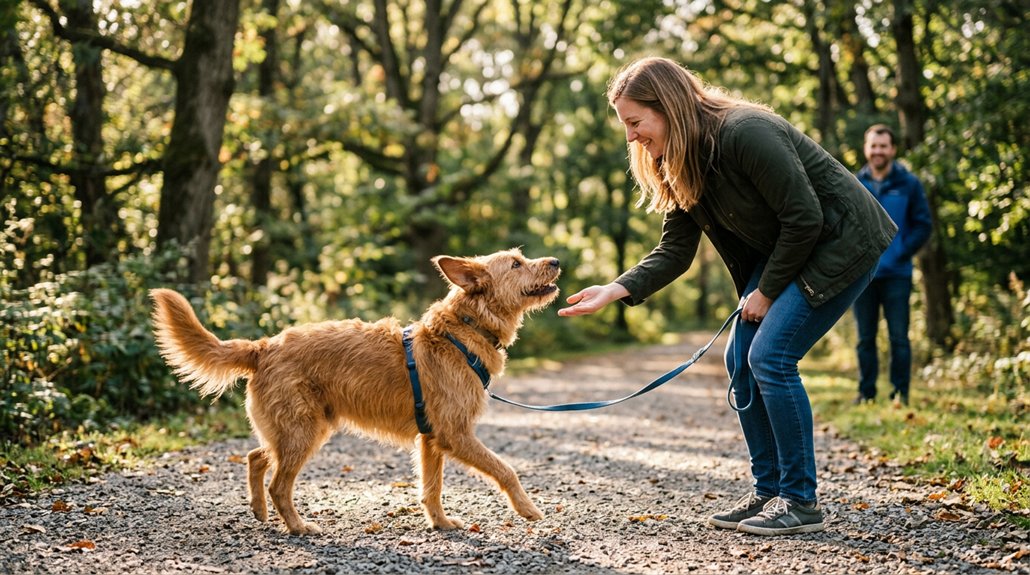
To introduce your dog to new people effectively, understand their body language and comfort signals. Choose familiar, calm settings and allow your dog to set the interaction pace. Reinforce positive behavior with treats and brief guests on respecting dog boundaries. Watch for discomfort signals like lip-licking or tense posture, adjusting interactions accordingly. Make certain your dog has a retreat space for comfort, and consider professional help for persistent anxiety. Learn how these strategies can foster smooth introductions.
Key Takeaways
- Choose familiar, calm settings like your home or a local park to reduce your dog’s anxiety.
- Allow your dog to set the pace for interaction and initiate contact with new people.
- Use treats as positive reinforcement to create a welcoming environment for your dog.
- Educate guests on approaching your dog calmly, avoiding direct eye contact, and recognizing its comfort signals.
- Establish a retreat space for your dog to use during introductions for reassurance and comfort.
Understanding Dog Body Language for Positive Introductions
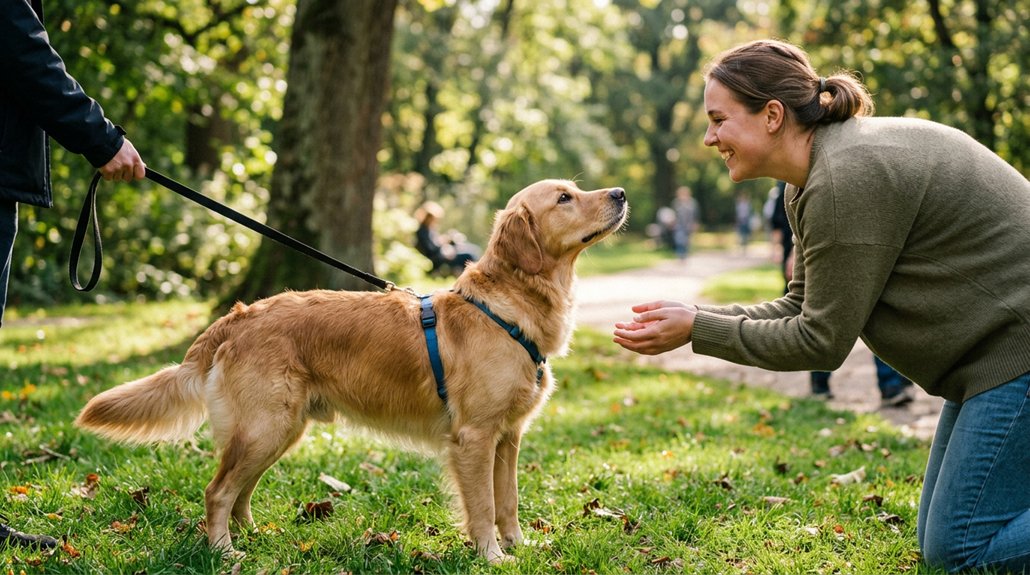
When introducing your dog to new people, it’s important to understand dog body language to guarantee positive interactions. By closely monitoring body language cues, like tail position and ear orientation, you’ll gauge their comfort indicators during introductions. Notice if their tail is wagging or if their mouth is relaxed and open, as these are signs of them being at ease. Conversely, discomfort cues like lip-licking, yawning, or pinned-back ears suggest your dog might need space or a break. Let your dog set the pace of the interaction, encouraging them to initiate contact when they’re ready. Recognizing these cues helps reinforce positive behaviors with treats and praise, strengthening your dog’s confidence in social settings and fostering trusting relationships with new acquaintances.
Selecting Ideal Settings for Dog Introductions
Choosing the right environment for introducing your dog to new people can greatly impact the success of the interaction. Opt for familiar spaces, like your home or a local park, as these settings can help reduce your dog’s anxiety. Outdoor venues are particularly effective, providing both a calming atmosphere and space for your dog to approach new experiences at their own pace. Avoid overcrowded or chaotic areas that might overwhelm your dog, instead choosing quiet lanes or dog parks known for tranquility. It’s essential to arrive early at any unfamiliar location, so your dog can adjust and feel settled. Minimize noise and distractions to create a relaxed atmosphere, fostering a more positive and engaging introduction experience for both your dog and the newcomers.
Allow Dogs to Set the Introduction Pace
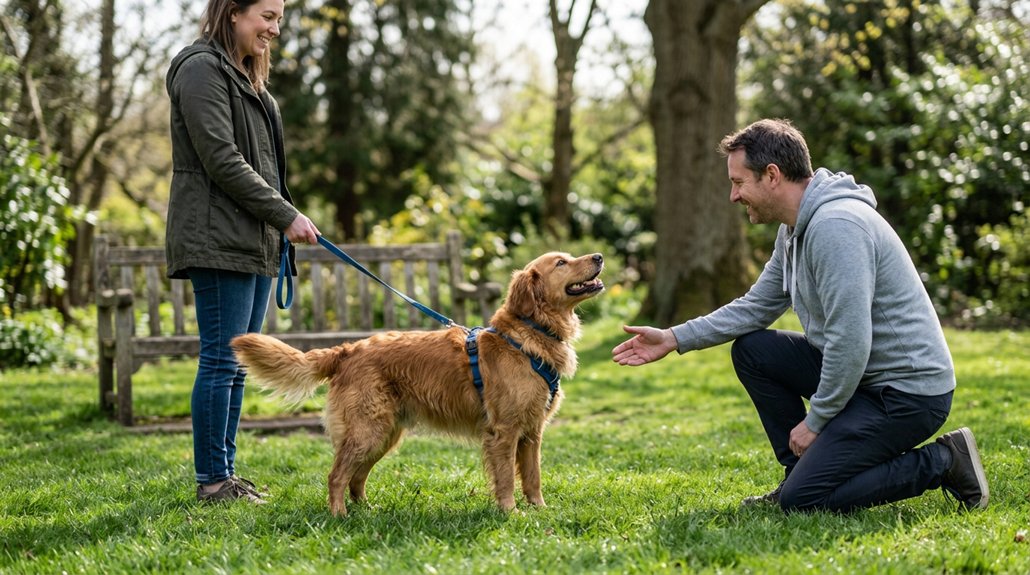
When introducing your dog to new people, it’s essential to recognize their comfort signals, such as relaxed body language and gentle tail wagging, to assess their readiness to engage. Encourage a gradual interaction approach by allowing your dog to initiate contact and rewarding their curiosity, which builds trust and reduces stress. Always respect their personal space boundaries by ensuring the new person maintains a non-threatening posture, such as keeping hands low and avoiding direct eye contact, to create a comfortable interaction environment.
Recognize Canine Comfort Signals
Understanding canine comfort signals is essential when introducing your dog to new people. Observing body language nuances such as a relaxed posture or wagging tail can offer insights into your dog’s comfort. Canine stress signals like tense muscles or tucked tails indicate discomfort, suggesting a need to slow the introduction process. Allowing your dog to approach new individuals at their own pace minimizes anxiety, fostering a sense of control. Newcomers should keep hands at their sides, avoiding direct eye contact, which can be intimidating. This approach lets your dog initiate contact when ready, reducing potential stress. Utilizing toys or soft gestures can encourage engagement, but respect the pace your dog sets, ensuring a comfortable, positive introduction experience.
Encourage Gradual Interaction Approach
It’s essential for your dog’s well-being to allow them to dictate the interaction pace when meeting new people. Let your dog approach at their own speed, promoting control and minimizing anxiety. Initially, new individuals should maintain a safe distance, with hands by their sides. This helps prevent overwhelming or intimidating your dog. Introduce playful engagement by using toys or friendly gestures, encouraging your dog to initiate contact. For more anxious dogs, consider starting introductions through a closed door so they can gradually acclimate to the new person’s presence. Throughout this process, closely observe your dog’s body language for any signals of discomfort, and be ready to pause or retreat if they seem uneasy to guarantee a positive experience.
Respect Personal Space Boundaries
As you foster gradual interaction between your dog and new people, respecting personal space boundaries becomes vital to guaranteeing a positive introduction experience. Understanding dog behavior is essential.
- Allow self-paced approaches: Let your dog approach new individuals at their comfort level, aiding trust-building.
- Recommend hands-off initially: Instruct newcomers to keep hands by their sides, minimizing threat perception for dogs.
- Initiate contact post-familiarity: Once your dog initiates, introduce treats or playful interactions to enhance feelings of safety.
- Use barriers for anxious dogs: Consider closed-door introductions to reduce pressure and ease them into the situation.
Carefully monitor your dog’s body language for signs of stress or discomfort. Recognizing avoidance behaviors and respecting these personal boundaries will guarantee a healthier, stress-free introduction.
Utilize Treats for Positive Reinforcement
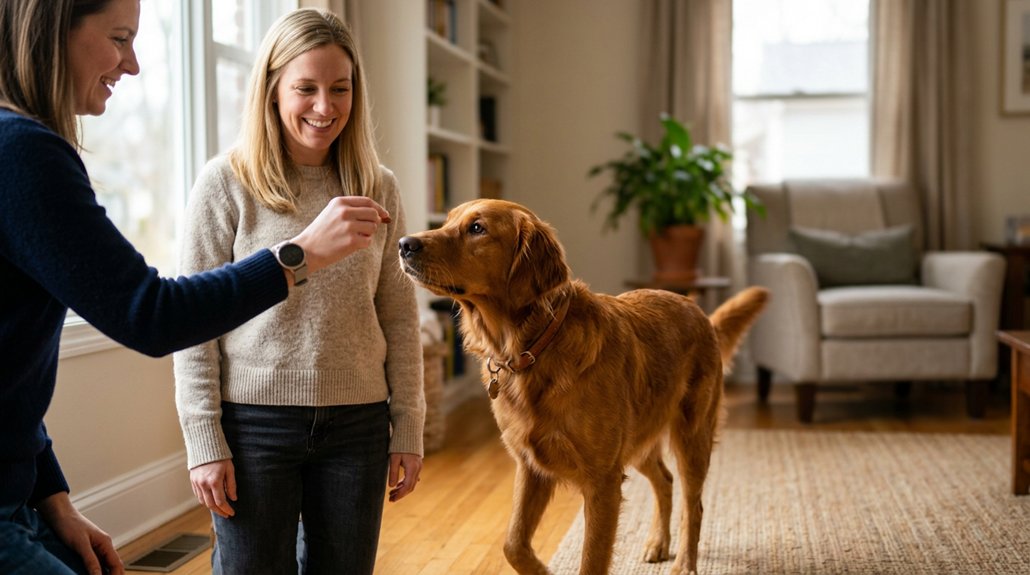
Introducing your dog to new people can be effectively managed by utilizing treats for positive reinforcement. Proper treat timing is essential; offer treats when your dog engages with the new person, reinforcing a positive association. Different treat types can cater to your dog’s preferences, but high-value treats often work best, especially with shy or anxious dogs. Gently toss treats to permit approach on their terms, reducing stress. Extending a treat on a flat palm fosters a sense of control, encouraging voluntary interaction. The new person’s calm and friendly body language also plays an important role, creating a relaxed atmosphere. Together, these strategies make introductions smoother, ensuring your dog associates new people with enjoyable experiences, fostering confidence in social situations.
Briefing Guests: How to Respect Dog Boundaries
When introducing your dog to new people, it’s crucial to brief your guests on recognizing your dog’s comfort signals, such as relaxed body postures or wagging tails. Encourage guests to approach slowly and calmly, avoiding direct eye contact, which can be perceived as a challenge by some dogs. Additionally, setting clear guidelines for interactions, like offering treats on an extended palm and respecting personal space, will help guarantee positive and stress-free introductions for everyone involved.
Recognizing Dog’s Comfort Signals
While observing a dog’s body language might initially seem complex, paying close attention to specific cues like ear position, tail movement, and posture can reveal their comfort level with new people. Understanding these signals can enhance your body awareness and help the dog remain within its comfort zone. To facilitate a positive experience, instruct guests to:
- Stay calm and avoid sudden movements, which can signal anxiety.
- Avoid direct eye contact, as it may feel threatening.
- Greet the dog at a lower level rather than leaning over, reducing feelings of intimidation.
- Let the dog approach when it’s ready, indicating comfort and readiness to engage.
These measures guarantee you’re respecting their boundaries without unintentionally causing stress or fear.
Guidelines for Guest Interactions
Effective interaction guidelines are essential to guarantee positive experiences between your dog and visitors. Start by briefing guests about your dog’s personality, training status, and boundaries. As part of guest preparation, instruct them to greet you first, allowing your dog to observe and acclimate to their presence. Utilize socialization techniques by providing treats near the entrance for guests to leave; this encourages your dog to approach independently. Advise guests to avoid sudden movements, direct eye contact, or reaching toward the dog, which can heighten anxiety. Stress the importance of maintaining a calm demeanor, avoiding loud noises, or crowding to prevent overwhelm. These strategies secure comfort and foster a safe environment, facilitating seamless interactions between your dog and guests.
Establishing a Retreat Space for Dog Comfort
To promote your dog’s comfort and well-being when meeting new people, establishing a retreat space can be highly beneficial. A dog retreat gives them a cozy environment to escape when overwhelmed. Follow these guidelines to create an effective retreat:
Establish a cozy retreat space to ensure your dog feels secure during new social interactions.
- Choose a quiet location: Position the space away from the main activity hub, allowing your dog to feel secure while observing interactions.
- Include familiar items: Stock the area with their favorite toys, blankets, or treats to provide comfort and reinforce a sense of belonging.
- Encourage usage: Allow your dog to retreat during introductions, supporting them when they’re anxious.
- Monitor behavior: Regularly retreating suggests they may need more time to acclimate. Providing this option fosters confidence and reduces stress in social settings.
Recognizing and Responding to Dog Discomfort Signals
Identifying and understanding dog discomfort signals are essential for guaranteeing safe and enjoyable interactions for your pet. Dogs often communicate their unease through subtle body language. Watch for lip licking, yawning, and flattened ears—these cues can indicate anxiety. Excessive panting and a tense posture are also key discomfort signals, suggesting stress. If your dog begins to back away or hide, it’s important to pause and reassess the introduction. Not all signs are negative; a wagging tail, relaxed posture, and curious sniffing show comfort. By acknowledging these early warning signals, you can adjust the situation and foster a more positive experience for your dog. Being observant and responsive to these cues guarantees a smoother social experience.
Ensuring Smooth Home Introductions
While understanding dog discomfort signals is indispensable for guiding interactions, ensuring smooth home introductions helps create a welcoming environment for both your dog and guests. Here’s how to manage dog anxiety and promote proper guest etiquette:
Understanding dog discomfort is key to smooth home introductions for your dog and guests.
- Create a Safe Space: Before guests arrive, establish a quiet area where your dog can retreat if overwhelmed, reducing stress.
- Brief Your Guests: Inform them about your dog’s personality, training status, and behaviors, aligning their expectations with reality.
- Prioritize Human Greetings: Encourage guests to greet you first and let your dog approach when comfortable, preventing any overwhelming impact.
- Promote Calmness and Treat Offering: Advise guests to stay calm, avoid sudden movements or eye contact, and offer treats from a flat palm. This helps dogs feel less pressured and more at ease.
Using Walks to Encourage Gradual Socialization
Incorporating gradual socialization into your dog’s routine can be effectively achieved through structured walks. Strategically choosing walk routes offers exposure to varied environments, fostering adaptable social behaviors. Start with short, frequent walks to familiarize your dog with new surroundings. Engage their curiosity by altering these routes, as this prevents monotony and enhances observational learning.
As you walk, observe your dog’s body language. If discomfort arises when encountering new people, maintain a comfortable distance. Gradually decrease this distance over time, carefully managing stress levels. Use treats to positively reinforce approaching strangers, creating associations with rewarding experiences. Additionally, incorporating toys during walks adds playful stimuli, encouraging relaxation. Over time, these incremental steps will build your dog’s confidence in social settings.
When to Seek Professional Help for Persistent Dog Anxiety
If your dog consistently shows severe anxiety signs like excessive barking, growling, or cowering when encountering new people, it’s essential to seek professional help. A qualified dog trainer or behaviorist can offer specialized strategies, such as desensitization and counter-conditioning, tailored to your dog’s needs. This expert guidance is important for managing anxiety efficiently, particularly when avoidance behaviors hinder your dog’s ability to build confidence and social skills.
Recognizing Severe Anxiety Signs
Severe anxiety in dogs can manifest in various distress signals that you need to recognize to address the issue effectively. Understanding anxiety triggers and how they affect canine coping is essential. Look for these signs of severe anxiety:
- Excessive barking or growling: This behavior during introductions signals the dog is overwhelmed.
- Physical symptoms: Cowering, trembling, and panting indicate discomfort in social situations.
- Avoidance behavior: Hiding or remaining on high alert around new people suggests professional help is needed.
- Disrupted normal activities: Difficulty in engaging in activities like walking or playing points to deeper issues.
Persistent anxiety is more than a temporary reaction; it’s a sign your dog needs tailored strategies from a qualified trainer to build confidence.
Benefits of Professional Guidance
Understanding when to seek professional guidance for persistent dog anxiety can markedly improve the well-being of your furry companion. If your dog persistently cowers, growls, or barks at new people, it might be experiencing fear-based anxiety, warranting professional assessment. Certified trainers excel at estimating body language and will identify discomfort signals accurately, tailoring training strategies to alleviate anxiety. Opting for early intervention from professionals not only aids in desensitizing your dog to unfamiliar scenarios with structured protocols but also boosts social confidence. By integrating techniques like the Click to Calm method, trainers foster positive interactions and minimize future anxiety during introductions. Ultimately, professional guidance guarantees better outcomes, transforming your dog’s experience and enhancing stress management in new settings and encounters.
Frequently Asked Questions
What Is the 3-3-3 Rule for Introducing New Dogs?
The 3-3-3 rule guides behavior expectations during a dog’s adjustment: initial withdrawal, gradual routine establishment, and full acclimatization. Employ positive reinforcement throughout, ensuring the dog feels secure and supported at each of the three phases.
How Long Does It Take for a Dog to Accept a New Person?
It can take anywhere from minutes to weeks for a dog to accept a new person, depending on its behavior and past interactions. To build trust, consistent, gradual exposure paired with positive reinforcement like treats and praise is essential.
What Is the 90/10 Rule Dog?
Imagine trust growing like a garden in a dog’s mind. The 90/10 rule means using positive reinforcement 90% of the time and corrections 10%, tuning into their body language to build confidence and reduce anxiety.
What Annoys Dogs the Most?
Dogs can get annoyed by ignoring their body language. Watch for stress signals like growling or avoiding eye contact. Your behavior is vital; respect their space and practice proper socialization tips to prevent discomfort or anxiety.
Conclusion
Incorporating these strategies can greatly ease your dog’s social interactions. Did you know that approximately 40% of dogs experience anxiety in new social situations? By understanding their body language and using controlled settings, you empower your dog to adapt comfortably. Remember, patience is key; allow your dog to dictate the pace, and reward their progress. If anxiety persists, don’t hesitate to seek professional help. With consistent effort, you’ll foster positive experiences for your dog and their new acquaintances.