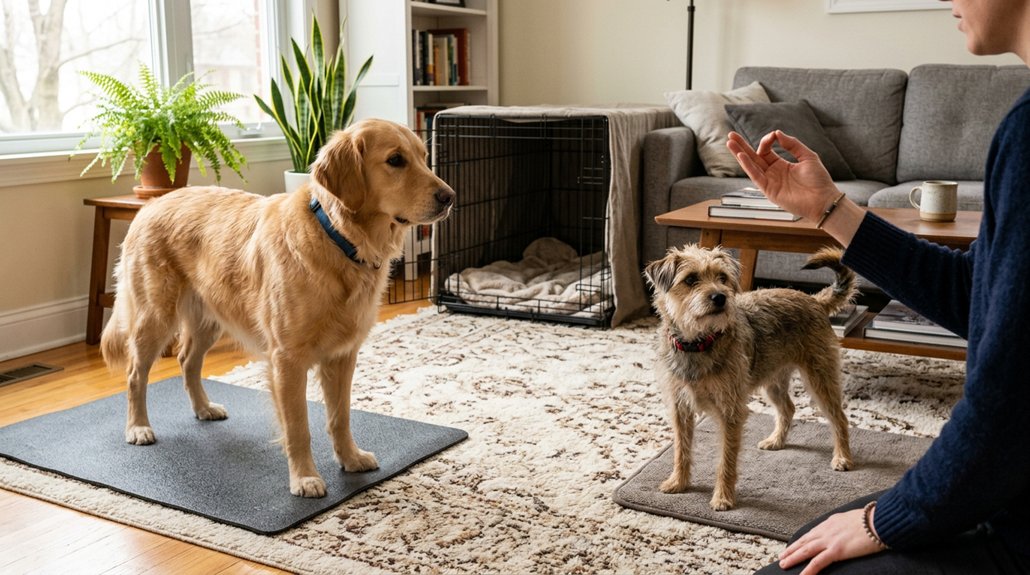
To prevent conflicts between dogs at home, identify triggers like resource guarding and unmet needs. Use positive reinforcement to encourage sharing and monitor interactions to anticipate aggression. Establish clear leadership with consistent training on commands like ‘sit’ and ‘stay’ to reinforce authority. Engage dogs in structured play and designate separate spaces to reduce competition. Regularly monitor behaviors and adapt strategies as necessary. Understanding these foundations will lead you to greater harmony in your multi-dog household.
Key Takeaways
- Monitor and remove contentious objects to minimize competition and prevent conflicts between dogs.
- Use positive reinforcement to encourage sharing and discourage resource guarding behaviors.
- Provide regular exercise and structured interactions to alleviate frustration and reduce conflict triggers.
- Establish consistent leadership and routines to lower anxiety and maintain harmony among dogs.
- Supervise interactions closely and document incidents to better understand and manage triggers.
Understanding Why Dogs Fight at Home
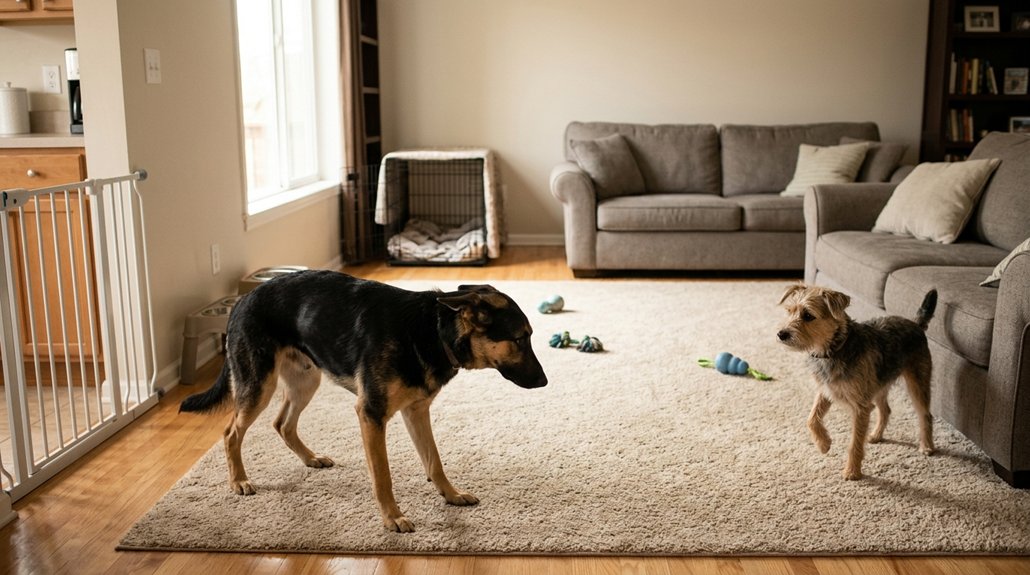
While understanding the underlying reasons why dogs fight at home can be complex, it’s vital to recognize that these conflicts often stem from basic issues such as resource guarding and unmet needs. Canine socialization plays a pivotal role, as poorly socialized dogs may misinterpret social cues, leading to heightened stress. Behavioral triggers, such as competition over food, toys, or attention, are common catalysts that can escalate into more serious confrontations. Additionally, lack of exercise and structured interactions provoke frustration, manifesting as conflict. Creating a balanced environment where each dog’s needs are consistently met, and where clear leadership is established, can mitigate these behavioral triggers. Addressing these foundational elements provides a stable framework to reduce tension and foster harmonious coexistence.
Recognize Aggression Triggers in Dogs
To effectively prevent dog conflicts at home, you should focus on identifying stress factors and analyzing behavior patterns that could lead to aggression. Understanding resource guarding is essential, as it’s often a primary trigger for tension between dogs. Pay close attention to the subtle shifts in body language and social cues that may indicate anxiety or competition, enabling you to implement strategies that mitigate potential conflicts.
Identifying Stress Factors
When confronting aggression between dogs in a household, understanding the stress factors that trigger such behavior is vital. Recognizing stress signals amidst environmental factors is fundamental. Consider these aspects:
| Stress Signals | Environmental Factors |
|---|---|
| Tense body language | Limited resources |
| Growling and snarling | Changes in routine |
| Avoidance or retreat | Overcrowded spaces |
| Over-grooming | Sudden loud noises |
| Excessive barking | Presence of strangers |
Aggression might stem from competition over resources such as food or toys, making resource management imperative. Observing how certain interactions, like overly enthusiastic greetings, affect your dogs can help you identify triggers. Keeping detailed accounts of aggressive incidents—assessing context and environmental influences—provides insights to alleviate tension and reduce conflict. Effective supervision and understanding each dog’s communication cues are key strategies to mitigate aggression.
Analyzing Behavior Patterns
Recognizing aggression triggers in dogs requires a keen eye for detail and an analytical approach to their behavior patterns, as understanding these cues can be essential in managing household harmony. By observing and documenting incidents where aggression arises, you can pinpoint specific triggers such as resource competition or attention-seeking behaviors. Canine communication is nuanced; posturing and social signals often defuse tensions if interpreted correctly. Identifying consistent patterns in the context of these incidents—whether they relate to food, toys, or owner attention—can guide you in adopting proactive strategies. Supporting the more confident dog while gently discouraging challenges from the subordinate can maintain balance. Consulting behaviorists can further clarify these dynamics, providing insight into dominant and submissive roles within your pack.
Understanding Resource Guarding
How can you effectively address resource guarding to prevent dog conflicts in your home? Understanding dog behavior related to resource guarding requires careful observation and strategy. Often, aggression stems from dogs protecting their food, toys, or attention, leading to tensions. To tackle this, consider these expert strategies:
- Identify Triggers: Assess which resources prompt guarding behaviors and adjust the environment to reduce threats.
- Set Boundaries: Establish clear rules regarding resource sharing to prevent escalation and guarantee peaceful coexistence.
- Monitor Interactions: Supervise dogs and remove contentious objects, minimizing potential conflicts.
- Promote Positivity: Use positive reinforcement to encourage relinquishing control over resources, fostering cooperation.
Establish Leadership to Reduce Tension
Establishing strong leadership principles in your home is essential for creating a structured environment that minimizes uncertainty and tension among your dogs. Implementing consistent rules and routines guarantees your dogs about who leads, promoting respect and reducing competition. By maintaining a command-response program and actively supervising their interactions, you’re reinforcing your authority, helping make certain your dogs coexist peacefully.
Consistent Leadership Practices
When faced with canine conflicts at home, understanding the importance of consistent leadership practices emerges as essential. Establishing clear leadership styles and embracing training consistency help reduce discord. By consistently implementing leadership practices, you’ll provide the structure that dogs crave, and determine acceptable behavior, minimizing aggressive encounters. Here’s how:
- Leadership Styles: Adopt a proactive approach, avoiding sudden changes that might confuse your dogs.
- Training Consistency: Reinforce commands regularly to instill respect and impulse control.
- Routine: Keep daily patterns predictable, so your dogs learn what’s expected of them.
- Security: Create a stable environment where dogs feel secure, reducing their need to compete for dominance.
Embrace these strategies to enhance harmony and reduce tensions within your pack.
Structured Environment Guidelines
Creating a structured environment within your home is vital to reducing tension and conflict among dogs. Establish leadership by maintaining routine schedules, which help dogs predict daily activities and reduce anxiety. Designate specific areas for feeding and resting to prevent resource competition. Use structured playtime to channel energy positively and reinforce social interactions. When introducing new dogs, guarantee controlled introductions to prevent stress and allow gradual acclimatization. It’s imperative to consistently supervise their interactions, intervening if necessary, to guide them towards appropriate behaviors. Apply positive reinforcement for desirable actions, affirming leadership and building mutual respect. By addressing these environmental aspects, you create a harmonious atmosphere, minimizing conflict and promoting peaceful coexistence among your dogs.
Create Structured Activities for Peaceful Dog Interactions
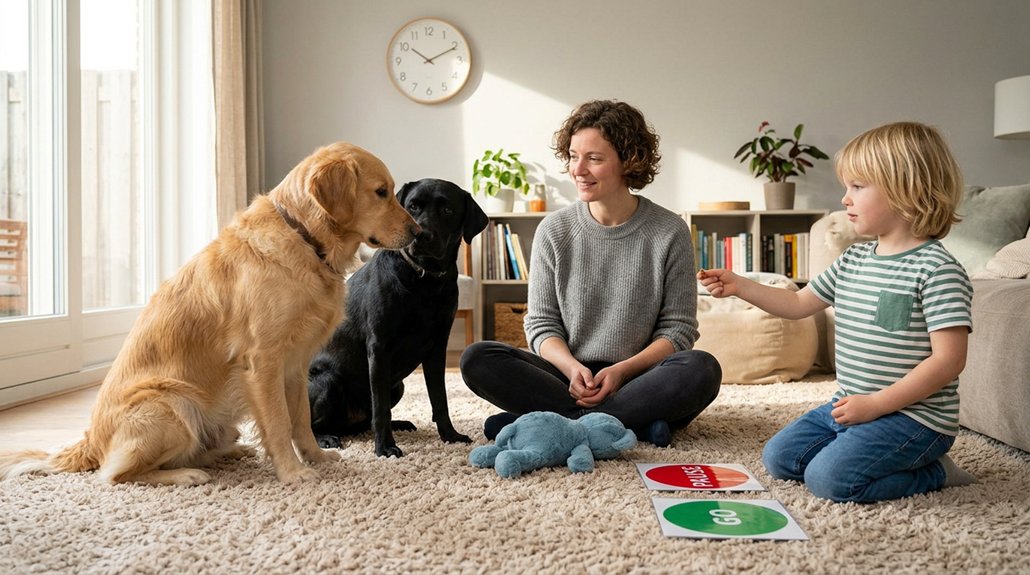
Structured activities are essential in promoting peaceful dog interactions, as they systematically foster positive associations and reduce aggression. By adopting the engage-disengage game, you’ll help dogs associate positive behaviors with each other, encouraging calm interactions. Gradual introductions guarantee that dogs approach each other slowly, minimizing reactivity and fostering tranquility. Such methods mitigate stress and anxiety by creating a structured pathway to interaction. To further enhance harmony, separate but nearby spaces reduce competition during shared activities, decreasing resource guarding behaviors.
Here’s how to create structured activities:
- Engage-Disengage Game: Foster positive associations.
- Gradual Introductions: Maintain calm interactions.
- Regular Play Sessions: Encourage socialization.
- Separate Spaces: Decrease competition and conflict.
These insights, when applied consistently, establish a foundation for peaceful coexistence.
Essential Training Techniques for Harmony
Amp up harmony in your home by mastering essential training techniques that establish a peaceful environment among your dogs. Fundamental commands like ‘sit’ and ‘stay’ build confidence, instill discipline, and set the stage for better communication, slashing the chances of misunderstandings that lead to conflict. Immerse yourself in training games such as the engage-disengage game to boost socialization skills, equipping dogs to interact positively without aggression. A command-response program helps dogs understand their roles, manage interactions, and respect boundaries. Use positive reinforcement to encourage cooperation and deter competition. Training all dogs together guarantees consistency and fairness, both vital in reducing tensions. Implement these techniques for a structured, harmonious multi-dog household, fostering an environment where dogs coexist peacefully.
Share Resources Fairly to Keep the Peace
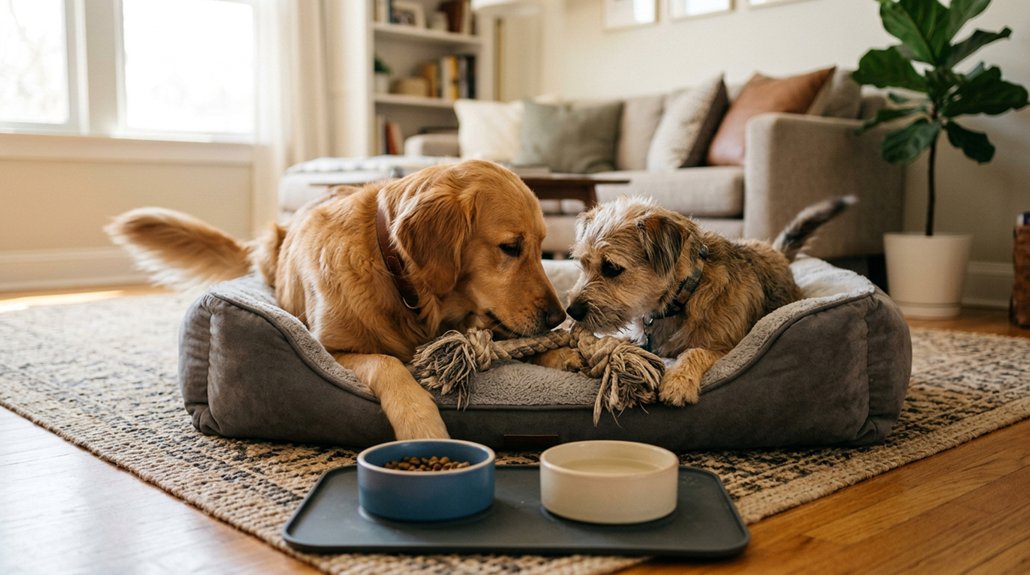
Equilibrium in a multi-dog household hinges on sharing resources fairly, a practice that can mitigate conflict by curbing resource guarding behaviors. Achieving this balance requires strategic planning. Consider these essential strategies:
- Toy Rotation: By rotating toys regularly, you keep your dogs interested and reduce the likelihood of them becoming possessive over specific items.
- Shared Spaces: Designate specific areas for each dog to claim as their own, reducing competition and bolstering a sense of security.
- Equitable Distribution: Provide equal access to resources like beds and food to prevent competition and feelings of jealousy.
- Observe and Intervene: Monitor interactions with shared resources and step in if you notice guarding tendencies or tension, ensuring peaceful coexistence.
Coexisting After a Fight: Recovery Strategies
Conflicts can arise despite the best efforts at fair resource sharing, so it’s important to have a plan for recovery when fights occur. Establishing a recovery timeline is essential, allowing you to manage the gradual reintegration of your dogs safely. Start with barriers or tethers during early interactions to prevent further conflict while rebuilding trust. Shared activities such as walking together and engaging with chew toys can subtly reinforce their bond. Use these controlled sessions to observe positive behavior, gradually phasing out tethers as the dogs become more comfortable. Always supervise their time together and keep them separated during unstructured periods to maintain harmony. This structured approach guarantees a more secure, peaceful environment, facilitating smoother cohabitation post-dispute.
Long-Term Household Peace Strategies With Dogs
To cultivate a harmonious long-term environment for your canine companions, establishing structured routines and consistent rules is key. This clear framework reduces competition and clarifies leadership roles, preventing conflicts. Consider these strategies:
- Socialization Techniques: Gradually introduce new resources, such as food and toys, with positive reinforcement to encourage sharing and reduce resource guarding behaviors.
- Behavioral Enrichment: Create designated spaces for each dog, minimizing stress and territorial disputes, while providing them a safe retreat when overwhelmed.
- Training Consistency: Engage in regular training sessions, establishing common commands to foster mutual respect and enhanced communication.
- Monitoring: Document any aggressive behaviors during interactions to adjust management strategies, guaranteeing improved household safety.
These insights will guarantee lasting peace and facilitate your dogs’ behavioral development.
Frequently Asked Questions
How to Stop Dogs From Fighting in the Same Household Home?
You’re addressing dog fights at home by studying dog body language to preempt issues. Use positive reinforcement techniques—reward calm behavior and separate them when needed—to build harmony, focusing on identifying triggers and establishing clear boundaries.
What Is the 3-3-3 Rule With Dogs?
Imagine the 3-3-3 rule as planting a seed of trust. You’ll observe behavioral cues over time. Effective socialization techniques let your dog integrate fully, bloom in confidence, and harmonize with their environment, minimizing future conflicts.
What Is the 7 Second Rule for Dogs?
The 7 Second Rule allows dogs to engage briefly, supporting effective canine communication and reducing stress. By observing dog body language, you’ll promote positive interactions, minimizing conflict and encouraging smoother socialization and better understanding between your dogs.
How to Resolve Conflict Between Two Dogs?
To resolve dog conflicts, don’t just assume they’re debating philosophy. Instead, keenly observe dog behavior and communication signals. Their subtle cues require a master’s level in canine diplomacy. With patience and understanding, peace will reign.
Conclusion
In homes with multiple dogs, conflict resolution is essential. Did you know that 45% of multi-dog households experience inter-dog aggression? Understanding triggers, establishing leadership, and creating structured activities are key. Training techniques can instill harmony, while fair resource sharing mitigates disputes. After a fight, recovery strategies foster coexistence. Implementing long-term peace strategies accommodates behavioral insights, ensuring a harmonious environment for your dogs. With consistent effort, you can transform tension into a balanced, peaceful coexistence.