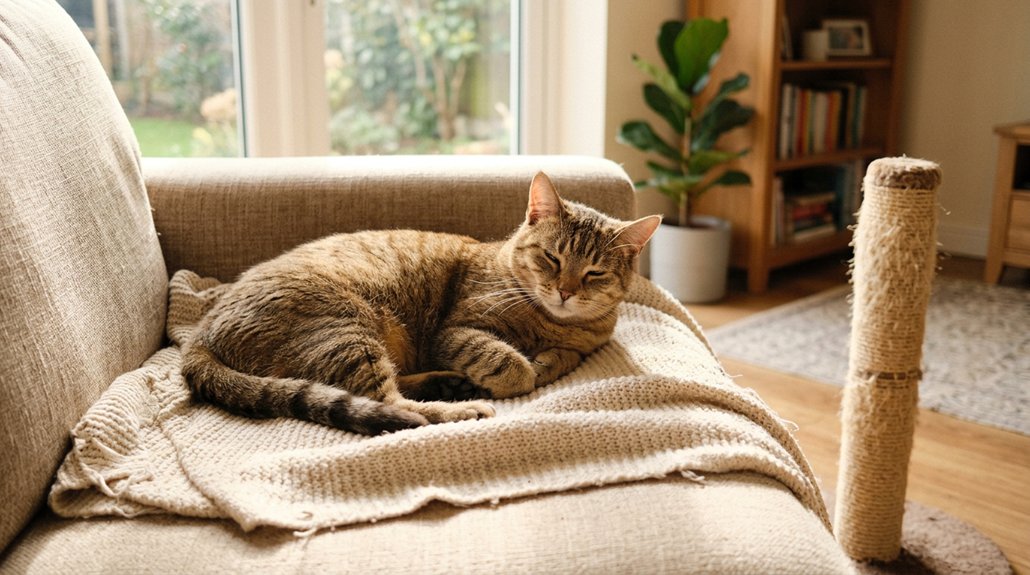
Your cat demonstrates comfort at home through distinct behaviors rooted in scientific observations. Look for relaxed postures such as soft ear positioning, stretched limbs, and partially closed eyes, which indicate security and well-being. Consistent litter box use and regular grooming underscore territorial confidence and emotional health. A healthy appetite and playful tendencies reflect contentment. Social behaviors like rubbing suggest a strong bond and trust. Discover further insights into these comforting signals and their implications on overall feline happiness.
Key Takeaways
- Relaxed postures, like soft ears and closed eyes, indicate your cat feels secure.
- Regular grooming behavior shows emotional well-being and confidence.
- Consistent use of the litter box signifies comfort in the home environment.
- Seeking social interaction through rubbing and proximity reflects trust and belonging.
- Playful activity suggests contentment and adaptation to the surroundings.
How Cats Display Comfort in Their Territory
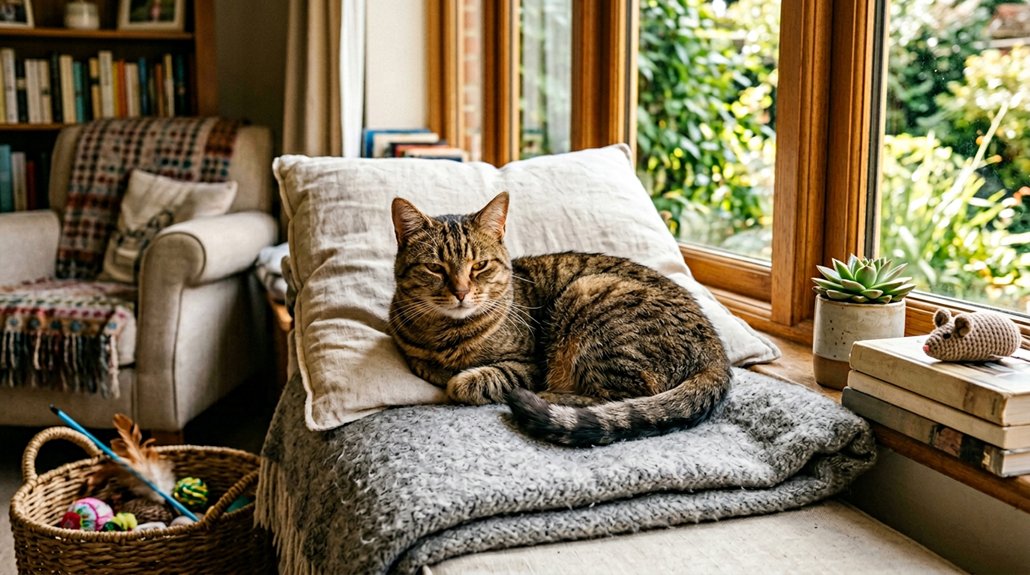
When evaluating how cats display comfort in their territory, it is essential to observe specific behavioral cues and body language that indicate their level of ease and security. Cats exhibit territorial instincts by maintaining relaxed postures—soft ears, calm whiskers, and closed eyes signal a safe environment. Regular grooming activities reflect emotional well-being and a strong confidence in their territorial boundaries. Additionally, playful behavior, such as interacting with toys, highlights a cat’s comfort and adaptation to its surroundings. Consistent use of the litter box without mishaps corroborates a secure attachment to their home environment. Finally, when cats seek social interaction, like rubbing against you, it signifies trust and a profound sense of belonging, underscoring their comfortable territorial interaction.
Maintaining a Healthy Appetite
Ensuring your cat maintains a healthy appetite is essential, as regular eating habits can be a clear indicator of their overall well-being. Cats thrive on a consistent eating schedule, and adult felines typically require 24-35 calories per pound of body weight to sustain health. Monitoring their calorie intake is vital; fluctuations might suggest health issues, warranting close observation. It’s not unusual for a cat’s appetite to wane initially when exposed to new environments, but a swift return to regular eating patterns is a positive sign of adaptation. Position food and water away from noise and heavy foot traffic to minimize anxiety. If your cat refuses food for over 24 hours, prompt veterinary consultation is advisable to rule out serious problems.
Recognizing Relaxed Body Language
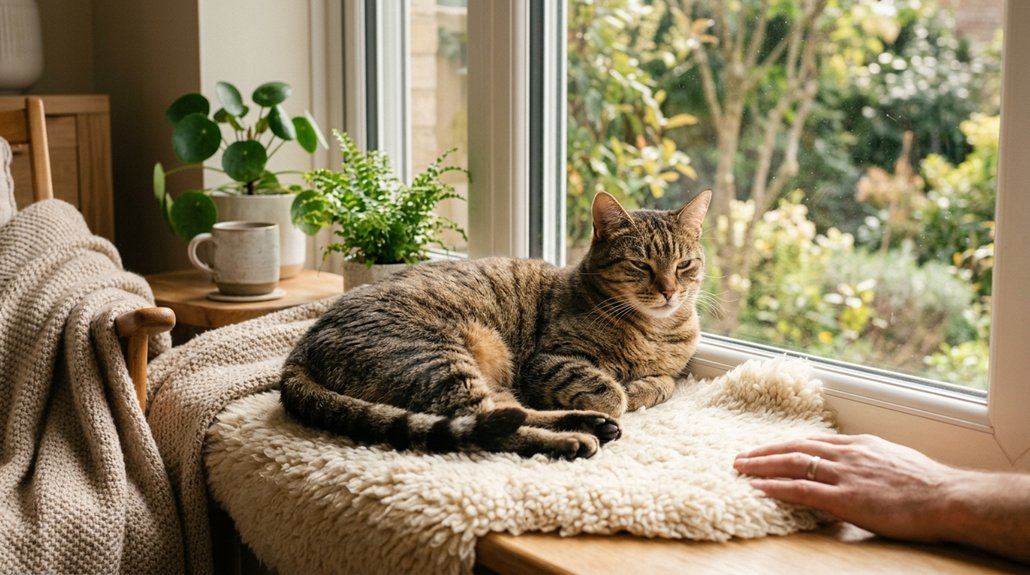
When your cat displays relaxed body language, it’s crucial to recognize specific indicators such as soft ear positioning, stretched out limbs, and partially closed eyes, which each signal comfort and security. Research indicates that the ears in a non-alert, relaxed state coupled with the limbs extended suggests your cat feels safe in their environment. Partially closed eyes further signify that your feline is at ease, as cats typically reserve this vulnerable state for environments where they perceive no threat.
Soft Ears Position
The position of a cat’s ears provides valuable insight into its emotional state, with relaxed ears serving as a key indicator of comfort and security. Soft ears in cats, characterized by a neutral or slightly outward ear position, denote a state of relaxation and are vital emotional indicators of the animal’s well-being. Unlike ears that are flattened against the head, these positions convey a sense of security and confidence in their home environment.
Monitoring your cat’s ear position can offer:
- Recognition of calmness and absence of tension: Soft, upright ears reflect a comfortable emotional state.
- An assessment of security: Ears not flattened indicate trust in their surroundings.
- Insights during adjustment: Changes in ear positions help assess their comfort during changes.
Properly understanding these cues fosters a harmonious home.
Stretched Out Limbs
While observing your cat’s ear position provides essential insights into its emotions, another significant indicator of feline comfort is the posture of its limbs. When your cat exhibits stretching behavior by fully extending its limbs, it signals a state of relaxation and trust in the environment. Feline relaxation often involves this behavior after sleeping, reflecting a content and secure disposition. Scientific observations suggest that this posture indicates a lack of perceived threats, as it leaves the cat vulnerable yet assured of safety. This physical display demonstrates that your cat has adapted well to its surroundings.
| Stretching Behavior | Indicator | Significance |
|---|---|---|
| Fully Stretched | Comfort | Security in home |
| Post-sleep Stretch | Content | Safe environment |
| Vulnerable Posture | Trust | Absence of stressors |
Your attentive observation guarantees a healthy, relaxed feline environment.
Eyes Partially Closed
- Such eye behavior suggests the cat feels safe, enhancing the overall impression of emotional well-being.
- During interactions like petting or resting near you, observe this behavior to assess if your cat feels content.
- Recognizing partially closed eyes can help differentiate states of ease from signs of stress or discomfort.
These subtle cues highlight your cat’s trust and comfort in your home.
Resuming Consistent Grooming Habits
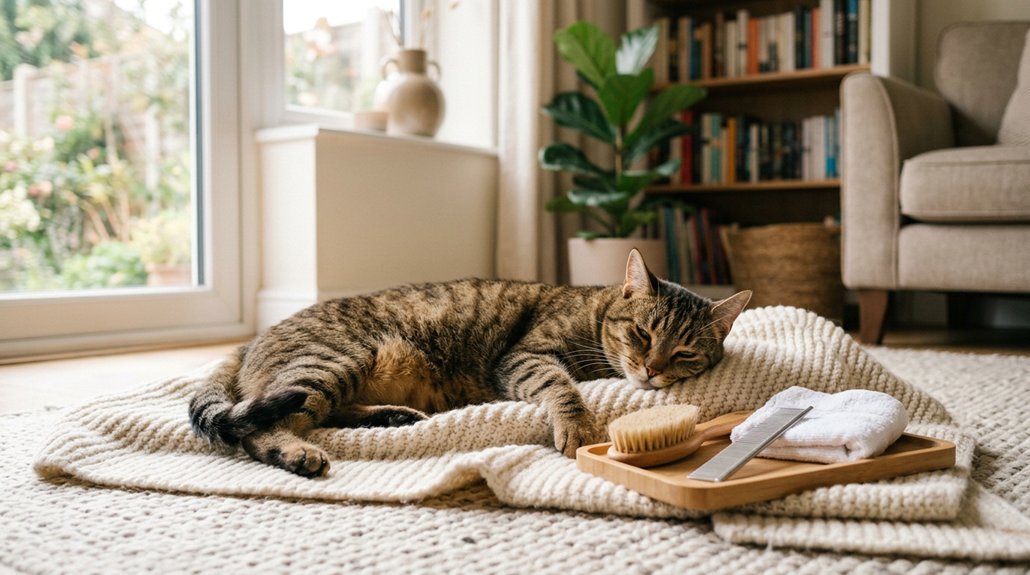
As your cat acclimates to a new environment, resuming consistent grooming habits is a key indicator of its comfort and emotional well-being. A normalization in grooming frequency reflects reduced anxiety and stability, making it a critical measure of adjustment. Initially, stress might cause either excessive grooming or neglect, representing behavior changes you should monitor. Cats groom to remove loose fur and dirt, and when they feel secure, they engage in these self-care routines, indicating a positive emotional state. Observing this resurgence is essential in evaluating your cat’s adaptation and confidence levels. Consistent grooming also indicates trust and affection, as it helps foster physical and emotional health. Monitoring these habits provides insights into your cat’s overall well-being during home changes.
Seeking Social Interaction With You
Cats communicate comfort and trust through various behaviors, and your role in encouraging cat-led interaction is essential. When a cat approaches you for affection or displays playful engagement, it’s a clear indication of their emotional security and social willingness. Scientific studies assert that interactive play and positive social exchanges foster a deeper bond, enhancing the cat-owner relationship.
Cat-Led Interaction Encouragement
When observing your feline companion, their propensity for cat-led interaction encouragement provides significant insights into their comfort level. Scientific evidence suggests that when cats feel secure, they actively engage in cat communication, presenting behaviors that mark clear social boundaries. These behaviors demonstrate the cat’s trust and comfort in their environment.
- Seeking petting or rubbing against your legs are clear indicators of trust and security, reflective of positive cat communication.
- Audible signals like meowing, trilling, or chirping suggest not only a desire for interaction but a recognition of you as a social ally within their territory.
- Your cat’s voluntary proximity, whether sitting near you or following you, underscores their comfort—they’re opting for companionship, a direct sign of contentment in shared spaces.
Understanding Playful Engagement
Beyond observing cat-led interactions, understanding playful engagement offers further insights into a cat’s comfort and social inclinations. Playful behavior, characterized by seeking out interactive sessions with you, indicates trust and adaptability in their environment. Scientific evidence suggests that when a cat initiates play by bringing toys or engaging in purring and rubbing, it’s demonstrating a desire for companionship and fortifying the human-animal bond. These actions not only reflect your cat’s satisfaction with its basic needs but also suggest a deepening trust in its surroundings. Such playful behavior implies the cat feels secure and is comfortable expressing its energetic instincts. Therefore, a cat’s inclination to participate in interactive sessions signifies a healthy, well-adjusted pet engaging positively with its environment.
Understanding Litter Box Confidence in Cats
A key element in evaluating a cat’s comfort level in its new environment is its litter box confidence. Scientifically, consistent use of a litter box indicates a cat’s adaptation to its surroundings, backed by regular habits that reflect security. To promote this confidence, focus on:
- Litter box cleanliness: Regular cleaning is paramount in encouraging consistent use, as cats prefer a pristine environment.
- Litter box accessibility: Strategic placement in quiet areas guarantees that the cat feels safe accessing it, enhancing its sense of security.
- Monitoring behavior changes: Adapting quickly to litter habits can rule out stress-related behaviors such as accidents outside the box.
Understanding Playful Signs of Cat Contentment
While observing your cat’s litter box habits can provide significant insights into its comfort, understanding its playful behaviors can further illuminate aspects of its well-being. A key indicator of feline contentment is a playful demeanor, suggesting their needs are met. Engaging in playful pouncing and chasing toys signals a relaxed and secure state, essential for their emotional health. Scientific evidence indicates that increased playfulness reflects an enhanced sense of safety, allowing cats to mirror natural hunting instincts. Interactive play especially initiated by your cat illustrates their comfort in bonding through shared activities. Regular participation in playtime is pivotal, serving as a reliable metric of overall satisfaction with their environment, effectively bolstering mental and emotional fulfillment.
Showing Affection Through Rubbing
One of the primary ways cats express comfort and affection is through rubbing, which involves the transfer of scent from glands in their cheeks. This behavior serves dual purposes:
Cats show comfort and love by rubbing, transferring scent from cheek glands, marking territory and building bonds.
- Scent marking: By rubbing against you or household objects, cats are marking their territory. This establishes an environment rich in familiar scents, essential for their emotional security.
- Emotional bonding: When a cat nuzzles you, it indicates trust and strengthens your relationship, highlighting their secure attachment.
- Indicators of well-being: Frequent rubbing suggests your cat is in a positive emotional state, pursuing companionship and interaction due to a sense of security.
Observing your cat’s rubbing behaviors provides insights into their comfort level. It allows for a proactive approach in fostering a happy and harmonious home environment.
Frequently Asked Questions
How Do I Know if My Cat Is Comfortable in My House?
Your cat exhibits comfortable behavior through exploring safe spaces, displaying happy habits like regular grooming, consistent appetite, and relaxed body language, such as soft ears and a calm posture. Trust is shown by seeking positive social interactions with you.
What Is “I Love You” in Cat Language?
“I love you” in cat language is a symphony of purring patterns and a ballet of tail signals. Studies show purring releases endorphins, while a tail shaped like a question mark often indicates affection and emotional security.
What Is the 3-3-3 Rule of Cats?
The 3-3-3 rule outlines a cat adjustment period where newly adopted cats take three days hiding, three weeks exploring using feline body language, and three months fully settling. Monitoring is critical for evaluating emotional well-being throughout.
What Annoys Cats the Most?
Steering through feline preferences is like learning a complex symphony. Cats often find sudden movements, loud noises, and forced affection particularly irksome. These factors clash with their behavioral instincts, amplifying stress as their autonomy and safe haven are compromised.
Conclusion
When evaluating feline comfort, it’s essential to recognize behavioral cues. Cats maintain a healthy appetite and consistent grooming, indicative of a stable environment. Relaxed body language and social interactions with you suggest trust and attachment. Additionally, litter box confidence reinforces territorial security. In the grand tapestry of animal behavior, such signs are akin to a telegraph from the past, signaling contentment. Observing these patterns offers empirical insight into your cat’s psychological well-being, ensuring a harmonious home environment.