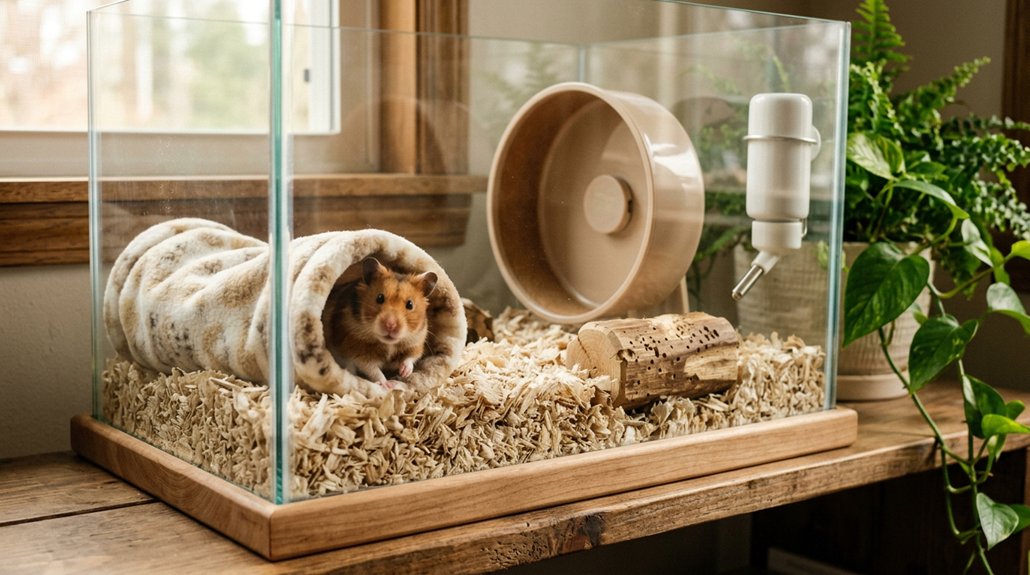
To create a comfortable habitat for your hamster, guarantee at least 650 square inches of unbroken floor space with 10-12 inches of paper bedding or coconut fiber for burrowing. Include multiple hiding spots, tunnels, and a solid wheel for enrichment. Provide a balanced diet with Mazuri blocks and fresh produce, avoiding citrus. Regularly clean and monitor your hamster’s health for well-being. With these essentials, you’ll discover even more tips to enhance your hamster’s environment.
Key Takeaways
- Ensure the cage offers a minimum of 650 square inches of uninterrupted floor space for the hamster.
- Use paper bedding or aspen shavings with a depth of 10-12 inches for burrowing and nesting.
- Provide multiple hiding spots, such as cork logs or terracotta pots, to ensure privacy and comfort.
- Offer a balanced diet using Mazuri Rat & Mouse blocks mixed with Higgins Sunburst seed mix and add fresh fruits, avoiding citrus.
- Regularly spot clean and conduct monthly deep cleans while preserving familiar scents to maintain a hygienic environment.
Immediate Steps for an Ideal Hamster Home
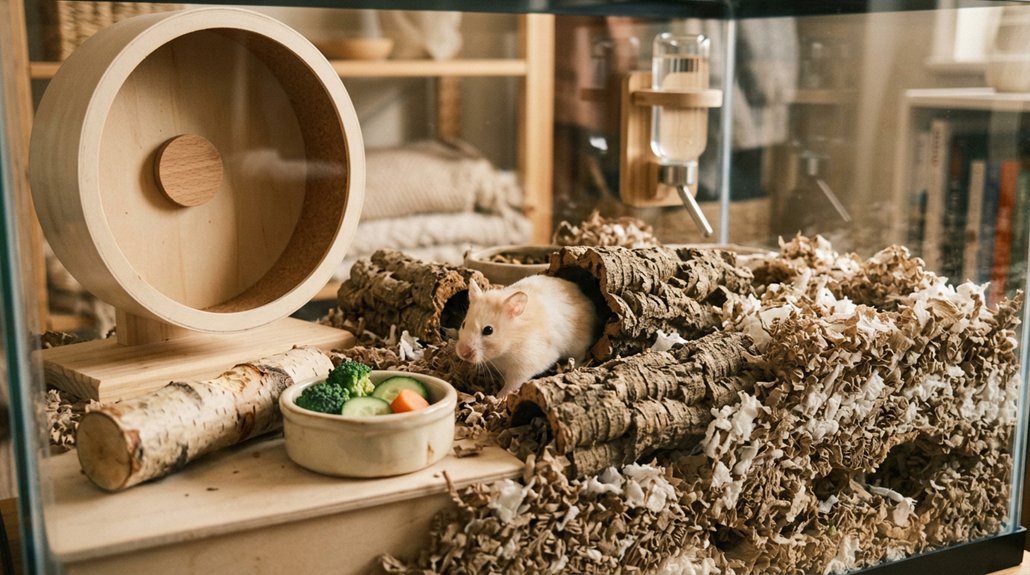
When you’re starting on creating an ideal habitat for your hamster, it’s important to start by ensuring that the cage provides at least 650 square inches of unbroken floor space. This generous space supports exploration and activity, critical for your pet’s well-being. Bedding choices like paper bedding or aspen shavings are excellent options that facilitate burrowing and nesting, unlike cedar or pine, which pose respiratory risks. Depth matters—aim for 10-12 inches of bedding for premium care. Additionally, install multiple hiding spots and a large, dark nesting box to offer warmth and reduce light exposure. Regularly spot clean soiled areas and uneaten food every few days, supplemented by a monthly deep clean to maintain a hygienic environment conducive to your hamster’s comfort.
Set Up a Safe and Engaging Hamster Habitat
To create a safe and engaging habitat for your hamster, consider the importance of floor space and environmental enrichment. Make certain the cage offers at least 650 square inches of unbroken floor space. Habitat materials like paper bedding and coconut fiber can foster natural behaviors, especially with a 10-12 inch depth for burrowing. Diverse hiding spots, such as cork logs, guarantee security and comfort. Adding enriching activities, including tunnels or a solid surface wheel, is essential for activity and preventing boredom. Spot clean soiled bedding often and perform monthly deep cleans, retaining some familiar scents for reassurance.
| Habitat Elements | Recommendations |
|---|---|
| Floor Space | Minimum 650 square inches |
| Bedding | 10-12 inches depth |
| Hiding Spots | Cork logs, terracotta pots |
| Enrichment Activities | Chew sticks, tunnels, solid wheel |
Feed and Hydrate Your Hamster Right
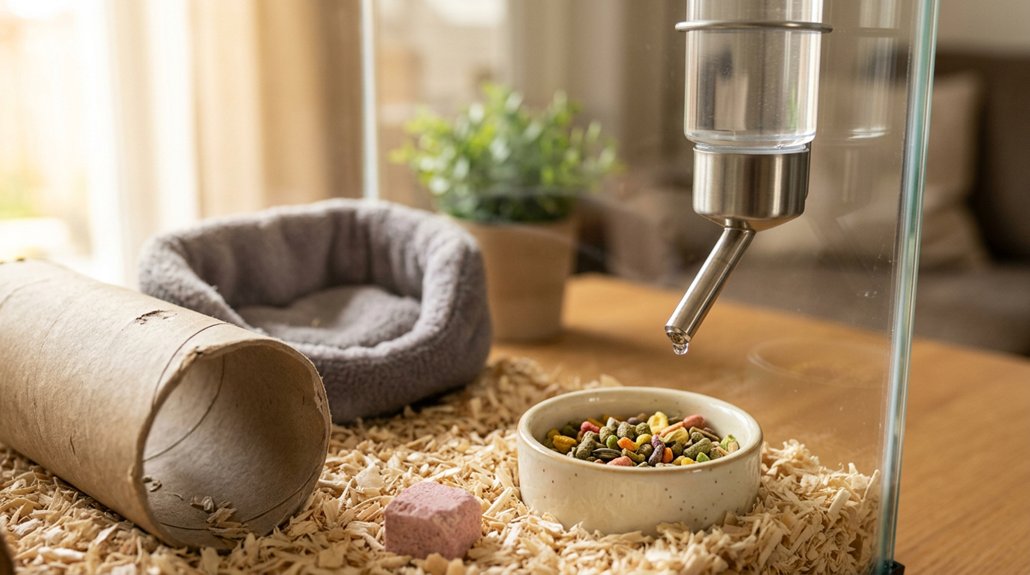
Although providing the right nutrition and hydration may seem challenging initially, it’s essential for your hamster’s health and well-being. Opt for a balanced diet by mixing Mazuri Rat & Mouse blocks with Higgins Sunburst seed mix, ensuring 18-20% protein. Enhance diet variety with fresh fruits and vegetables, avoiding citrus to prevent digestive issues. Scatter feeding is an excellent technique that encourages natural foraging behavior and provides mental stimulation.
Hydration importance can’t be overlooked. Always supply your hamster with a small bowl of clean, lukewarm water, checking it daily to prevent dehydration. Remember to freeze fresh foods for 48 hours before serving to eliminate pests, ensuring safer feeding. Your thoughtful care can lead to a happy, healthy hamster life.
Optimize Your Hamster’s Environment
Creating the perfect sanctuary for your hamster requires thoughtful consideration of their natural instincts and needs. Prioritize adequate space requirements by guaranteeing the cage offers at least 650 square inches of unbroken floor space, vital for a healthy, active lifestyle. This setup allows you to incorporate a deep bedding selection, essential for natural burrowing behavior—aim for a 10-12 inch layer using paper bedding or aspen shavings, steering clear of cedar or pine due to potential respiratory issues. Strategically position the cage in a quiet, draft-free area with controlled lighting to provide comfort. Enhance their environment with tunnels, hideouts, and chew toys, offering mental and physical stimulation. Regular spot cleaning preserves the peaceful and sanitary haven your hamster deserves.
Clean and Monitor Your Hamster’s Health Regularly
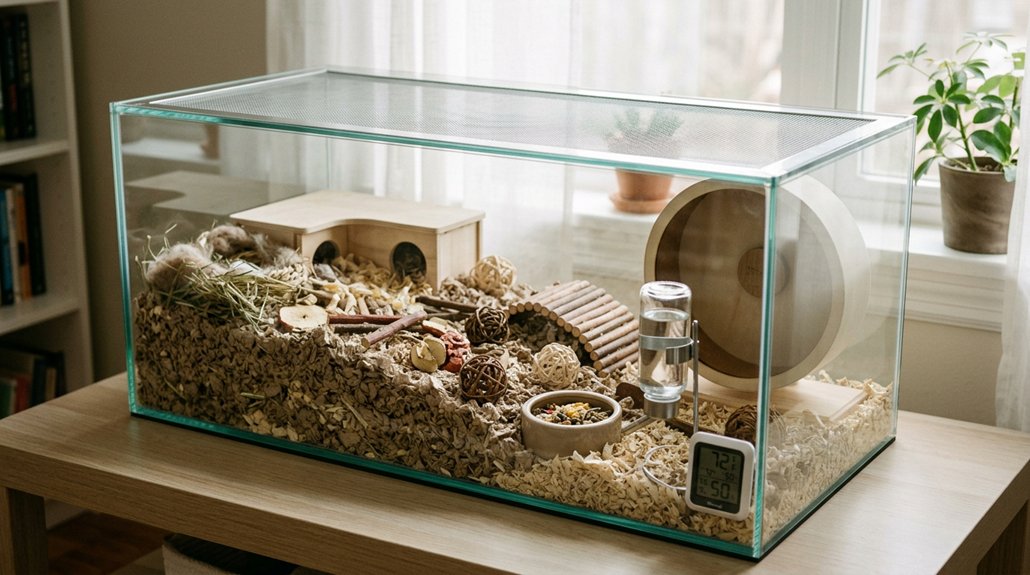
Maintaining your hamster’s habitat and health goes hand-in-hand to guarantee a happy and stress-free life for your furry friend. Regular health checks are essential. Weigh your hamster weekly or bi-weekly to spot issues early. During these check-ups, make sure to inspect their underbelly for cleanliness, as it’s a good indicator of overall hygiene. Skittish hamsters can benefit from using clear plastic cups for minimal stress during handling. Keep a dedicated hamster health page to track tips and behavioral changes.
Regular checks and proper handling ensure your hamster stays happy and healthy in a stress-free environment.
Bedding maintenance is fundamental for a clean environment. Spot clean every few days, removing soiled bedding and uneaten food. Also, monitor the cage’s condition regularly. Here’s a quick guide:
- Weekly weigh-ins
- Inspect underbelly cleanliness
- Use plastic cups for handling
- Track health tips
- Spot clean bedding regularly
Frequently Asked Questions
How to Create the Best Hamster Habitat?
To create the best hamster habitat, guarantee a cage size of at least 650 square inches. Use deep bedding materials for burrowing, provide exercise options, maintain ideal temperature control, guarantee habitat enrichment, and facilitate easy food accessibility and social interaction.
What Is the Most Common Cause of Death for Hamsters?
Poor living conditions often lead to respiratory infections, shortening your hamster’s lifespan. It’s a “Hamlet” tale of neglect: guarantee a clean, spacious habitat to prevent common health issues, allowing your little companion to thrive longer and healthier.
Can I Leave a Hamster Alone for 4 Days?
You shouldn’t leave a hamster alone for four days. They need daily interaction and a consistent feeding schedule. Arrange for someone to provide hamster care, ensuring fresh food, water, and monitoring their health and cage cleanliness.
Do Hamsters Prefer Lights on or Off?
Sure, because nothing says a good hamster sleep like a spotlight, right? Seriously, hamsters thrive with lights off during their active hours, minimizing light exposure. Create a calm, dim habitat and they’ll thank you with happy scurrying.
Conclusion
In the grand scheme of hamster care, crafting your furry friend’s palace is more than half the battle—it’s everything! By creating a safe and stimulating environment, providing nourishing meals, and ensuring ideal conditions, you’re setting the stage for a hamster paradise. Regular cleaning and health checks will keep your tiny companion thriving. With these steps, your hamster will be the envy of every pet in the neighborhood, living the high life in hamster luxury!