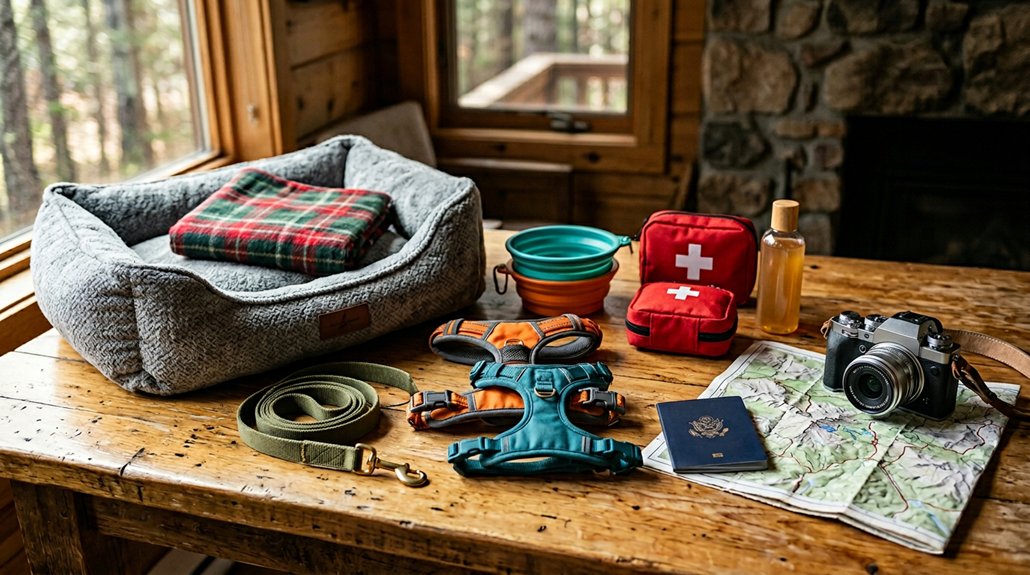
When you’re traveling with your dog, pack essentials for safety, comfort, and health. Make certain you’ve got a secure harness or crate, and update their ID tags and microchip. Comfort items like a favorite blanket and enough food and water are key. Don’t forget health documents like rabies and health certificates for international travel. Familiarize yourself with specific travel requirements. Preparing these essentials guarantees a smoother journey, and there’s much more to explore for an enjoyable trip.
Key Takeaways
- Secure a harness or crate for safety while traveling with your dog in the car or airplane.
- Pack familiar items like a favorite blanket or toy to reduce the dog’s travel anxiety.
- Carry an updated veterinary certification and government-endorsed health certificate if required for travel.
- Bring sufficient food, water, and extra poop bags to maintain hygiene during the journey.
- Use calming supplements or pheromone sprays, and schedule stops for stretching to reduce travel stress.
Essential Safety and Comfort Items for Dogs
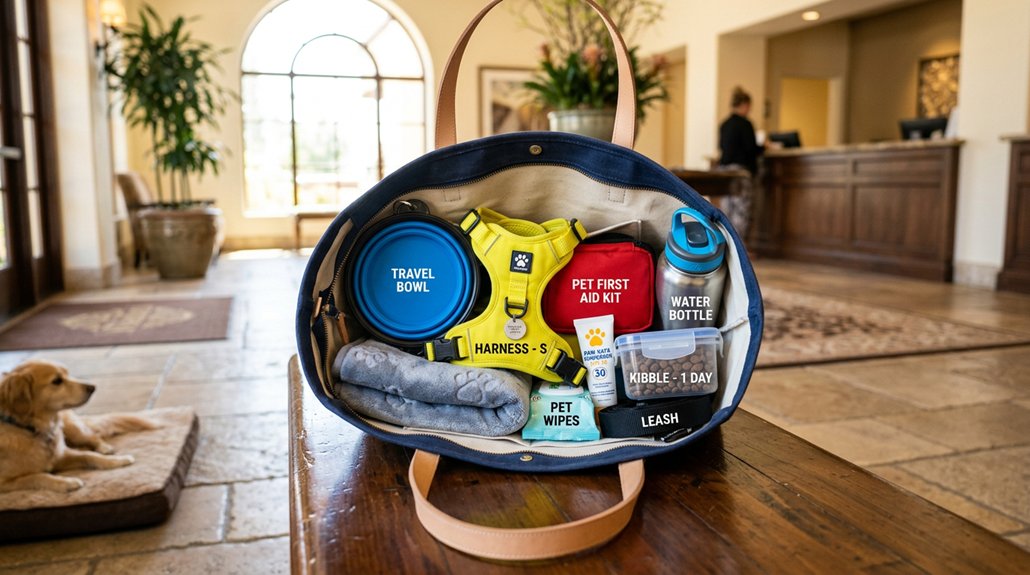
When traveling with your dog, prioritizing their safety and comfort is essential. Ensuring harness safety is your top priority; always secure a well-fitted harness or dog seatbelt when on the road, whether you’re in a vehicle or RV. This not only protects your furry friend in case of sudden stops but also prevents distractions that could lead to accidents. For travel comfort, pack their favorite blanket or toy. Familiar items help soothe any anxiety and offer a much-needed sense of security. Don’t forget absorbent pads or a thin blanket for the travel crate, which helps manage accidents and enhances comfort. Keeping your dog’s journey pleasant and secure requires attention to these details, ensuring a smoother, hassle-free adventure.
Preparing Necessary Health Documents and Supplies
Alongside guaranteeing your dog’s safety and comfort, it’s important to get their health documents and supplies in order for a smooth journey. Start by securing an updated veterinary certification, particularly one that confirms a rabies vaccination, as airlines commonly require this. Don’t forget to attach a new identification tag to your dog’s collar with your current contact information to guarantee they’re easily identifiable. If you’re traveling internationally, verify that your dog has an ISO-compatible microchip, as this is often a mandated requirement. Prepare all necessary health documents in advance; some destinations may require a government-endorsed health certificate. Finally, keep a recent photo of your dog taped to their travel carrier to aid in quick identification if they get lost.
Adapting Essentials for Various Travel Modes
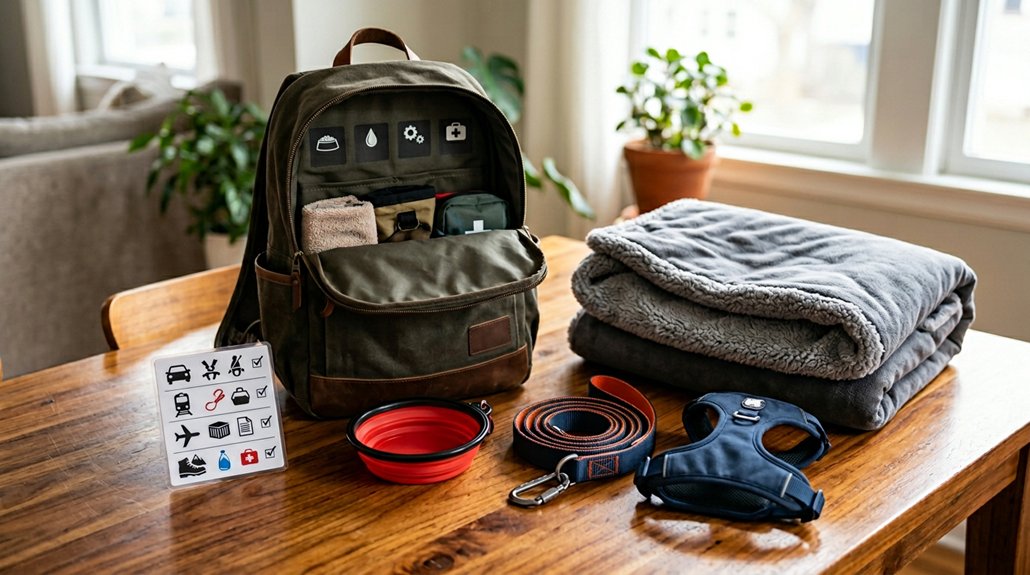
Packing the right essentials for various travel modes with your dog can make the experience more enjoyable and less stressful for both of you. For car travel, guarantee safety with a crate or harness. Bring familiar items like a blanket or favorite toy to ease anxiety. When it comes to flying tips, select an airline-approved crate for smaller dogs, guaranteeing it fits under the seat, or a durable kennel for larger breeds. Include absorbent pads to handle any accidents during the journey. Regardless of how you travel, keep your dog’s routine intact by packing enough food and water, and carry extra poop bags for cleanliness. Familiarize yourself with travel-specific requirements, like health certificates for flights, to prevent any hiccups.
Planning for Extended Trips and Outdoor Safety
As you prepare for journeys both near and far with your furry companion, it’s important to plan for longer trips and outdoor adventures with an eye on safety and comfort. Start by packing a thorough dog first-aid kit, guaranteeing you have gauze, antiseptic wipes, and any necessary medications for emergencies. For outdoor safety, include dog boots and a rain jacket, especially for short-haired breeds. A comfortable sleeping space like a dog bed or old towels can offer your pet a familiar spot during campouts. Don’t forget to prioritize dog nutrition and travel hydration by packing sufficient food and water. Regular breaks for exercise and rest along your route are essential, and make sure you research pet-friendly parks and local veterinarians.
Ensuring Stress-Free Travel for Your Dog
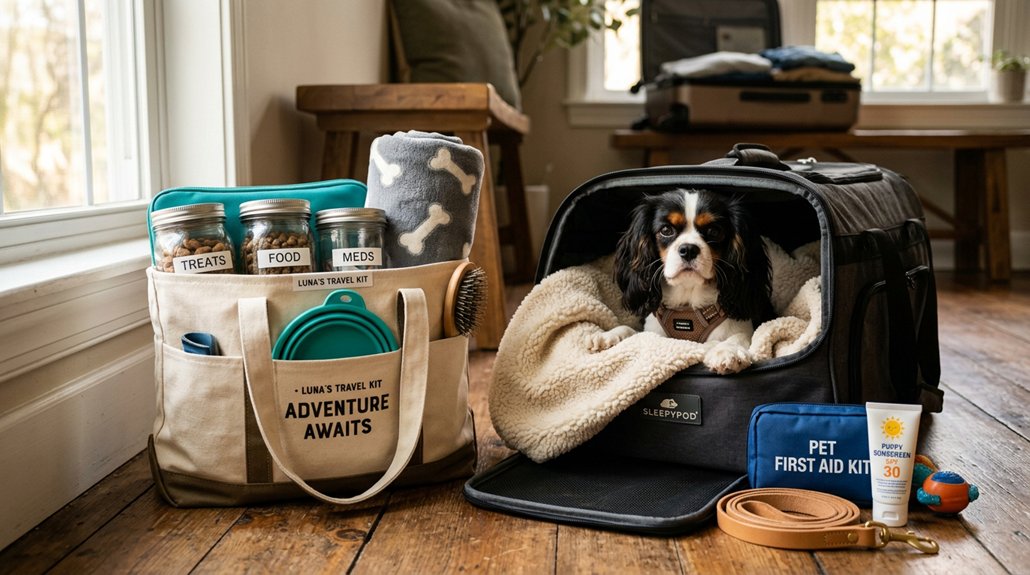
How can you guarantee a stress-free journey for your dog? Start by acclimating them to car travel with short rides. This gradual exposure aids in anxiety reduction for longer trips. Stay calm, as your stress can heighten their anxiety. Bring along familiar comfort items such as a favorite blanket or toy to provide security.
Here’s a simple plan:
| Activity | Benefits | Tips for Success |
|---|---|---|
| Short Car Rides | Anxiety Reduction | Increase duration gradually |
| Comfort Items | Security | Choose familiar belongings |
| Regular Rest Stops | Tension Relief | Schedule stops every 2 hours |
Regular rest stops let them stretch and relax. Consider packing calming supplements or pheromone sprays, ensuring they’re effective beforehand. Proper preparation and a calm demeanor create a smoother car travel experience for you both.
Frequently Asked Questions
What Is the 3-3-3 Rule With Dogs?
The 3-3-3 rule guides dog travel adjustment: three days for initial acclimation, three weeks for routine settling, and three months for full comfort. Be patient and pack pet essentials for a smooth shift to new environments.
What Is the 7 7 7 Rule With Dogs?
The 7-7-7 rule guarantees dog travel safety by packing seven days’ supplies and essential items, arranging pet-friendly accommodations, and implementing stress-reducing strategies. It’s a practical guideline for a smooth, stress-free journey with your furry friend.
What to Pack When Traveling With a Dog on a Plane?
Did you know 76% of pet owners find traveling stressful? Pack essentials like absorbent pads, collapsible bowls, and ID tags for travel safety. Follow airline regulations for cabin comforts to guarantee a smooth journey for you both.
How Do You Say “I Love You” in Dog Speak?
You say “I love you” in dog speak by using canine communication: maintain eye contact, speak softly, and offer belly rubs. Recognize their dog body language, play together, and respect their space. They’ll know you understand them.
Conclusion
When you’re traveling with your dog, it’s not just about packing their favorite toys and treats; it’s an exercise in understanding your commitment to their well-being and comfort. Each item signifies your responsibility, from health documents to safety essentials. By adapting to various travel modes and planning for the unexpected, you’re ensuring a smoother journey. This approach isn’t just practical; it’s a demonstration of the bond and trust you’ve built with your furry friend.