Does your dog cry the second you leave the room?
That gut-punch feeling of leaving a whining pup behind is rough. But here’s something worth knowing: dogs naturally avoid messing up their own sleeping spot.
That one instinct is the whole reason crate training works so well for house training and setting boundaries your dog can actually understand.
This guide walks you through building a crate space your dog will want to enter on their own. I’ll give you step-by-step instructions, plus real fixes for the problems that trip up most new owners.
Grab a cup of coffee, and let’s get your pup settled into a spot they’ll learn to love.
Key Takeaways
- Dogs naturally avoid soiling their sleeping area, which makes crate training such an effective tool for housebreaking and building secure boundaries.
- A puppy’s age in months plus one equals the max hours they can stay crated safely without a bathroom break.
- Pick a crate that fits snugly, just enough room for your dog to stand, turn around, and lie down comfortably.
- Never use the crate as punishment. Build positive associations instead, through treats, praise, and a steady daily routine.
- Gradual introduction, the right crate size, comfy bedding, and a consistent schedule turn the crate into your dog’s favorite retreat.
Benefits of Crate Training Your Dog
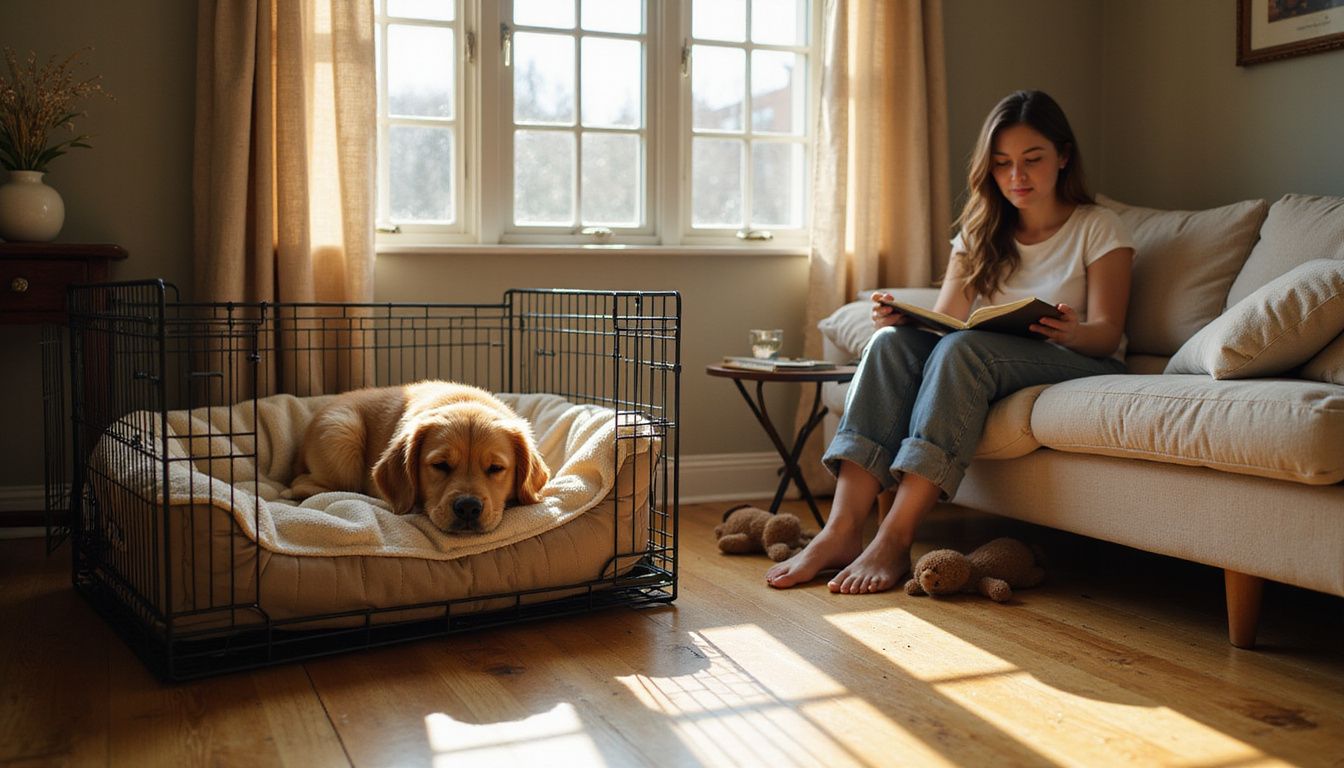
A crate gives your dog their own personal den, kind of like a bedroom that belongs to just them. Nobody bothers them there, and that matters more than you might think.
This simple training tool also makes house training so much easier. It cuts down on destructive behavior and keeps your home safe when you can’t watch your pup every second.
How Does a Crate Create a Safe Space for Dogs?
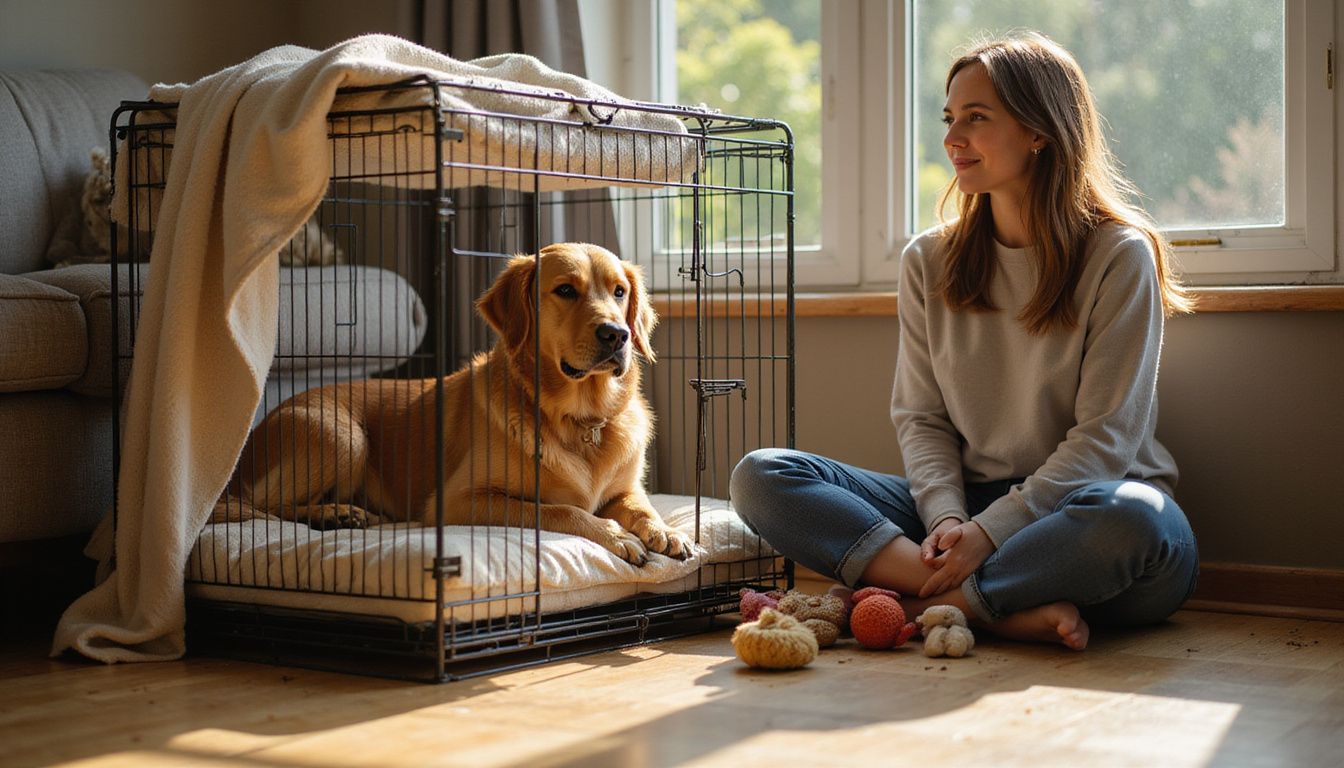
Your dog’s crate turns into a real den once you set it up right. Dogs are wired to seek out small, enclosed spaces where they can relax and feel protected.
That instinct goes back to their wolf ancestors, who slept in caves and dens for safety. A properly sized crate taps into that same wiring today, and this anxiety reduction matters most for dogs prone to stress.
According to the American Veterinary Medical Association’s Companion Animal Care Guidelines, appropriate housing for dogs must offer “a secure, comfortable resting place.” A crate that fits your dog just right checks that box, and it tells worried owners this method is backed by real veterinary science, not just guesswork.
- Size: Your dog should stand at full height and turn around with a little room to spare, but not much more. Too small feels cramped. Too large tricks your dog into using one corner as a potty area.
- Placement: Put the crate in your family room or kitchen instead of a back closet. Your dog stays part of the action instead of feeling shut out.
- Coverage: Draping a light blanket over the top creates a den-like feel while air still flows through.
One young mixed-breed dog who whined every time his owners left the room got used to a kennel in the living room over eight days, using short sessions of just 5 to 15 minutes. He walked in on his own by day 3, ate meals inside by day 5, and vocalized 72% less by day 8, all thanks to high-value freeze-dried treats used only inside the kennel.
Positioning the crate near family life reduces anxiety and builds confidence. Your dog gets to watch everyone come and go while staying safe in their own little spot.
Soft bedding and a covered top make the crate feel like a real hideaway, a break from noise and chaos. Covering the crate tells your dog this space belongs to them alone.
Stress drops fast once your dog has a comfortable crate to escape to, especially if separation anxiety is part of the picture. Dogs with a comfortable crate sleep better, relax faster, and feel steadier overall.
Your dog learns over time that the crate means safety, not punishment. Now let’s look at how crate training helps with housebreaking.
A dog’s crate is not a cage; it’s a sanctuary where your pup finds peace.
Why Does Crate Training Help with Housebreaking?
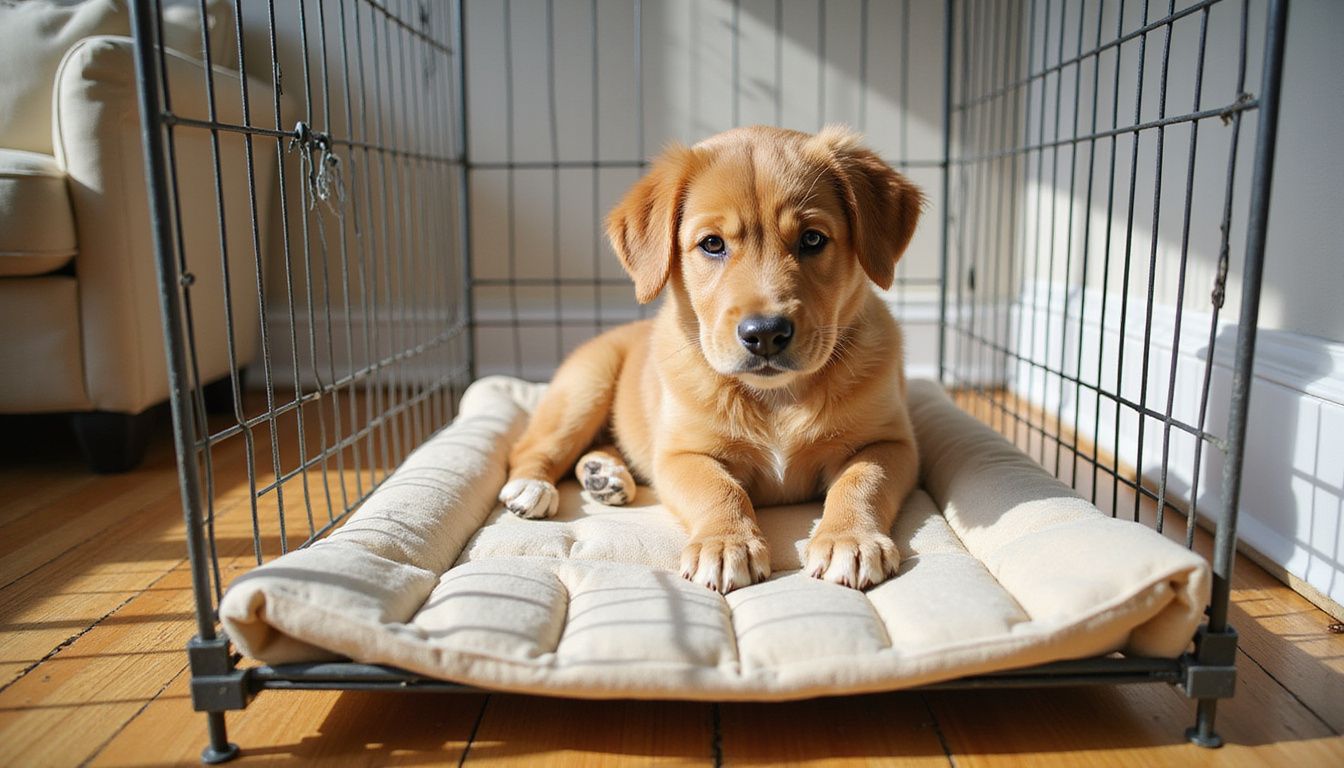
Your dog’s natural instincts work in your favor here. Dogs instinctively avoid soiling their den or sleeping area, which makes a crate a powerful tool for potty training.
This means your pup will hold their bladder and bowels when confined to a space that fits them properly. The crate becomes a spot where accidents just don’t happen as often.
Size matters a lot here. An oversized crate lets your dog create a separate potty corner, which wrecks your housetraining progress. Pick a wire crate that fits snugly, just enough room to stand, turn around, and lie down.
Real results: One three-month-old puppy averaged 4.2 indoor accidents a day. After two weeks of following the age-plus-one-hour rule with consistent post-meal potty trips, that number dropped to just 0.8 accidents a day, an 81% drop. Timing beats luck when it comes to building solid bathroom habits.
Puppies need extra grace since their bodies aren’t fully grown yet. A simple formula helps: take their age in months and add one, that’s roughly the max hours they can hold it. We’ll break down the exact numbers a little further down.
Take your puppy out often, especially after meals, playtime, and naps. This reinforces good housetraining habits fast.
Working all day? Set your puppy up in an ex-pen, small bathroom, or gated room with pee pads instead of the crate. Never crate a puppy for a full workday or overnight without breaks. That just breeds frustration and setbacks.
How Does Crate Training Protect Your Home?
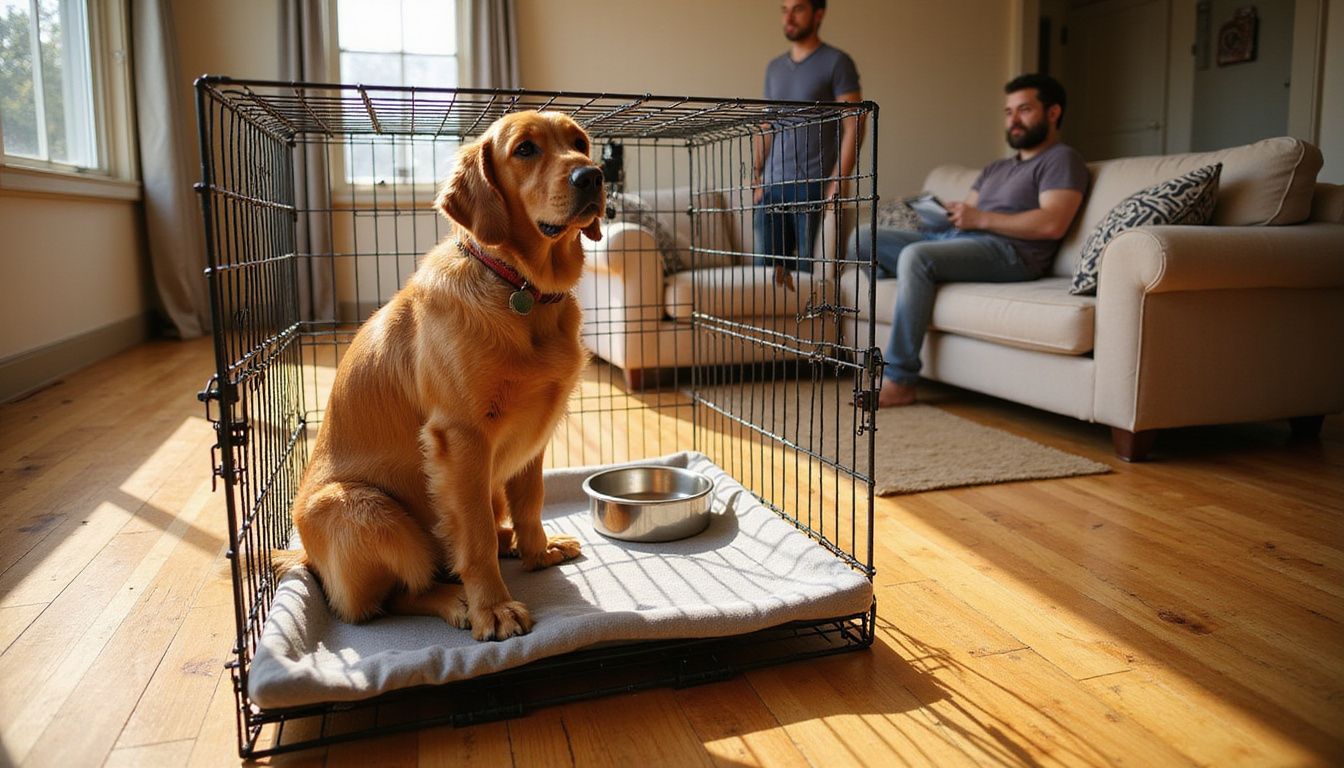
Give your dog free run of the house while you’re away, and trouble tends to follow. Chewed furniture, scratched walls, or an accident on the carpet, all common when nobody’s watching.
A 2026 U.S. dog behavior analysis by Bark Busters, covering over 50,000 inquiries nationwide, found that separation anxiety and household destruction rank among the top concerns owners report, often driven by a lack of consistent structure at home. A crate gives your dog exactly that: structure.
Crate training gives you built-in dog supervision when you can’t watch every move, cutting down on the mischief that comes from boredom or stress.
- Chewed furniture and baseboards
- Scratched doors and walls
- Carpet or floor accidents
- Excessive barking from stress
A structured crate management routine gives your dog boundaries, and boundaries actually calm anxious dogs down instead of stressing them out more. Your dog learns the crate is a safe haven, not a prison, so they relax instead of panicking.
Heavy-duty crates work best if your dog tends to escape. Skip soft crates for these pups since they can tear through the fabric fast.
Crate-trained dogs are less likely to develop destructive behaviors when you’re gone. That means your couch stays intact, your floors stay clean, and your stress level drops too.
Steps to Crate Training Success
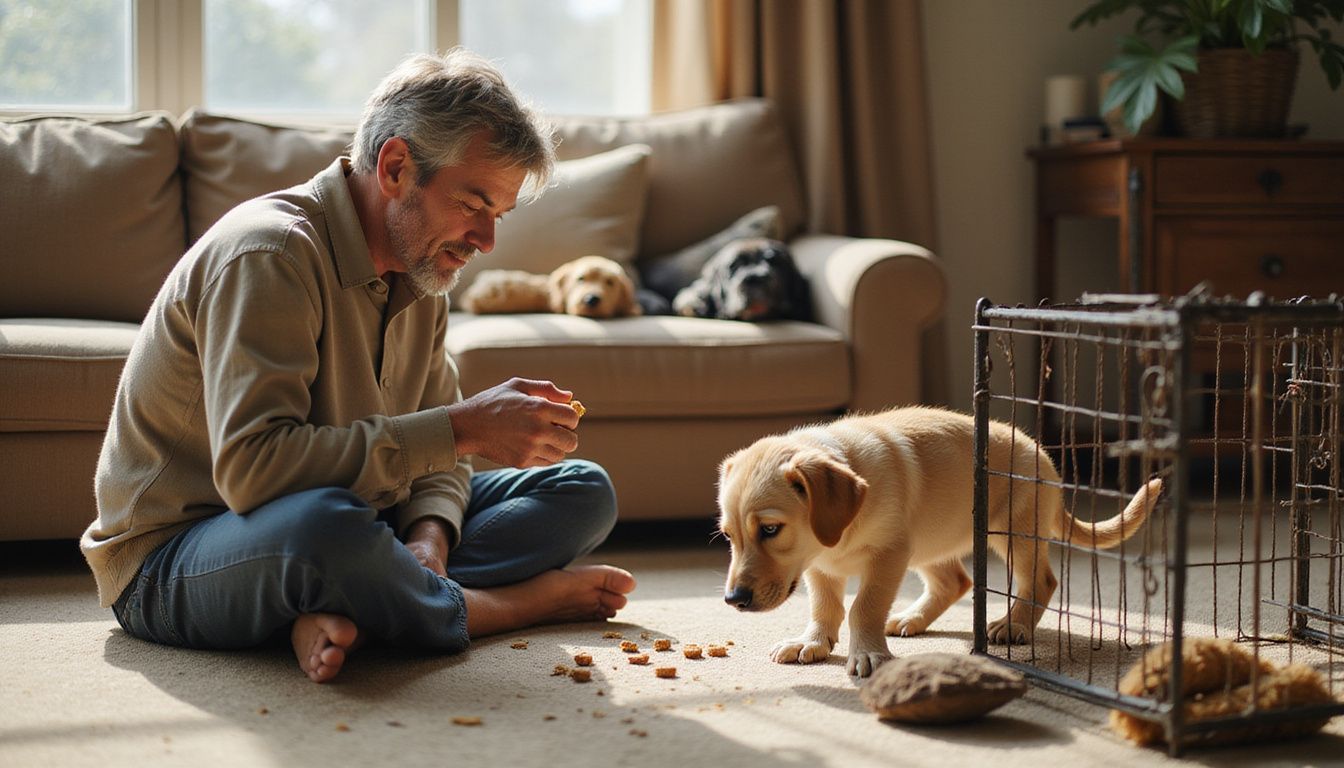
You’ll make real progress when you introduce your dog to the crate gradually, use high-value treats to build positive associations, and stick to a consistent schedule that works for your life.
These three steps form the foundation of crate training success. They work because they respect your dog’s pace while building confidence at every stage.
How Do You Introduce Your Dog to a Crate Gradually?
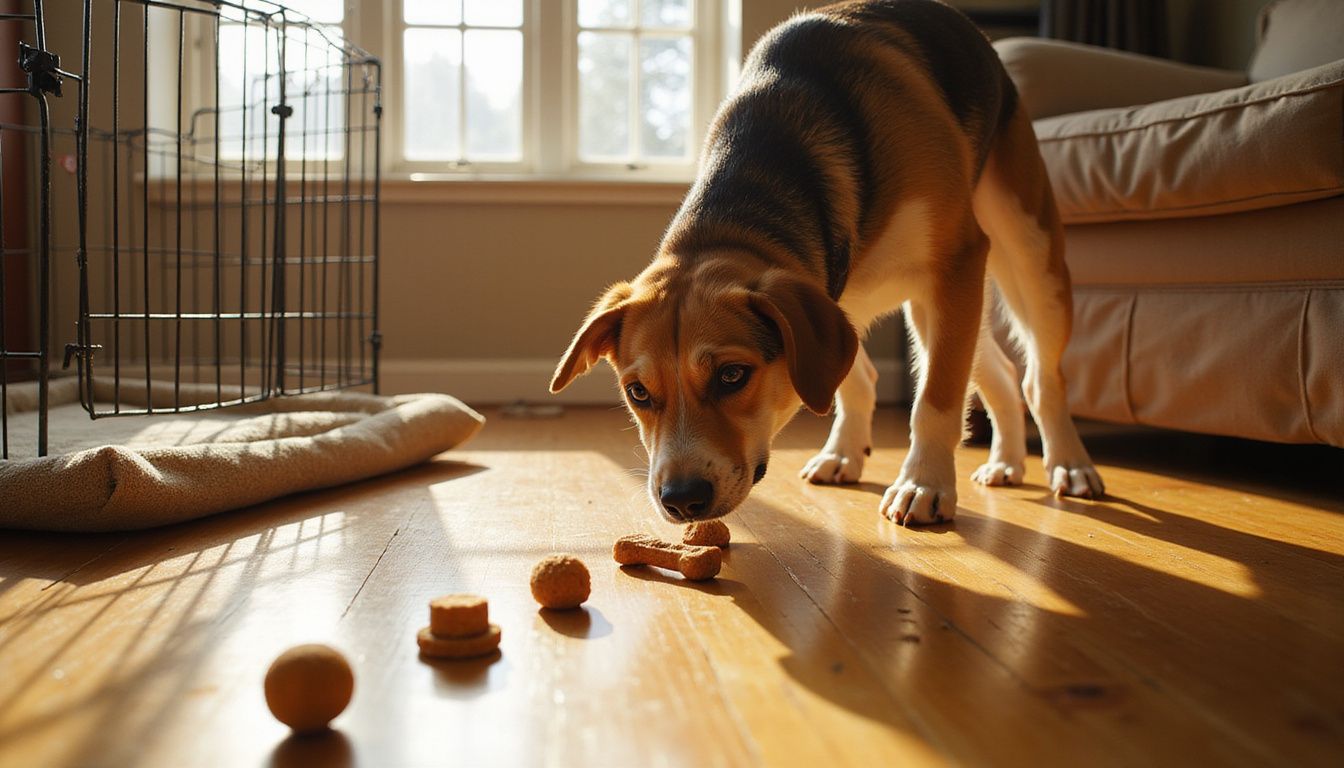
Introducing your dog to a crate takes patience and positive associations. Start slow, and your pup will view the crate as a safe haven rather than a prison.
- Place the crate in a central spot like your living room or kitchen, where household activity happens daily.
- Keep the door open and let your dog explore at their own pace, without any pressure.
- Scatter treats outside the crate, then slowly move them inside, never forcing your dog in. This prevents crate anxiety from creeping in later.
- Start feeding meals near the crate, then move the bowl fully inside with the door open.
- Close the door briefly during meals, then stretch that time out slowly until you reach about 10 minutes total.
- Add a bully stick or marrow bone inside to make the space extra inviting and keep your dog occupied.
- Keep Scott® Pet Guard dog pads nearby to handle any accidents while your pup learns bladder control.
What Rewards Build Positive Crate Associations?
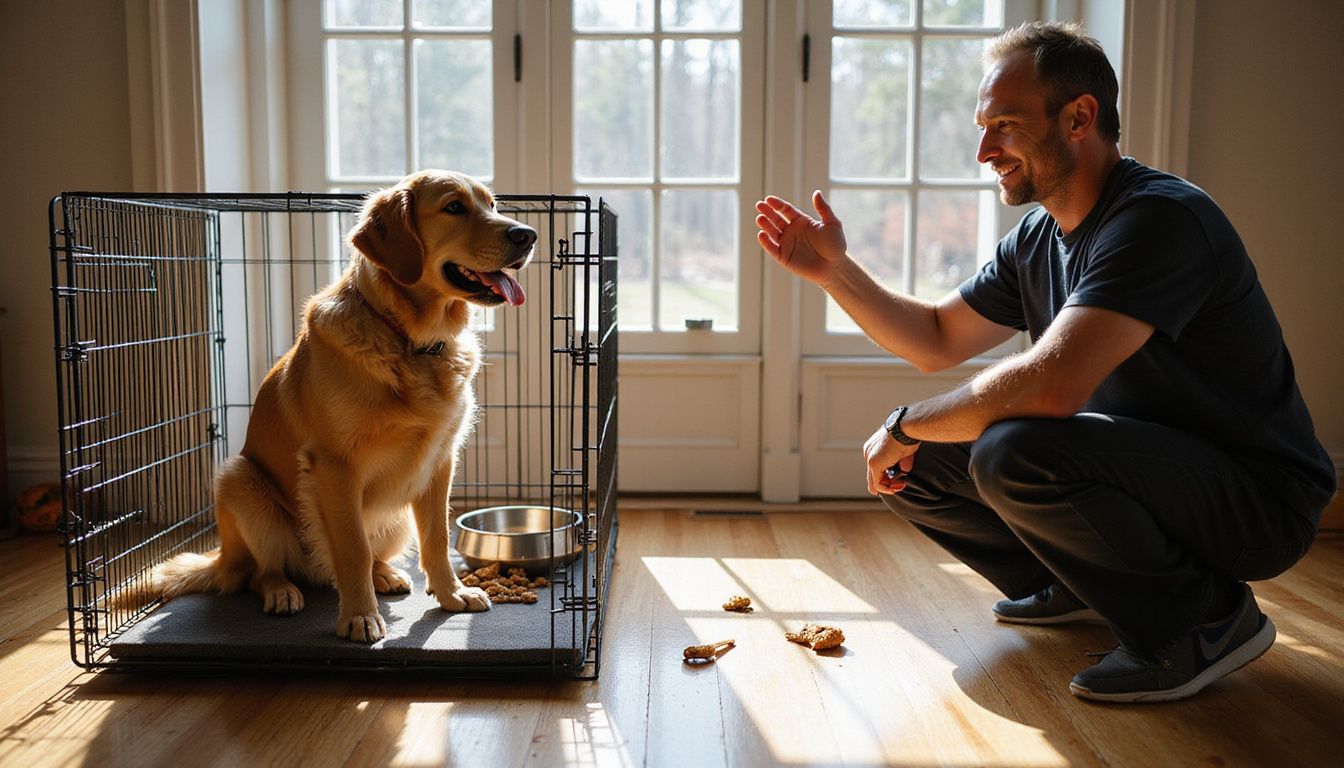
Your dog learns to love the crate when you offer the right rewards at the right moments. Positive reinforcement builds strong associations that make crate training stick.
- Save high-value freeze-dried treats just for crate time. According to 2026 U.S. market research on puppy training treats, freeze-dried meats are top sellers in the $2.1 billion training treats market because dogs eat them fast without breaking the flow of training, which makes them ideal rewards.
- Place a bully stick or pig’s ear inside before your dog goes in, giving them a reason to walk in on their own.
- Feed meals inside the crate, with food placed near the back wall so your dog fully enters the space.
- Use an excited voice and warm petting the moment your dog approaches or steps inside.
- Time your reward right when paws hit the crate floor. Speed matters a lot in dog training.
- If your dog isn’t that into treats, try a favorite toy, or switch things up with frozen marrow bones for variety.
Now that you understand how rewards create positive associations, let’s cover the critical mistake of using the crate as punishment.
How Do You Set a Consistent Crate Schedule?
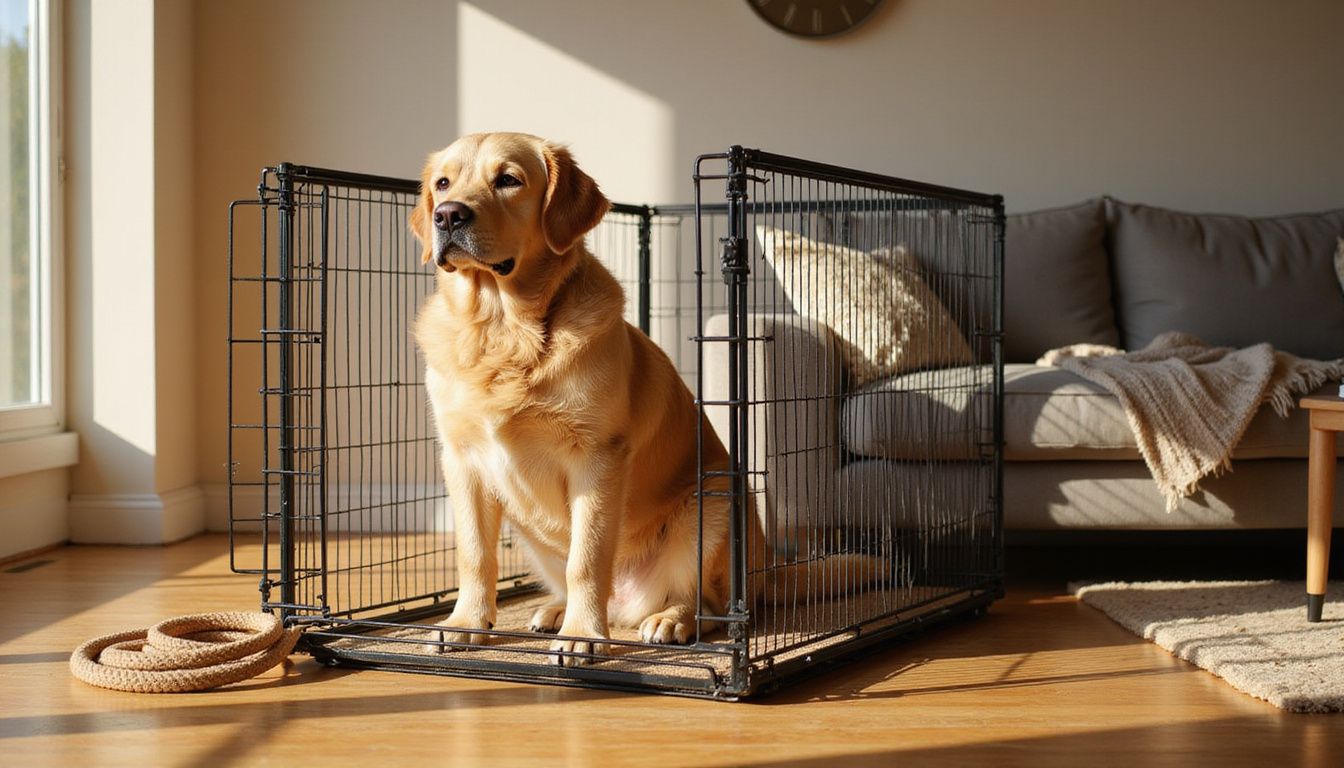
Once your dog bonds with the crate through rewards, a steady routine changes everything. Consistency teaches your pup what to expect, so crate time feels normal instead of scary.
- Stick to a daily schedule, same crate times each day, so your dog anticipates the routine and builds confidence in it.
- Use one command, like “kennel up,” every single time you want your dog inside, so the words and the action link up fast.
- Crate your dog for short stretches while you’re still home. Professional trainers at Ridgeside K9 NorCal advise this exact step, since dogs that are only ever crated right before you leave start linking the crate with abandonment. Practicing while you’re around breaks that pattern early.
- Mix up how long you wait before leaving, anywhere from 2 to 20 minutes, so the routine doesn’t feel like a countdown to being left alone.
- Give your dog exercise and a potty break before crate time. Tired dogs settle faster, and bladder control improves with activity.
- Start with just a few seconds away on your first departure, then stretch that time out slowly over days and weeks.
- Keep the crate in the same spot and use it for regular mealtimes too, so it stays linked to good things in your dog’s mind.
Common Crate Training Mistakes to Avoid
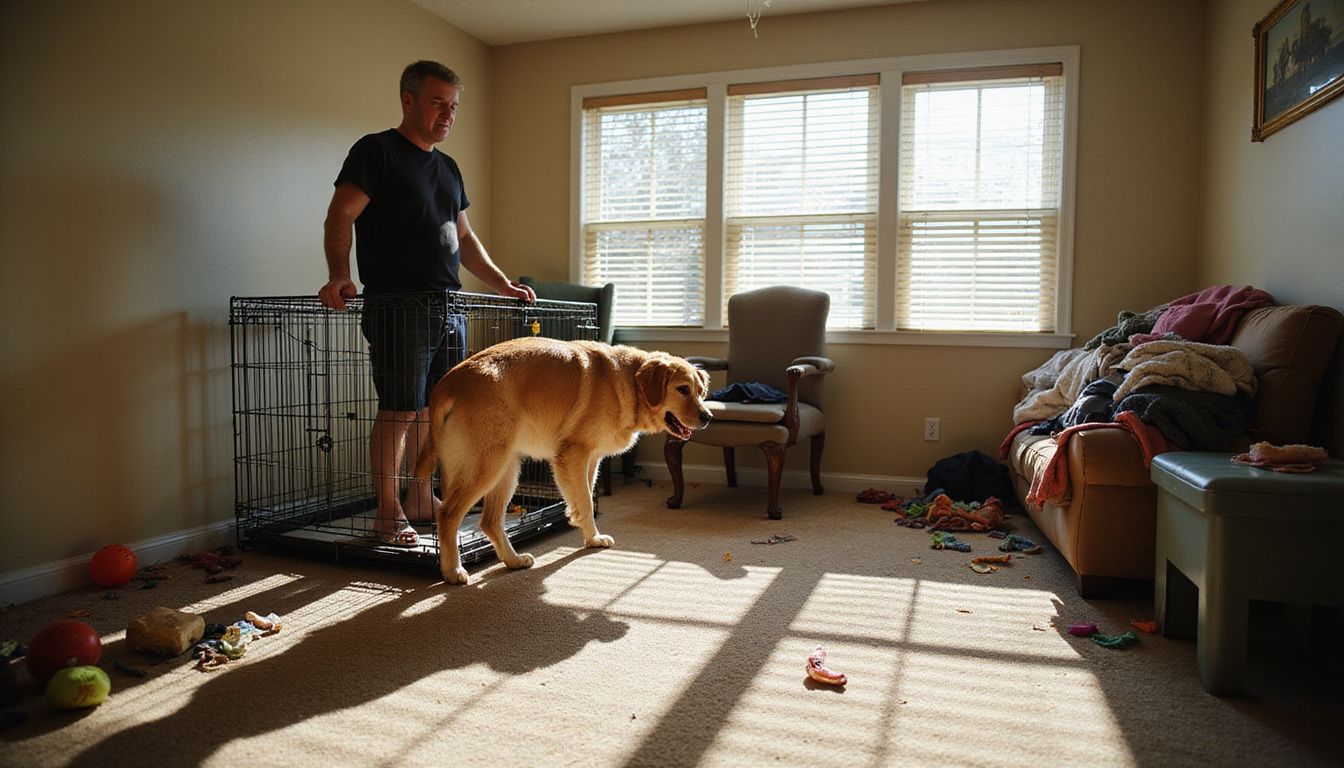
You’ll want to sidestep the pitfalls that trip up most dog owners during crate training. Here’s what could derail your progress, and how to steer clear of it.
Why Should You Never Use the Crate as Punishment?
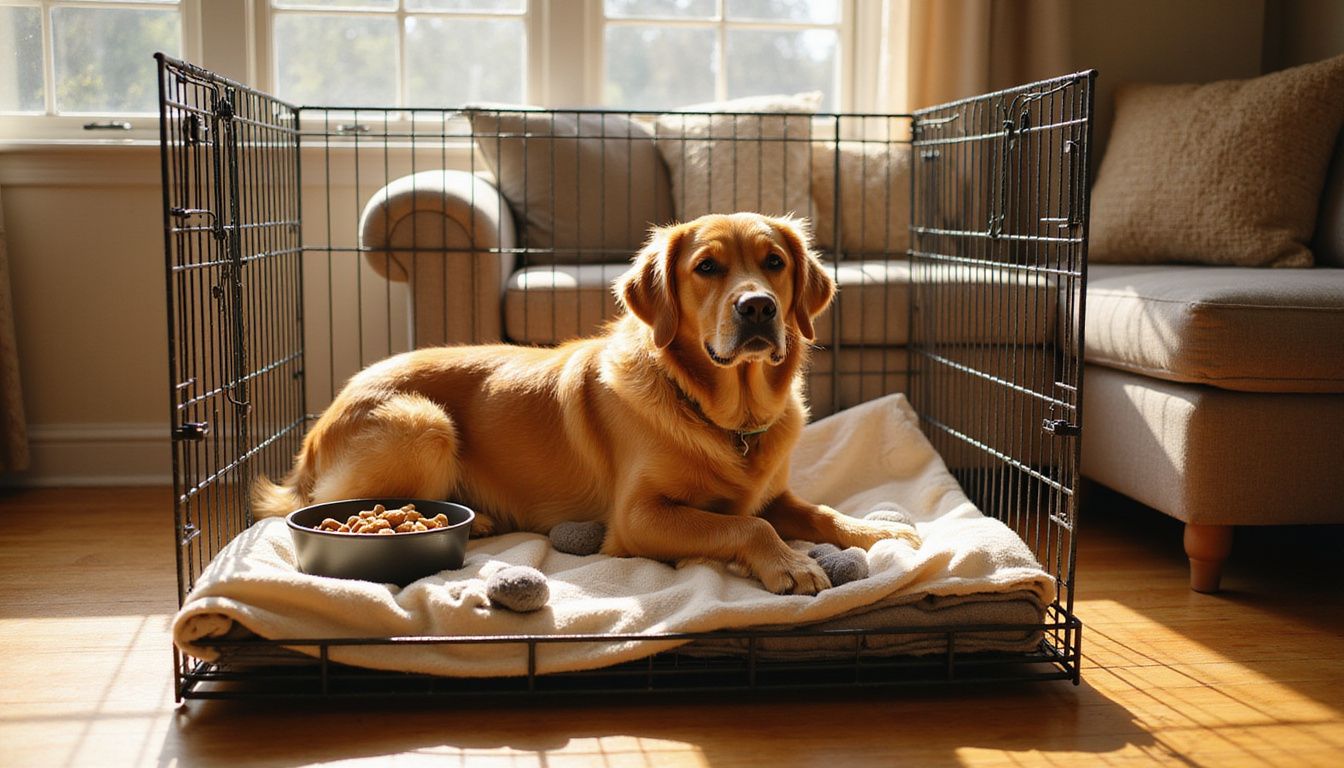
Your dog’s crate should feel like a safe haven, not a prison cell. Yelling at your pet or pounding on the crate teaches fear, not obedience. Your dog starts dreading the space instead of loving it.
Using the crate as punishment creates anxiety that sticks around for months. Positive reinforcement through treats and praise builds trust, while punishment builds walls between you and your pet.
- Yelling at your dog to get them into the crate
- Slamming or banging on the crate door
- Sending your dog to the crate right after scolding them
- Locking your dog in as a time-out during play
The goal of dog behavior management is to help your pup feel secure and happy in their crate. Negative reinforcement causes setbacks that take extra time to fix, and your dog won’t understand why you’re upset, they’ll only know the crate means something bad just happened.
This confusion leads to resistance during house training and makes dog supervision much harder. Instead, focus on rewarding calm behavior inside the crate. Treats, gentle words, and patience build trust that lasts.
How Long Is Too Long to Leave a Dog in a Crate?
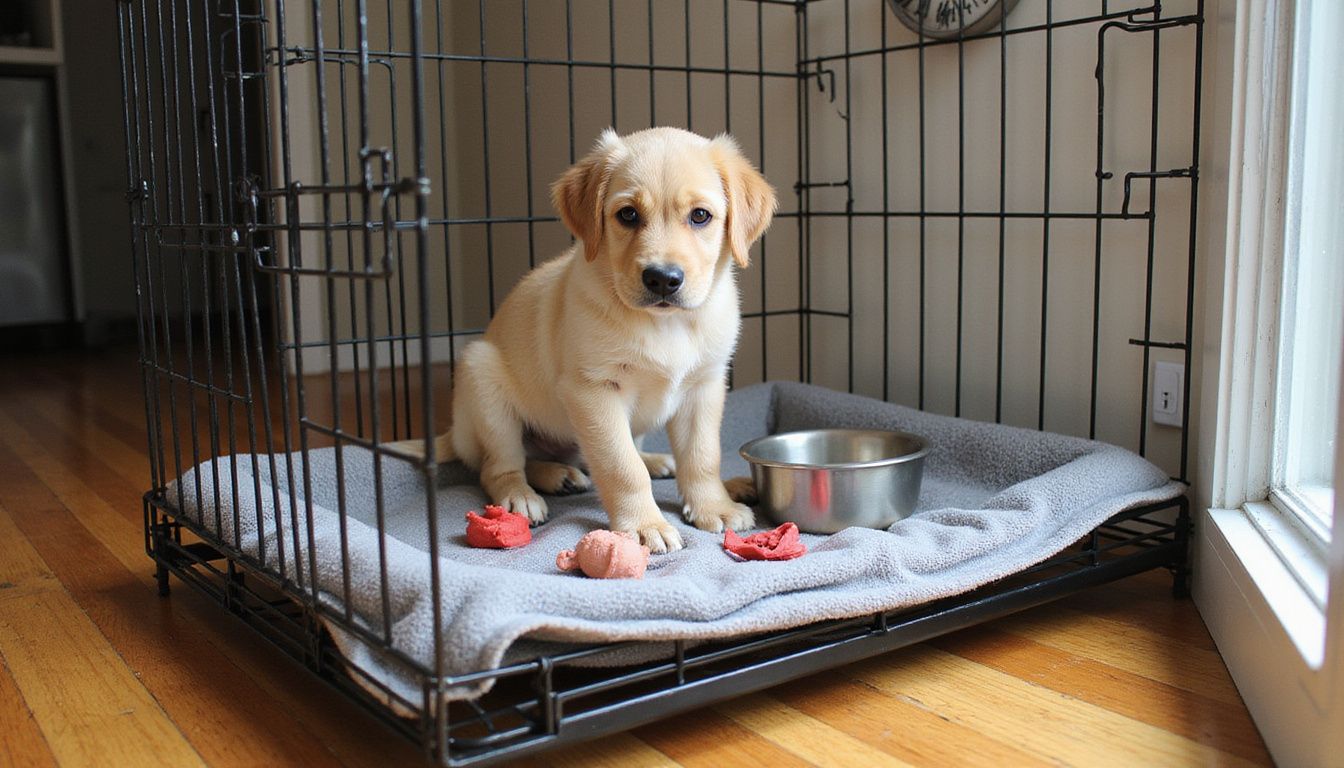
Puppies can’t hold their bladder and bowels for long stretches, so a simple math trick helps: take your puppy’s age in months and add one hour. That’s roughly your max crate time.
| Puppy Age | Max Crate Time |
|---|---|
| 3 months | About 4 hours |
| 6 months | About 7 hours |
| Adult dog (waking hours) | Up to 6 hours max |
Your puppy should never spend a full workday or overnight in a crate without breaks. Over-crating leads to behavior problems and health issues nobody wants to deal with.
According to the service dog training experts at America’s VetDogs, an adult dog shouldn’t be crated for more than 6 hours during a waking day. Go past that limit, and your dog misses out on exercise and socializing they need, which can lead to real stress or low mood.
For longer absences, set your puppy up in an alternate space instead, with water, toys, and a designated potty area.
A crate that’s too big can backfire too, letting your dog sleep in one corner and potty in another. Picking the right size fixes this fast, and pairing it with a proper dog bed and Scott® Pet Guard Advanced Dog Pads adds an extra layer of protection against accidents.
Trainers who specialize in behavior modification recommend increasing crate duration gradually, never pushing your dog past their physical limits. Staying consistent with your schedule matters more than anything else here.
Tips for Making the Crate a Comfortable Space
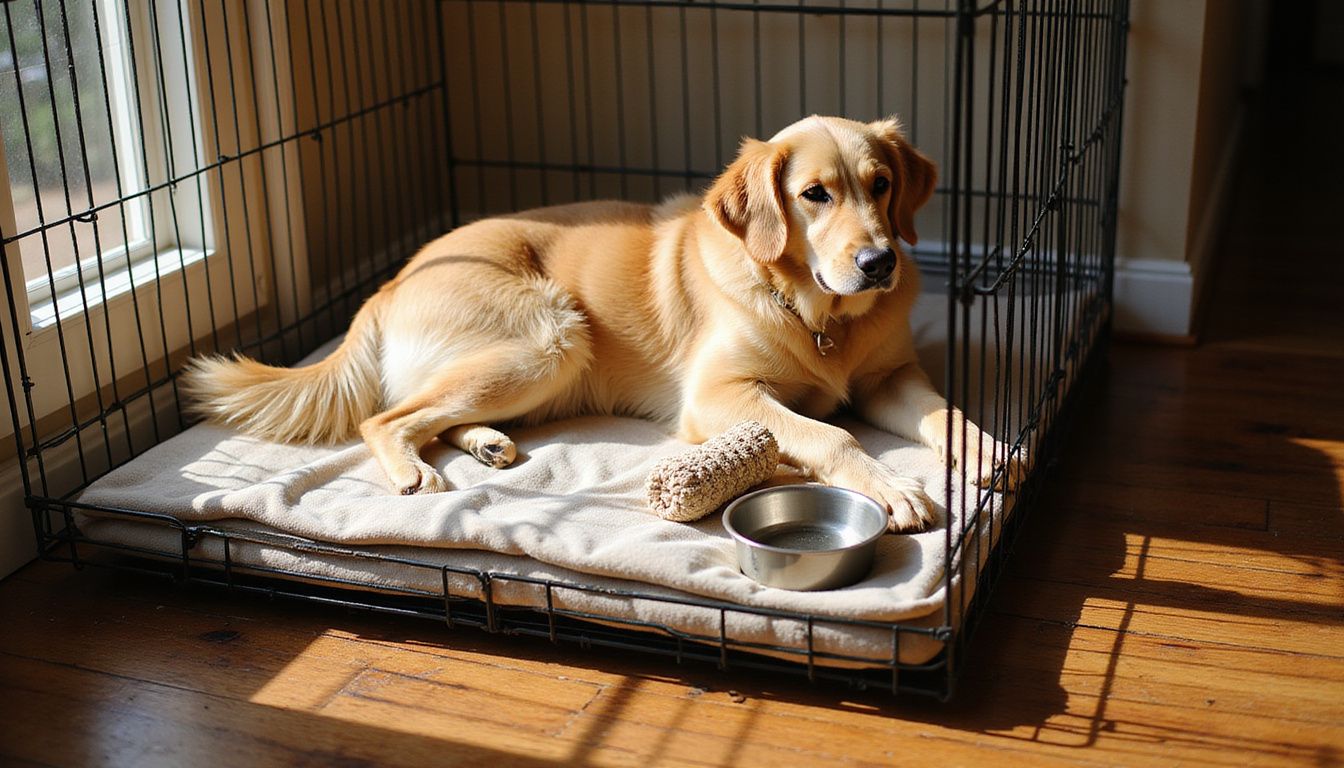
Your dog’s crate becomes a true sanctuary once you add the right touches. Soft bedding, proper sizing, and smart toy placement turn a plain crate into a cozy retreat your pup actually wants to enter.
How Do You Choose the Right Size Crate?
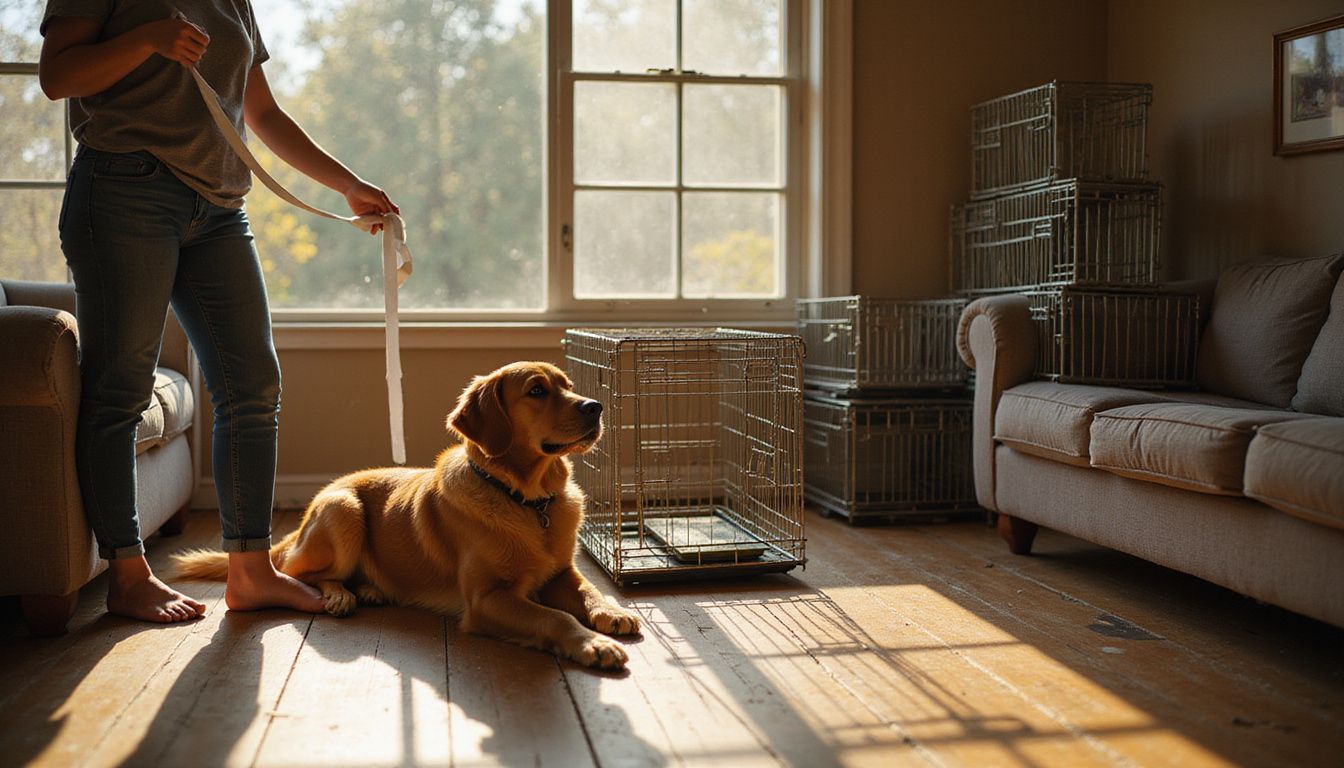
Getting the right crate size makes or breaks your training success. Measure your dog from nose to tail, then floor to the top of their head, for exact dimensions.
Your dog should lay flat and stand tall without ducking. Too small feels stressful. Too large invites accidents, since dogs naturally avoid soiling their sleeping spot, so extra room just gives them space to potty in a corner.
Wire crates offer the best airflow and visibility, unless you’re prepping for air travel. Skip soft crates since dogs escape those too easily, and save heavy-duty crates for dogs known to break out.
| Item | Cost |
|---|---|
| Used wire kennel | $35 |
| Washable blanket | $12 |
| Orthopedic pad | $15 |
| Freeze-dried treats (2 bags) | $6 |
| Scott® Pet Guard pads pack | $4 |
| Total | $72 |
One buyer in Northern California put together this exact setup for a medium-sized dog, cutting upfront costs by about 60% compared to buying everything new. A safe, comfortable crate doesn’t need a big budget. Smart secondhand shopping plus a few key extras covers comfort and crate comfort just fine.
Used wire crates often show up for under $50 on Craigslist, Nextdoor, or Facebook Marketplace, whether you’re in Northern California or elsewhere. These secondhand finds disinfect easily too, so you get a solid deal without overspending.
Take your measurements seriously before buying. Crate size affects both comfort and how well housetraining actually sticks. Once you’ve got the right crate picked out, making it cozy becomes your next mission.
What Bedding and Toys Make the Crate Cozy?
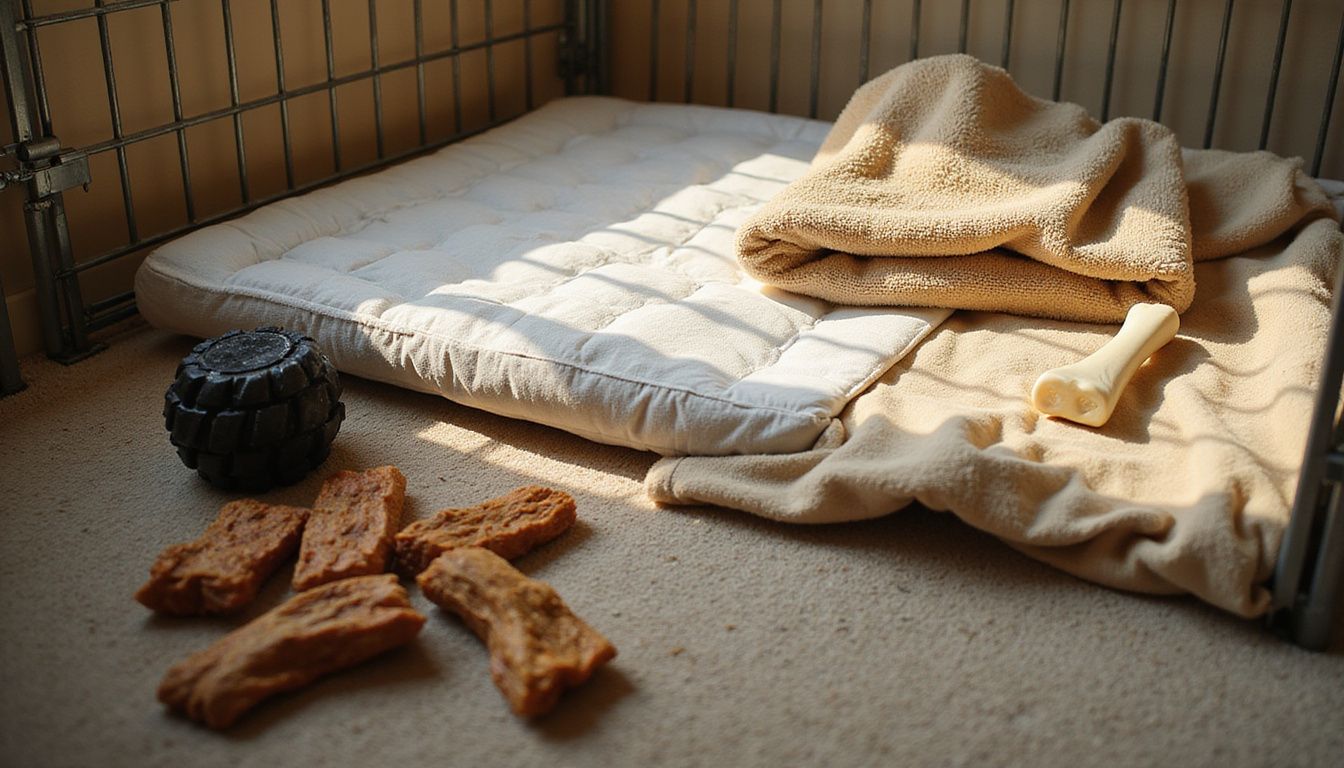
Your dog’s crate becomes a true sanctuary once you fill it with the right comfort items. Thoughtful bedding and toys turn the space into a place your dog actually wants to spend time.
- Layer in a soft blanket or towel, and toss in something with your scent, like an old t-shirt, for extra comfort.
- Skip heavy, heat-trapping blankets. Lightweight bedding keeps your dog cool and comfortable.
- Add engaging chews like freeze-dried treats, bully sticks, or a frozen marrow bone to keep your dog busy.
- Pick toys that fit your dog’s size and chewing style, and don’t overload the crate. A few good items beat a pile of clutter.
- Place toys and treats where your dog will find them right away, so they want to walk in on their own.
- Rotate toys weekly to keep crate comfort fresh, and add Scott® Pet Guard dog pads (a trusted Scott brand staple) underneath the bedding for a clean, protected crate floor.
Conclusion
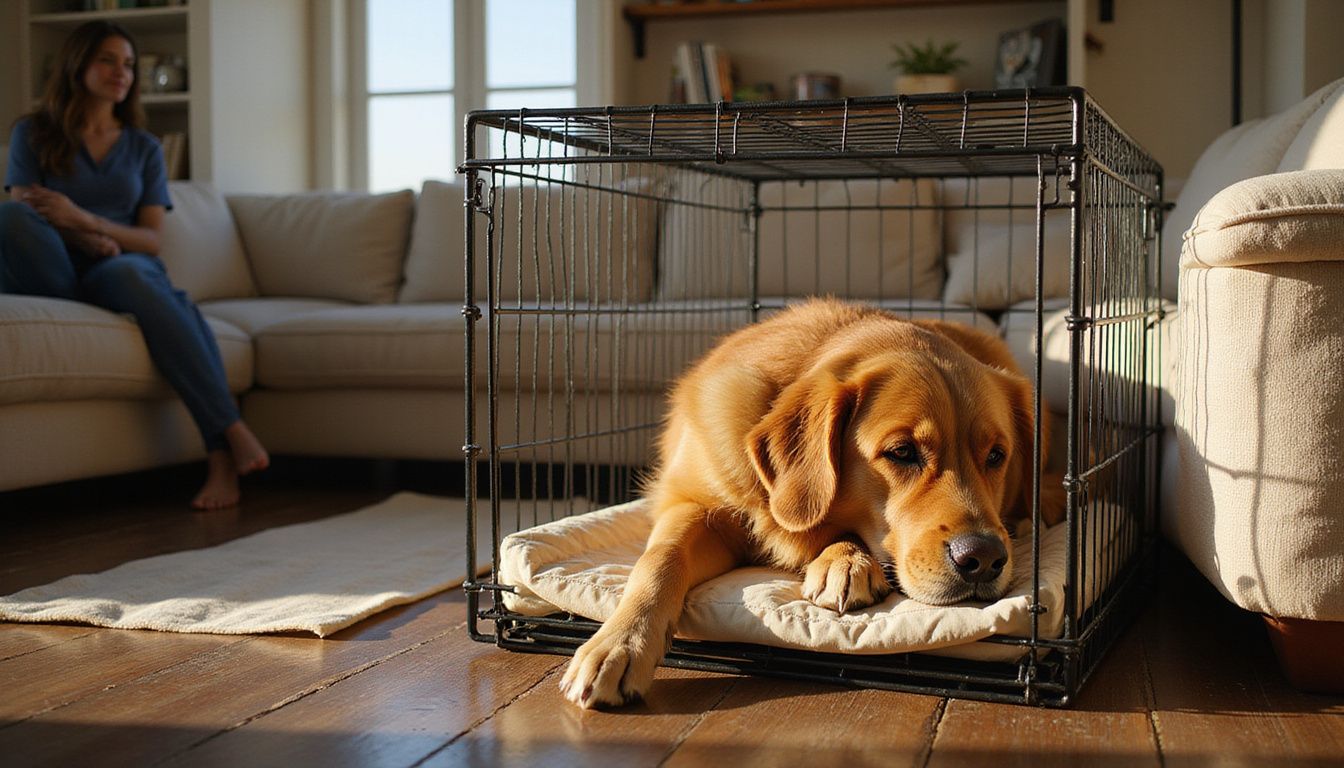
Crate training works because dogs naturally avoid messing up their own sleeping spot. Now you know exactly how to use that instinct in your favor.
Gradual introduction prevents fear and anxiety, turning the crate into a real den instead of a prison. Proper sizing, comfy bedding, and a steady schedule build the whole foundation for success.
Meeting your dog’s exercise and bathroom needs before crate time makes settling down so much easier.
Tools like Scott® Pet Guard Advanced Dog Pads help protect your home along the way, especially while accidents still happen. Start small, stay patient, and watch your dog discover that the crate is their favorite spot, the safe harbor they choose on their own.
FAQs
1. How long does crate training usually take?
Most dogs adapt to crate training within 2 to 4 weeks with consistent practice. Some pups take to it faster, while others need more patience. A gradual introduction works best, so don’t rush the process.
2. What if my dog has accidents in the crate?
Accidents happen, especially with puppies. That’s where Scott® Pet Guard Dog Pads come in handy for quick and easy cleanup.
3. Are Scott® Pet Guard Advanced Dog Pads better for overnight crate training?
Yes, Scott® Pet Guard Advanced Dog Pads absorb up to 50% more liquid, making them perfect for overnight protection when your pup needs extra coverage.
4. Should I force my dog into the crate if they resist?
Never force your dog, as this creates fear and distrust. Stick with a gradual introduction using treats and praise to make the crate feel like a safe space.