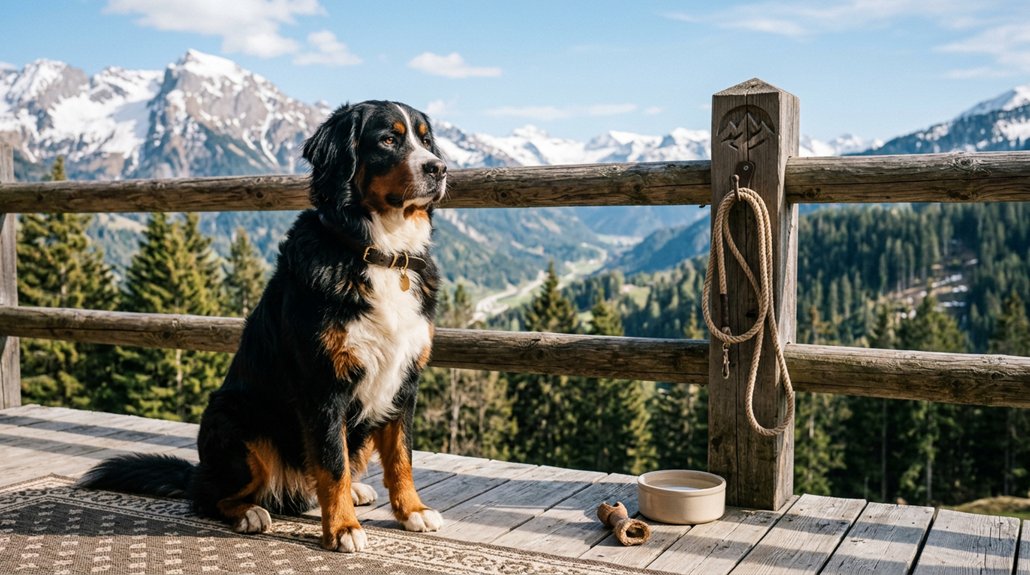
You’ll find Bernese Mountain Dogs to be loving, loyal companions perfect for families. They’re gentle with children and easily trainable, thriving on early training and socialization. Their beautiful tri-color coat needs regular grooming, while good nutrition supports their large breed growth. Prepare your home to accommodate their size and energy needs. Regular vet visits guarantee they’re healthy and happy. Dive deeper into grooming techniques and activity ideas for a fuller understanding of your Bernese’s needs.
Key Takeaways
- Bernese Mountain Dogs are affectionate, calm, and loyal, making them excellent companions for families with children.
- Regular grooming 2-3 times weekly is necessary to manage their distinctive tri-color coat and excessive shedding.
- Early training with positive reinforcement after the second vaccination is essential, using short sessions to introduce basic commands.
- High-quality large-breed puppy food with protein below 25% supports healthy growth and joint protection.
- Daily exercise, including outdoor activities, is vital for maintaining their physical health and preventing obesity.
Understanding the Loyal Nature of Bernese Mountain Dogs
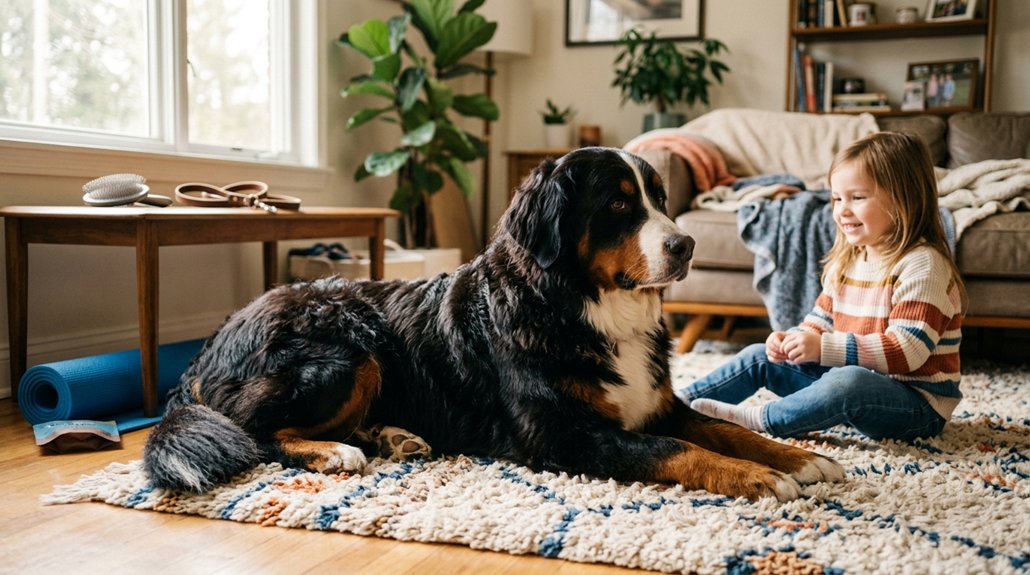
Renowned for their affectionate and loyal nature, Bernese Mountain Dogs are more than just pets—they’re devoted family members. Their calm and gentle demeanor makes them ideal companions for children, nurturing emotional connections that foster a harmonious home. You’ll find these dogs thrive on bonding activities that strengthen their attachment to you and your family. Whether it’s taking them on a hike or playing in the backyard, they’re happiest when included in family life, reflecting their working heritage.
This breed tends to form particularly strong attachments to individual family members, offering unmatched loyalty. Early socialization is vital to temper their reserved behavior with strangers, allowing them to adapt seamlessly to different environments. Their willingness to please guarantees they’re not only loyal but also reliably trainable companions.
Iconic Traits and Grooming Needs of Bernese Mountain Dogs
When considering the iconic appearance of Bernese Mountain Dogs, their striking tri-color coat leaves an indelible impression on anyone who sees them. The combination of jet-black base, rust accents, and crisp white markings defines their visual distinctiveness but brings grooming challenges requiring consistent care. You’ll need to tend to their dense double coat 2-3 times a week for matting prevention and shedding management, especially during seasonal molting.
The tri-color coat of Bernese Mountain Dogs captivates with beauty but demands regular grooming care.
Here’s how to tackle their grooming needs:
- Use an undercoat rake: Helps remove loose hairs from underlayers.
- Apply a slicker brush: Effective for tangled fur.
- Use a de-shedding comb: Manages shedding efficiently.
- Bathe every 6-8 weeks: Keeps coat healthy with dog-specific shampoo.
- Incorporate daily brushing: Enhances bonding and reduces home fur.
Fueling Your Bernese Mountain Dog: Nutritional Tips
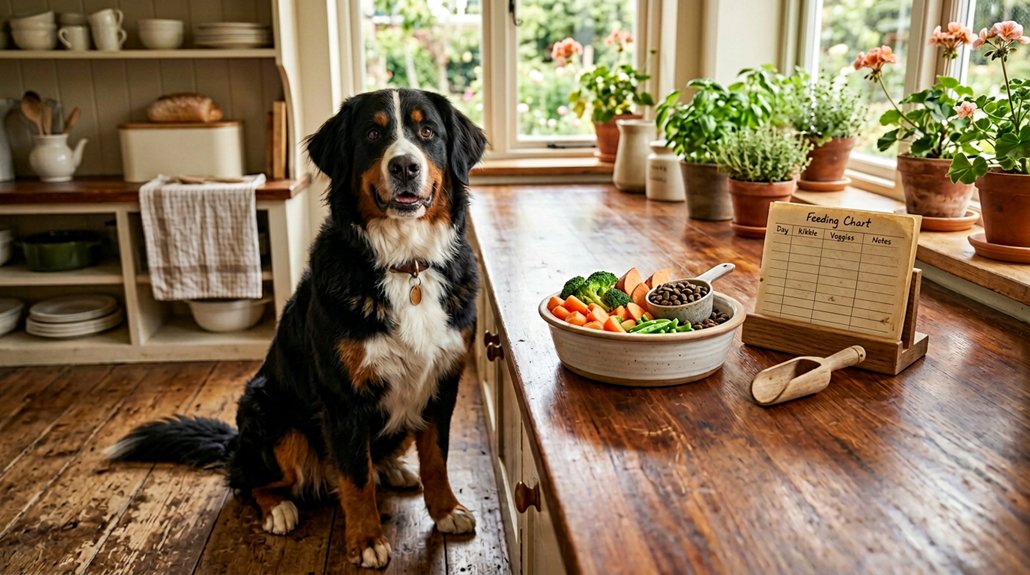
While maintaining the luxurious coat of your Bernese Mountain Dog is important, don’t overlook the significance of fueling them with proper nutrition. Start with a high-quality, large-breed puppy formula, balancing calcium and phosphorus for healthy growth. Aim for protein levels below 25% to support their bone and joint health. A proper feeding schedule is essential; provide 3-4 smaller meals daily until your puppy reaches six months. Shift to adult feeding schedules then, increasing portion size as needed. Introduce new foods gradually over a week to prevent digestive issues. Probiotics can be beneficial during these shifts. Regular veterinary consultations guarantee your dog’s nutritional needs are met, promoting steady growth. Watch for consistent weight gain and adjust as advised by your vet.
Preparing Your Home for a Large Dog Breed
Bringing a Bernese Mountain Dog into your home requires thoughtful preparation to guarantee a safe and welcoming environment for this large breed. Confirm your home is optimized for their size and needs. Focus on:
- Home safety: Secure loose wires, remove small objects, and store harmful substances out of reach.
- Space requirements: Provide ample room to roam and play. Bernese Mountain Dogs need space to move given their 70-115 pound size.
- Puppy environment: Designate a cozy bed or crate to offer comfort and security as they adapt.
- Boundary setting: Use baby gates or closed doors to define off-limits areas and manage their movement.
- Cozy zones and play areas: Establish inviting environments for relaxation and interaction, fostering companionship.
Following these steps confirms a balanced, nurturing atmosphere for your large furry friend.
Training and Socializing Your Bernese Puppy
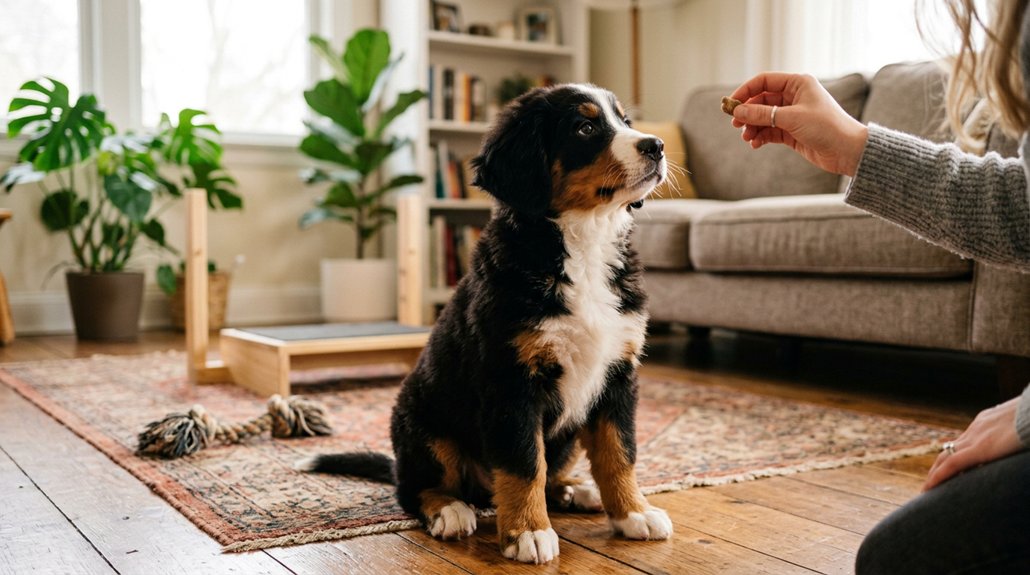
Training your Bernese Mountain Puppy in their early months is essential to ensuring they grow into well-behaved adults, using positive reinforcement like high-value treats to encourage desired behaviors. Introduce foundational commands and gradually socialize your puppy with new experiences after vaccinations to build confidence. Monitor interactions to manage behavioral challenges and keep sessions short, fun, and engaging.
Early Training Techniques
Commence the journey of training and socializing your Bernese Mountain puppy by prioritizing obedience training soon after their second round of vaccinations. Focus on essential bonding techniques like positive reinforcement to create a strong connection with your puppy. Short training sessions, typically 5-10 minutes, help maintain their attention span. As your puppy becomes proficient, gradually increase the duration. Enhance their learning experience using a clicker or verbal marker to link behaviors with rewards.
- Introduce commands like “sit,” “come,” and “stay” to build a reliable foundation.
- Use rewards such as treats and praise to encourage desired actions.
- Ensure guidance with consistent supervision of interactions in multi-dog settings.
- Gradually increase training session lengths as proficiency grows.
- Begin socialization by safely exploring diverse settings once vaccinations are complete.
Socialization Best Practices
Although it may be tempting to immerse yourself in socializing your Bernese Mountain puppy immediately, it’s essential to wait until they’ve had their vaccinations to guarantee safety. Once ready, introduce them to diverse socialization environments to enhance puppy exposure and foster behavioral adaptability. Start with controlled settings, ensuring interaction supervision with other dogs or people. Gradual exposure over one to two weeks will build their confidence through positive experiences.
Incorporate playful encounters in puppy classes or arrange playdates, watching for signs of comfort or stress. Consistently use positive reinforcement to reward calmness and curiosity, as this encourages good manners. Supervised interactions and gradual introductions are key in establishing a well-adjusted companion, setting the foundation for a socially confident Bernese Mountain dog.
Managing Behavioral Challenges
As you continue the journey of raising a well-socialized Bernese Mountain Dog, addressing behavioral challenges plays a vital role in their development. Start training early, ideally within the first six months, to tackle potential issues like leash manners and barking control. Implement positive reinforcement techniques to boost behavioral redirection and manage aggression.
To tackle behavioral challenges:
- Positive Reinforcement: Use treats and praise to encourage good behavior.
- Leash Manners: Teach loose-leash walking to prevent pulling.
- Barking Control: Redirect excessive barking with training and stimulus control.
- Aggression Management: Monitor and separate during feeding to reduce resource guarding.
- Separation Anxiety: Gradually increase alone time to build your puppy’s comfort.
Consistency in commands is essential, and short, focused sessions hold their attention and facilitate learning.
Veterinary Tips for Healthier Berners
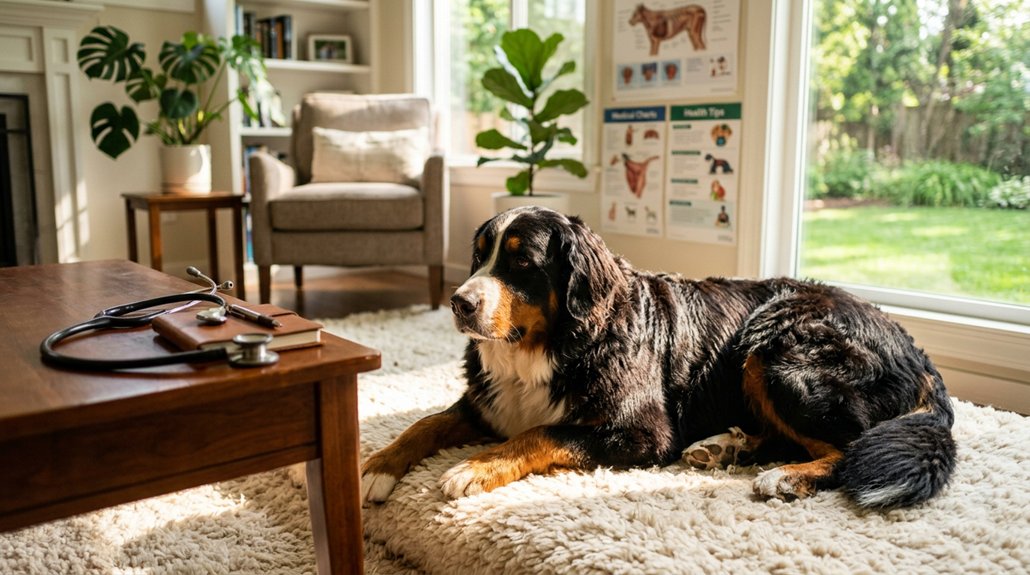
Taking steps to prevent health issues and provide proper nutrition is essential for your Bernese Mountain Dog’s well-being. It’s important to establish a routine with your vet for vaccinations, heartworm prevention, and regular screenings, while also discussing a balanced diet tailored to this breed’s specific needs. By being proactive and informed, you’re setting the stage for a longer, healthier life for your furry companion.
Preventative Health Measures
To guarantee your Bernese Mountain Dog stays healthy and robust, committing to preventative health measures is key. Preventative vaccinations and maintaining dental hygiene are essential in safeguarding your dog from common ailments. Start vaccinations between 6 and 8 weeks old to protect against infectious diseases. Regular dental care is important for preventing oral diseases and promoting overall health.
Key preventative health measures include:
- Regular veterinary check-ups: Critical for detecting health issues like hip dysplasia early.
- Flea and tick medications: Protect against parasites that can impact health.
- Heartworm prevention: Necessary for your dog’s longevity.
- Weight monitoring: Helps prevent obesity, reducing joint issues.
- Discuss spaying/neutering: Consult your vet to decide the best time for this procedure.
Nutritional Guidance for Berners
Understanding the nutritional needs of your Bernese Mountain Dog is crucial to guarantee they grow into a healthy adult. Bernese puppies thrive on high-quality large-breed puppy formulas that carefully balance calcium and phosphorus, ensuring proper bone and joint development without risking issues. Aim to maintain feeding schedules of 3-4 smaller meals daily until they’re six months old, adapting to adult nutrients carefully. Include steady nutrition sources, with protein levels below 25% to prevent kidney strain and support healthy weight gain.
Regularly monitor your puppy’s growth, ensuring weight gain is steady without visible rib definition. Consider incorporating daily probiotics to bolster digestive health during diet adjustments and adaptation phases. These measures support your Bernese Mountain Dog’s wellbeing and longevity.
Handling Shedding and Coat Care in Bernese Mountain Dogs
Handling the shedding and coat care of a Bernese Mountain Dog can seem challenging at first, but understanding their unique grooming needs simplifies the process. Focus on shedding solutions and a grooming schedule. Brush their dense double coat 2-3 times weekly to prevent matting and control everyday shedding. During seasonal changes like spring and fall, enhance coat maintenance with daily brushing. For these tasks, essential tools include:
Brush the dense double coat 2-3 times weekly to manage shedding and prevent matting.
- Dog-specific shampoo for every 6-8 weeks bathing
- Undercoat rake for managing thick fur
- Slicker brush for detangling knots
- De-shedding comb to minimize loose fur
- Regular grooming sessions for bonding and early detection of skin issues
Fun Activities and Adventures With Your Bernese
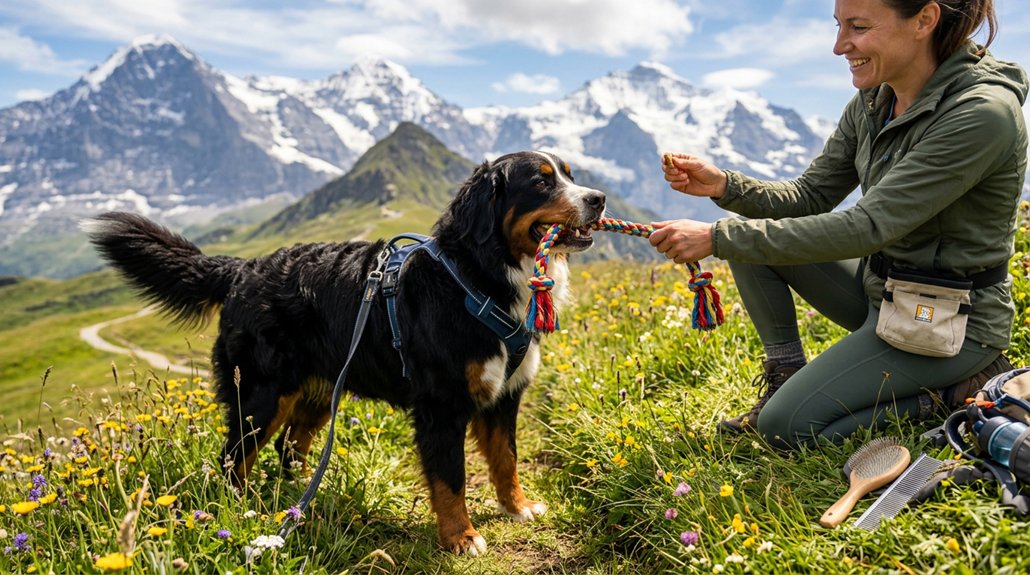
Once you’ve mastered the grooming regimen for your Bernese Mountain Dog, you’re well-prepared to introduce them to a range of activities that play to their natural strengths and guarantee their well-being. Enjoy hiking adventures and swimming fun, ensuring they get 1 to 1.5 hours of daily outdoor exercises. Engaging in fetch games and agility training boosts their physical health and strengthens your bond through playful interactions. During cooler months, embrace snow play as a delightful way to tap into their love of cold environments. Camping outings are ideal, though remember to supply weatherproof shelters and fresh water. Visit parks and attend dog events to encourage socialization, cultivating your Bernese’s gentle demeanor and friendly interactions with both people and other dogs.
Essential Gear for Your Bernese Mountain Dog
Equipping your Bernese Mountain Dog with the right gear is essential to guaranteeing their safety and comfort during your shared adventures. Prioritize their well-being with properly fitted collars, especially considering their rapid growth as puppies. For walks and training, a 6-foot leash gives you control while allowing them space to explore.
Ensure your Bernese Mountain Dog’s safety and comfort with properly fitted collars and a 6-foot leash for adventures.
- Collar fittings: Guarantee snug, secure collars with updated ID tags.
- Leash length: A 6-foot option keeps your dog safe and close.
- Bowl materials: Stainless steel prevents tipping and enhances hygiene.
- First aid: Always carry a pet first aid kit for minor injuries.
- Rubyloo Doggy Bag: Perfect for organized waste clean-up on outings.
These essentials will help you maintain a balance of adventure and safety.
Frequently Asked Questions
How Do Bernese Mountain Dogs Interact With Children and Other Pets?
You’ll notice Bernese Mountain Dogs often engage in playful interactions with children and other pets. Their gentle guardianship makes them welcoming companions, ensuring a safe environment. However, always supervise, as their size might unintentionally overwhelm smaller friends.
What Are Common Health Issues in Bernese Mountain Dogs Apart From Joint Problems?
You’ll often find Bernese Mountain Dogs facing dental health issues, encountering skin conditions, and suffering from a cancer predisposition. Eye disorders also plague them occasionally. Understanding these can guarantee better care and early intervention for your dog.
How Much Time Should I Dedicate Daily to Exercise My Bernese?
You should dedicate at least 30 to 60 minutes daily to exercise routines and engaging daily activities. This helps maintain your Bernese’s health and happiness, considering their energy levels and large build needing consistent activity.
Are Bernese Mountain Dogs Suitable for Apartment Living?
Only 28% of large dog breeds thrive in apartments. Bernese Mountain Dogs need spacious environments to offset limited apartment size. They’re gentle giants but may bark; confirm noise tolerance in your building to avoid issues.
How Do I Find a Reputable Bernese Mountain Dog Breeder?
Start by researching breeders with certifications guaranteeing ethical practices. Contact each to discuss their puppy socialization processes. It’s essential breeders prioritize these aspects to ascertain healthy, well-adjusted puppies, perfect for joining your family.
Conclusion
Caring for a Bernese Mountain Dog is like tending to a flourishing garden; with the right nurturing, it thrives and brings joy. Just as a garden needs water, light, and care, your Bernese needs proper training, socialization, and love. Remember, studies show 70% of a dog’s happiness stems from a balanced routine. Embrace this journey with empathy and consistency, and your gentle giant will blossom into a loyal, cherished companion.