Your puppy needs substantial sleep to support its rapid growth and development. Puppies can require up to 22 hours of sleep daily, particularly in their early weeks. As they approach 20 weeks old, this typically decreases to 18-20 hours daily. Sufficient sleep is essential for brain development, muscle growth, and immune support. Without enough rest, your puppy might become irritable and less trainable. Explore further to guarantee your puppy’s sleep supports its health and well-being.
Key Takeaways
- Puppies require up to 22 hours of sleep daily, reducing to 18-20 hours as they approach 20 weeks old.
- Sleep supports brain development, muscle growth, and immune system functionality in puppies.
- Adequate rest prevents crankiness, irritability, and destructive behaviors affecting a puppy’s temperament.
- Monitoring sleep patterns is crucial to ensure puppies achieve necessary rest for health and development.
- Significant changes in sleep or behavior should prompt consultation with a veterinarian for early intervention.
Understanding Puppy Sleep Needs
Understanding puppy sleep needs is essential for ensuring their healthy development and well-being. Puppies, especially newborns, have demanding sleep patterns, snoozing up to 22 hours a day. As they grow and their puppy activity increases, their sleep requirements adjust, ranging between 18 to 20 hours until they’re about 20 weeks old. It’s important to monitor these sleep patterns closely because sleep plays a significant role in brain development and muscle growth. Proper sleep supports their immune system and helps avoid crankiness or destructive behaviors often linked to fatigue. As puppies mature, their sleep needs diminish gradually; however, ensuring they get enough rest remains essential. Balancing rest and activity will help keep your puppy well-adjusted and happy.
The Benefits of Extended Puppy Sleep
Ensuring your puppy gets ample sleep goes beyond meeting their basic needs; it plays a significant role in their growth and learning. During their growth stages, extended puppy sleep cycles are essential for brain development, as they help consolidate new memories and strengthen cognitive functions. A well-rested puppy is more equipped to resist infections, as adequate sleep enhances the immune system‘s functionality. Additionally, sleep supports physical health by facilitating muscle growth and tissue repair, which are important in rapid development stages. Without enough sleep, puppies may exhibit behavioral issues such as crankiness and destructive tendencies, impeding their temperament. Puppies who enjoy sufficient rest are more alert, improving their receptiveness during training and enabling them to learn essential social behaviors and commands efficiently.
Creating a Comfortable Sleep Environment for Your Puppy
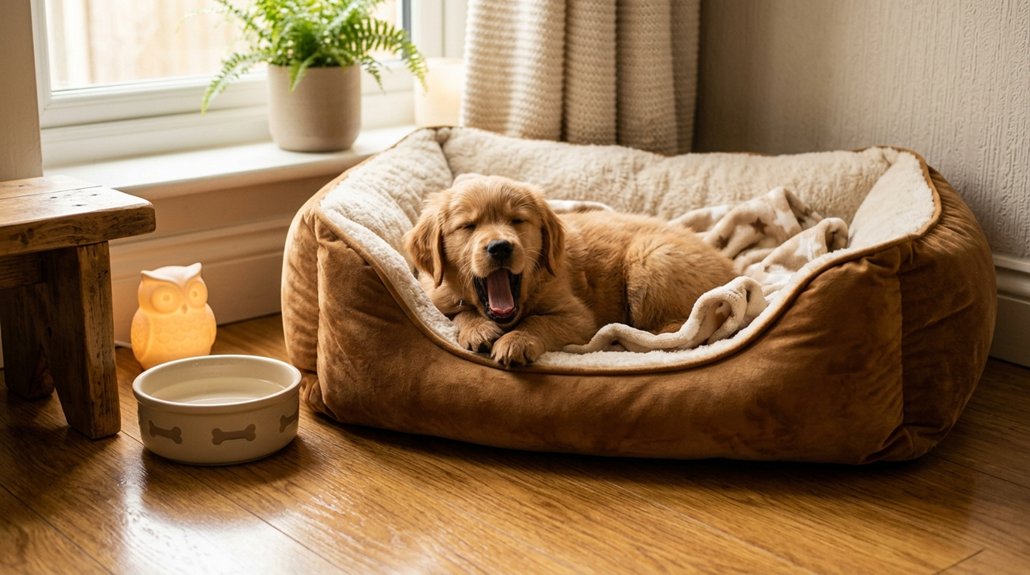
It’s essential to choose a quiet and peaceful area in your home for your puppy’s sleep, far from disruptions and loud noises. Providing a comfortable bed that’s appropriately sized allows your puppy to fully stretch and relax, contributing to quality rest. Make certain the sleeping environment maintains a cozy temperature and minimizes bright lights and noise, as these factors support deeper, uninterrupted sleep for your puppy.
Ideal Bed and Location
While creating a comfortable sleep environment is essential for your puppy, finding the ideal bed and location involves several key considerations. Selecting the right puppy bed is vital; it should be appropriately sized and comfortable, allowing your puppy to stretch without restriction. This guarantees a restful and undisturbed sleep. The sleep location is equally important. Designate a quiet, peaceful area, free from disruptions, which will aid in fostering a tranquil resting environment. To limit distractions, choose a space away from loud noises and bright lights, promoting a more conducive atmosphere for restful sleep. Establishing a consistent bedtime routine, like a calm winding down period, will also help signal to your puppy that it’s time to rest effectively.
Temperature and Lighting Control
Beyond selecting the right bed and location for your puppy, controlling the temperature and lighting in the sleeping area is paramount for fostering a quality sleep environment. It’s essential to maintain an ideal sleep temperature, ideally within 65°F to 75°F (18°C to 24°C), as puppies are sensitive to extreme heat or cold. Choose soft, breathable bedding that retains warmth without causing overheating. The lighting effects in the room should mimic natural conditions conducive to rest; dimming lights or employing a night light cultivates a calming atmosphere. This signals your puppy that it’s time to sleep. To support relaxation and enhance sleep quality, eliminate loud noises and establish a consistent sleep schedule. Proper environmental control promotes a peaceful, restful sleep.
Identify Sleep Deprivation in Puppies
To identify sleep deprivation in puppies, watch for signs like crankiness, irritability, and destructive behavior as they struggle to regulate their mood. It’s essential to guarantee your puppy gets the necessary 18 to 20 hours of sleep daily, as significant deviations can signal underlying health issues. If your puppy appears lethargic or exhibits excessive sleep during active periods, it’s time to evaluate their environment and routine to address potential sleep shortages effectively.
Signs of Sleep Deprivation
Recognizing the signs of sleep deprivation in puppies is critical for ensuring their well-being and balanced growth. Sleep patterns play an essential role in a puppy’s development, and any deviation can signal trouble. You may notice behavioral changes such as irritability, mood swings, or crankiness. Excessive yawning and pacing often indicate insufficient rest. When puppies retreat to solitude, it’s a clear cry for more sleep. If their naptime falls short of the usual 18-20 hours daily, it might suggest potential health issues or inadequate rest. Extreme sleep deprivation can cause destructive behavior due to increased anxiety or hyperactivity. Regularly monitor your puppy’s sleep patterns and behavior to catch early warning signs and avert adverse consequences.
Addressing Sleep Shortages
An effective way to address sleep shortages in puppies involves identifying and understanding the root causes of their sleep deprivation. It’s essential to maintain excellent puppy sleep hygiene by establishing a consistent napping schedule. Puppies typically need 18-20 hours of daily rest; missing out can hinder their growth. Monitor for signs like irritability or lethargy, as these may indicate sleep deprivation. Be observant during growth spurts, as puppies might require more sleep. However, if sleep increases suddenly or considerably, it’s worth checking with a veterinarian. Visual indicators such as pale gums, diarrhea, or vomiting should prompt immediate attention. Regularly track their sleep patterns to spot deviations early, ensuring their sleep needs align with their developmental requirements.
Crafting Your Puppy’s Sleep Routine
- Dedicated Sleep Area: Create a quiet, comfortable space devoid of distractions, which can make your puppy feel more secure and relaxed.
- Balanced Activity Schedule: Incorporate active playtime sessions followed by quieter periods to naturally guide them to their much-needed 18 to 20 hours of sleep daily.
- Monitor for Overtiredness: Keep an eye on signs of exhaustion and gently lead your puppy to their sleep spot to guarantee they’re getting quality rest.
Adjust routines as their sleep needs evolve, fostering healthy habits.
Encouraging Restful Daytime Naps for Puppies
Understanding the essential role that sleep plays in a puppy’s development, you’ll want to make certain they get sufficient daytime naps to support their growth and well-being. Puppies require approximately 18 to 20 hours of sleep daily, making restorative naps critical. A routine that balances puppy playtime with quiet periods aids in effective nap changes, allowing naps to range between 30 minutes and two hours. Designating a safe, comfortable sleeping spot, like a crate or a dog bed, fosters security and promotes independence. Be attentive to signs of overtiredness, such as restlessness or whining, indicating a need for rest. Allowing puppies to nap alone not only supports their independence but also guarantees they get the essential sleep necessary for healthy development.
Do Puppies Sleep Through the Night?
Having established the importance of restful daytime naps, you might wonder if puppies manage uninterrupted sleep throughout the night. Typically, younger puppies don’t sleep through the night due to specific puppy nighttime behavior. They often wake up for potty breaks, following a guideline where they need a bathroom break once every hour for each month of age. For example, a 4-month-old puppy may need to go out every four hours.
To help manage this phase effectively, consider these potty training strategies:
- Limit Water: Reduce water intake before bedtime to decrease nighttime wake-ups.
- Comfortable Environment: Confirm your puppy’s sleeping area is cozy and conducive to rest.
- Routine: Establishing a consistent nightly routine helps them develop regular sleep patterns as they mature.
What to Do If Your Puppy Isn’t Sleeping Well
When you notice that your puppy isn’t sleeping well, it might be due to a few key factors that, once addressed, could improve their sleep quality. Guaranteeing peak sleep hygiene is essential—provide a quiet, comfortable area free from distractions like loud noises or bright lights. Maintain a consistent sleep routine to signal bedtime. Monitor your puppy’s activity levels; excessive play or stimulation can heighten puppy anxiety, making it difficult for them to wind down. Adjust feeding schedules to avoid late-night meals, which could prompt bathroom needs and interrupt sleep. Observe for signs of discomfort or health issues, such as behavioral changes. Addressing these factors can help guarantee your puppy gets the restful sleep they need for peak growth and health.
When to Seek Veterinary Advice for Puppy Sleep Issues
How do you know when your puppy’s sleep issues merit a trip to the veterinarian? It’s essential to monitor their sleep patterns actively. Changes in behavior, such as lack of interest in family interaction or activities, may signal health issues.
Consider the following signs that suggest the need for vet consultations and assessments:
- Sudden changes in sleep patterns: Excessive sleeping or insomnia could require a veterinary evaluation for behavioral assessment and health monitoring.
- Accompanying symptoms: Signs like lack of appetite, pale gums, diarrhea, or vomiting alongside altered sleep should prompt immediate attention.
- Lethargy or self-isolation: These could indicate distress or unseen health concerns, warranting professional evaluation.
Timely intervention can address issues early, ensuring your puppy’s overall well-being.
Frequently Asked Questions
What Is the 7 7 7 Rule for Puppies?
The 7 7 7 rule for puppies guarantees their energy levels and sleep patterns are balanced. You’ll structure their day with seven hours of play, seven hours of sleep, and seven hours of quiet time, supporting healthy development.
Is It Okay for a Puppy to Sleep All Day?
Yes, it’s normal for a puppy to sleep like a log throughout the day. Ensuring balanced puppy sleep patterns is essential for ideal puppy sleep health, supporting their development and preventing potential underlying health issues.
What Is the Hardest Month of a Puppy?
The hardest month is often the fourth due to puppy development challenges. You’ll face behavioral issues, training difficulties, and health concerns. Sleep patterns fluctuate, socialization needs increase, and exercise requirements grow, making this adjustment period essential.
What Is the 10 10 10 Rule for Puppies?
The 10-10-10 rule is like a rhythmic dance guiding puppy development: balance 10 minutes each of play, training, and relaxation. It optimizes energy and incurs beneficial puppy sleep, essential for their growth and health.
Conclusion
You’ve explored the intricacies of puppy sleep, uncovering its essential role in development. While puppies may challenge you with erratic patterns, remember, their need for 18–20 hours of sleep daily is non-negotiable for ideal growth. Debunking the myth that forcing wakeful hours aids adaptation, it’s important to recognize that ample rest is essential for their well-being. Trust your instincts, but seek veterinary advice for persistent issues, ensuring your furry friend thrives in its formative years.