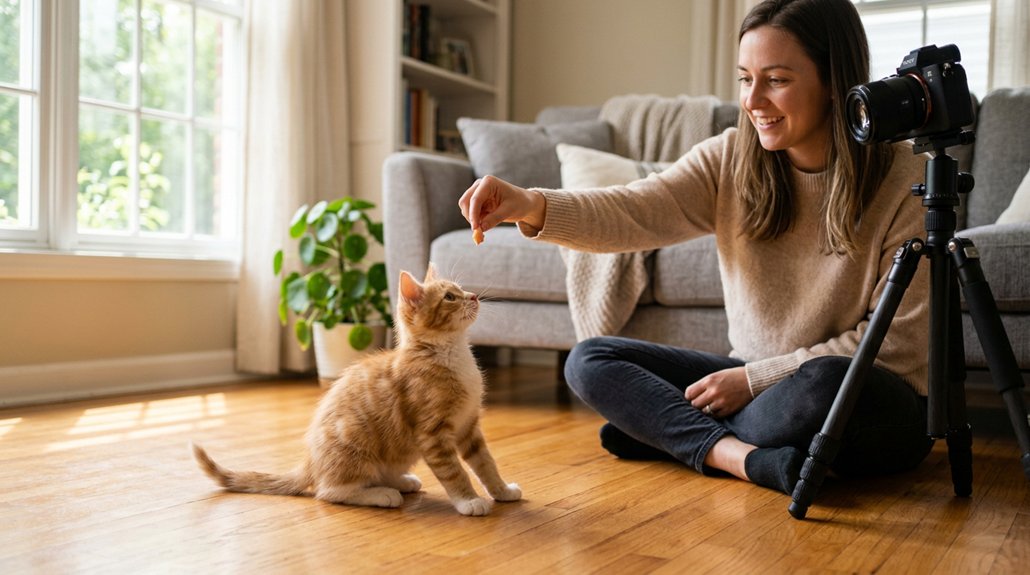
Training a kitten shares similarities with dog training, yet demands unique strategies that respect a kitten’s independent nature. You should focus on short, frequent sessions with high-value treats to match their solitary tendencies, and use positive reinforcement like toys and clickers for engagement. It’s essential to understand their individual motivators for effective results. Developing a trusting bond is important, and exploring various techniques can improve behavioral retention. Discover more differences and effective methods to enhance your training process.
Key Takeaways
- Kittens can be trained using positive reinforcement, similar to dogs, but with adjustments for their independent nature.
- Use high-value treats to motivate kittens, as positive reinforcement is more effective than social praise.
- Clicker training, like with dogs, helps mark desired behaviors and strengthen communication with kittens.
- Training sessions should be short (5 to 10 minutes) and frequent for optimal focus and retention.
- A calm, distraction-free environment is essential for effective kitten training, similar to training dogs.
Can You Train a Kitten Like a Dog? Understanding Key Differences
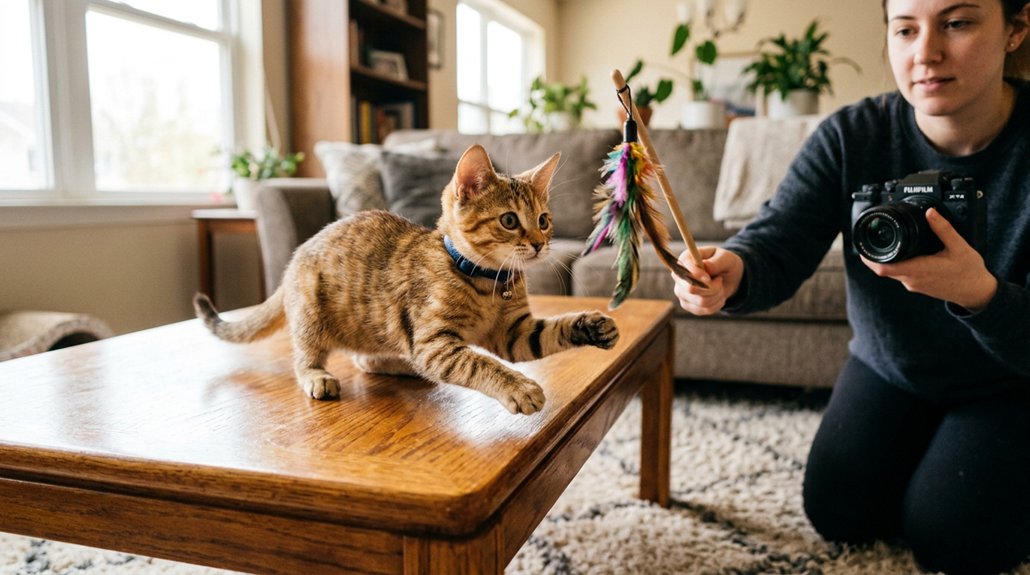
How can a pet owner approach training a kitten with techniques typically reserved for dogs? First, understand that kitten behavior differs considerably from that of a dog. While dogs thrive on social interaction and hierarchy, cats demonstrate more solitary and independent tendencies. Training techniques must adapt to this distinction. Kittens respond best to positive reinforcement, with rewards such as treats or toys, as opposed to social praise, which is more effective for dogs. Leveraging short training sessions—ideally between 5 to 10 minutes—can help maintain a kitten’s focus and reduce frustration. Structured yet flexible approaches cater to a kitten’s natural pace and comfort level, ultimately enabling them to learn various behaviors, from using a litter box to performing tricks like high-fives.
Discovering Your Kitten’s Motivators
Curiously enough, understanding what drives your kitten’s behavior can transform your training approach considerably. Scientific insights into feline behavior suggest that motivator discovery is essential in effectively training kittens. Identifying unique reward preferences like food, toys, or catnip will provide valuable leverage. Studies indicate that food-motivated kittens show a high response rate to treat-based incentives, yet it’s important to find high-value treats that truly capture their interest. Empirical data suggest that patience and experimentation are necessary to discern what engages your specific kitten. Interacting with various motivators prevents boredom, keeping training sessions dynamic. This customized approach not only augments kitten engagement but also strengthens the bond between you and your feline companion, making training a mutually rewarding endeavor.
Implementing Positive Reinforcement for Kittens
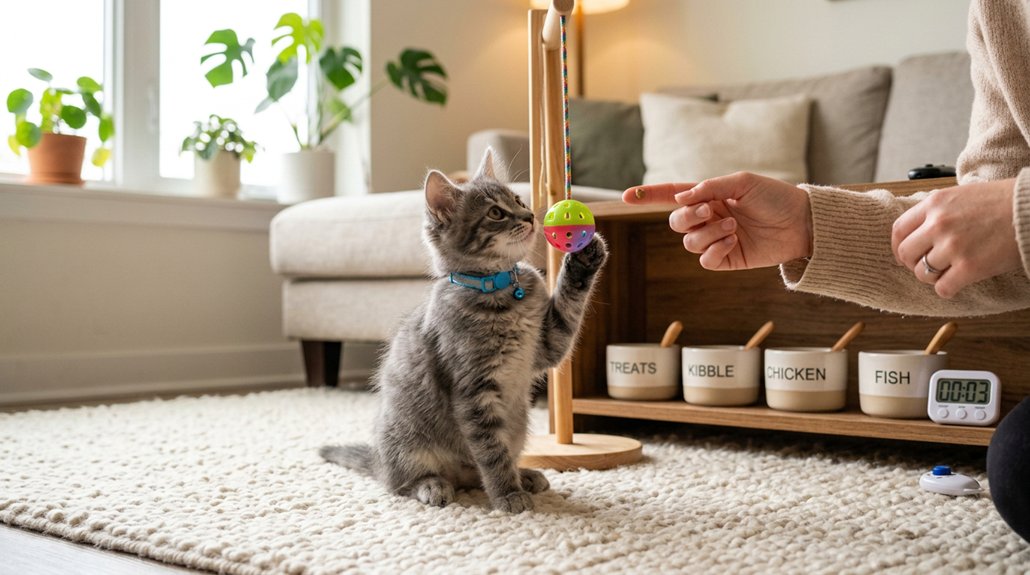
When aiming to effectively train kittens, employing positive reinforcement emerges as a scientifically-backed strategy that harnesses the principles of behavioral conditioning. This technique encourages desirable kitten behavior by offering appropriate reward types, such as treats, toys, or affection, which are key motivators. Timing is essential; immediate and consistent rewards help cement learning, associating good behaviors with positive outcomes.
| Reward Type | Timing | Impact |
|---|---|---|
| Treats | Immediate | High drive |
| Toys | After behavior | Engagement boost |
| Affection | Consistent | Emotional bond |
To increase efficacy, identify what truly motivates your kitten; specific treats or playful actions can be more persuasive. Uniformity in using commands and rewards across training sessions supports kittens in better grasping what is expected of them, enhancing training success.
Guidelines for Kitten Training Sessions
When training a kitten like a dog, keeping sessions brief—around 5 to 10 minutes—ensures their attention doesn’t wander and enhances behavioral retention
Short, Frequent Sessions
Typically, successful kitten training sessions rely on brevity and regularity to maintain focus and enhance behavior retention. Scientific studies indicate that short sessions, ideally between 5 to 10 minutes, are ideal for sustaining a kitten’s attention span. At this interval, they’re more receptive to absorbing new commands or tricks without feeling overwhelmed. Frequent training, particularly with multiple sessions spread throughout the day, proves beneficial in reinforcing learned behaviors. Evidence shows kittens thrive on consistent, regular practice, making it easier for them to master tasks and commands. Incorporate refresher sessions to solidify retention, ensuring lessons aren’t forgotten over time. A distraction-free setting aids concentration, providing an environment conducive to learning, and increasing the likelihood of training success when executed properly.
Positive Environment Essentials
Building upon the practice of short, frequent sessions, creating a positive environment is a key component of effective kitten training. Scientific analysis shows that a calm, distraction-free space enhances focus, enabling kittens to better absorb socialization skills. Effective distraction management requires minimizing noise and removing unnecessary stimuli, fostering a sense of security and engagement. Evidence suggests that sessions kept between 5 to 10 minutes help prevent cognitive overload, promoting effective learning and behavioral retention. Positive reinforcement through treats or praise further establishes trust, encouraging desired actions. Ending sessions on a successful note—with a trick or reward—solidifies a kitten’s sense of achievement and enjoyment, motivating continued participation. This structured approach optimizes their early developmental and learning experiences.
Try Clicker Training With Your Kitten
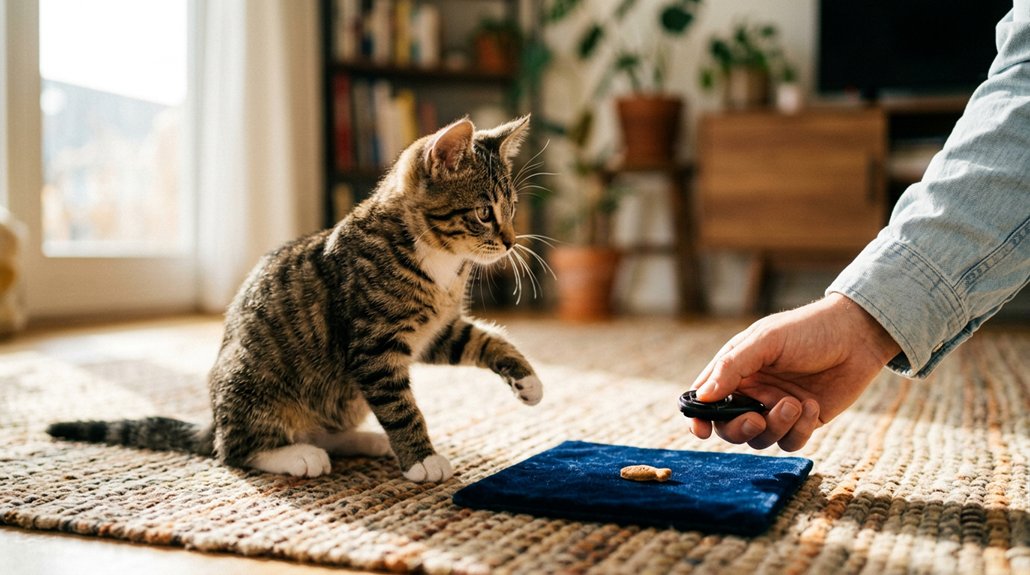
Incorporating clicker training with your kitten can greatly enhance their learning by leveraging the power of positive reinforcement. When you consistently pair the distinct click with a treat or praise, it helps solidify the association between the sound and a reward, effectively boosting your kitten’s response to commands. Evidence shows that this method not only facilitates teaching various tricks but also maintains engagement and motivation, ultimately making training sessions effective and enjoyable for both you and your pet.
Benefits of Clicker Training
When introducing clicker training to your kitten, you’ll find it to be a scientifically-supported approach that effectively reinforces desired behaviors. The distinct sound of the clicker marks the action, providing clear communication through precise behavioral cues. This method aids in developing your kitten’s socialization skills, as it learns to associate the click with positive reinforcement, facilitating interaction with humans and other pets. With sessions kept between 5 to 10 minutes, clicker training enhances focus and retention, making learning commands and tricks more efficient over time. Gradually phasing out the clicker while continuing rewards promotes independence in responding to cues. This technique underscores its evidence-based efficacy by establishing clear signals and encouraging interaction, making clicker training a valuable tool for kitten development.
Creating Positive Associations
Exploring the methods in which clicker training can generate positive associations for your kitten builds on its proven benefits. You can employ positive reinforcement by pairing the click with treats and praise, enhancing behavior shaping. The click acts as a marker for desired actions, fostering a learning environment where your kitten knows exactly what’s rewarded. Introducing commands in tandem with the clicker streamlines behavior retention. This method also enables the gradual phasing out of the clicker, reinforcing long-term responsiveness without continual sounds. To enhance learning, conduct short, frequent sessions. Examine the table below to refine your approach:
| Benefit | Approach |
|---|---|
| Positive Reinforcement | Click with treats and praise |
| Behavior Shaping | Mark desired actions |
| Command Introduction | Pair commands with clicks |
| Phasing Out | Reduce clicker dependency gradually |
| Best Engagement | Use brief, consistent training |
Teach Your Kitten These Fun Tricks
Why limit your kitten’s abilities to mere curiosity when you can harness their intelligence for learning delightful tricks? Scientifically, kittens exhibit a remarkable capacity for playful engagement when introduced to cute commands like “high-five.” By leveraging techniques such as using a toy to coax paw movement, you can reinforce this behavior with treats and praise. Limit training sessions to no more than 5 to 10 minutes to enhance focus and behavioral retention. Clicker training offers additional benefits, where the sound becomes a distinct marker for positive reinforcement. Understand your kitten’s unique motivator—food, toys, or even catnip—to tailor your approach. Concluding with a successful trick reinforces positive behavior, encouraging future participation. Behavioral evidence suggests strategic reinforcement enhances learning efficiency.
Tools and Techniques for Effective Kitten Training
Even though kittens are often perceived as independent creatures, you can utilize specific tools and techniques to access their training potential effectively. Clicker training serves as an invaluable tool, marking desired behaviors with a unique sound. When combined with treats or praise, it strengthens positive reinforcement, fostering a trusting bond. Training consistency is crucial; aim for 5 to 10-minute sessions held frequently to bolster behavior retention. Identifying your kitten’s unique motivators—whether they’re toys, treats, or particular foods—enhances engagement and responsiveness. To counteract kitten distractions, choosing a calm environment is necessary. Implementing calming diffusers can minimize anxiety, promoting focus. Prioritizing positive reinforcement over punishment guarantees a conducive learning atmosphere, enhancing their ability for successful behavioral adaptation.
Creating the Right Environment for Kitten Training
A calm and distraction-free environment is pivotal for effective kitten training, as it greatly aids in concentration and learning retention. Scientific studies underscore the importance of limiting stimuli, which allows your kitten to focus on learning new tasks and commands without unnecessary interruptions. Confirm you’ve gathered your training essentials, like treats, toys, and clickers, in advance to maintain a smooth, focused session. Short, focused sessions—ideally 5 to 10 minutes—help prevent fatigue and improve behavioral retention. Ending with positive reinforcement, such as praise or favored treats, bolsters future engagement. Incorporate calming products like Comfort Zone Calming Diffusers to craft a serene environment, considerably reducing anxiety and promoting focus. A distraction-free space, combined with proper supplies, enriches the kitten’s learning experience effectively.
Frequently Asked Questions
What Is the 3-3-3 Rule for Kittens?
The 3-3-3 rule describes kitten behavior and acclimation phases in a new home. Understand these stages: initial stress, gradual exploration, and full integration after three months. Tailor training techniques by acknowledging these behavioral insights for effective adaptation.
How Do I Say “Hi” in Cat Language?
To say “hi” in cat language, mirror feline body language and use slow blinks. Like opening the door to a secret world, this gesture, coupled with soft vocalizations, enhances cat communication, fostering warmth and trust.
What Is the Hardest Pet to Train?
Cats, especially kittens, can be the hardest pets to train. Their behavior is less socially driven than dogs, requiring unique training methods based on evidence about motivation. Focus on understanding their behavioral insights for effective training.
Where Should a Kitten Sleep on the First Night?
Make certain your kitten’s first night involves a safe sleeping environment with best sleep spots. Set up a quiet, cozy bed in a designated area, adding a soft blanket with your scent, promoting comfort and reducing stress-related behaviors.
Conclusion
In the domain of pet training, adaptability is key. While felines aren’t pack animals like dogs, they are intelligent and capable learners, albeit with unique motivators. Employing positive reinforcement and structured sessions, you’ll unravel their potential just as effectively. Remember, consistency breeds familiarity, whereas patience nurtures progress. With tools like clicker training, fostering an enriching environment isn’t just feasible—it’s transformative. By aligning techniques with your kitten’s intrinsic behaviors, you’ll shape not merely a pet, but a companion.