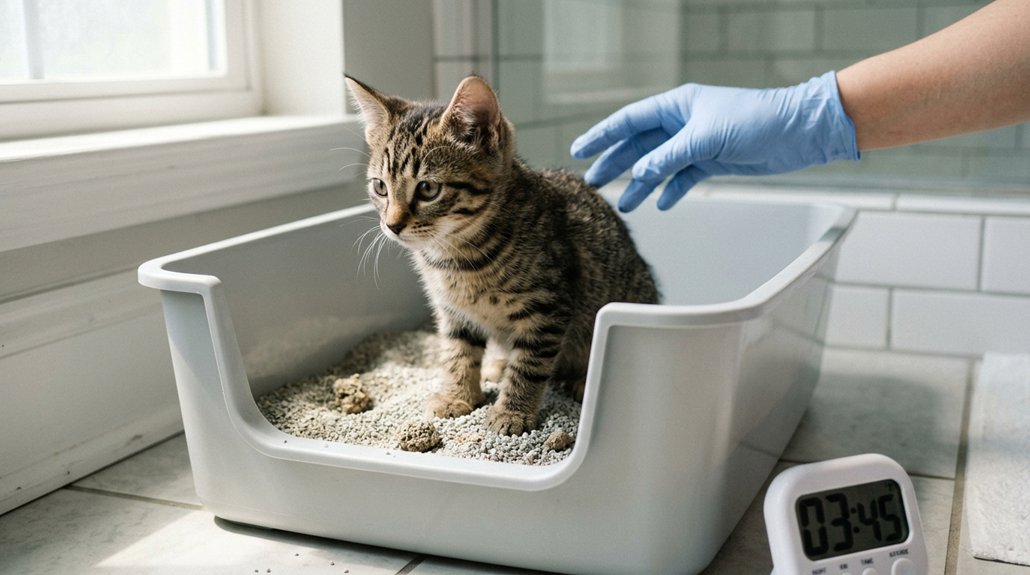
Litter training a kitten usually takes about three weeks, with most kittens being fully trained between 8 and 12 weeks old. Consistency is key—place your kitten in the box after meals and naps, and clean the box regularly. Choose non-clumping, natural litter in a shallow, open-top box. Patience and encouragement help overcome challenges, as kittens may have different adaptation speeds. By understanding these factors, you’ll gain insights into smoother training and fostering good litter habits.
Key Takeaways
- Kittens typically take about three weeks for full litter training, usually completed by 8 to 12 weeks old.
- Consistent routines, such as using the box after meals and naps, expedite training.
- Cleanliness and accessibility of the litter box significantly impact the training period.
- Kitten temperament and environmental factors influence the speed of litter box adaptation.
- Patience and positive reinforcement are crucial for overcoming initial litter training challenges.
Getting Started: How and When to Begin Litter Training
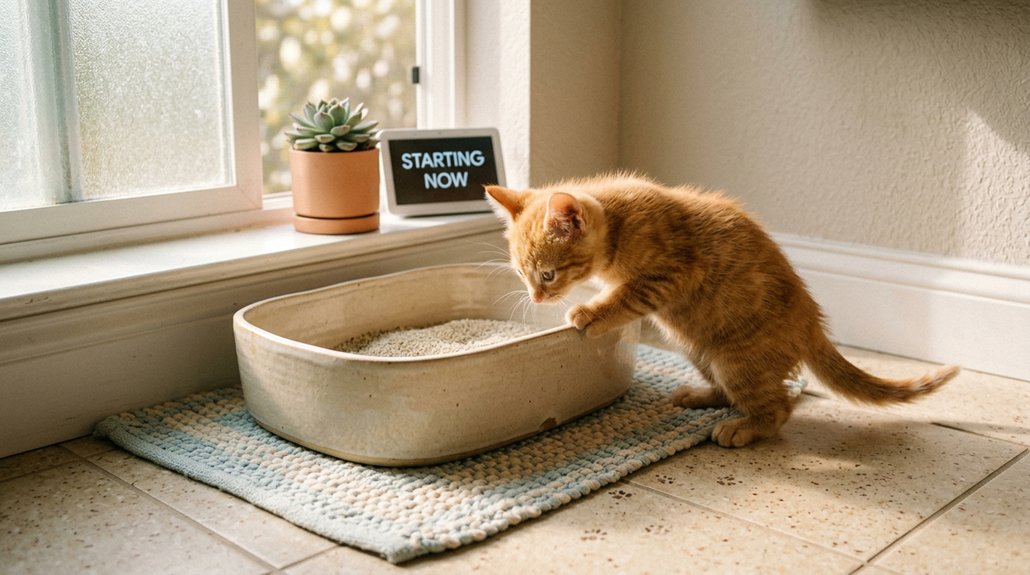
When bringing a new kitten home, it’s important to start litter training as soon as possible. Litter training typically begins around 3 weeks of age when kittens can use a litter box. Facilitate a seamless litter box introduction by placing your kitten in the box immediately upon arrival. Establish a routine by taking your kitten to the litter box after meals and naps, reinforcing the connection between these activities and using the box. Pay close attention to their early signs, like sniffing, circling, or crouching, which indicate a need to go. Swiftly guide them to the box when you see these behaviors. Consistently use a calm approach and positive reinforcement to make this change smooth and successful.
Typical Litter Training Duration and Influencing Factors
On average, you’ll find that litter training a kitten takes about three weeks, but this timeframe can vary depending on several factors. The cleanliness of the litter box, type of litter, and consistent training approaches greatly impact how quickly your kitten adapts. By tailoring techniques and using positive reinforcement, you can enhance your kitten’s learning experience and achieve successful training more efficiently.
Average Training Timeframe
Typically, litter training a kitten takes about three weeks, though most are fully trained by the time they’re 8 to 12 weeks old. Success hinges on understanding kitten behavior and maintaining training consistency. Pay attention to the following:
- At around 3 weeks of age, kittens begin recognizing the litter box, so make certain they have access.
- Stimulate regular use initially until the habit forms naturally.
- The environment must remain stable to avoid confusing your kitten.
- Consistency in your training method is essential; deviating may set back the progress.
- Use appropriate litter and boxes, as these preferences influence their adaptation.
Factors Affecting Duration
Although litter training a kitten often concludes successfully within three weeks, various factors can affect this timeframe. A kitten’s temperament plays an essential role; more adaptable kittens might take to the litter box swiftly, while shy or easily stressed kittens may require additional time and patience. Similarly, noise levels in the environment can either facilitate or hinder training success. A calm, quiet space encourages a kitten to feel secure, making them more likely to use their designated box. The strategic placement of the litter box away from noise can greatly expedite the process. Furthermore, consistent placement and timing after meals or naps reinforce habits. Early introduction, at around three weeks, combined with positive reinforcement, further enhances training success.
Tailoring Training Techniques
When it comes to tailoring training techniques for litter training a kitten, understanding the unique behaviors and environment of your feline friend can optimize the process. The average training period is about 3 weeks, but applying tailored methods can influence both speed and success. Utilizing personalized strategies can make a significant difference, considering:
- Environment: Guarantee a comfortable and accessible space for the litter box.
- Consistency: Establish a steady routine that reinforces good habits.
- Early Recognition: Start training around the 3-week mark as kittens begin recognizing litter boxes.
- Positive Reinforcement: Use treats and praise to encourage proper use.
- Patience: Accept that accidents are natural and approach setbacks calmly.
Choose Kitten-Safe Litter and Boxes
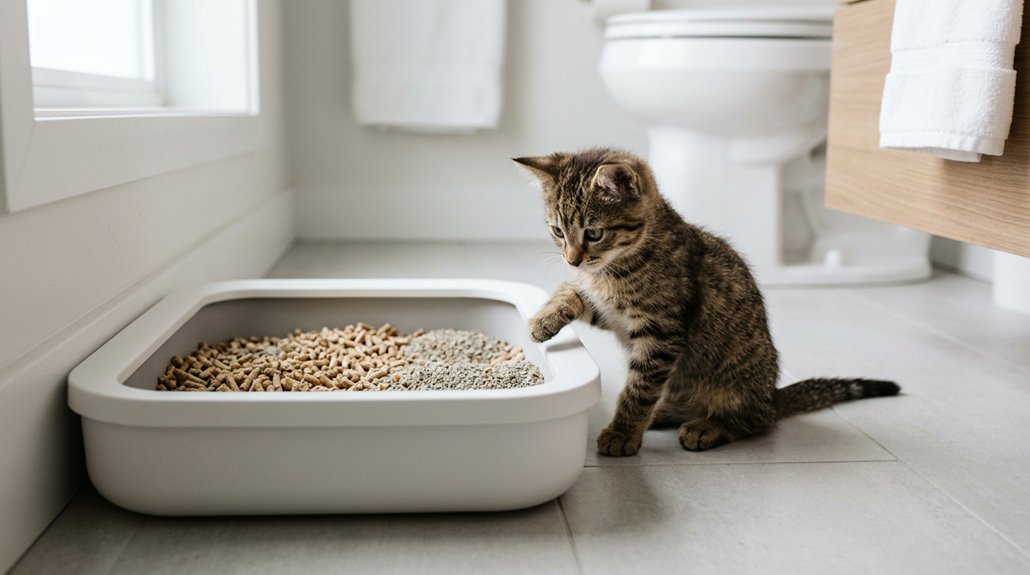
Choosing the right litter and box for your kitten is essential for its safety and comfort. Start by selecting safe litter types like non-clumping, natural, or pellet-based options. These minimize ingestion risks and keep harmful chemicals at bay. Avoid scented litters, as kittens’ sensitive respiratory systems can be irritated by strong fragrances. For maximum box accessibility, choose a shallow, open-top litter box. This design allows easy entry and exit, reducing kitten stress. The box should be at least 1.5 times the length of your kitten for ample movement room. Steer clear of high-sided or covered boxes, especially for young kittens, as they can struggle with entry and exit, hindering their progress in litter training.
Strategic Litter Box Placement
After selecting the right litter and box for your kitten, placement becomes key to effective litter training. Establishing a distraction-free environment is essential for your kitten’s success. Start by placing the box in a clean, quiet area where it’s easily accessible. Follow these strategic tips:
- Keep litter boxes away from food and water bowls to maintain hygiene.
- In multi-cat homes, provide one box per cat, plus an extra, spread out to avoid territorial disputes.
- Limit kitten’s space to one room initially, ensuring it consistently finds and uses the litter box.
- Distribute multiple boxes within 10 feet for older kittens, enhancing accessibility.
- Monitor for frequent accidents, as this may indicate a need to reevaluate placement strategies.
Harnessing Positive Reinforcement for Kitten Training
Positive reinforcement serves as an effective tool in kitten training, facilitating a strong association between desired actions and rewarding outcomes. With consistent reward timing, you can effectively use motivation techniques like treats or praise to celebrate when your kitten uses the litter box correctly. Immediate rewards reinforce the habit, making them understand the expected behavior better. A calm and comfortable environment encourages positive experiences and adaptation, ensuring reliable use of the litter box. Importantly, avoid punishing accidents, as this could induce stress and negative associations, undermining progress. By gradually reducing treats as the habit solidifies, your kitten evolves into using the litter box naturally, fostering a more independent routine. Remember, precision in timing and motivation is the cornerstone of successful litter training.
Getting Past Litter Training Roadblocks
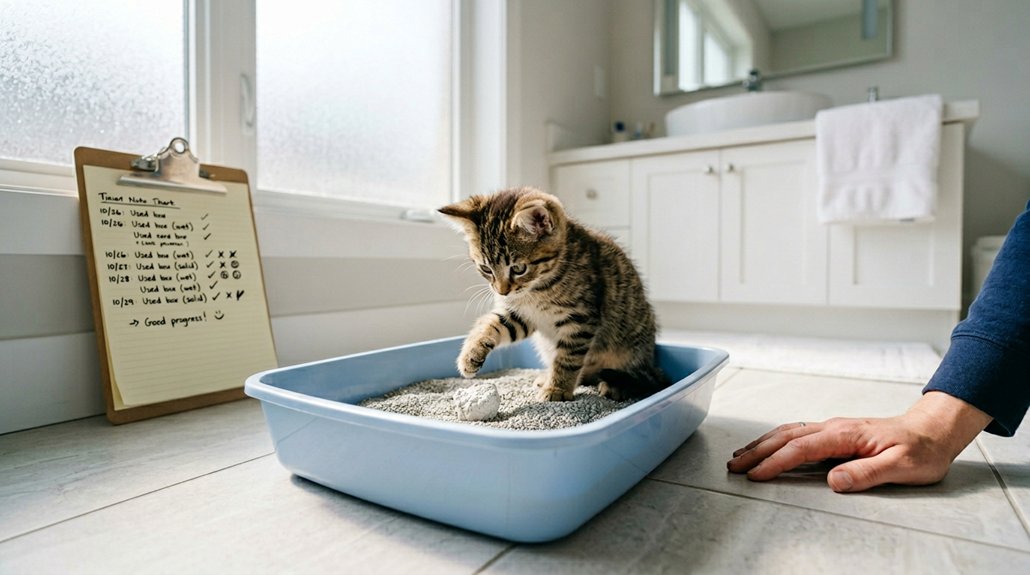
Encountering roadblocks in litter training is common, yet understanding the underlying issues can greatly ease the process. When dealing with setbacks, fostering patience is essential. Recognize that each kitten’s journey is unique. Initial hurdles are often linked to unfamiliarity with the litter box or environmental changes. You can help your kitten overcome these challenges by:
- Observing for signs like sniffing or circling, indicating they need to use the litter box.
- Maintaining a calm, stress-free environment to encourage their focus.
- Initially limiting their space to reduce distractions and support their training.
- Remembering urinary habits may take longer to develop, requiring consistent encouragement.
- Adjusting to your kitten’s learning curve, allowing up to 3 weeks or more for complete adaptation.
Patience is key.
Practicing Clean and Hygienic Litter Habits
A clean litter box is essential for maintaining your kitten’s health and hygiene. Regularly scoop it daily to uphold litter box hygiene, as cats favor a tidy space for elimination. Every couple of weeks, replace all litter based on its type to guarantee effective odor control. When cleaning, opt for hot, soapy water, steering clear of strong-smelling cleaners that may deter usage.
Laying puppy pads beneath the litter box can help capture spills, simplifying cleanup. Choose non-dusty litter to minimize respiratory risks, promoting better health. By maintaining these practices, you’ll create a conducive environment for your kitten’s litter training. Following these steps is critical for a well-maintained space, fostering comfort and cleanliness in your kitten’s routine.
Adapting Techniques to Your Kitten’s Unique Needs
Every kitten has its own learning tempo and distinct behaviors that influence litter training success. It’s crucial to observe your kitten for signs like sniffing or circling, which indicate a need to adjust your techniques. Tailor your approach with patience and flexibility, using positive reinforcement and maintaining a calm environment to cater specifically to your kitten’s preferences and personality.
Tailor Training Approaches
- Recognize signs like sniffing or circling.
- Choose appealing litter textures.
- Create a serene training environment.
- Reward positive behavior promptly.
- Adjust approaches as needed.
Monitor Kitten Behavior
When training your kitten, it’s crucial to monitor their behavior closely to tailor your approach to their unique needs. Pay attention to kitten signals, like sniffing, circling, or crouching, as these behavioral cues indicate they might need to use the litter box. Each kitten’s adaptation speed varies; some master urinary habits more quickly than bowel habits. Patience is key when observing these differences. If your kitten frequently has accidents, assess the litter box access and their comfort with the surrounding environment. Reducing environmental stimulation, such as noise and distractions, can greatly aid in their focus and overall adaptation. Establishing a consistent routine by placing your kitten in the litter box after meals or upon waking can enhance successful training.
Adjust Techniques Accordingly
Building on your observations of kitten behavior, it’s important to customize your litter training techniques to suit your kitten’s specific signals and preferences. Pay attention to indoor preferences and anxiety signals to guarantee a smooth training process. Here’s how you can adapt techniques:
- Observe behavior: Identify sniffing or scratching as signs they need the litter box.
- Litter preferences: Experiment with clumping and non-clumping litter to encourage use.
- Location matters: Move the box to quieter spots if your kitten seems anxious or fearful.
- Positive reinforcement: Use treats and praise to reward successful litter box usage.
- Stay flexible: Adjust your methods and timing according to your kitten’s unique adaptability.
Remain patient, and tailor your approach as needed for efficient litter training.
Frequently Asked Questions
Are Kittens Hard to Litter Train?
No, kittens aren’t usually hard to litter train. Focus on their litter box preferences and a calm training environment. Use treats for positive reinforcement. Remember, patience is key since each kitten’s adaptability can vary due to individual quirks.
What Is the 3-3-3 Rule for Kittens?
The 3-3-3 rule for kittens guides understanding kitten behavior changes: three days to settle, three weeks for routine, and three months for full adjustment, including confident litter box use—helping you set realistic training expectations.
What Are the Signs of a Happy Kitten?
You’ll notice a happy kitten through its playful antics and exploratory nature. Regular purring, paw kneading on soft surfaces, and a healthy appetite all indicate that the kitten’s behavior reflects comfort and contentment in its environment.
Is It Ever Too Late to Litter Train a Cat?
It’s never too late to litter train a cat. Use these litter box tips: guarantee accessibility, choose the right box and litter, and employ positive reinforcement. Training challenges exist, but consistency and understanding your cat’s needs are key.
Conclusion
Mastering the art of litter training a kitten may seem like an epic saga, but with a sprinkle of patience and a dose of strategy, you’ll succeed in the blink of an eye. Choose the right litter, place boxes wisely, and engage in heroic acts of positive reinforcement. Overcome those inevitable roadblocks with steadfast determination, and adapt to your kitten’s every quirk. Before you know it, you’ll celebrate the triumphant completion of this monumental feline feat!