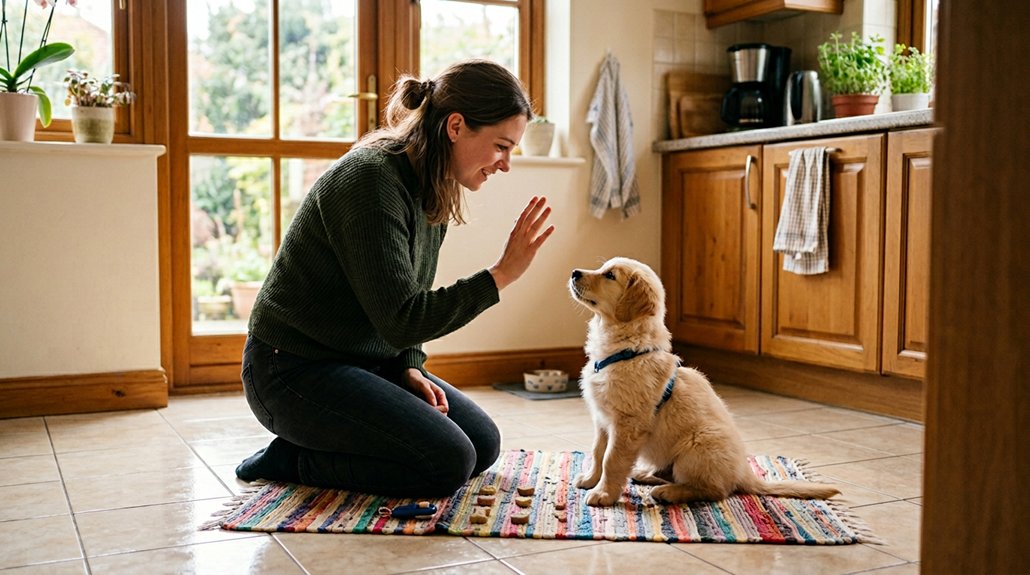
Training your first dog involves mastering foundational principles and using positive reinforcement. Start with key commands like “sit” and “stay,” ensuring consistency and patience in a distraction-free environment. Use brief sessions (2-10 minutes) with high-value treats for motivation. Be consistent with cues and gradually introduce distractions to build confidence. If challenges arise, seek professional guidance. Develop a sustainable training routine for long-term success. More insights await as you explore the art of dog training.
Key Takeaways
- Use positive reinforcement with immediate rewards to create clear behavioral associations and strengthen your bond with the dog.
- Start training in quiet environments and gradually introduce distractions to help your dog generalize commands.
- Focus on brief, consistent sessions (2-10 minutes) using uniform commands for clarity and effective learning.
- Address challenges with high-value treats for motivation and professional guidance for complex issues.
- Regularly evaluate your dog’s progress and adjust training techniques to ensure continued improvement.
Foundational Principles of Dog Training
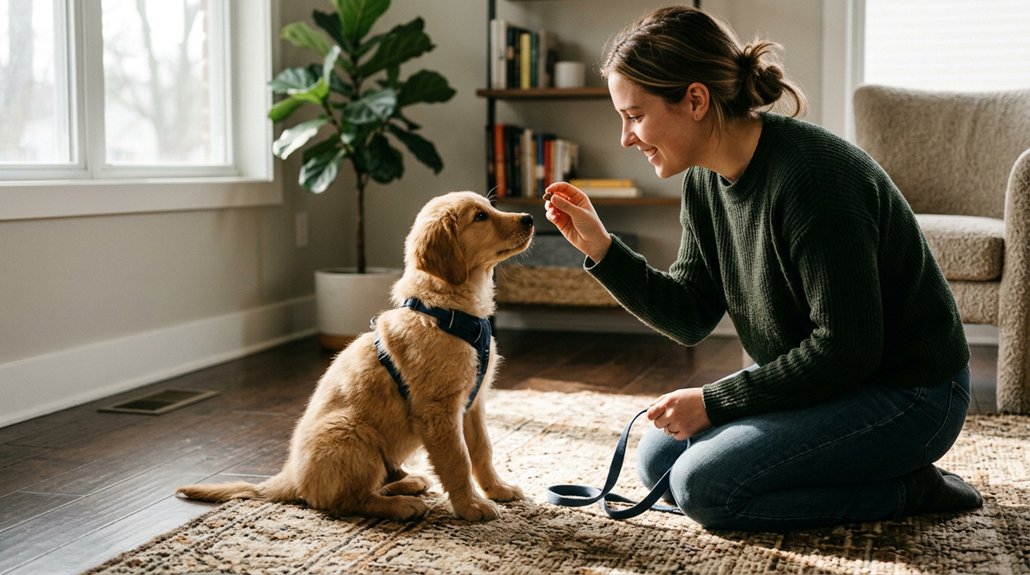
When starting with dog training, understanding the foundational principles is vital to your success. Training motivation begins with a strong bond, and using reward techniques is essential. By emphasizing rewards rather than punishment, you foster trust and enthusiasm in your dog. Utilize a marker like a clicker or specific word to precisely identify the rewarded behavior, enhancing clarity. Consistency can’t be overstated—stick with the same cues and gestures to avoid confusion. Short, engaging sessions of 2-10 minutes maintain focus, important during early training stages. To shape a well-rounded adult dog, focus on early socialization between 3 to 12 weeks, exposing them to diverse environments and people. These principles lay a solid foundation for effective dog training.
Why Positive Reinforcement Is Crucial
Building on the foundational principles in training your first dog, focusing on positive reinforcement plays a key role in successful dog training. By using reward schedules, such as treats or praise, you can encourage desired behavior modification effectively. Positive reinforcement not only improves training effectiveness, but also enhances your pet’s emotional well-being, reducing fear and anxiety typically associated with aversive methods. This approach fosters a supportive environment, promoting positive communication and trust building between you and your dog. As you consistently apply rewards immediately after commendable behavior, you create clear associations, resulting in better behavior repetition. Ultimately, this method strengthens the bond between you and your furry friend, making training a mutually enjoyable experience characterized by cooperation and respect.
Key Commands for Effective Dog Training
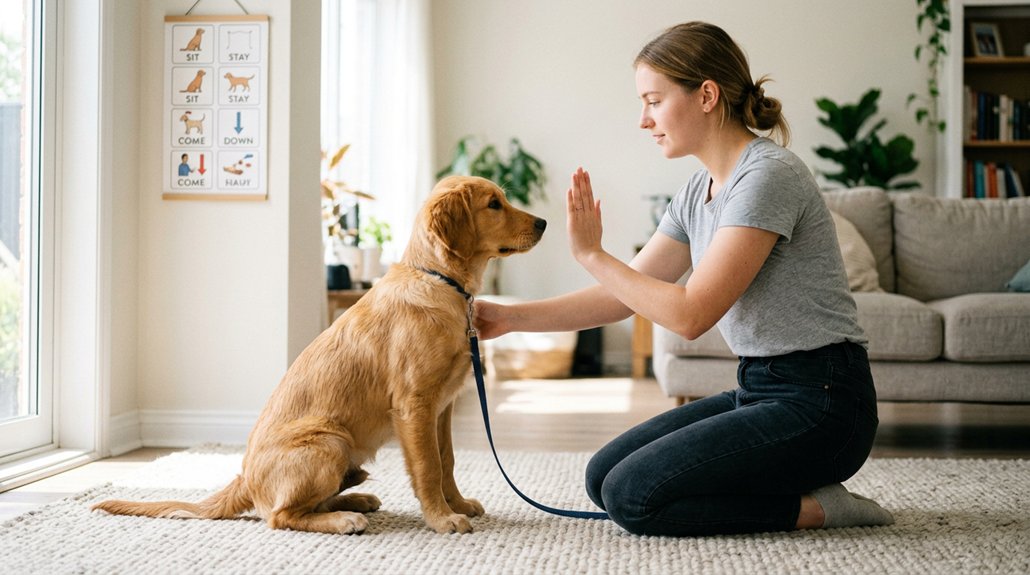
Mastering key commands is crucial for effective dog training and sets the foundation for your pet’s lifelong learning. Start with “Sit,” using a treat as a visual training aid to guide your dog into position. The “Stay” command builds on “Sit,” introducing distance while rewarding patience. Engage in socialization exercises by practicing “Come” in low-distraction settings, strengthening recall. “Leave it” teaches restraint, where a treat is used to enhance focus and self-control. Finally, guide your dog to “Down,” combining movement with rewards for effectiveness.
| Command | Technique |
|---|---|
| Sit | Move treat upward to nose |
| Stay | Increase distance while rewarding |
| Come | Low-distraction environment, rewards |
| Leave it | Reward ignoring treat in hand |
These commands are fundamental for a well-rounded dog.
Starting Dog Training: Timing and Environment
When beginning to train your dog, timing and environment are essential for success. Start when your dog is most alert and in a quiet setting to prevent distractions and keep sessions brief, around 2 to 10 minutes, to maintain focus. Use a consistent marker, such as a clicker or word, paired with immediate rewards to reinforce the correct behaviors as you gradually introduce more challenging settings.
Ideal Training Environment
To guarantee successful dog training, it’s vital to start in a low-distraction environment where your pup can concentrate without interruptions. Establishing a distraction-free zone is important for focused learning. Choose a quiet room in your home or a fenced yard, making sure there are no competing noises, animals, or toys.
Keep training sessions short, between 2-10 minutes, to maintain attention and prevent boredom. Provide high-value treats that are small and easy to eat quickly, making certain your dog stays engaged. Immediate rewards following each correct behavior reinforce positive associations.
Once your dog has learned basic cues in this environment, you can gradually introduce mild distractions to challenge your dog further. Doing so ensures your dog isn’t overwhelmed while building up their confidence and skill set.
Timing for Beginners
Your dog’s understanding of training relies heavily on the timing of sessions and the environment in which they occur. Begin your dog’s training as soon as possible, regardless of their age. Even puppies as young as six weeks can start learning basic cues. Create a consistent training schedule, keeping sessions brief—between 2 to 10 minutes. This helps maintain your dog’s attention and prevents boredom, which is vital for effective dog behavior training. Start in a low-distraction setting to facilitate focus, and gradually introduce more challenging environments. Always follow a correct action with a reward, using a marker like a clicker or verbal cue. Regular practice and a positive atmosphere are essential for reinforcing desirable behaviors and building your dog’s confidence.
Consistency and Patience: Keys to Effective Training
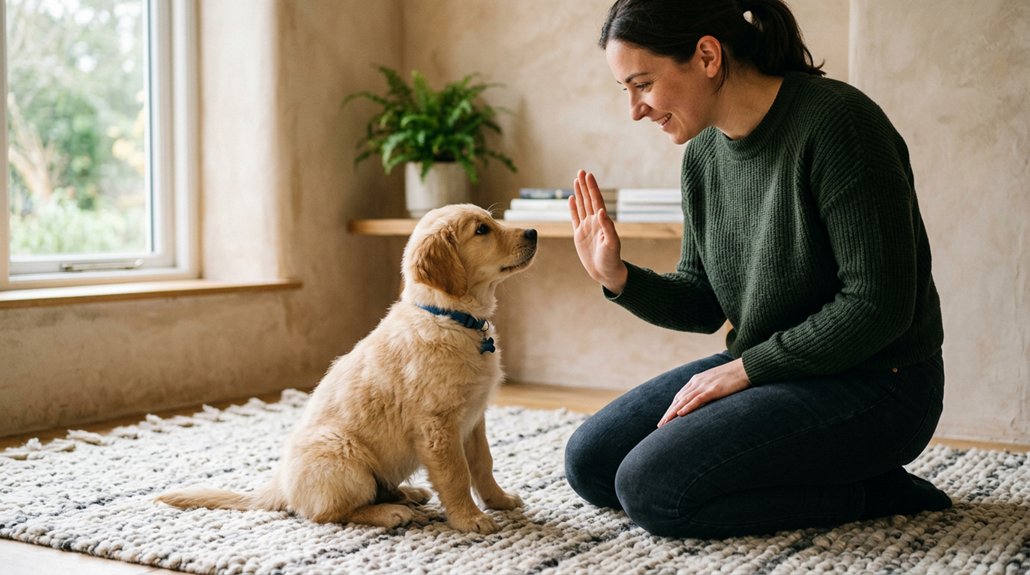
Consistency and patience form the backbone of effective dog training. Stick to the same routine and commands in every session to guarantee your dog receives clear, consistent cues, which prevents confusion. Remember, practice really does make perfect, so engage in short, focused sessions and celebrate small victories to keep both you and your dog motivated throughout the process.
Stick to Routine
A successful dog training experience starts with establishing a consistent routine that balances attention span and engagement. Set a reliable training schedule with sessions lasting between 2-10 minutes to maintain focus and prevent boredom. Consistency is key; use the same verbal cues and hand signals for each command, ensuring your communication is clear. By sticking to familiar phrases, you greatly reduce any potential confusion your dog might experience.
To aid generalization, practice commands in various environments. This helps your dog understand and respond correctly, regardless of the setting. Remember, patience is essential—dogs learn at their own pace. Repeat commands calmly and reward your pup immediately after they perform the desired behavior, reinforcing the right actions and enhancing learning effectiveness.
Practice Makes Perfect
While persistence is your ally in dog training, maintaining consistency and patience are indispensable for success. Consistency guarantees that your dog learns the correct cues and behaviors without confusion. Establish a routine with training frequency, setting sessions between 2-10 minutes to keep your dog engaged without boredom. Short, regular practice sessions are more effective than infrequent, lengthy ones, as they help the dog absorb information better.
Patience plays a key role; don’t expect immediate command mastery. Celebrate small achievements, reinforcing progress with positive reinforcement like treats and praise. By applying these practice strategies, you create a supportive learning environment, empowering your dog to thrive in training. Remember, patience and consistency will guide you to successful outcomes.
Using Training Tools Effectively
When it comes to using training tools effectively, understanding their purpose and application is key to successful dog training. Clicker training is a powerful method that uses a clicker or a specific word as a precise marker to communicate correct behavior to your dog. This technique enhances clarity during sessions, making it easier for your dog to grasp what’s expected. Alongside clicker training, treat selection is essential; opt for high-value treats like Pet Botanics Training Rewards to keep your dog motivated and engaged. Limit sessions to 2-10 minutes to prevent fatigue. Begin in low-distraction environments, gradually introducing challenges. Consistently pair treats or praise immediately following desired behaviors to reinforce learning and build positive associations in various settings.
Common Challenges & Solutions in Training
Training your first dog inevitably presents several challenges, yet understanding and addressing these obstacles can lead to a more successful and rewarding experience. Cue confusion often arises from inconsistent commands. Maintain uniform cues to guarantee clarity and prevent training frustrations. Gradual learning is key; introduce commands one at a time rather than overwhelming your dog with too much information. Keep sessions brief—ideally between 2 and 10 minutes—to capture attention and prevent boredom. Motivation methods are essential; high-value treats tailored to your dog’s preferences can boost their enthusiasm. Address fear and anxiety by fostering a trusting environment with positive reinforcement, avoiding aversive techniques. Recognizing and solving these common challenges will smooth your path to effective training and a harmonious relationship with your pet.
When Professional Guidance Is Needed
If you’re facing challenges or uncertainties beyond your expertise in training your dog, seeking professional guidance can be a valuable step forward. Expert evaluations and behavior assessments by certified trainers offer you insights into complex issues such as aggression or excessive fear. A professional can create tailored strategies that cater to your dog’s unique behavior and your specific needs.
Professional guidance provides tailored strategies for complex dog behavior issues like aggression and fear.
- Enhanced Socialization: Training workshops with professionals expose your dog to positive interactions, helping reduce behavioral issues.
- Effective Techniques: Experienced trainers emphasize positive reinforcement, promoting a strong bond and desirable outcomes.
- Lifelong Learning: You’ll gain essential skills to maintain efficient training practices throughout your dog’s life.
Engaging with professional guidance guarantees evidence-based methods and strengthens your ability to nurture a well-behaved companion.
Crafting a Sustainable Training Routine
While professional guidance can pave the way to effective dog training, the foundation of a well-behaved companion begins with crafting a sustainable training routine. Start with short, consistent sessions of 2-10 minutes to maintain your dog’s focus and prevent boredom. Use high-value treats as an engagement technique, ensuring they’re both appealing and motivating for your pet. Begin in low-distraction environments, gradually introducing new challenges as your dog’s skills advance. Incorporate regular sessions throughout the week to reinforce and build on behaviors, enhancing communication between you and your dog. Track progress by implementing a marker system, such as a clicker or a specific word, to immediately signal successful behaviors, cementing clear associations and ensuring ongoing improvement.
Frequently Asked Questions
What Breed-Specific Challenges Should I Consider When Training My Dog?
You should consider your dog’s breed tendencies when selecting training techniques. Some breeds might be stubborn or energetic; tailor your approach accordingly. Understand your dog’s specific challenges to effectively address them and guarantee successful training outcomes.
How Can I Train an Older Dog With Established Habits?
To train an older dog with established habits, focus on using positive reinforcement and consistency strategies. Be patient and reward desired behaviors immediately to encourage change. Consistent routines and rewards will effectively reshape your dog’s learned habits.
Are There Signs My Dog Is Overwhelmed During Training?
Yes, your dog might be overwhelmed if you notice stress indicators like excessive yawning, panting, or drooling. Pay attention to body language signals such as flattened ears, tucked tail, or avoidance behaviors. Adjust the training pace.
How Do I Address My Dog’s Fear-Based Behavior During Training?
Address your dog’s fear-based behavior by using desensitization techniques paired with positive reinforcement. Gradually expose your dog to the fear trigger in a controlled setting, rewarding calm behavior to build confidence and reduce anxiety over time.
What Role Does Diet Play in My Dog’s Training Success?
About 70% of your dog’s energy comes from their diet. A balanced nutritional impact and consistent feeding schedule boost focus and performance during training, underscoring diet’s pivotal role in your dog’s training success.
Conclusion
Training your first dog is, ironically, less about teaching the dog and more about learning patience yourself. You’ll see that positive reinforcement isn’t just a treat for the dog, but a practice in optimism for you. Just when you think they’ve mastered “sit,” they’ll sit when you say “stay.” Embrace consistency like it’s your new best friend—besides your dog, of course. And remember, it’s perfectly okay to seek help if you find that speaking “dog” is harder than anticipated.