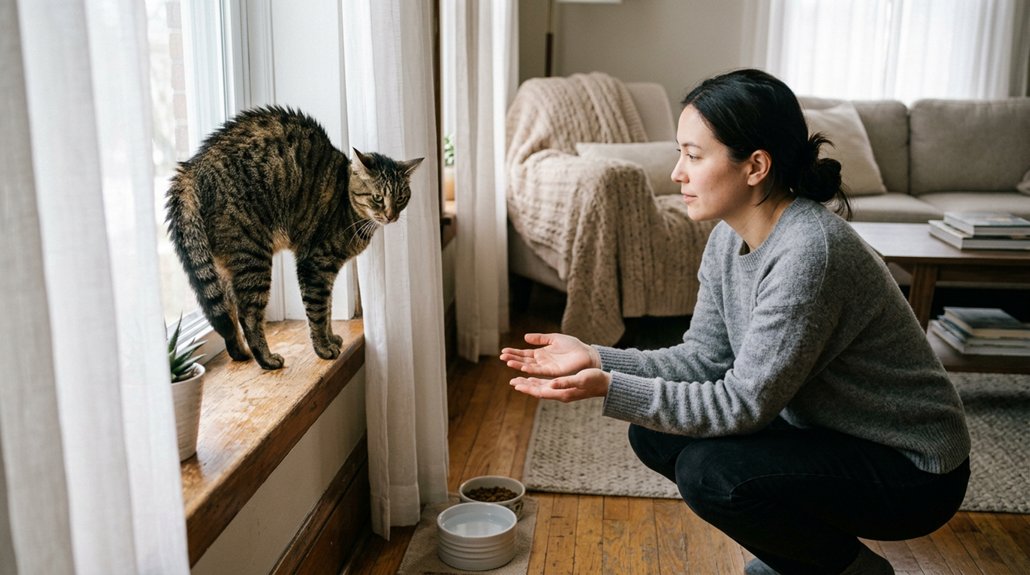
To safely calm an aggressive cat, recognize signs like pinned ears or a fluffed tail. Approach the cat’s side calmly, avoiding quick movements. Create a serene space with safe hiding spots, reducing noise, and using calming pheromones. Positively reinforce relaxed behavior with treats, and consider holistic supplements if needed. Consulting experts, like veterinarians or feline behaviorists, can provide additional insights. Discover more strategies to guarantee your cat’s peace and well-being through careful steps.
Key Takeaways
- Use cat pheromones like Feliway to reduce stress and promote a calming environment for aggressive cats.
- Approach from the side, avoiding sudden movements, to minimize perceived threats and allow the cat to control the interaction.
- Provide safe hiding spots and personal spaces to alleviate stress and prevent aggressive behavior in cats.
- Reinforce calm behavior with treats or affection to positively condition the cat away from aggression.
- Consult a veterinarian to rule out medical causes and consider supplements or medication for managing aggression.
Identify Aggression Signs in Cats
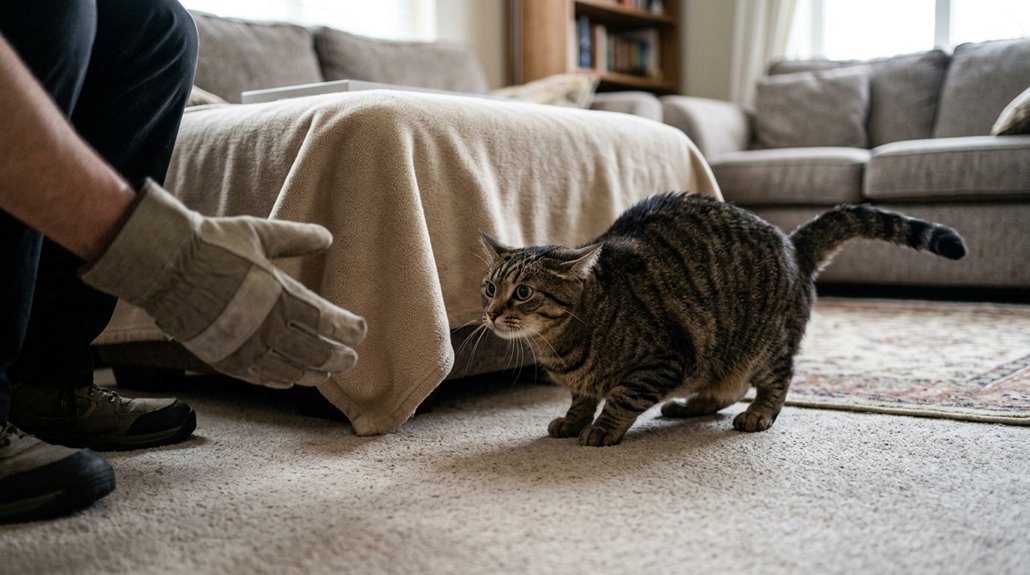
Understanding how to identify signs of aggression in your cat is essential for ensuring the safety and well-being of both you and your feline companion. You’ll notice specific feline body language that signals aggression triggers, such as pinned ears directed backward and dilated pupils indicating heightened arousal. An arched back accompanied by a fluffed tail held straight up often means your cat is in a defensive or hostile state. In addition to these visual signs, listen for vocal cues like hissing and growling. Recognizing these behaviors early helps address potential aggression before it escalates. Keep in mind that physical punishment can worsen fear or anxiety, making it vital to understand these signals for effective management and prevention of aggressive interactions.
How to Create a Calm Space for Your Cat
When you’re setting up a calm space for your cat, prioritize choosing safe hiding spots where it can retreat when stressed. It’s essential to optimize territory boundaries by providing multiple zones for your cat to eat, play, and rest without feeling crowded. Adjusting the ambient environment, such as ensuring low noise levels and familiar scents, can greatly reduce anxiety and foster a safer, more tranquil atmosphere for your feline friend.
Choosing Safe Hiding Spots
Creating a calm space for your cat begins with identifying safe hiding spots throughout your home, essential for a stressed or aggressive feline. It’s important to offer multiple options, such as cozy beds, boxes, or cat trees. These safe retreats should be located in quiet areas to help your cat avoid household stressors.
Incorporate familiar scents like their favorite blanket or a well-loved toy to make these spots more inviting. Consider vertical spaces where your cat can comfortably observe the surroundings and feel less vulnerable. Regularly clean these areas to keep them appealing. This proactive approach will alleviate stress and potential aggression.
Here are some suggested hiding spot options:
| Hiding Spot | Quiet Location | Familiar Scent |
|---|---|---|
| Cozy Cat Bed | Bedroom Corner | Blanket |
| Cardboard Box | Closet Floor | Favorite Toy |
| Cat Tree Perch | Living Room Shelf | Cat-Scented Bed |
Optimizing Territory Boundaries
Having established safe hiding spots, defining and optimizing territory boundaries can further enhance your cat’s sense of security and reduce aggressive behavior. Utilize territorial markers like multiple litter boxes, food, and water stations throughout your home. This reduces competition and guarantees easy access to essential resources. Employ space management strategies by creating vertical spaces such as cat trees and shelves, allowing your cat to survey its territory from a height, fostering security. Designate quiet areas with soft bedding and hiding spots for retreat when overstimulated. Implement barriers like baby gates to separate areas, efficiently managing inter-cat aggression. Regular maintenance and cleanliness of all spaces are critical; an organized environment diminishes stressors, promoting well-being and lessening aggressive tendencies in your feline companion.
Adjusting Ambient Environment
Even the most aggressive cat can benefit from a thoughtfully adjusted ambient environment, as it serves to soothe and mitigate stress-driven behaviors. Start by creating a safe, quiet retreat equipped with essential items like a litter box, food, and water. This helps reduce perceived threats and stress. Incorporating environmental enrichment, such as climbing perches and cozy hiding spots, provides your cat with a sense of control and security. Use familiar scents or Feliway diffusers to ease anxiety and create a calming atmosphere. Noise reduction is key; make sure the area is free from loud disturbances to maintain stability.
| Environment Feature | Benefit | Suggestion |
|---|---|---|
| Safe retreat | Reduce stress | Quiet, separate area |
| Climbing perches | Sense of security | Install in cat’s space |
| Familiar scents | Alleviate anxiety | Use Feliway diffusers |
| Noise reduction | Prevent triggers | Free from loud noises |
Safely Approaching an Aggressive Cat
Approaching an aggressive cat requires careful strategy and understanding of feline behavior. Start by interpreting the cat’s body language—flattened ears, puffed-up fur, or hissing can indicate stress or fear. When you approach, aim to come from the cat’s side rather than directly in front to minimize perceived threats. Avoid sudden movements, maintain a calm demeanor, and keep your voice soft and soothing. This helps create a safer environment, fostering trust. Allow the cat to initiate contact or approach you on its own terms, giving it control. If the environment remains tense, a calming pheromone spray like Feliway might be helpful. Remember, your gentle approach, respecting its boundaries and signals, can greatly ease its aggression and anxiety over time.
Top Techniques to Calm an Aggressive Cat
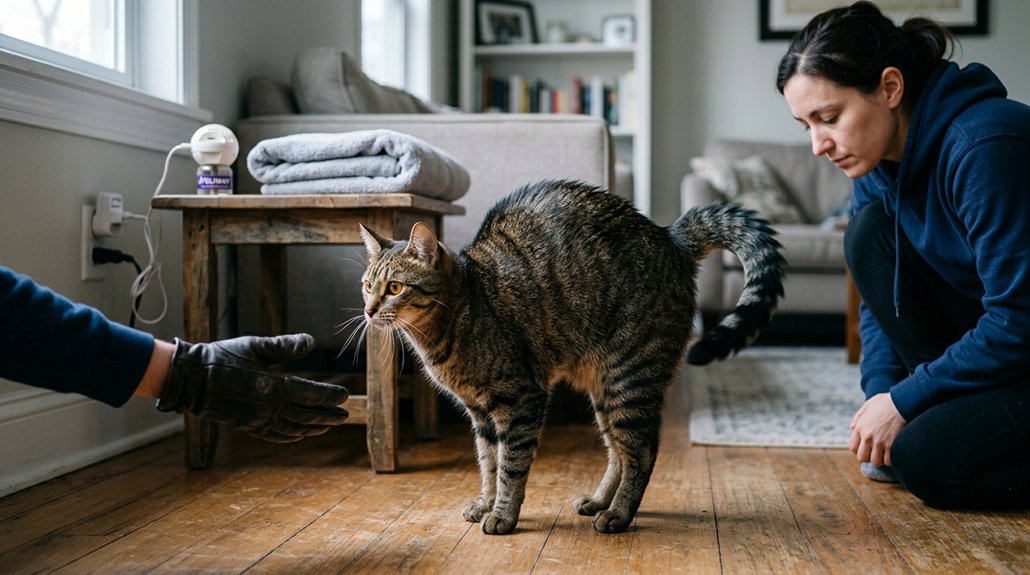
There are several effective techniques to help calm an aggressive cat, promoting a more harmonious environment for both you and your feline friend. Incorporating cat pheromones like Feliway can reduce stress-related behaviors, enhancing feline behavior and overall stress management. Consistency is key here. Positively reinforce calm behaviors with treats or affection, fostering positive associations and minimizing aggression. Always maintain a calm demeanor—avoiding physical punishment is essential as it can heighten fear and anxiety, worsening aggression. Gradual reintroduction through individual spaces and scent swapping can ease tension and build familiarity. Additionally, holistic supplements such as Zylkene or Solliquin may help with anxiety relief; however, consult your veterinarian to confirm they’re safe and suitable for your cat’s unique needs.
Should You Call in an Expert?
Why should you consider involving a specialist when dealing with an aggressive cat? Consulting a veterinary behaviorist offers expert insight through behavioral assessment and tailored strategies. With a DACVB designation, these specialists collaborate with your vet to develop thorough management plans. If typical veterinary care and medication fail, an expert’s intervention can be the key to successful behavior modification. Early engagement with a behaviorist not only prevents aggression escalation, but also guarantees a safer environment for everyone involved. The consultation benefits extend to learning the importance of combining environmental changes with therapy for lasting outcomes. Here’s how a behaviorist can help:
| Aspect | Benefit |
|---|---|
| Specialized Insight | Tailored strategies |
| Advanced Training | DACVB designation |
| Collaboration | Thorough plans |
| Early Intervention | Prevention of escalation |
| Combination Therapy | Lasting results |
Prevent Aggression in Cats
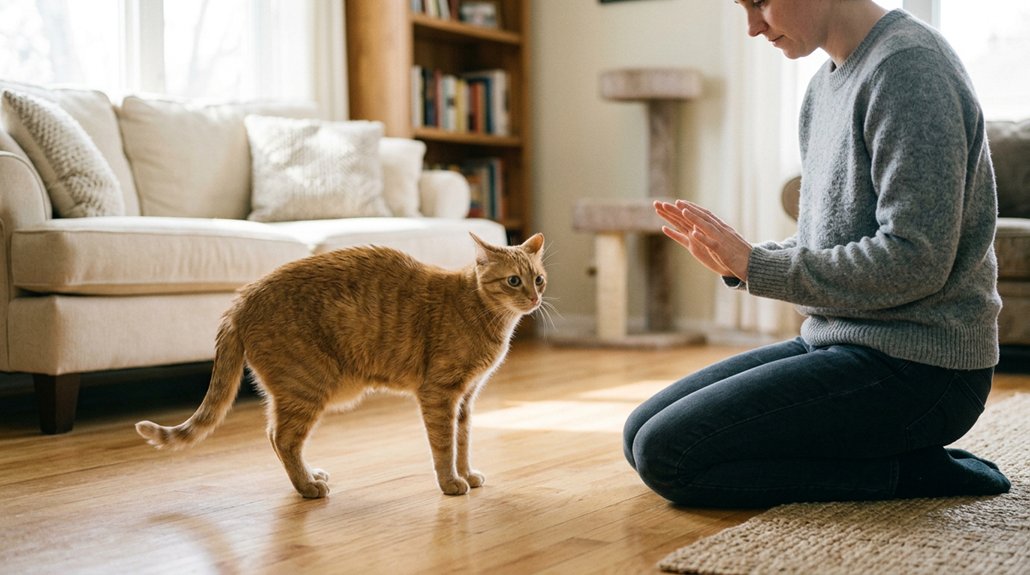
While it might seem simple, preventing aggression in cats requires a thoughtful and proactive approach. Kitten socialization is essential; adopting kittens in pairs from the same litter helps them learn appropriate behaviors, reducing future aggression. Additionally, spaying benefits can’t be overstated, as neutering cats by five months can notably reduce territorial aggression in males. Avoid using your hands or feet as play objects to prevent play aggression patterns from forming. In multi-cat households, make sure each cat has separate safe spaces and resources, like multiple litter boxes and food bowls, to minimize conflict. Finally, be vigilant for early signs of aggression and consult a veterinarian promptly to address issues before they escalate, guaranteeing a harmonious environment for your feline companions.
Frequently Asked Questions
What Can Calm Down an Aggressive Cat?
To calm an aggressive cat, understand feline stressors and employ calming techniques. Use pheromone diffusers, bring in holistic supplements, modify environments, and practice positive reinforcement. Always consult a vet to rule out health issues exacerbating aggression.
What Is the 3-3-3 Rule for Cats?
The 3-3-3 rule helps in understanding cat behavior and feline anxiety during changes. Expect three days of stress, three weeks of cautious exploration, and three months for full adaptation, helping your cat feel secure and at home.
How to Deal With an Extremely Aggressive Cat?
Taming an aggressive cat is like soothing a storm. Start with a vet check to address any pain. Maintain a calm aura; use safe handling techniques. Consider environmental changes and enlist professional advice for complex cat behavior.
Do Cats Forgive You for Yelling at Them?
Cats don’t process forgiveness in the same way humans do. However, understanding feline psychology and adapting your behavior can help rebuild trust. Use a calm demeanor and positive reinforcement to improve cat behavior and mend your relationship.
Conclusion
In dealing with your aggressive cat, remember: patience isn’t just a virtue, it’s a necessity. By recognizing aggression signs, creating calm spaces, and using gentle approaches, you’re crafting a sanctuary of peace. Techniques and expert advice are your tools; wield them wisely. But ask yourself—does peace start with understanding? Engaging with your cat on their terms fosters trust and prevents future outbursts. Ultimately, prevention and empathy are your strongest allies.