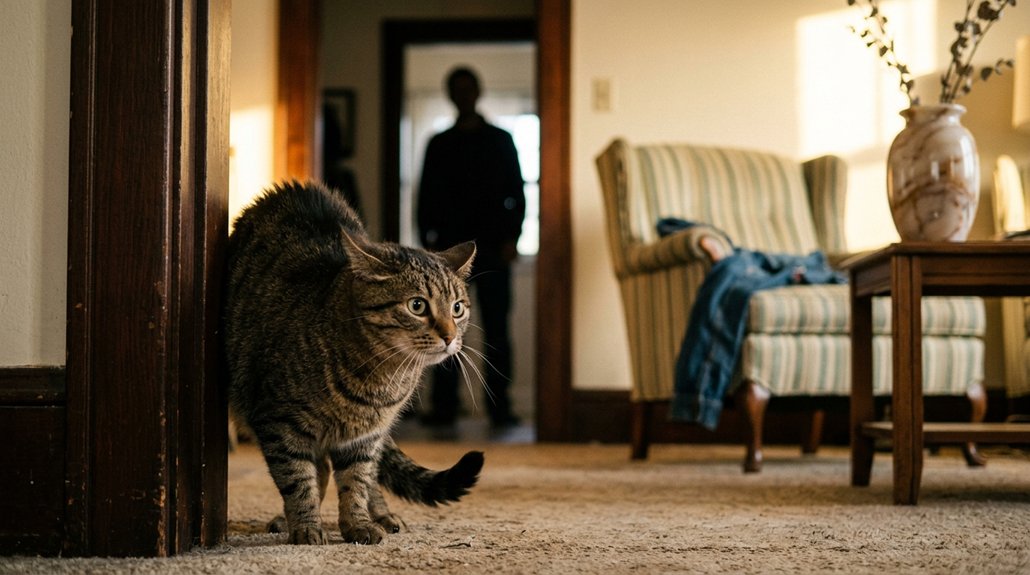
Your cat’s instinct to run and hide from guests stems from their territorial nature and ancestry linked to solitary African wildcats. Unfamiliar faces can feel like threats, triggering stress symptoms like avoidance and changes in behavior. Establishing a safe zone with comforting elements, using products like FELIWAY®, and introducing guests gradually can help. By using positive reinforcement, you can nurture your cat’s confidence around visitors. Discover how to transform these interactions into positive experiences.
Key Takeaways
- Cats have territorial instincts, making unfamiliar guests seem threatening and prompting hiding behaviors.
- Loud noises and sudden movements by guests can trigger anxiety and stress in cats.
- Observing unfamiliar people from a distance lets cats decide safe interactions.
- Safe zones with essentials like food and bedding can alleviate stress during guest visits.
- Positive reinforcement with treats or toys encourages confident interactions with guests.
Recognizing Your Cat’s Territorial Instincts

Although cats may seem aloof, it’s important to recognize that their territorial instincts are deeply ingrained and play a significant role in their behavior, especially around guests. Cats’ territorial behavior stems from their solitary ancestry, as they’re descendants of the African wildcat, creatures that preferred solitude and familiar surroundings. Your cat views its home as a sanctuary, a protective domain where any unfamiliar presence can appear threatening. When guests enter, your feline friend may exhibit avoidance behaviors like hiding or fleeing—feline communication indicating discomfort and a need to maintain distance. To help your cat feel more secure, consider gradual introductions to new people. Allow your cat to observe guests from a distance, providing reassurance and a sense of control over its environment.
Identifying Stress Triggers and Practical Solutions
What makes a cat hide from guests, and how can you address these stress triggers effectively? Cats are naturally solitary, reacting to unfamiliar guests due to territorial instincts. Loud noises, the presence of other animals, and environmental changes can intensify their anxiety, causing them to seek refuge. As an observant pet owner, monitor signs like altered appetite or litter box habits indicative of stress. Animal behavior experts suggest easing stress by introducing visitors gradually, allowing your cat to watch from a safe distance. Encourage them to approach on their own terms to build trust gradually. Crafting a dedicated safe space with familiar items during guest visits offers comfort, calming their nerves. With empathy and patience, reducing stress for your feline friend is achievable.
Setting up Safe Zones With Feliway® for Comfort

After recognizing the signs and triggers of stress in your feline friend, creating a dedicated safe zone can be an essential step in providing them the comfort they need during guest visits. A proper safe zone setup involves a quiet corner equipped with essentials like food, water, a litter tray, and comfy spots. Using FELIWAY® products enhances the environment by introducing pheromone effects that mimic natural calming scents. Plug in a diffuser a few days before guests arrive to establish a tranquil atmosphere, reducing your cat’s stress. Consistency in feeding schedules within this zone guarantees stability. Importantly, keeping the area accessible allows your cat to retreat to their sanctuary, offering them control and minimizing anxiety during social scenarios.
Introducing Guests Gradually and Effectively
When introducing guests to your home, the key to easing your cat into these social environments lies in gradual exposure. Start by inviting just one guest over to prevent overwhelming your cat. Educate your visitor on reading cat body language, ensuring gentle interactions without forcing contact. Encourage them to minimize abrupt movements and direct eye contact, as these can be perceived as threats by your cat, leading to hiding behavior. Facilitate positive guest engagement by using treats or toys, enticing your cat to approach when ready. Always allow your cat to observe from a distance, deciding when they want to engage. Make sure they have a safe space to retreat to, promoting a comfortable and trusting atmosphere.
Using Positive Reinforcement for Confident Cat Interactions
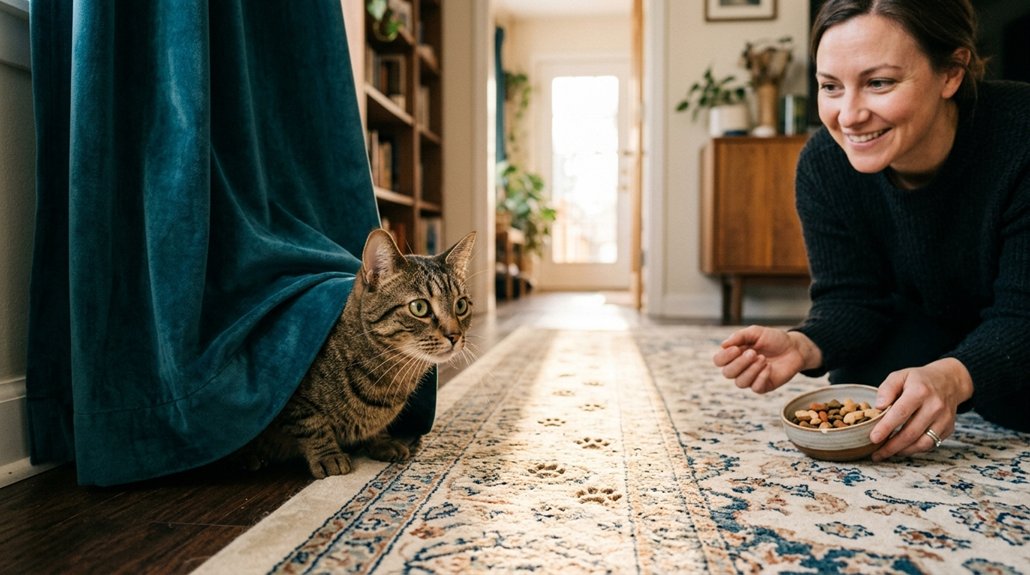
Although cats may initially seem aloof or wary around newcomers, using positive reinforcement can effectively nurture more confident interactions. Employ treat motivation by introducing treats, toys, or games during guest visits, transforming unfamiliar faces into positive experiences. Consistently rewarding your cat for calmly observing or approaching visitors is a critical socialization technique. This method reinforces trust and reduces anxiety over time. Gradually increase exposure to guests, offering treats as your cat progresses to approach closer, fostering comfort and confidence. Training exercises, like rewarding calm observation from a distance, can encourage exploration while ensuring security. Establish a routine where guest interactions become a source of positive experiences, helping your cat shift from fearful to sociable behavior patterns with patience and persistence.
Frequently Asked Questions
Is It Normal for Cats to Hide From Guests?
Yes, it’s normal for cats to hide from guests due to guest anxiety and instinctive feline behavior. You can help through gradual socialization tips, ensuring they feel secure and comfortable without forcing interaction or causing stress.
What Is a Red Flag Behavior in Cats?
A stitch in time saves nine. Keep an eye on feline anxiety and stress signs, like excessive hiding or aggression. Recognizing these red flags early can save your cat from distress and guarantee a happier home environment.
What Is “I Love You” in Cat Language?
“I love you” in cat language can be expressed through purring and relaxed whisker positions. You might notice them kneading or slow blinking — these affectionate signals indicate comfort, trust, and a bond between you and your feline friend.
What Is the 3-3-3 Rule for Cats?
The 3-3-3 rule for cats is life-changing! It outlines feline behavior in new environments, highlighting stress indicators and socialization tips. Understand your cat’s personality; ease adaptations by introducing them to guests gradually, ensuring their comfort.
Conclusion
Isn’t it fascinating how your cat’s instincts and environment shape their behavior? By recognizing their territorial nature and pinpointing stressors, you can create a more welcoming atmosphere for your feline friend. Safe zones, gradual introductions, and positive reinforcement are key strategies to help your cat feel secure and confident around guests. With patience and understanding, you’ll foster an environment where your cat can flourish, even when unfamiliar faces come to visit.