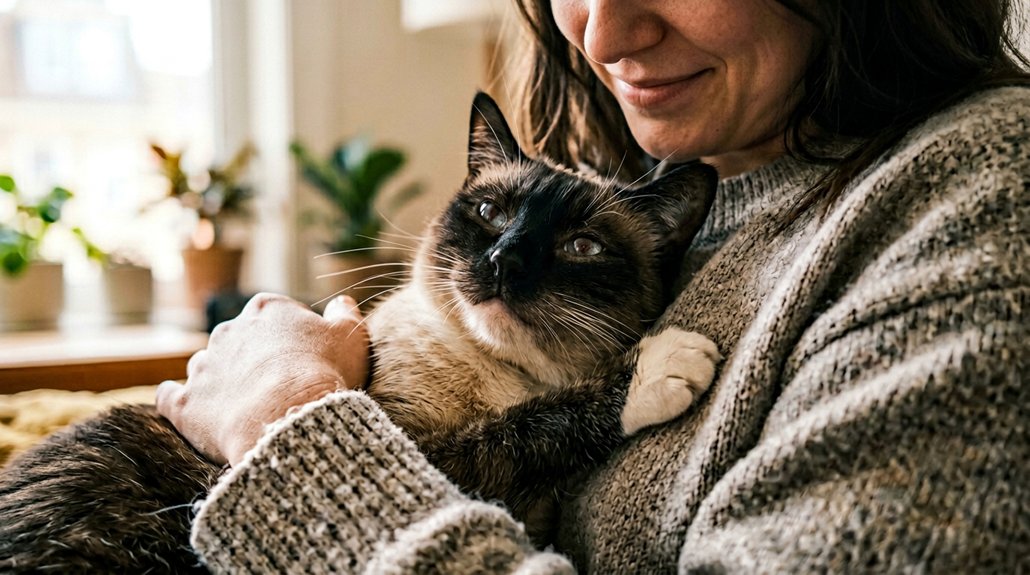
Cats display affection through various behaviors and vocalizations, signaling their desire for closeness. When cats headbutt or give head rubs, they’re marking you with pheromones and showing attachment. An upright tail and slow blink, or ‘cat kiss,’ indicate trust. Purring often signifies love and contentment, while soft meows express a wish to interact. Their body language, like curling up beside you, shows vulnerability and comfort. Discover more about these meaningful feline gestures to deepen your connection.
Key Takeaways
- Cats headbutt and rub against objects or people to mark territory and show affection.
- Curling up next to humans signifies deep trust and comfort in their presence.
- An upright tail indicates happiness and a willingness to interact.
- Slow blinking, known as a ‘cat kiss,’ shows trust and invites affection.
- Purring usually indicates contentment and strengthens bonds during grooming and interaction.
Recognizing Your Cat’s Signals of Affection
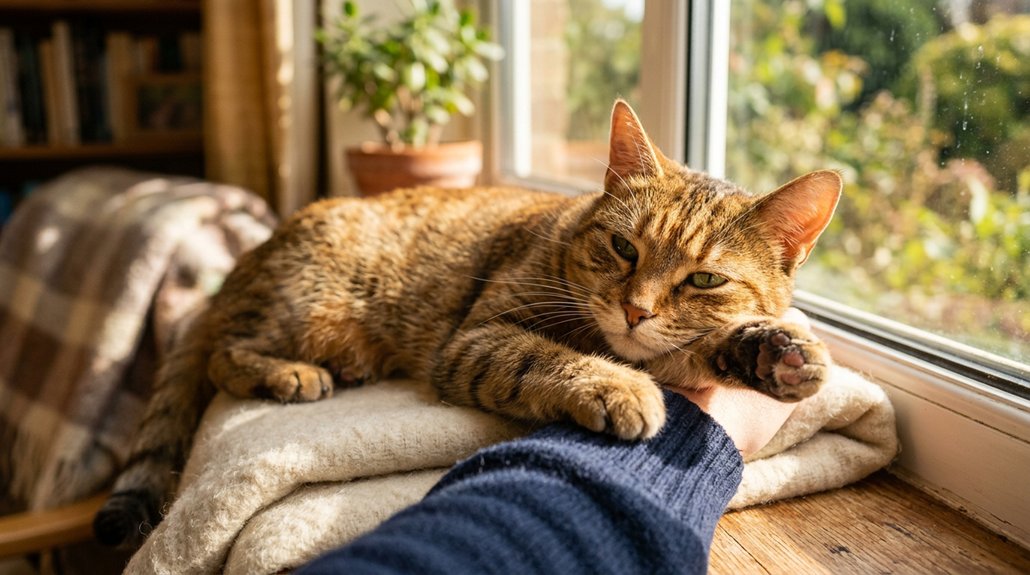
Another affectionate gesture is headbutting, where your cat gently bumps their head against you. This action isn’t random; it effectively transfers pheromones, marking you as part of their territory and denoting attachment. These pheromones communicate a deep desire for closeness. Understanding these behaviors helps you appreciate your cat’s unique language of love, ultimately strengthening your bond with them.
What Your Cat’s Body Language Really Means
Understanding your cat’s signals of affection can be enriching, but it’s equally important to interpret what their body language conveys. Cats express emotions through tail communication and subtle gestures. An upright tail signals happiness and a willingness to interact, serving as a feline invitation to engage. Additionally, head bonks are not random nudges; they’re intentional acts of affection. When your cat rubs its head against you, it’s marking you with its scent, claiming you as part of its family. Slow blinking, often called a ‘cat kiss,’ reveals trust and contentment. If you reciprocate, you mimic this feline affection, reinforcing the bond. Cats may also signal affection by curling up beside you, indicating their sense of safety and attachment.
Understanding How Cats Vocalize Their Love
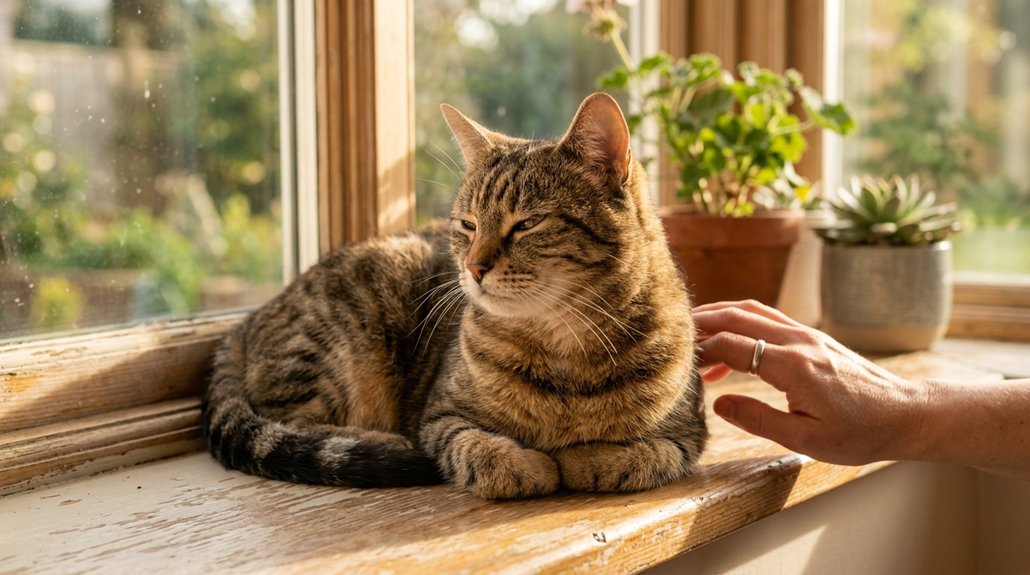
Even though cats are often perceived as aloof creatures, they possess a rich repertoire of vocalizations to express affection towards their human companions. Meow interpretation is key to understanding these subtle signals. Soft meows often indicate happiness or a desire for interaction, tailored to elicit a response from you. These vocalizations reveal your cat’s wish for companionship. Purring significance should not be underestimated either, as it’s produced through larynx muscle contractions and usually signifies contentment and love. During grooming, the sound of purring strengthens the bond between you and your feline friend. By recognizing variations in meows—such as tone and length—you can better comprehend your cat’s emotional state, ultimately deepening your understanding and relationship with them.
Spotting Your Cat’s Affectionate Behaviors
You’ll find that cats use a variety of behaviors to express affection, many of which are subtle but meaningful. A cat’s slow blinking is akin to a “cat kiss,” demonstrating trust as they gaze serenely at you—an invitation to reciprocate. When your cat engages in head rubs, they’re marking territory with their scent, a sign of closeness. Curling up next to you signifies profound trust, indicative of their comfort in your presence, choosing you in their most vulnerable moments. Purring sounds serve as a universal expression of contentment, resonating when they feel secure by your side. Bunting behavior, or head-butting, is a tactile gesture that deepens the bond by mingling scents, declaring you an important figure in their world.
Strengthen Your Bond With Simple Steps
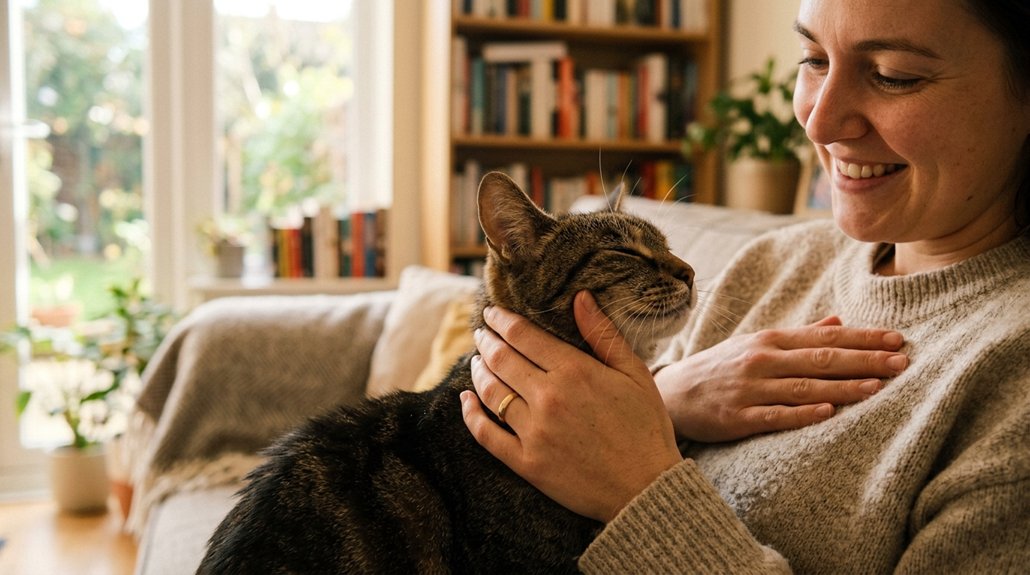
To truly enhance the bond with your cat, consider integrating simple yet effective actions into your daily routine. Recognizing the unique playtime benefits for both you and your cat can deepen emotional connections. Play not only enhances their happiness but also strengthens trust. Remember to respect your cat’s boundaries to foster mutual understanding and security. Here are some scientifically-backed steps to strengthen your bond:
Integrate simple actions daily; playtime and respect deepen the bond and strengthen trust with your cat.
- Engage in daily interactive playtime: This releases endorphins and creates positive experiences.
- Respect their personal space: Allow your cat to initiate affection, reinforcing trust.
- Acknowledge affectionate gestures: Respond to their head rubs and purrs, enhancing your connection.
Implementing these steps consistently can lead to a secure and affectionate relationship with your feline companion.
Frequently Asked Questions
What Is the 3-3-3 Rule of Cats?
The 3-3-3 rule describes a cat’s adjustment stages post-adoption: three days for decompression, three weeks for environmental acclimation, and three months for complete feline bonding. Understanding cat behavior helps you support your pet’s seamless adjustment.
What Is “I Love You” in Cat Language?
“I love you” in cat language is expressed through behaviors like a slow blink, indicating trust, or purring behavior, reflecting contentment and affection. These signals scientifically demonstrate a cat’s emotional connection and attachment to you.
What Smell Do Cats Absolutely Hate?
When it comes to what cats absolutely despise, the smell of citrus tops the list. It’s no walk in the park; their feline repulsion to such scents, alongside vinegar and strong perfumes, showcases significant odor aversion.
What Breed of Cat Is the Most Clingy?
You’d find Ragdolls are the most clingy breed, as they display affectionate behaviors like following you closely. They’re known for their enthusiasm to be held and cuddled, more so than other clingy breeds like Siamese or Burmese.
Conclusion
Just like deciphering an intricate puzzle, understanding your cat’s affection signals deepens your bond. Imagine your cat’s purrs as their unique love language, akin to notes passed in a classroom—each one personal, significant, and uniquely expressive. Studies show cats purr within 25 to 150 Hertz, fostering an environment of comfort and love. By learning to read these signals, you’re not just a pet owner, but a trusted friend in your feline’s world. Embrace these moments; they’re precious.