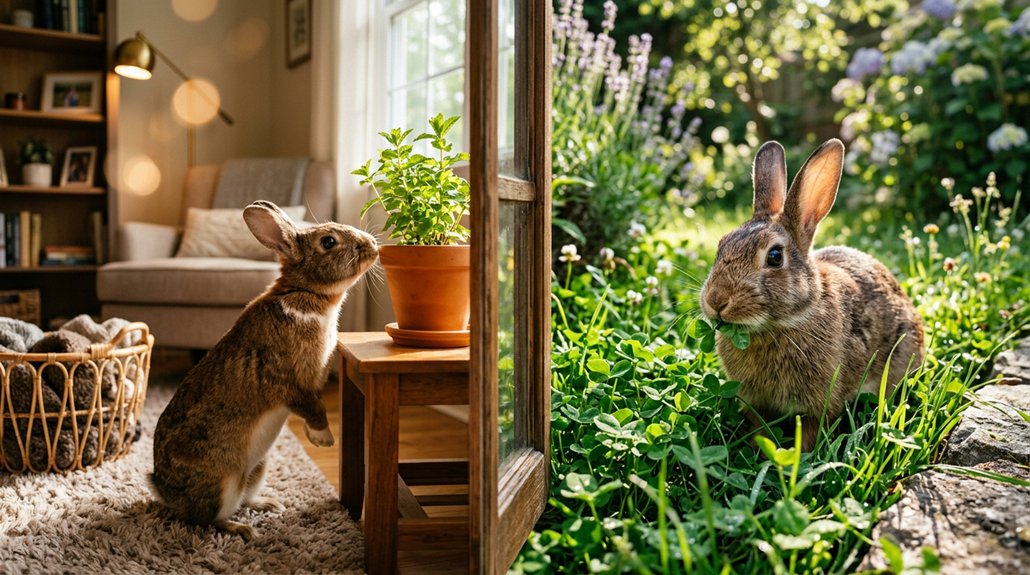
Choosing between indoor and outdoor settings for rabbits involves evaluating several factors. Indoor rabbits benefit from easier health monitoring, reduced pest exposure, and enhanced companionship. However, outdoor rabbits engage in natural enrichment activities and require vigilant safety measures against predators and harsh weather. Whether prioritizing health, safety, or socialization, each option presents unique advantages and challenges. Understanding these factors helps you make the best decision, and further exploration can offer additional insights into optimizing rabbit care.
Key Takeaways
- Indoor rabbits offer better health monitoring and companionship, reducing loneliness and anxiety.
- Outdoor rabbits require secure enclosures to protect from predators and harsh weather.
- Indoor environments decrease stress with a toxin-free setting, but need mental stimulation and supervised play.
- Outdoor rabbits benefit from natural enrichment, needing regular health checks for parasites and other vulnerabilities.
- Both indoor and outdoor rabbits need proper socialization, enrichment toys, and protection from hazards.
Indoor or Outdoor Rabbits: Making the Best Choice?
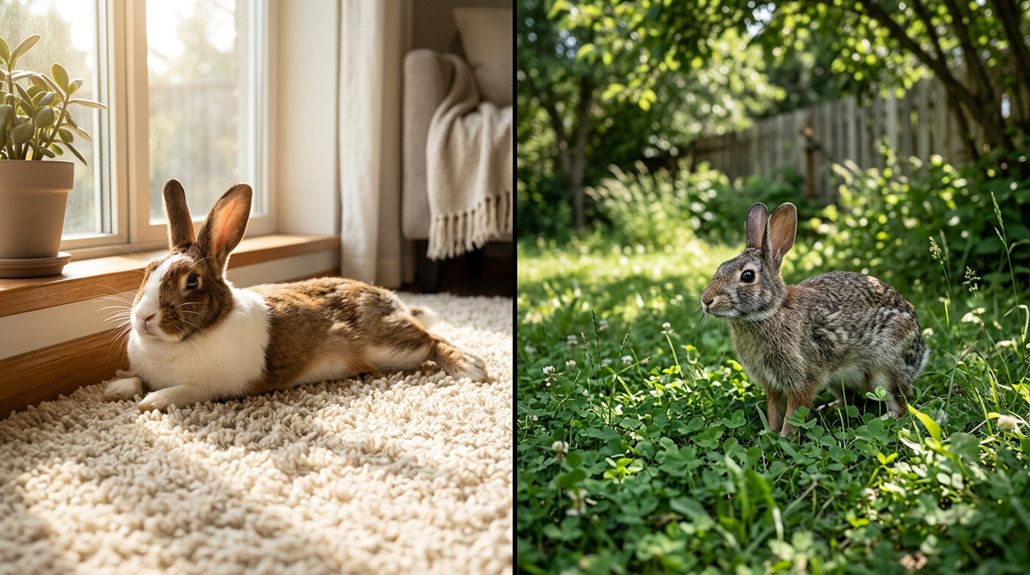
When deciding whether to keep rabbits indoors or outdoors, it’s important to weigh the advantages and drawbacks of each environment. Indoor rabbits allow for easier health monitoring, helping you respond quickly to issues due to your close observation and interaction. This setting also lowers health risks from pests and diseases, offering a safer environment for rabbit companionship and social interaction, which is essential to avoid loneliness and anxiety.
Conversely, outdoor rabbits benefit from more space, providing natural rabbit enrichment activities like digging and exploring. However, effective enclosures are necessary to guard against predators and extreme weather. Regardless of the environment, ensuring rabbit companionship and adequate shelter is crucial. Ultimately, consider your ability to meet these needs when choosing the best setting for your rabbits.
Identifying and Mitigating Outdoor Rabbit Dangers
When keeping rabbits outdoors, you’re faced with the challenge of safeguarding them from natural predators like feral cats and hawks. It’s crucial to protect them from harsh weather conditions, ensuring they have adequate shelter to prevent heatstroke or cold stress. You’ll also need to remove toxic plants from their environment to prevent accidental ingestion, which can be life-threatening.
Natural Predators and Threats
Outdoor rabbits face numerous threats that need careful management to guarantee their safety and well-being. Predator awareness is essential—feral cats, hawks, dogs, and raccoons pose significant risks. These predators can cause panic in rabbits, potentially resulting in heart attacks or injuries as they attempt to flee. To mitigate these dangers, secure enclosures are necessary. Health vulnerabilities extend beyond predators to include parasites like fleas, ticks, and worms, undermining rabbit health and leading to disease. Regular checks for flystrike are important, as flies can cause severe infection in unsanitary conditions. Additionally, vaccinations against Rabbit Hemorrhagic Disease Virus (RHDV2) and protection from diseases like myxomatosis, transmitted by mosquitoes, are essential to safeguard against contagious and potentially fatal illnesses.
Harsh Weather Conditions
In addition to predator threats, another significant concern for rabbits living outdoors is harsh weather conditions. Temperature extremes, such as those above 80°F (26°C), can lead to heatstroke, while cold and wet conditions pose additional health risks. Ensuring adequate shelter requirements is essential. Outdoor rabbits need weatherproof housing, insulated with dry bedding to mitigate exposure to these extremes.
| Weather Condition | Risk | Mitigation |
|---|---|---|
| Heat | Heatstroke | Shaded areas, water |
| Cold | Hypothermia | Insulation, dry straw |
| Wet | Flystrike | Dry shelter, vigil |
| Wind | Temperature loss | Block winds, blankets |
| Sun | Overheating | Shade, ventilation |
Monitoring their environment regularly for signs of distress, such as heat stress or hypothermia, safeguards their health. Enrichment helps further by promoting safe, natural behaviors.
Toxic Plants and Foods
A notable challenge for rabbit owners is the potential danger posed by toxic plants and foods in outdoor environments. Domestic rabbits lack the instinct to avoid poisonous flora, necessitating vigilance in identifying and removing threats. Common toxic plants include foxglove, yew, and certain ferns, which, if ingested, can cause severe health issues. To guarantee a safe environment, focus on rabbit safe plants and regularly inspect these areas for unidentified species. Additionally, beware of pesticides and fertilizers; they pose risks through contaminated plants or grooming after exposure. Educating yourself on local plant toxicity is essential for recognizing symptoms of poisoning. By remaining diligent, you can meaningfully reduce the likelihood of health emergencies stemming from harmful dietary indiscretions.
Enhancing Indoor Rabbit Health Benefits
When considering the health benefits of indoor rabbits, you’ll find they enjoy a safer environment with protection from extreme temperatures and harmful pests. It’s essential to provide mental stimulation through toys and activities to support their well-being and prevent destructive behaviors. By managing these aspects, you can enhance both the physical and emotional health of your indoor rabbit.
Safe Indoor Environment
Creating a safe indoor environment for rabbits offers numerous advantages for their health and well-being. Indoor comforts and enhanced bunny safety are paramount, shielding them from predators and adverse weather. This controlled setting considerably lowers stress levels and health risks. You’ll find it’s easier to monitor their health indoors, as regular interactions make it simple to notice shifts in appetite or behavior, potentially indicating health concerns. Additionally, they benefit from a toxin-free environment, reducing their exposure to harmful plants, pesticides, and diseases such as RHDV2. Maintaining a stable temperature prevents heatstroke—essential since rabbits struggle with temperatures above 80°F (26°C).
- Protection from outdoor hazards guarantees stress-free living.
- Immediate detection of health issues through close monitoring.
- Toxin-free surroundings eliminate risks from outdoor contaminants.
Maintaining Mental Stimulation
To guarantee your indoor rabbit remains mentally stimulated, incorporate a variety of engaging activities and enrichment tools. Provide a toy variety that includes chewable items and tunnels to prevent boredom and related behaviors. Engage their natural behavior by hiding treats and encouraging digging activities, which foster exploration and engagement. Regular interaction with your rabbit bolsters their emotional well-being and helps observe any behavioral changes, thereby aiding in health monitoring. Create a safe indoor space for supervised free-roaming, allowing them to satisfy their curiosity. Interactive play sessions should be included daily to stimulate their mind and body, promoting a happier, healthier lifestyle indoors. With these efforts, you can greatly enhance your rabbit’s mental stimulation and overall well-being.
Socializing Your Indoor and Outdoor Rabbits
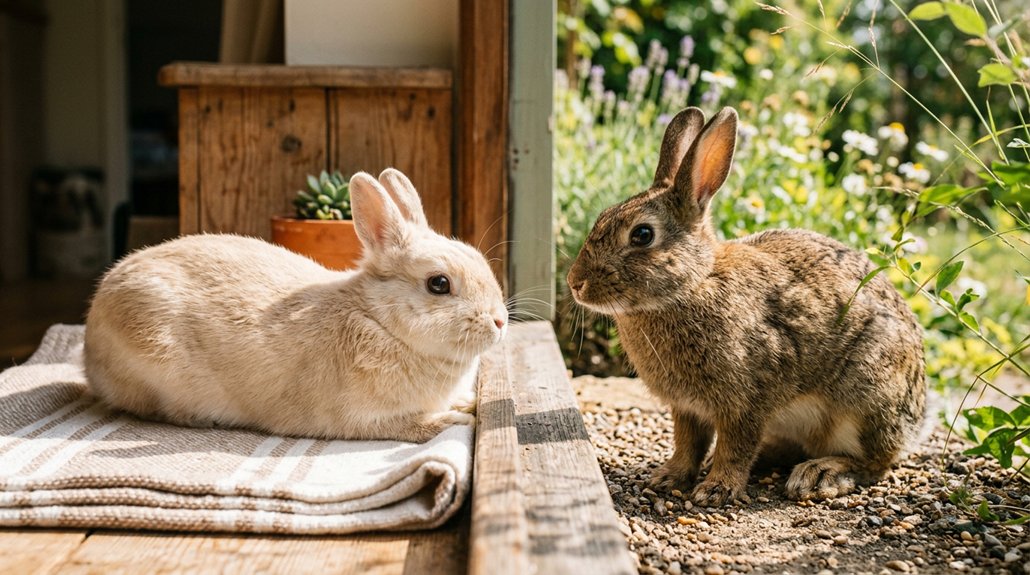
Socializing your rabbits, whether they reside indoors or outdoors, is fundamental to their overall well-being. Indoor rabbits thrive with frequent bonding activities, fostering emotional connections and enhancing their quality of life. Companion compatibility is key, as pairing rabbits with suitable buddies reduces stress and encourages natural behaviors essential for mental health. Outdoor rabbits benefit from daily supervision and interactive engagement to combat loneliness and anxiety.
- Engage in interactive bonding activities to promote physical activity.
- Ensure companion compatibility by gradually introducing new companions.
- Utilize enrichment toys that stimulate mental engagement.
Both environments require regular play and enrichment to prevent boredom and behavior issues. Adjusting rabbits between indoor and outdoor settings for supervised play helps them adapt socially, promoting a balanced, happy life.
Ensuring Sufficient Vitamin D for Indoor Rabbits
While indoor rabbits enjoy a comfortable habitat, their limited access to natural sunlight can result in low Vitamin D levels, jeopardizing their calcium absorption and overall health. This deficiency might lead to dental diseases, which are common in rabbits. To mitigate this risk, consider vitamin supplementation and guarantee some sunlight exposure. Supervised outdoor time, particularly for rabbits with dental issues, boosts Vitamin D synthesis. Alternatively, installing UV light sources indoors can help avoid deficiencies.
| Solution | Benefits | Consideration |
|---|---|---|
| Sunlight exposure | Natural Vitamin D boost | Supervision required for safety |
| Vitamin supplementation | Supports overall health | Vet consultation needed for dosage |
| UV light installation | Indoor convenience | Initial cost and proper setup necessary |
Consult your vet to guarantee adequate nutritional support.
How to Bunny-Proof Your Home Effectively
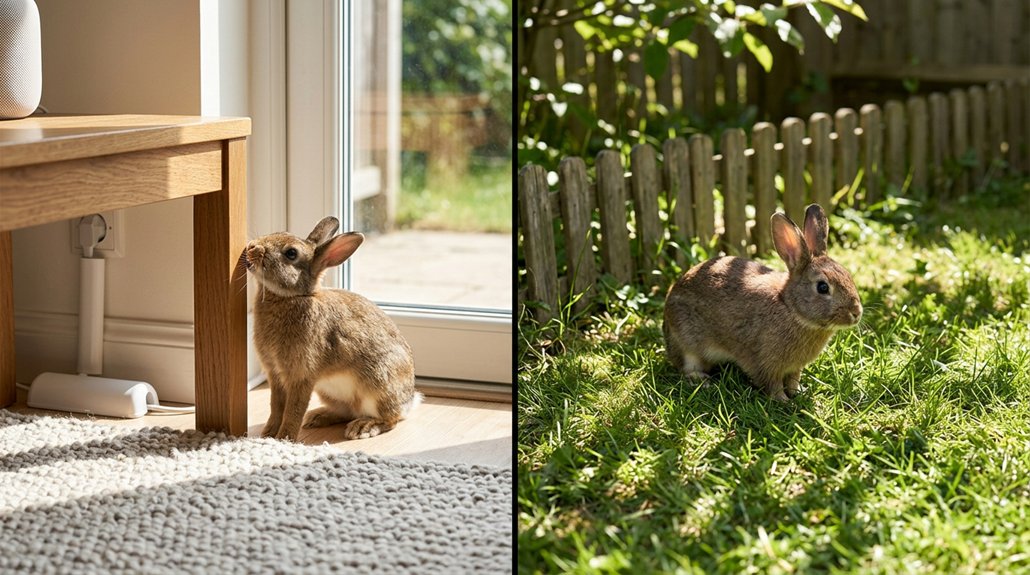
Although rabbits are delightful companions, they can create challenges in your home due to their inquisitive nature and chewing habits. To bunny-proof your home effectively, begin by addressing electrical hazards. Secure cords and cables using cord protectors to prevent chewing, which can lead to burns or electrical shock. Guarantee that all potentially toxic plants and small ingestible objects are removed or out of reach, as rabbits lack the instinct to avoid harmful flora.
Provide a variety of chewable toys to meet their natural chewing needs, reducing the temptation to nibble on your belongings. Implement barriers to designate specific safe zones within your home. Regularly inspect and maintain these areas to identify any newly arisen hazards.
- Use thick cord protectors
- Supply cardboard boxes or fruit tree branches
- Block off restricted areas with barriers
Crafting Secure Outdoor Play Areas for Rabbits
Ensuring security in outdoor play areas for rabbits requires meticulous planning and attention to detail. You’ll need to select robust enclosure materials—heavy-gauge wire and solid floors—to safeguard against predators and tunneling attempts. Craft the space to be at least 35 square feet per rabbit and 6 feet tall to inhibit climbing escapes. Integrate well-placed shaded areas to protect your rabbits from heat and rain. Regular maintenance is vital; inspect for wear or escape points. A secure, weatherproof shelter should be available for nighttime.
Enhancing the enclosure with enrichment options like toys and tunnels is fundamental. This stimulates exploration and maintains mental engagement.
| Feature | Recommendation | Purpose |
|---|---|---|
| Enclosure size | 35 sq ft per rabbit | Space and exercise |
| Height | 6 feet | Prevent climbing escapes |
| Materials | Heavy-gauge wire | Predator-proofing |
| Shelter | Weatherproof | Nighttime safety |
| Enrichment | Toys, tunnels | Mental stimulation |
Merging Natural Instincts With Outdoor Safety
After establishing secure outdoor play areas, consider how outdoor environments can align with a rabbit’s natural instincts while prioritizing safety. Rabbits’ digging instincts and exploring behavior require careful planning to provide a stimulating yet secure environment. Guarantee predator-proof enclosures to prevent threats from feral cats and birds of prey. Enrich the area with items that enhance exploration and activity.
- Incorporate tunnels for concealment and exercise, simulating a warren.
- Offer digging boxes filled with safe materials to fulfill their digging instincts.
- Place various toys that encourage movement and mental stimulation.
Regularly monitor your rabbit’s well-being, as outdoor environments require vigilance to recognize stress or health issues quickly. Provide ample shade and water to counteract the risk of heatstroke. Properly merge their natural instincts with essential safety measures.
Tips for Perfect Rabbit Living Spaces
Creating the ideal living space for your rabbit involves balancing their need for exploration with the necessity for safety. Indoor rabbits benefit from rabbit-proofed areas that include tunnels, platforms, and chewable toys for rabbit enrichment, optimizing available space. A quiet zone away from household noise is critical to alleviate stress. Outdoor enclosures should be at least 35 square feet per rabbit, protecting them from predators and adverse weather. Regular social interaction is essential for both environments, supporting their emotional and mental health. It’s essential to keep bedding clean and dry, with weekly deep cleanings to prevent health issues, such as flystrike. Consider the following guidelines to enhance rabbit living spaces:
| Indoor Tips | Outdoor Tips |
|---|---|
| Use tunnels | Provide shade |
| Offer platforms | Protect from weather |
| Chewable toys | Predator-proof fences |
| Quiet rest area | Ample exercise space |
| Rabbit-proof zones | Weekly clean bedding |
Frequently Asked Questions
Is It Better for a Rabbit to Live Inside or Outside?
You’ll find that indoor conditions are generally safer, offering protection from predators and diseases. However, outdoor space allows for natural behavior and exercise. A balanced approach, combining both environments, tends to benefit a rabbit’s overall well-being.
What Is the 3-3-3 Rule for Bunnies?
The 3-3-3 Rule guides you through your bunny’s gentle acclimatization. In three days, expect shy behavior. By three weeks, they’ll feel assured. After three months, a loving bond blooms, enhancing bunny behavior and rabbit health.
What Is the Main Cause of Death in Rabbits?
The main cause of death in rabbits often stems from underlying health issues. Common diseases, environmental stress, and unmet dietary needs markedly impact rabbit health, leading to fatal conditions if preventive measures aren’t diligently implemented.
Are Rabbits Happier Outside?
Rabbits might enjoy bunny behavior like digging in outdoor space. However, they could experience stress due to predators, extreme weather, and isolation. Supervised outdoor play provides enrichment, but indoors offers consistent security and interaction that supports happiness.
Conclusion
As you weigh the options for your rabbit’s habitat, consider this as a modern-day Odyssey, steering between the safety of Penelope’s hearth and the allure of Odysseus’ adventures. Both indoor coziness and outdoor freedom offer unique benefits. By creating a secure environment and considering factors like socialization and vitamin D, you’ll strike a harmonious balance. Ultimately, your choice should merge instinctive needs with safety, ensuring your rabbit thrives, be it in a cozy burrow or a grassy playground.