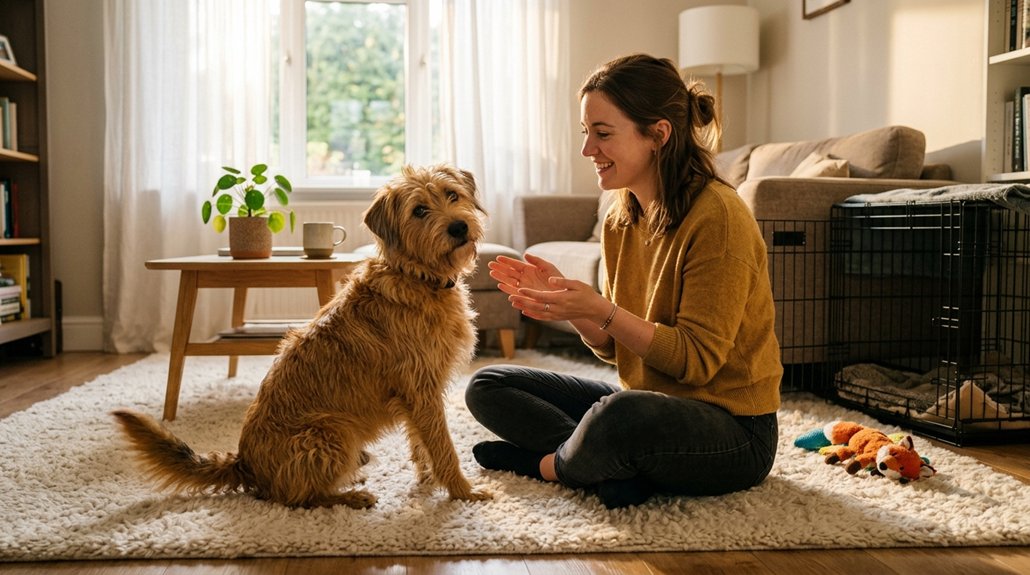
As a new dog owner, building a bond requires patience and understanding. Gradually introduce your dog to environments, letting them explore at their own pace. Consistently reward bravery with treats and praise to nurture trust. Create a calm atmosphere with slow movements and gentle tones. Recognize their body language and establish stable routines for comfort. Incorporate physical and mental activities, ensuring they’re engaging and varied. Trust develops over time, and there’s much more to discover ahead.
Key Takeaways
- Allow your dog to approach new environments at their own pace to build trust.
- Maintain a calm demeanor with slow movements to reassure and reduce anxiety.
- Engage in regular interactions and shared activities to strengthen your bond.
- Celebrate your dog’s achievements with treats and praise to encourage learning and exploration.
- Observe and understand your dog’s body language to communicate effectively and address their needs.
Take Time to Build Trust
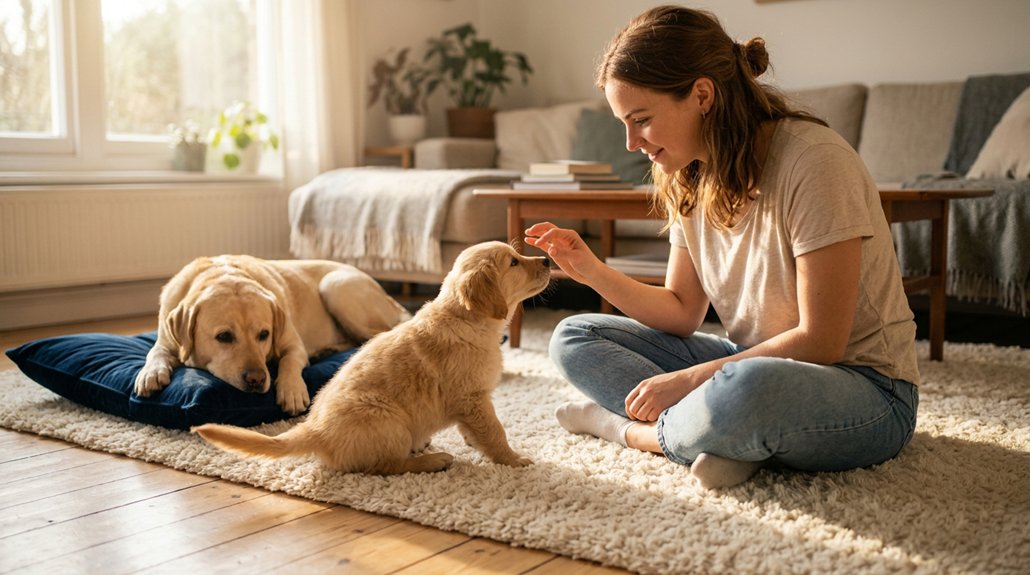
When welcoming a new dog into your home, it’s critical to understand that trust won’t develop overnight. Dogs, as sentient beings, often need weeks, if not months, to adjust. An effective socialization strategy involves gradual introductions to different environments and experiences that will lower anxiety. By ensuring that these adjustments are seamless, you’ll help your new companion feel safe and unthreatened. Allow your dog the space to approach you on their terms—this freedom is pivotal for building trust. In your interactions, reward bravery and curiosity with treats or gentle affirmations. These gestures can establish a foundation for a trusting relationship. Remember, patience is essential; consistent, positive experiences will nurture a bond based on respect and trust.
Reflect Calmness to Build Trust
To foster a trusting relationship with your new dog, it’s essential to maintain a calm demeanor during interactions. Dogs are sensitive to your emotional state; your soothing presence can create an emotional connection that encourages relaxation. Slow movements and a soft tone indicate you aren’t a threat, fostering comfort and safety. Engaging in low-energy activities like quiet petting or relaxed play strengthens this serene environment, vital for bonding. Patience and consistency further support this process.
| Action | Impact on Dog | Resulting Bonding Effect |
|---|---|---|
| Calm demeanor | Alleviates stress | Builds trust |
| Soothing presence | Encourages relaxation | Enhances emotional connection |
| Gentle interaction | Signals non-threat | Fosters sense of safety and comfort |
Your consistency and calmness will reassure your dog, building trust over time.
Create a Secure Space
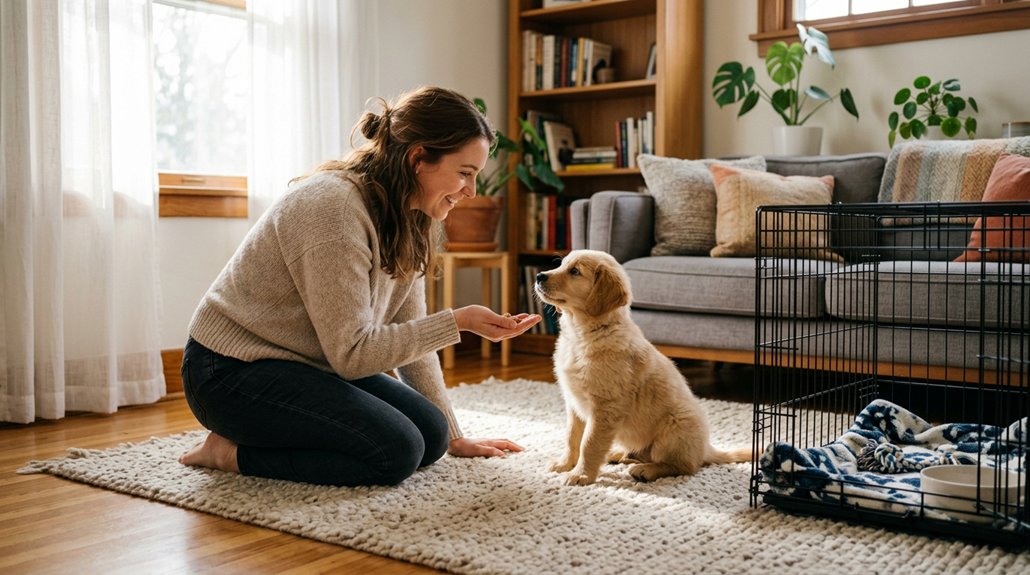
A secure space is critical for your dog’s mental well-being, providing them with a haven to retreat to when they need comfort and privacy. By establishing a secure environment, you enable your dog to acclimate smoothly and feel included without being overwhelmed. Consider the following strategies:
- Dedicated Space: Create a private area like a crate or dog bed for safety and relaxation.
- Comfort Items: Personalize with familiar blankets and toys to make it homey and comforting.
- Strategic Placement: Guarantee visibility of household activities to promote a sense of belonging.
- Respect Privacy: Avoid forcing interactions, which fosters trust and eases adjustment.
A predictable routine around this space enhances their sense of security, pivotal for a stable and trusting relationship.
Foster Exploration Safely
Understanding how to foster exploration safely is essential to developing your dog’s confidence and independence within their new home. This safe environment encourages dogs to navigate their surroundings, allowing them to build trust and familiarity with their space. The exploration benefits are multifaceted: as your dog investigates at their own pace, they engage natural instincts, enhancing their well-being. Monitor these explorations closely, ensuring that their curiosity doesn’t lead to danger. Introduce new spaces and items gradually, starting small to avoid overwhelming them. Celebrate positive experiences, like discovering a toy or treat, to strengthen your bond. Through shared experiences of joyful discovery, your dog learns that their environment is a place of safety and comfort, vital for their overall adjustment.
Use Rewards to Reinforce Positive Behavior
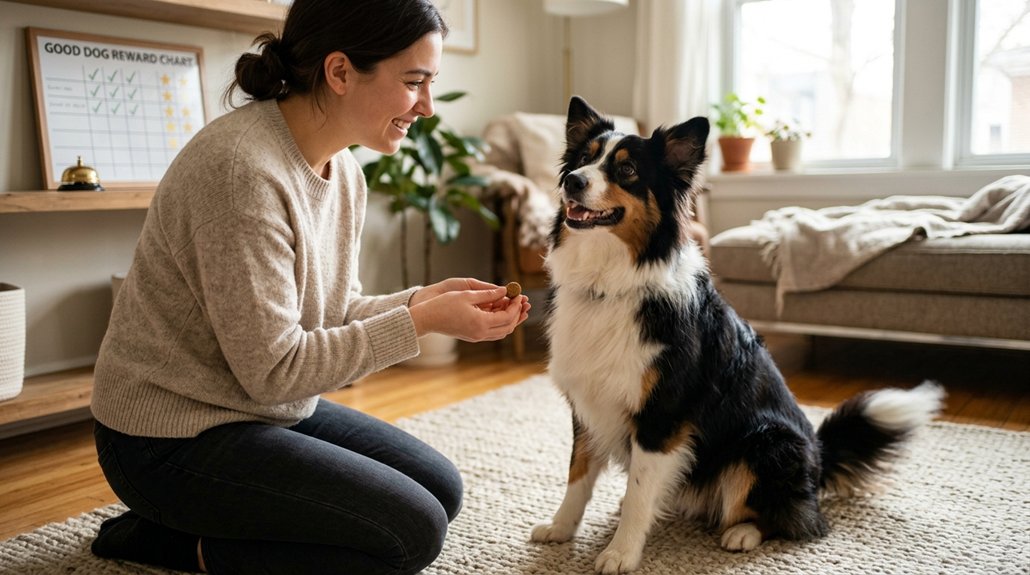
Building on the security established through safe explorations, employing rewards further nurtures confidence and goodwill in your dog’s behavior. Reward diversity enhances motivation, making it essential to not rely solely on treats. Incorporating praise, playtime, or affection cultivates a more balanced bond. Timing is critical; deliver rewards immediately after desired behavior to guarantee effective positive reinforcement. This practice strengthens the canine connection, fostering trust and reliability.
Consider these insights:
- Treats work well in training sessions to reinforce good behavior.
- Confirm rewards like play or affection complement treat-based reinforcement.
- Timing importance means rewards should coincide with the behavior completion.
- Consistent positive actions encourage habitual desirable behaviors.
Through observing these principles, you’ll see your relationship with your dog flourish.
Enjoy Shared Activities Together
When you engage in shared activities with your dog, the relationship benefits from both physical and emotional enrichment. Regular walks as dog friendly outings allow them to explore diverse environments, enhancing their socialization skills while giving both of you the chance to bond over shared hobbies. Playtime with interactive toys not only stimulates their mind but strengthens your emotional connection, making each session both fun and rewarding. Incorporating positive reinforcement in training sessions can cultivate a deeper understanding and improve communication with your dog. Activities like fetch and agility training nurture trust and provide an outlet for natural behaviors. Additionally, spending quiet moments together—whether grooming or simply lounging—reinforces comfort and security, further solidifying your affectionate relationship as new companions.
Learn Your Dog’s Signals
To strengthen your bond with your dog, it’s essential to understand their body language and recognize stress indicators. Observing signals like tail position, ear orientation, and facial expressions can reveal their emotional state, with behaviors such as yawning and lip licking indicating stress or discomfort. Regularly monitoring these cues allows you to respond appropriately, fostering trust and enhancing your relationship.
Understand Canine Body Language
Recognizing canine body language is an essential skill for any dog owner aiming to understand their pet’s feelings and responses. Observing tail communication provides valuable insights. For example, the position and speed of tail wags can indicate emotions ranging from excitement to insecurity. Similarly, ear position plays a pivotal role in decoding a dog’s emotional state—ears forward suggest curiosity, while pinned back can hint at fear.
Consider these observations:
- Tail Position: High and fast wags often mean excitement, whereas low and slow can signal unease.
- Ear Position: Perked and forward reflect interest; ears flat against the head can signal submission.
- Overall Posture: A relaxed stance points to comfort, whereas a tense body might indicate stress.
- Nuances in Signals: A deep understanding enhances your ability to respond effectively to your dog’s needs.
Recognize Stress Indicators
How can you accurately assess stress in your dog? Look closely at their body language for signs of anxiety. A tucked tail, flattened ears, or avoiding eye contact can indicate discomfort. Recognizing these indicators allows you to address dog anxiety effectively. A dog not overheated but panting, yawning excessively, or lip licking may be relieving tension. Don’t overlook shifts in behavior—withdrawal or aggression might reflect stress adapting to new environments. Consider their posture; a tense or stiff body could signal fear, while a relaxed stance suggests comfort.
| Stress Indicator | Comfort Signal |
|---|---|
| Tucked tail | Relaxed stance |
| Flattened ears | Loose body posture |
| Avoiding eye contact | Eye contact |
| Excessive yawning | Natural yawn |
Learn these cues to communicate better and foster a secure bond.
Establish Reliable Routines
While bringing a new dog into your home is exciting, establishing reliable routines from the start is essential for their adjustment and well-being. Embracing schedule consistency gives your dog a sense of security, helping reduce anxiety as they settle in. The routine benefits extend to fostering trust, as dogs rely on predictable patterns:
- Regular feeding and exercise times
- Consistent walks, playtime, and training sessions
- Celebrating milestones like successful potty training
- Integrating training within daily activities
Such consistency enhances both physical and mental well-being, preventing behavioral issues tied to boredom. As you celebrate small victories from learning new tricks to consistent bathroom habits, you’re reinforcing positive behaviors, thereby strengthening your bond. Precise routines act as frameworks for communication, gradually teaching obedience and loyalty.
Engage in Physical and Mental Challenges
Engaging your dog in both physical and mental challenges is an essential aspect of fostering a well-rounded and happy pet. Physical play, like walks, runs, or fetch, meets exercise needs, reducing anxiety and promoting a positive demeanor. To guarantee mental stimulation, incorporate interactive games or puzzle toys that activate your dog’s problem-solving skills. Insightfully, activities such as agility training enhance coordination and obedience, deepening your relational bond. Trick training during play offers dual benefits, merging physical activity with cognitive engagement, making command learning enjoyable. Varying these activities regularly keeps your dog enthusiastic and stimulates a shared joy, fortifying an authentic connection. Observationally, continually adapting to these challenges encourages growth and resilience, building a rewarding companionship based on fulfilling shared experiences.
Stay Patient and Steady
As you commence on the journey of bonding with your dog, remember that patience and consistency are pivotal for cultivating a trusting relationship. Building a bond doesn’t happen overnight; it requires time for your canine companion to settle nerves and adjust to the new environment. Embrace patience as you establish predictability through consistent routines for feeding, walking, and playtime. It allows your dog to feel secure and fosters a strong connection.
- Let them adjust at their own pace to encourage trust.
- Celebrate small milestones to keep motivation high.
- Stay present and attentive to interpret body language effectively.
- Avoid overwhelming attention to prevent stress.
These actions will help in forging a lasting bond, advancing understanding between you and your new furry friend.
Frequently Asked Questions
How Long Does It Take for a Dog to Bond With a New Owner?
Bonding with a new dog varies; initial bonding may take weeks, while full trust-building often spans several months. Each dog’s adjustment timeline is unique, so you’ll need patience and consistent nurturing to establish a lasting, meaningful relationship.
What Is the 3-3-3 Rule With Dogs?
The 3-3-3 rule outlines dog behavior adjustment timelines: three days for settling in, three weeks for bonding techniques, and three months for full puppy socialization, fostering trust building through patient observation and insightful understanding.
What Is the 7 7 7 Rule for Dogs?
“A watched pot never boils,” so be patient. The 7 7 7 Rule suggests dogs need time: seven days to adjust behavior, seven weeks for understanding routines, and seven months for bonding. Engage in consistent activities for effective bonding.
What Is “I Love You” in Dog Language?
“I love you” in dog language involves dog body language and canine affection, such as a relaxed tail wag, soft gazes, leaning on you, offering toys, or joyful vocalizations. They demonstrate trust, happiness, and a deep bond with you.
Conclusion
Building a bond with your new dog requires patience and understanding. Did you know dogs have around 60 more olfactory receptors than humans? This incredible sense of smell helps them explore and understand their environment, much like you do by observation. By creating trust, safe spaces, and engaging activities, you’re not just nurturing a pet but a friendship. Observe their cues, reward good behavior, and establish routines. In time, you’ll witness your bond grow resilient and joyful.