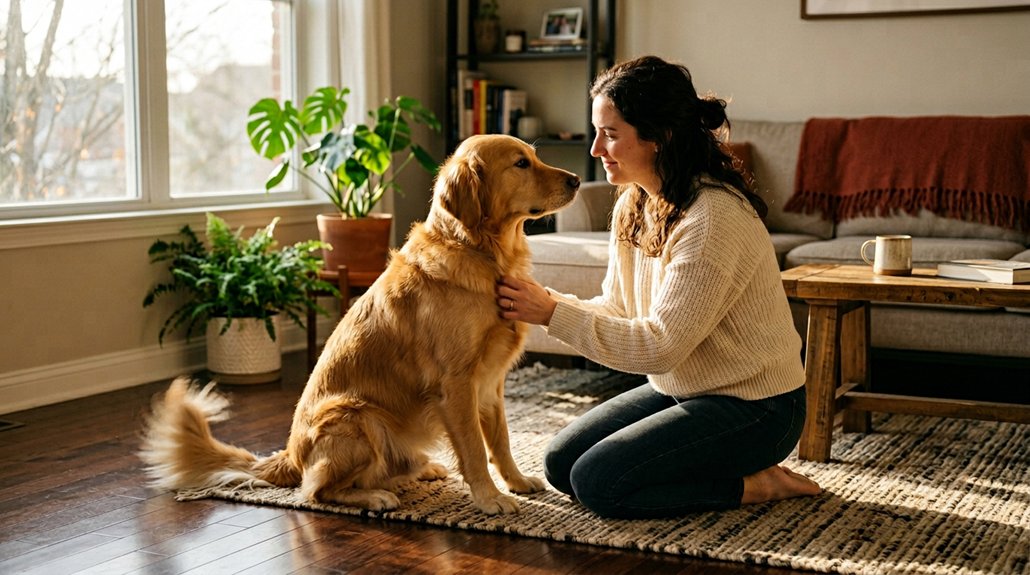
Building a strong bond with your dog involves engaging in activities like fetch and daily walks, which stimulate and connect you both. Establish a consistent routine to provide stability and reduce anxiety. Use training sessions with positive reinforcement to encourage good behavior and deepen trust. Understand your dog’s body language to guarantee comfort and security. By investing time and patience, you’ll create a nurturing environment that enhances your relationship. Continue exploring for more insights into this rewarding journey.
Key Takeaways
- Engage in interactive activities like fetch and tug-of-war to stimulate your dog’s mind and body.
- Maintain a consistent daily routine to reduce anxiety and build trust with your dog.
- Use regular training sessions with positive reinforcement to strengthen obedience and deepen your bond.
- Understand your dog’s body language to ensure comfort and emotional security.
- Spend quality time together to increase comfort and foster a stronger relationship.
Play and Walk: Essential Bonding Activities
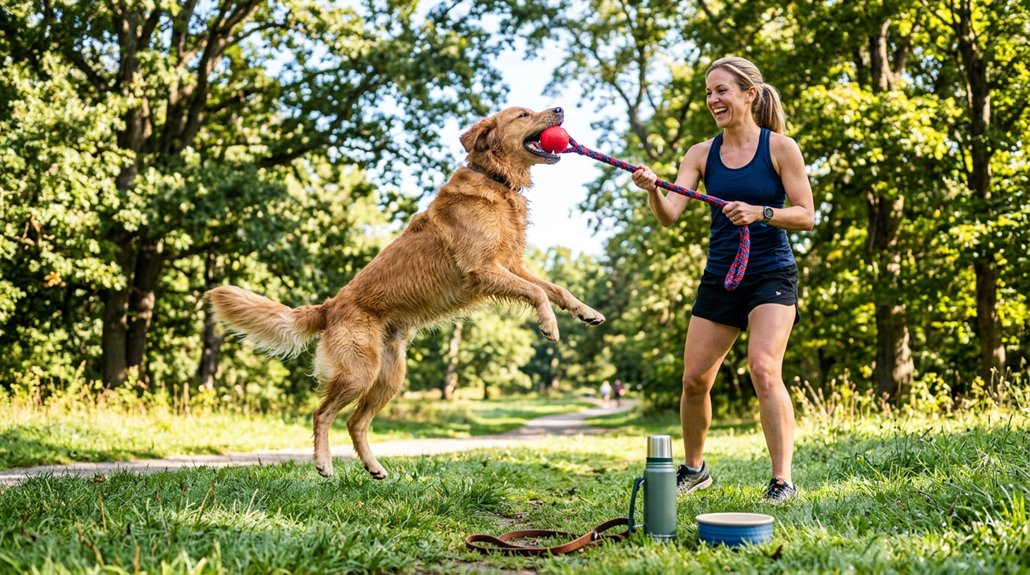
Without a doubt, play and walk times are key activities for building a lasting bond with your dog. Engaging in fetch fun not only stimulates your dog’s mind and body but enhances emotional connections, keeping boredom at bay. Similarly, tug teamwork echoes satisfaction through cooperation, strengthening trust between you two. Scientifically, these activities work wonders; they release endorphins, fostering happiness and satisfaction.
Daily walks go beyond physical fitness. They provide mental stimulation, introducing your dog to varied environments that spark curiosity and confidence. As an empathetic guardian, allow exploration – this builds independence, with you as their secure base in unfamiliar situations. Remember, interactive games reinforce this bond, making training more effective and enjoyable with positive reinforcement of their achievements.
Create a Regular Routine for Consistency
To foster a secure environment and strengthen the bond with your dog, establish predictable mealtimes and maintain a consistent daily schedule for activities like walking and play. Scientific studies suggest that dogs thrive on consistency, which can reduce anxiety and foster a sense of security. Incorporating regular training sessions not only aids learning but also reinforces their trust and reliance on you.
Establish Predictable Mealtimes
When you establish predictable mealtimes for your dog, their overall well-being greatly benefits from the sense of routine. The anticipation surrounding mealtime creates trust as your pet learns to rely on you for their needs. Using systematic feeding equipment further enhances this structure, reinforcing the expectation of consistent nutrition. A set schedule not only contributes to physical health but also aids in emotional bonding by creating clarity in their world.
Consider the following advantages of routine feeding:
- Security: Consistent mealtimes reduce anxiety, offering psychological comfort through regularity.
- Behavioral Benefits: Dogs in structured environments show improved behavior, thriving when expectations are clear.
- Training Ease: Potty training is facilitated as dogs learn to associate mealtime with bathroom habits.
Providing stability strengthens the foundational bond between you and your dog.
Maintain Daily Activity Schedule
Incorporating a daily activity schedule for your dog fosters a sense of predictability and security, essential for their well-being. Establishing a consistent routine for dog exercise and daily enrichment enhances your pet’s quality of life. Structured schedules help manage their energy levels, balancing activity with relaxation. Predictable mealtimes and potty breaks considerably contribute to successful potty training, reducing indoor accidents. This regularity reduces anxiety, promoting trust between you and your dog.
A well-planned routine isn’t just about physical health. It’s a cornerstone for emotional security, helping your dog understand what to expect each day. Consistent walks and playtimes not only engage them physically but stimulate their minds. By prioritizing their needs, you create a harmonious bond based on mutual respect and understanding.
Implement Consistent Training Sessions
Developing a consistent training routine for your dog immerses them in a structured environment where they can thrive through predictability and routine. Engaging in regular training sessions, ideally 5 to 10 minutes multiple times a day, strengthens obedience while keeping your dog mentally stimulated. Here’s how to enhance your training routine:
- Incorporate Training Games: Interactive games make learning fun and engaging, maintaining your dog’s interest.
- Use Command Variations: Introduce different commands to diversify learning, preventing monotony and enhancing cognitive development.
- Reinforce Positively: Consistently use treats or praise to associate learning with positive experiences, fostering trust.
Reward the Right Moves
To strengthen your connection with your dog, it’s crucial to reinforce positive behaviors through consistent reward-based strategies. Using treats and praise, you’ll encourage repeated desirable actions, effectively using your dog’s natural inclinations for learning and cooperation. By choosing high-value treats, you make training sessions more engaging, leading to quicker learning and a more robust bond.
Reinforce Positive Behaviors
Positive reinforcement training shines as a scientifically backed method that not only teaches your dog but also fortifies your mutual bond. It’s all about behavior modification through well-timed rewards. Here’s how to intelligently reinforce positive behaviors:
- Perfect Reward Timing: For ideal behavior modification, give the treat within seconds of the correct behavior, solidifying the association in your dog’s brain.
- High-Value Treats: Use delicious rewards to increase motivation and encourage frequent repetition of the desired behavior. Your dog should feel it’s worth the effort!
- Celebrate Small Wins: Recognize even the smallest achievements during training, which fosters a positive atmosphere. This practice not only celebrates progress but also deepens the trust between you and your canine companion.
Encourage Consistent Actions
While reinforcing positive behaviors lays a strong foundation, encouraging consistent actions is what truly cements a lifelong bond with your dog. Behavioral consistency during every interaction is essential, as it helps your dog understand and predict actions, promoting a secure and trusting environment. When you reward your dog’s desired behaviors consistently, you’re fostering interaction patterns that intrinsically motivate them to repeat those actions. Scientific studies suggest clear commands coupled with consistent rewards improve communication pathways between you and your dog, enhancing obedience and mutual understanding. Celebrating small training milestones nurtures emotional security, fortifying your bond. By establishing a structured environment where patterns of reward are predictable, you contribute to your dog’s overall well-being, ensuring a stable and harmonious relationship.
Utilize Treats Effectively
One powerful technique to enhance your dog’s learning is the strategic use of treats as incentives. By utilizing high-value treats, such as fresh pet food, you can effectively reward the right moves, ensuring your dog remains engaged and motivated. Immediate reward delivery is essential for behavior reinforcement, as it forms a strong connection between the desired behavior and the treat.
Consider the following strategies:
- Timely Rewards: Offer treats right after the desired action to reinforce positive behavior efficiently.
- Gradual Reduction: As commands are mastered, slowly phase out treats, shifting to verbal praise or playtime.
- Routine Integration: Incorporate treats into daily activities to foster bonding and make routine tasks more enjoyable.
Understand your dog’s preferences, as individual tastes greatly impact training success.
Understand Your Dog’s Body Language
Understanding your dog’s body language is pivotal for deepening your bond and ensuring their well-being. Dogs communicate their emotions primarily through posture, tail movements, and ear positions. Tail wagging signals are particularly telling; a relaxed wag indicates happiness, whereas a stiff tail signals tension or fear. Recognizing these signs allows you to respond appropriately to your dog’s emotional state. Stress indicators, such as yawning, lip licking, or averting their gaze, provide clues to discomfort or anxiety. By attuning yourself to these cues, you can create a supportive environment that alleviates stress and nurtures trust. Remember, each dog has a unique language—dedicate time to learn these individual nuances. Your empathetic understanding enhances communication, fortifying the relationship with your canine friend.
Advocate for Your Dog’s Comfort

Recognizing and advocating for your dog’s comfort requires a thoughtful and proactive approach. Start by identifying stress triggers such as loud noises or unfamiliar environments and manage your dog’s exposure:
- Establish safe spaces: Create a retreat where your dog can feel secure, like a cozy bed or crate. This sanctuary fosters emotional control and reduces stress.
- Communicate boundaries: Inform strangers when your dog isn’t comfortable interacting. Respecting their need to be left alone is vital for their well-being.
- Monitor body language: Be vigilant for signs like yawning or lip licking, which can signal discomfort. Adjust the situation accordingly to reassure them.
Prioritizing these strategies enhances your dog’s physical and emotional health, strengthening the bond you share.
Patience Pays Off: Building Trust Over Time
While advocating for your dog’s comfort establishes a foundation of trust, building this bond further requires patience and time. Trust building techniques like gradual exposure are vital as each dog adjusts at their own pace. Acknowledge your dog’s unique needs and offer them space to acclimate. Consistently reward desired behaviors and spend quality time together to reinforce connection. It’s important to be proactive in identifying stress or anxiety signs, addressing these with gentle reassurance to nurture safety and security.
Celebrate incremental advances, such as improved obedience or heightened comfort. This encourages ongoing relationship growth. Guarantee a successful journey by understanding the science behind canine behavior and employing empathy. Here’s a simple representation:
| Technique | Description | Benefits |
|---|---|---|
| Gradual Exposure | Slow, steady introductions | Reduced anxiety, trust |
| Rewarding Behavior | Positive reinforcement | Strengthened bond |
| Spending Time | Quality interactions | Increased comfort |
| Monitoring Stress | Recognizing signs | Enhanced security |
Frequently Asked Questions
What Is the 3-3-3 Rule With Dogs?
The 3-3-3 rule outlines your dog’s adjustment phases: three days to acclimate, three weeks to settle in, and three months to feel comfortable. This duration helps them adapt, requiring patience and empathetic understanding from you.
How Do I Deepen My Bond With My Dog?
You’re worried it’s challenging, but deepening your bond with your dog isn’t. Engage in trust-building activities through bonding games and shared adventures. Use positive reinforcement for every small success, nurturing a partnership grounded in trust and understanding.
What Are the 4 Signs Your Dog Thinks of You as a Parent?
You’re seen as a parent if your dog shows these attachment signs: sticks close by indicating strong attachment, relaxes around you showing trust, engages in interactive behaviors reflecting emotional connection, and protects you displaying parental instincts.
How Do I Say “I Love You” in Dog Language?
To say “I love you” in canine communication, use affection gestures like gentle petting, playing favorite games, and maintaining eye contact. Establish routines, respond to their cues, and remember, your actions often speak louder than words.
Conclusion
Building a strong bond with your dog is like crafting a masterpiece; it’s an art rooted in science and empathy. By engaging in play and walks, establishing routines, rewarding their good behaviors, and understanding their body language, you’ll set the stage for a thriving relationship. Advocate for their comfort and exercise patience, for trust is a seed that blooms with time. With these pillars, you’ll nurture a companionship that’s as loyal and profound as your beloved pet itself.