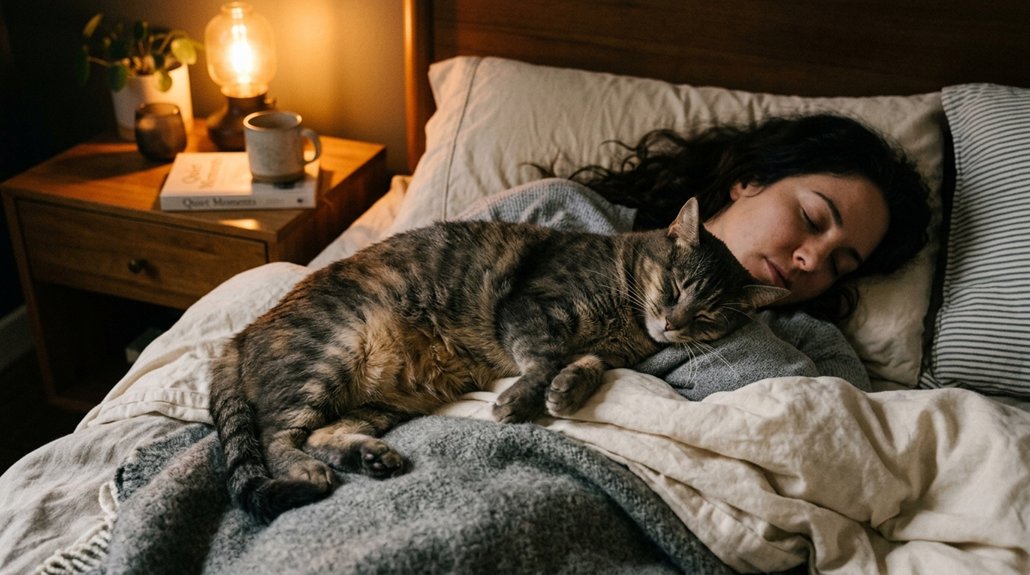
When your cat sleeps on you, it signifies deep trust and affection, reflecting a strong emotional bond. This behavior indicates your cat’s instinctual need for warmth and security, echoing its wild ancestors’ habits. The proximity serves both as a territorial signal and a comfort zone, enhancing your relationship by reducing stress and anxiety levels for both of you. Understanding these sleeping patterns offers valuable insights into your cat’s emotional state and strengthens your mutual connection further.
Key Takeaways
- Cats sleeping on humans signifies deep trust and emotional attachment, enhancing the human-animal bond and highlighting companionship.
- It reflects warmth-seeking behavior, as cats prefer humans for body heat, mimicking security of a mother cat.
- Cats display territorial instincts by scent-marking owners during sleep, reinforcing a sense of security and ownership.
- Social sleeping with humans fosters emotional bonds, providing comfort, reducing anxiety, and enhancing restful sleep cycles.
- Regular sleeping on humans indicates reduced stress levels, while changes may signal health or emotional concerns in cats.
What Your Cat’s Sleeping Habits Say About Your Bond
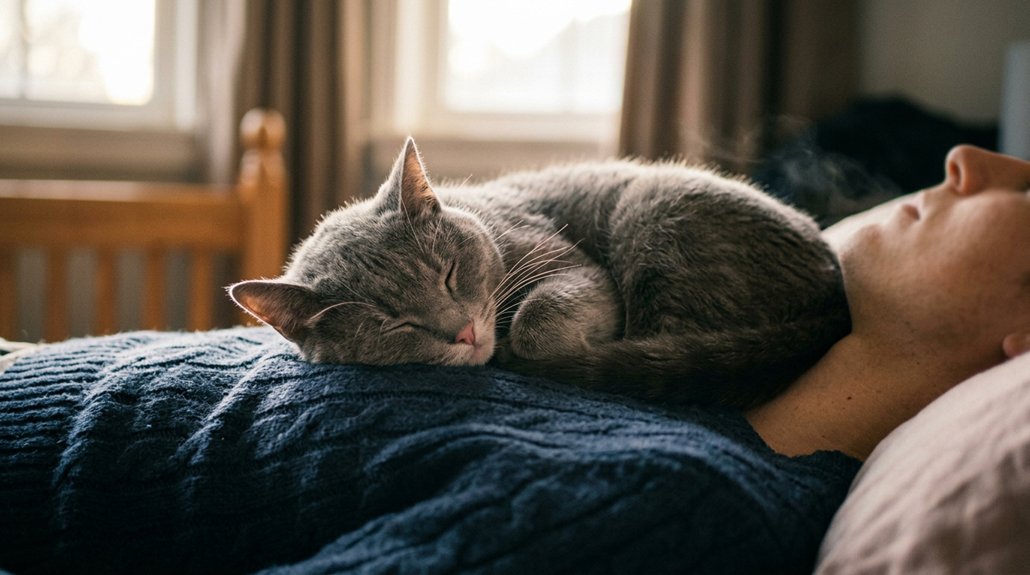
When your cat chooses to sleep on you, it reflects a profound level of trust and affection, signifying they perceive you as a secure and comforting presence. Such behavior underscores the human connection established through shared sleeping patterns. This habitual synchronization promotes companionship, reinforcing emotional support and deepening social bonds. Cats often engage in scent-marking during sleep, claiming their territory and asserting familiarity with you, further solidifying this connection. The sleeping position, whether on your chest or nearby, can indicate their emotional state; closer proximity signifies a heightened need for comfort and security. Research shows that 62% of cats prefer sleeping with their owners, emphasizing the importance of this act in strengthening the human-animal bond and nurturing mutual emotional well-being.
Why Cats Love Cuddling for Warmth
Cats are naturally drawn to warmth, an essential aspect of their survival instincts. With a body temperature around 101 degrees Fahrenheit, their warmth instinct compels them to seek energy-efficient heat sources—like you. When your cat curls up on you, they’re engaging in cuddle comfort, ensuring their heat retention is enhanced while reducing metabolic expenditure. Here’s why they love this behavior:
Cats instinctively seek warmth, seeing you as an efficient, comforting heat source to conserve energy.
- Energy Efficiency: Sleeping on you conserves energy for your cat, lessening the need to generate heat.
- Security Source: Your body mimics the warmth of a mother cat, providing security and reducing anxiety.
- Habitual Instinct: This behavior mirrors their ancestral trait of sharing body heat in the wild.
- Preferred Choice: Studies show 62% of cats favor human companions for warmth (Chomel & Sun, 2011).
How Sleeping Habits Mark Territory
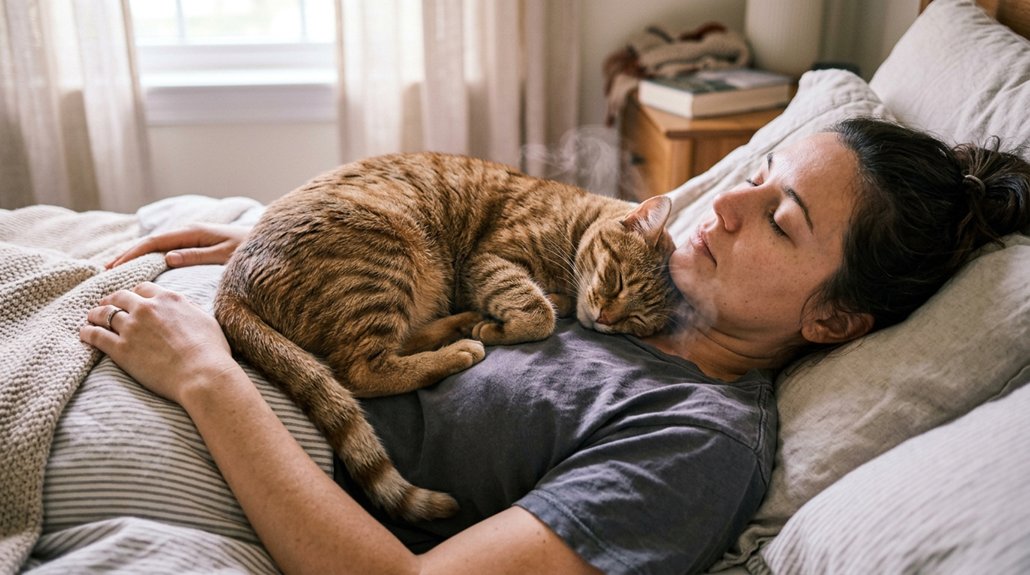
Your cat’s sleeping habits serve as a fascinating blend of instinctual and territorial behaviors. The act of sleeping on you isn’t just a sign of affection—it’s an expression of their territorial instinct. Cats use scent glands located in their paws and face to mark their territory, and by sleeping on you, they reinforce their claim over your shared space. The familiar scent signature created by these resting patterns provides your cat with a sense of security and comfort. Research highlights that such territorial behavior reduces anxiety and mirrors the environment needed for a safe, protective setting. When your cat sleeps on you, it’s a signal of ownership and bonding, blending social dynamics with scent marking, thereby communicating your status as a safe zone.
Instincts From Wild Ancestors Explained
When your cat sleeps on you, it taps into deep-rooted instincts inherited from its wild ancestors, who prioritized safety and warmth during rest. By choosing to sleep close, your cat mimics the behavior of wild cats that sought out elevated or enclosed sleeping spots to secure a protective environment against threats. This act also reflects territorial instincts, as cats use their resting positions to mark territory, leveraging your consistent presence for reassurance amidst vulnerability.
Territory Through Sleep Patterns
A notable instinctual behavior observable in domestic cats is their penchant for sleeping on their human companions, a practice deeply rooted in territorial instincts inherited from their wild ancestors. By choosing specific sleep positions, such as resting atop you, cats are exhibiting territorial behavior. This method serves to intertwine their scent with yours, marking the area as theirs. Furthermore, the act of sleeping on you communicates to other cats that this space is claimed, reinforcing their domain and security.
Consider these points:
- Scent marking: Sleeping on you blends their scent with yours, asserting territory.
- Positioning: Strategic sleep positions support claiming specific areas.
- Communication: It signals to other cats the space is occupied.
- Anxiety reduction: Establishing territory lessens stress during vulnerable sleep periods.
Maintaining Safety And Warmth
Although domestic cats may seem far removed from their wild ancestors, their behavior often reveals primal instincts, particularly their penchant for seeking warmth and security. When your cat chooses to sleep on you, it’s tapping into ancient instincts where snug companionship meant safety from predators and harsh climates. By curling up close, your cat engages in warmth sharing, not just preserving its body heat but creating a collective safe zone, reminiscent of wild cats huddling for protection. This act isn’t merely about claiming territory; it’s about establishing a refuge characterized by purring comfort. Your presence offers an elevated refuge akin to wild lookout points, providing stability and security, emphasizing your role as a crucial safeguard against threats in a domesticated environment.
Why Social Sleeping Strengthens Bonds
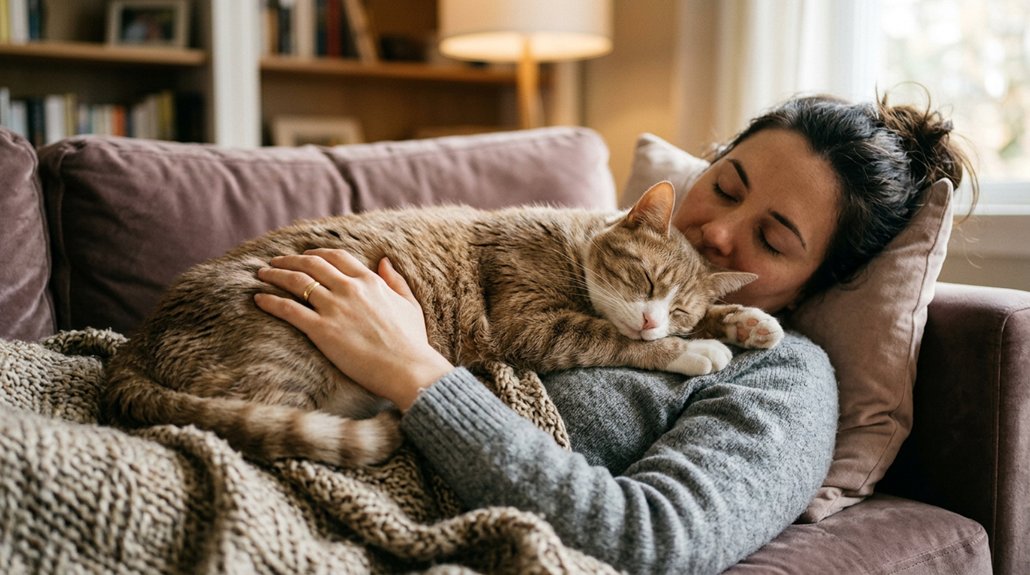
While it may initially seem like a simple act of affection, social sleeping plays an essential role in strengthening the bond between you and your cat. This behavior fosters social comfort, creating a deep emotional connection due to the psychological effects associated with proximity during vulnerable periods. Here are some benefits of social sleeping:
- Security and Comfort: Cats mimic ancestral communal behaviors, feeling assured through closeness.
- Reduced Anxiety: Human presence during sleep can lower a cat’s stress, leading to more restful sleep cycles.
- Companionship Preference: Your cat chooses you not only for warmth but to solidify emotional bonds over time.
- Scent Marking: Physical closeness reinforces territorial signals, enhancing the sense of belonging for both cat and owner.
Recognizing Safety and Security in Sleeping Patterns
Understanding how your cat’s sleeping on you signals a strong sense of safety can deepen the appreciation of your bond. In sleep psychology, a cat choosing to sleep on its owner indicates substantial feline trust. This behavior suggests they regard you as a protective presence, essential when they are at their most vulnerable during rest. By nestling close, they absorb body heat and rhythmic sounds like your heartbeat, which mitigate anxiety. Such actions reflect an intrinsic need for security that guarantees a deeper, uninterrupted sleep. Observing these patterns can offer insights into your cat’s emotional well-being. Additionally, sleeping on or near you fulfills a territorial instinct, using scent-marking to delineate a safe zone, further cementing your shared attachment.
Enhancing Your Relationship Through Understanding Sleeping Patterns
Understanding your cat’s sleeping patterns is essential to enhancing your relationship, as these behaviors serve as indicators of trust and affection, with your cat often choosing to sleep on you as a profound symbol of emotional bonding. Their preference for close proximity during rest not only reflects a desire for security and comfort but also reinforces the social bonds akin to those observed in multi-cat environments. By encouraging these sleeping habits, you can cultivate a closer, more trusting connection, ultimately promoting mutual emotional well-being.
Trust and Affection Symbol
Trust is foundational in feline-human relationships, especially when your cat chooses to sleep on you. This behavior suggests an affection display, signifying your cat’s confidence in your companionship. By understanding these sleeping patterns, you’re actively engaging in trust building, essential for enhancing your bond. Sleeping on you means they’re relying on your body heat and emotional presence.
Here’s what it means:
- Bond Strengthening: Sleeping on you reflects deep emotional attachment.
- Comfort Seeking: Your warmth mirrors the safety experienced with their mother, offering reassurance.
- Stress Reduction: Regular proximity can mitigate stress for you and your cat.
- Emotional Indicator: A shift in sleeping habits could signal changes in your cat’s comfort and emotional health, warranting attention.
Security and Comfort Connection
Exploring your cat’s sleeping patterns can provide essential insights into their security and comfort levels. When your cat chooses to sleep on you, it signifies a profound emotional connection. They identify you as a safe space to indulge their instinctual need for warmth and protection during those vulnerable rest moments. Behavioral cues, such as this, highlight their comfort in using your presence as a psychological and physical shelter. This form of closeness also acts as a scent-marking behavior, reinforcing their attachment and territorial bond with you. By understanding these patterns, you can better appreciate your cat’s emotional well-being. Note that changes in their sleeping habits might indicate underlying stress or health concerns, so it’s important to remain observant.
Bonding Through Close Proximity
Recognizing the emotional bond your cat forms when they choose to sleep on you enhances not only their sense of security but also your mutual relationship. Cats sleeping closely signifies shared warmth, reflecting their instinctual need for safe comfort zones. This behavior isn’t just about physical comfort; it’s a deep social interaction reminiscent of their wild ancestry, promoting companionship. Here’s how this close proximity can enhance your relationship:
- Trust: Cats trust you as a safe haven, deepening the emotional connection.
- Mirroring habits: They’ll often mirror your sleeping patterns, enhancing mutual understanding and attachment.
- Comfort: Sleeping near provides comfort and a sense of belonging, strengthening the bond.
- Reassurance: It reassures your cat, reinforcing feelings of security and affection.
Frequently Asked Questions
Do Cats Sleep on Their Favorite Person?
Yes, cats often do sleep on their favorite person. It’s a clear sign of cat bonding and feline trust, showing they find comfort and security with you while strengthening their emotional connection through proximity and shared warmth.
What Is “I Love You” in Cat Language?
In cat language, “I love you” is communicated through feline affection and body language, such as purring, kneading, slow blinking, or the infamous “cat kiss.” Witnessing these signs indicates they feel safe and cherished in your presence.
What Breed of Cat Is the Most Clingy?
Siamese cats exhibit strong affection, craving constant companionship. Burmese cats also thrive on close interactions with humans. Between these two breeds, expect a devoted pet prioritizing closeness and involvement in your daily activities, demanding your attention frequently.
How to Tell if a Cat Has Chosen You?
When a cat chooses you, it’s affection in motion—a symphony of trust indicators. They follow you, knead you, and bring you “gifts,” all showcasing their attachment. Their lingering gaze and gentle purrs further signal their cherished bond.
Conclusion
When your cat curls up and dozes off on you, it’s more than just seeking warmth—it’s a demonstration of a strong bond. They’re showing trust, marking you as their territory, and tapping into ancient instincts. This behavior underscores a comfort level akin to wearing one’s heart on their sleeve. By recognizing and understanding these sleeping patterns, you can foster a deeper connection, reinforcing the safety and security that your feline friend feels in your presence.