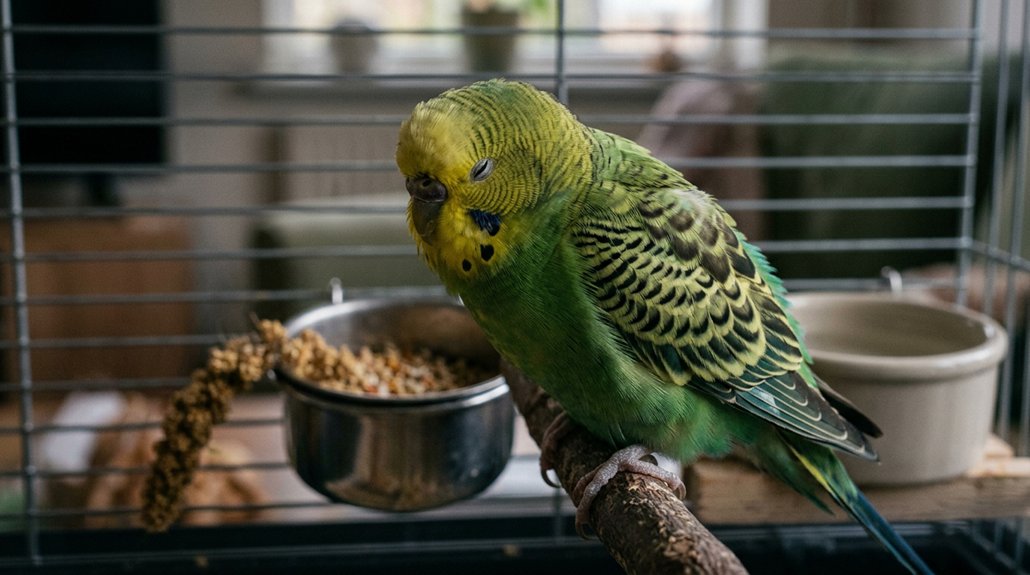
If your bird isn’t eating, treat it as a warning sign. Check for fluffed posture, weakness, watery, black, or scant droppings, rapid weight loss, or labored breathing, because these can mean illness or emergency care is needed. Also review recent food changes, water access, cage stress, and parasites. Offer warm, familiar foods and keep your bird quiet and warm, but don’t force-feed. If appetite doesn’t return within 24–48 hours, call an avian vet.
Key Takeaways
- A bird not eating for 48–72 hours is a medical emergency, especially in small species or if it looks weak or collapsed.
- Illness, pain, parasites, or abnormal droppings often cause appetite loss and need an avian veterinarian’s evaluation.
- Stress from cage changes, relocation, noise, or social disruption can reduce eating and should be minimized.
- Offer familiar foods, fresh water, warm calorie-dense foods, and keep the bird quiet and warm near a perch.
- Seek urgent avian care immediately for labored breathing, severe fluffed posture, dehydration, neurologic signs, or rapid weight loss.
Signs Your Bird’s Appetite Loss Is Serious
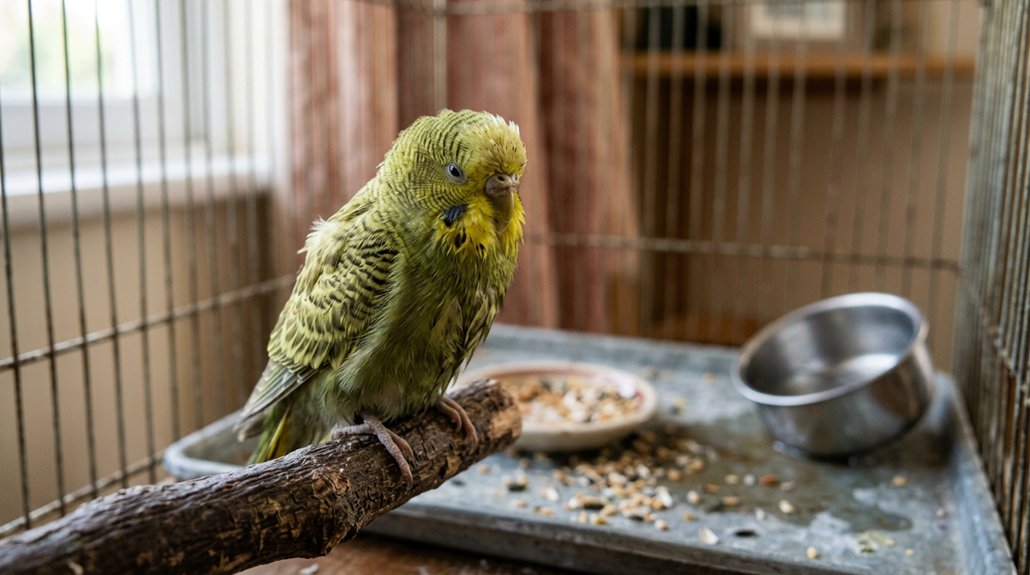
If your bird hasn’t eaten for more than 48–72 hours, treat it as a medical emergency, because birds can decompensate quickly from starvation and metabolic collapse. You should also act urgently if you see marked weakness, collapsing, or your bird spending most of its time on the cage floorings. Sudden anorexia with watery, black, or scarce droppings, or clear rapid weightloss, suggests internal disease rather than simple pickiness. If your bird stopped eating after a diet change but is still active, monitor closely for 24–48 hours. If appetite doesn’t return, or any other signs appear, contact an avian veterinarian promptly. Prolonged refusal to eat needs immediate diagnostics and supportive care, including fluids and possible tube-feeding.
Check for Illness, Stress, or Parasites
A sudden drop in appetite, especially when paired with lethargy, weakness, or watery, black, or very scant droppings, can signal serious illness and needs prompt avian veterinary evaluation. You shouldn’t wait if your bird’s not eating, because small birds can decline within 72 hours.
- Watch for behavioral changes: hiding, fluffed posture, reduced vocalizing, or less activity may point to infection or pain.
- Consider stress: home changes, cage relocation, or social disruption can suppress appetite and cause temporary immune suppression.
- Check for parasites: mites, lice, or worms can trigger feather damage, poor body condition, and weight loss.
If signs persist, your avian vet can diagnose the cause and treat it safely.
Rule Out Feed, Water, and Cage Problems
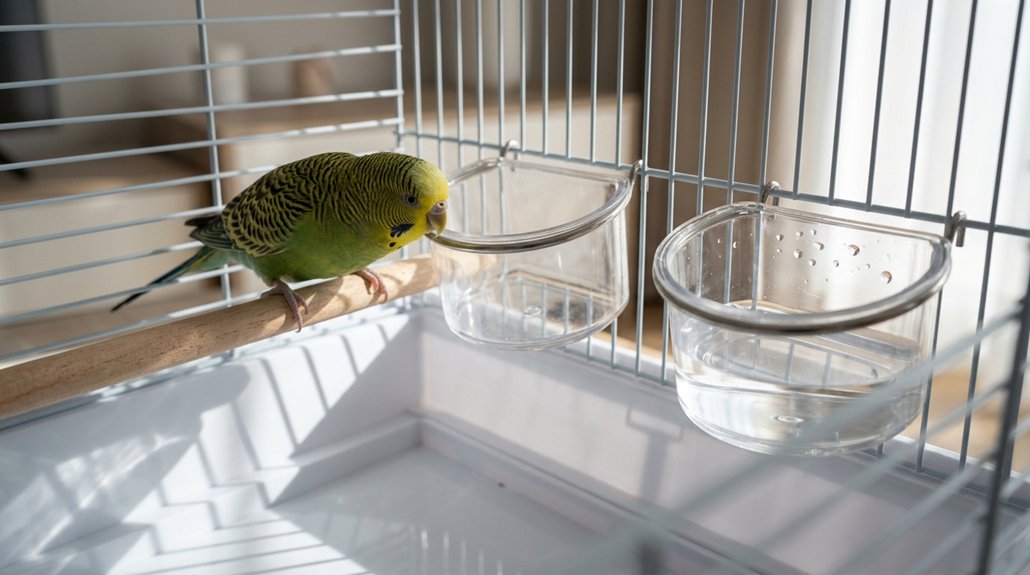
Start by ruling out basic husbandry problems that can shut down appetite: if you’ve recently changed feed, your bird may refuse a new brand or pellet type for several days, so confirm the exact previous diet and reintroduce familiar seed or hand-fed items while you shift gradually.
| Check | Action |
|---|---|
| Water | Provide fresh waterpoints and change them daily. |
| Feed | Match the prior diet during a changeover. |
| Bowl location | Place food near a perch, not the floor. |
| Noise | Move dishes to a quiet, sheltered feeding area. |
| Environment | Reduce bright, novel, or crowded cage stressors. |
If your bird looks dehydrated or stressed, offer clean water in multiple spots; a small drop of apple juice or Pedialyte may help temporarily. Cover cage sides if needed. Watch for weight loss or abnormal droppings, and call an avian vet if appetite doesn’t return within 24–48 hours.
Help Your Bird Start Eating Again
When your bird still won’t eat, focus on supportive measures that make swallowing easier and reduce stress. Offer warm, calorie-dense foods such as mashed baby food, softened pellets, or cooked rice, and give a little Pedialyte by dropper every 30–60 minutes if it’s not eating. Keep it warm, quiet, and confined in a small carrier with soft towels and supervised low/medium heat; hypothermia can suppress appetite. Use environmental enrichment and try millet spray, grapes, melon, or tiny bits of pancake or cornbread at perch height or by hand.
- Monitor droppings and weight closely.
- Use gentle syringe feeding only if you’ve been instructed.
- Avoid force-feeding or home medications.
If weakness, listlessness, or no intake persists 24–48 hours, seek avian veterinary care.
When to Call an Avian Vet Now
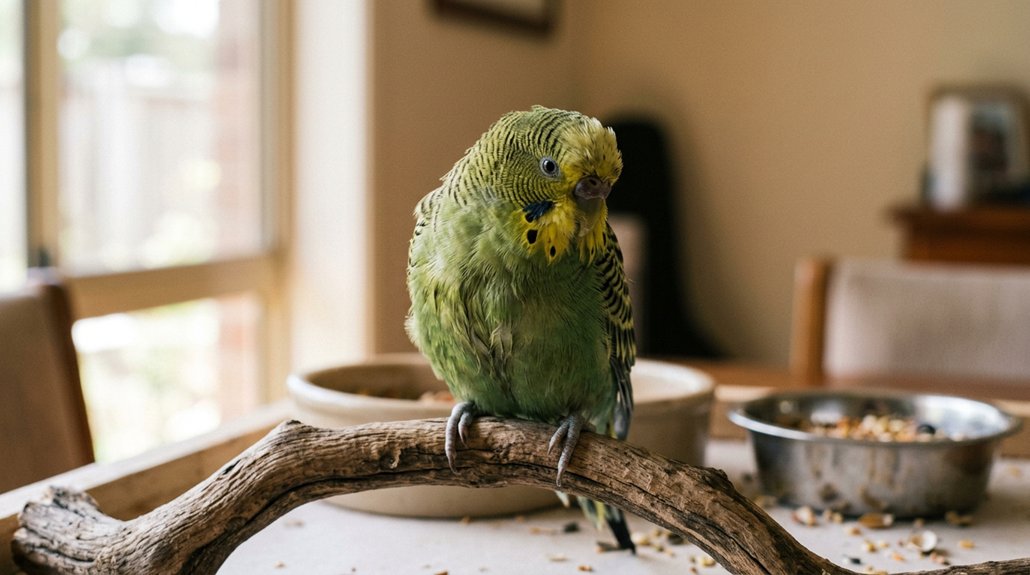
Call an avian veterinarian immediately if your bird hasn’t eaten for 24–48 hours, and sooner—within hours—if it’s a small species or looks very sick. Prolonged anorexia can trigger liver lipidosis, dehydration, and rapid weakness. Seek urgent care if you notice weakness, collapse, spending time on the cage floor, labored breathing, severe fluffed posture, or neurologic signs; these need emergency triage, fluids, possible tube-feeding, and diagnostics. Call promptly if droppings become watery, black, bloody, or markedly reduced with anorexia, because that can signal systemic disease or organ failure. If you’ve recently introduced the bird, isolate it and contact an avian-experienced vet. Don’t depend on home remedies; if warming or small electrolyte drops don’t help, use avian telemedicine only for immediate guidance and arrange in-person assessment within hours.
Frequently Asked Questions
What Is the 3-3-3 Rule for Birds?
You use the 3-3-3 rule: 3 days of quiet observation, 3 weeks of home adjustment, and 3 months for full trust. Watch behavioral cues and seasonal changes, and don’t rush settling.
What to Give a Bird if Not Eating?
Offer warmed unflavored Pedialyte, then thin mashed banana, cooked rice, or plain pumpkin; you can use gentle hand feeding techniques with tiny amounts. If prescribed, appetite stimulants may help. Seek vet care quickly.
What Causes a Bird to Stop Eating?
Your bird can stop eating from serious illness, environmental stressors, sudden diet changes, poor lighting, extreme temperatures, or vitamin deficiencies—it’s never just “picky.” If it hasn’t eaten for 48 hours, you need urgent veterinary care.
Can a Sick Bird Recover on Its Own?
Sometimes, but you shouldn’t assume it will. A mild illness may improve with warmth and rest, yet persistent anorexia needs avian rehabilitation and veterinary care; your bird’s immune response won’t reliably resolve organ disease alone.
Conclusion
If your bird isn’t eating, the issue may be minor or urgent, hidden or obvious. A dropped appetite can reflect stress, illness, parasites, or something as simple as stale feed or a misplaced water dish. Watch closely, correct what you can, and don’t wait if symptoms worsen. A small change in behavior can signal a serious problem. When in doubt, act fast—your bird’s silence at the feeder shouldn’t become a warning you ignore.