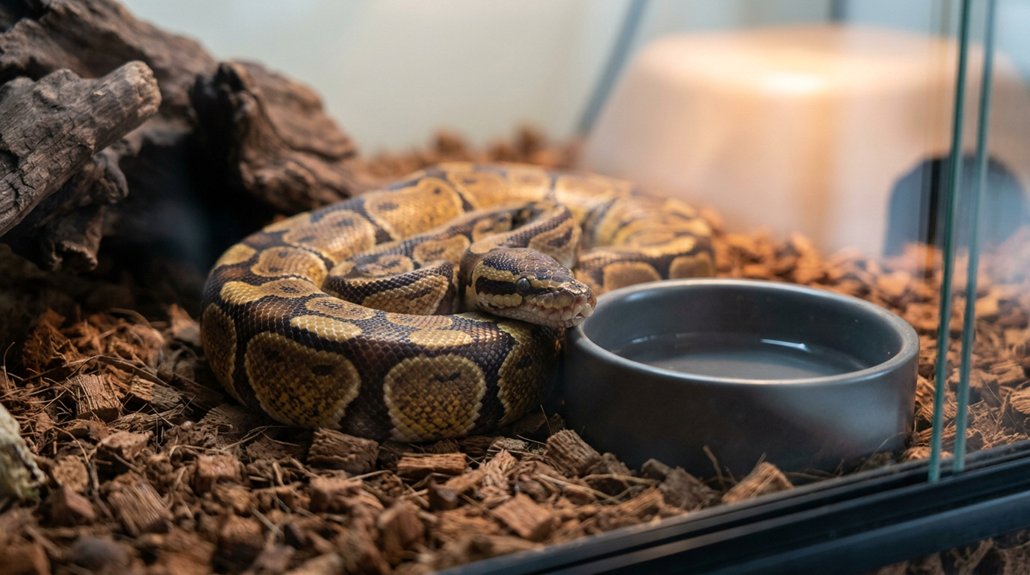
Your ball python may refuse to eat due to stress, improper environment, or health issues. Stress can arise from excessive handling or lack of hiding spots, while an incorrect temperature or humidity level can also impact appetite. Health problems, such as respiratory infections or mouth rot, require prompt veterinary attention. Seasonal factors like winter fasting or breeding cycles can influence feeding patterns as well. By understanding these causes, you can discover solutions to encourage healthy feeding habits.
Key Takeaways
- Inappropriate Prey Size: Ensure prey is no larger than 1.25 times the snake’s body width to prevent refusal.
- Stress from Environment: Maintain a stable temperature gradient and humidity to reduce stress-induced feeding issues.
- Seasonal Changes: Anticipate reduced feeding during winter fasting or breeding cycles due to natural behaviors.
- Health Problems: Monitor for signs of illness like respiratory issues or mouth rot, which can affect appetite.
- Improper Handling: Frequent or inappropriate handling can cause stress, leading to decreased feeding motivation.
Effective Strategies for Ball Python Feeding Success
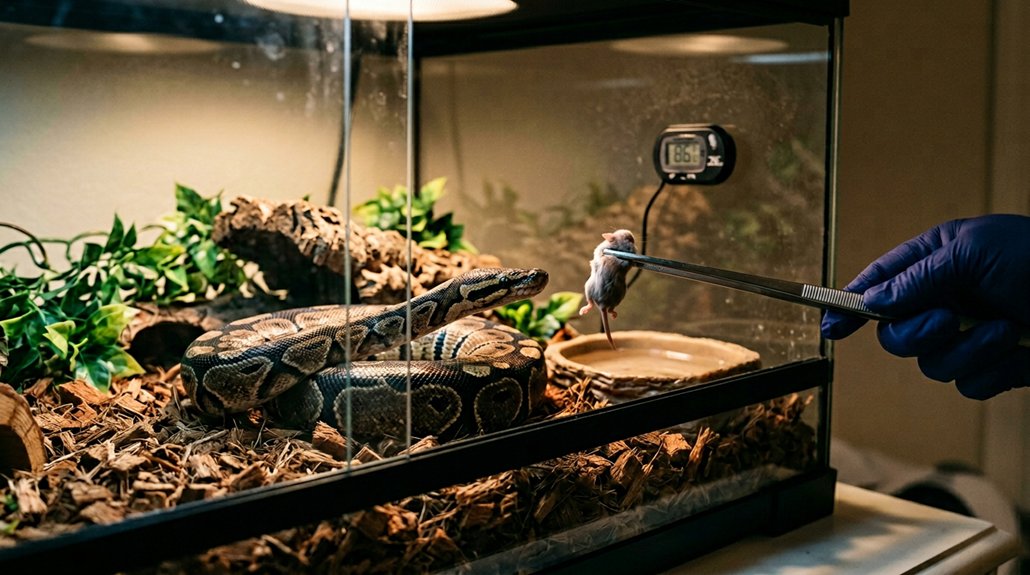
Ensuring your ball python’s dietary needs are met begins with optimizing its living conditions. A proper temperature gradient—from 85-95°F on the hot side to 70-80°F on the cool side—is essential for maintaining comfort and promoting effective digestion. Humidity levels should stay between 40-70% to support appetite and health. When it comes to prey varieties, offer appropriately-sized items, ensuring they don’t exceed 1.25 times the width of the snake’s body. Adjust feeding frequency based on the snake’s age and size, typically every 7-14 days for adults. Consider experimenting with different prey types, using scenting or live options to stimulate reluctant eaters. These strategies collectively foster a feeding environment that aligns with your ball python’s natural instincts and needs.
Identifying and Reducing Stress in Ball Pythons
Although ball pythons are generally hardy in captivity, stress can greatly impact their feeding routines and overall well-being. Recognizing stress indicators, such as reduced feeding and erratic behavioral signs like excessive hiding, is essential. To mitigate this, provide at least three hiding spots; these alleviate feelings of vulnerability. Limit handling if your snake isn’t accustomed, as excessive interaction can elevate stress levels. Assess the enclosure’s size and complexity; overly large or bare environments can increase anxiety. Consistency in environmental conditions—maintained temperature, humidity, and a 12-hour light/dark cycle—supports their natural rhythms and reduces stress. Regular monitoring and quick adjustments to maintain stability in these factors can greatly enhance the comfort and health of your ball python.
Seasonal Influences on Ball Python Appetite
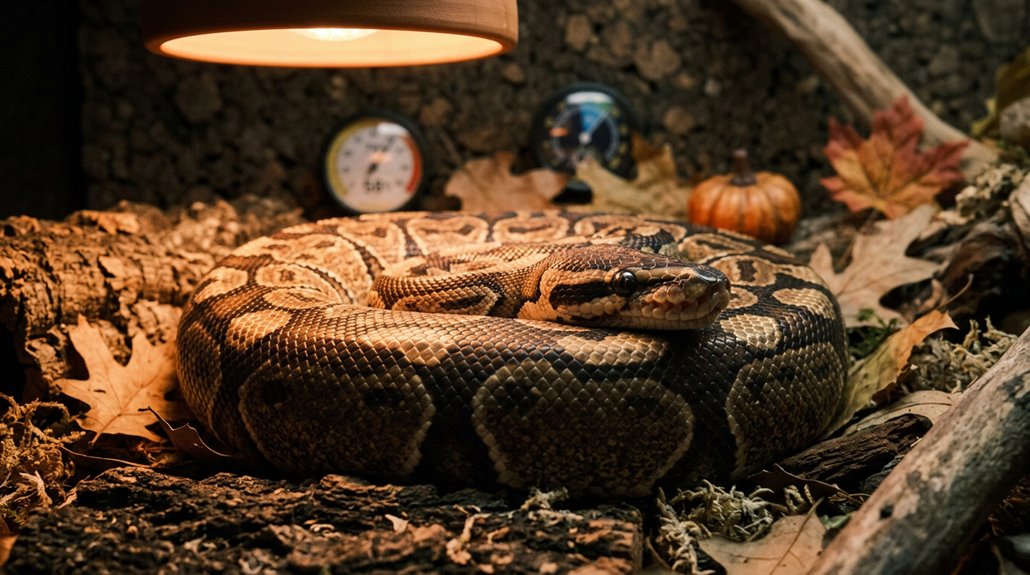
Maintaining a stress-free environment is one part of guaranteeing your ball python thrives; however, understanding their natural seasonal behaviors is equally vital in managing their feeding patterns. Seasonal influences can greatly affect your ball python’s appetite. Recognizing these patterns will help you anticipate and manage their feeding habits effectively:
- Winter fasting: During colder months, ball pythons may eat less due to reduced activity and metabolic slowdown.
- Temperature effects: Cooler conditions can decrease appetite, influencing feeding frequency.
- Breeding behaviors: In spring, males may prioritize finding mates over eating, displaying reduced interest in food.
- Gravid females: Pregnant females commonly stop eating as their energy focuses on egg development.
- Seasonal patterns: Recognizing these influences guarantees proper care and feeding management year-round.
Understanding these natural cycles is essential for effective python care.
How Feeding Temperatures and Methods Affect Appetite
When considering your ball python’s feeding habits, the temperature and method of presenting prey are critical factors that can greatly influence its appetite. Feeding temperatures should be precisely managed; if prey is too cold, it can drop the snake’s body temperature, causing discomfort and refusal to eat. Ideally, prey should be warmed to around 100°F. For ball pythons new to frozen/thawed meals, gradual changes can combat reluctance towards unfamiliar feeding methods. Utilizing scenting techniques, such as applying blood or African Soft Fur Juice to thawed rodents, can also trigger a feeding response. Additionally, offering food during their natural activity periods, typically evening, increases eating success. Confirm prey size doesn’t surpass 1.25 times their body width for best comfort.
Spotting Health Problems Affecting Feeding
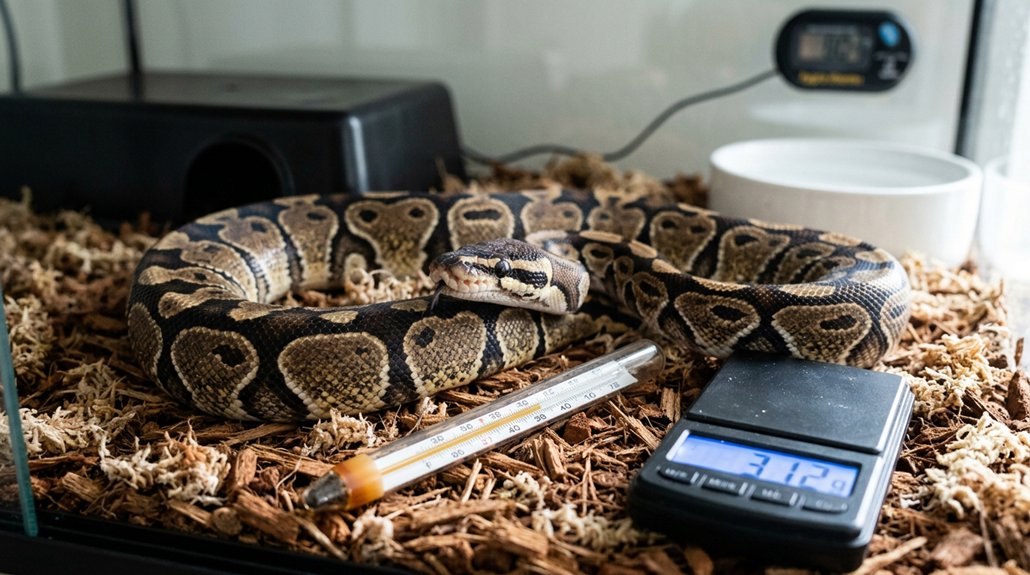
Beyond environmental factors, identifying health problems is essential when examining your ball python’s refusal to eat. Noticeable lethargy signs, such as decreased activity, could indicate issues affecting appetite. Keep an eye out for significant weight loss, as it might suggest illness. Respiratory issues manifested by wheezing or raspy breathing can interfere with feeding behavior. Here’s a checklist to aid in spotting potential health problems:
Respiratory issues and noticeable lethargy might explain your ball python’s refusal to eat.
- Mouth rot: Look for swollen or discolored gums.
- Routine health checks: Important for spotting mites and parasites.
- Scale rot: Inspective guidance for maintaining skin health.
- Eating disorders: Monitor irregular eating patterns.
- Hydration and enclosure cleanliness: Critical for overall well-being.
Addressing these can be essential, since untreated ailments might escalate, severely affecting your python’s health.
Setting Up the Ideal Enclosure for Feeding Success
To guarantee your ball python’s feeding success, it’s vital to maintain an enclosure that meticulously balances both ideal temperature and humidity. A thermal gradient, with a hot side of 85°F to 95°F and a cool side between 70°F and 80°F, along with humidity levels from 40% to 70%, supports your python’s physiological needs. In addition, incorporate essential features like multiple hiding spots and substrate blends of coconut fiber and sphagnum moss, which facilitate stress reduction and stable environmental conditions.
Optimal Temperature and Humidity
A critical factor in guaranteeing your ball python maintains a healthy appetite is the meticulous regulation of its enclosure’s temperature and humidity. Establishing a balanced temperature gradient within your enclosure layout is crucial for thermal regulation. The hot side should be between 85°F and 95°F, while the cool side should range from 70°F to 80°F. Humidity monitoring is essential to maintain levels between 40% and 70% to support proper hydration and assist shedding.
- Substrate selection: Use coconut fiber or sphagnum moss for humidity.
- Hydration support: Guarantee appropriate moisture to prevent dehydration.
- Stress indicators: Watch for signs of discomfort due to environmental factors.
- Seasonal adjustments: Regularly adapt settings to align with seasons.
- Feeding routines: Consistent environments foster regular eating patterns.
Essential Enclosure Features
Regulating your ball python’s enclosure doesn’t stop at temperature and humidity; setting up an environment that’s conducive to feeding is just as important. An ideal enclosure should measure 3’ x 1½‘ x 1’, providing sufficient space without causing stress from excessive room. Include at least three hiding spots to guarantee your python feels secure, as stress can hinder feeding. Confirm the enclosure maintains a temperature gradient—85-95°F on the hot side, 70-80°F on the cool—to match their thermoregulatory behavior. Humidity levels are best kept between 40-70% to prevent appetite issues. Use enclosure materials like coconut fiber and sphagnum moss for substrate, assisting in humidity regulation, while avoiding aspen or sand that detrimentally alter the environment’s balance.
Managing Stress and Anxiety in Ball Pythons
To effectively manage stress and anxiety in your ball python, start by ensuring their environment is comfortable with at least three hiding spots, as this promotes their natural need for security. Excessive handling, especially around feeding times, should be minimized to avoid triggering nervous behaviors that can lead to feeding refusal. Additionally, maintaining a consistent 12-hour day/night light cycle helps regulate their circadian rhythms, reducing stress from environmental fluctuations.
Creating a Comfortable Environment
In creating a comfortable environment for your ball python, it’s crucial to address factors that mitigate stress and anxiety, enabling healthier feeding behaviors. A well-planned enclosure aesthetics can greatly influence snake behavior. Carefully consider substrate selection, opting for coconut fiber or sphagnum moss to enhance comfort and maintain ideal conditions. Proper temperature gradient, from a hot side of 85-95°F to a cool side of 70-80°F, directly impacts stress levels. Ensuring a humidity balance between 40-70% is vital to preventing anxiety and feeding issues. Incorporating appropriate hide placement facilitates a sense of security. Aim for at least three hiding spots within the enclosure to reduce stress and foster comfort.
Reducing Handling Stress
Handling your ball python minimally is essential in mitigating stress, a significant factor influencing its appetite and overall health. Excessive handling frequency particularly increases the snake’s nervousness. It’s important to schedule interactions so they occur during ideally calm periods, avoiding feeding times when the snake is already sensitive. Observing your python’s body language will help identify stress-related behaviors, such as excessive hiding or striking. This insight emphasizes reducing handling during stressful moments. Additionally, creating a comfortable habitat with at least three hiding spots closely mimics the snake’s natural environment, enhancing its sense of security. Implementing a regular 12-hour light/dark cycle stabilizes its natural rhythms, effectively minimizing stress and promoting a normal feeding response. These strategies will foster a calm and thriving ball python.
Encouraging Picky Eaters With Smart Techniques
A strategic approach to encouraging picky eaters involves employing scientifically backed techniques that make the prey more appealing to the ball python. Understanding your ball python’s prey preferences is key. Scent enhancement can play a vital role in this process, as it alters the perception of the prey, making it more enticing.
Employ scent enhancement techniques to make prey more appealing to picky ball pythons.
- Offer prey no larger than 1.25 times the width of your python’s body to prevent intimidation.
- Scent frozen-thawed prey using rodent bedding or blood for enhanced appeal.
- Brain the prey to mimic fresh scents, stimulating feeding.
- Experiment with various prey types, such as quail or young chickens, to find your snake’s preference.
- Align feedings with evening activities to trigger feeding responses.
These methods encourage your python to engage with available prey.
Knowing When to Consult a Reptile Veterinarian
While enhancing food appeal can work wonders, sometimes even the savviest techniques aren’t enough to spark your ball python’s interest in eating. If your snake refuses food for more than two consecutive meals, it’s vital to consult a reptile veterinarian for a thorough health assessment. Look for veterinary signs such as lethargy, significant weight loss, or unusual respiratory sounds. These symptoms, alongside appetite loss, suggest deeper health issues requiring professional evaluation. Promptly address conditions like mouth rot or any difficulty in opening the mouth by seeking immediate care. Regular health check-ups play an important role in detecting potential problems early on. When adjustments to husbandry conditions don’t yield results, a veterinary consultation becomes necessary to diagnose and treat underlying concerns effectively.
Frequently Asked Questions
What Would Cause My Ball Python Not to Eat?
Your ball python might not eat due to stress factors, incorrect feeding techniques, unsuitable environmental conditions, or potential health issues. Consider inspecting temperatures, reducing stress, adjusting prey size, and consulting a vet if health symptoms appear.
How Long Can My Ball Python Go Without Eating?
Imagine time slipping through an hourglass; adult ball pythons can fast for 2-3 months without jeopardizing health. For younger ones, shorter feeding frequency is essential, allowing only weeks before risking adverse effects. Monitor their health closely.
How Do I Encourage My Ball Python to Eat?
To encourage your ball python to eat, focus on appropriate feeding techniques. Guarantee habitat temperature mimics natural conditions. Offer prey that’s not oversized, warm it to about 100°F, and minimize handling to reduce stress and stimulate appetite.
When to Worry About a Snake Not Eating?
If your snake’s feeding concerns begin to erupt like a volcano, exhibiting persistent refusals beyond normal behavior, or signs of weight loss and lethargy appear, it’s essential to scientifically analyze the environment and possibly consult a vet.
Conclusion
Think of your ball python’s feeding routine as a delicate dance—each step perfectly choreographed to guarantee a healthy appetite. By understanding the science behind feeding strategies, managing environmental stressors, and recognizing seasonal changes, you can gracefully guide your python to meal success. Analyze temperatures, monitor for health issues, and create an ideal habitat. If these strategies don’t spark improvement, consult a reptile veterinarian. Every detail is essential in this intricate symphony of care and feeding.