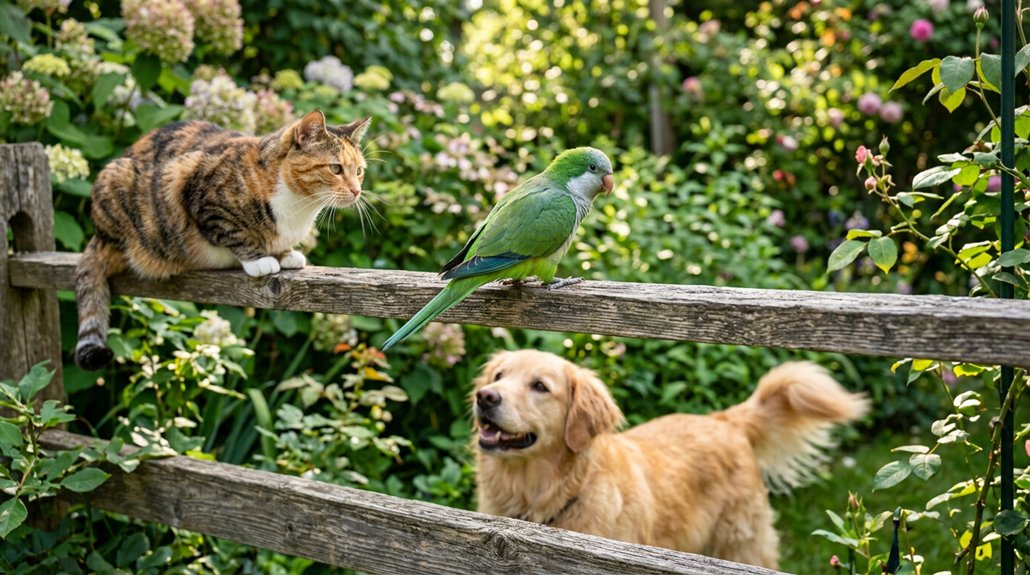
If you want a bird that can handle life with dogs or cats, you should start with calmer, less flighty species such as budgies, cockatiels, doves, or pigeons. These birds are usually easier to supervise and less likely to trigger chase behavior. Green-cheeked conures can also work with calm, trained pets. Even then, you’ll need secure caging, gradual introductions, and constant supervision. The right setup makes coexistence safer, and there’s more to know.
Key Takeaways
- Calm, less flighty birds usually handle homes with dogs or cats better than nervous or highly territorial species.
- Cockatiels, budgies, green-cheeked conures, doves, pigeons, and Pionus parrots are often better multi-pet choices.
- Hand-raised birds with early socialization are typically less reactive around other pets.
- Introduce pets slowly with brief, supervised sessions, using leashes, cages, and rewards for calm behavior.
- Never leave birds unsupervised with predatory pets, even if they seem friendly or trained.
What Makes a Pet Bird Good With Other Pets?
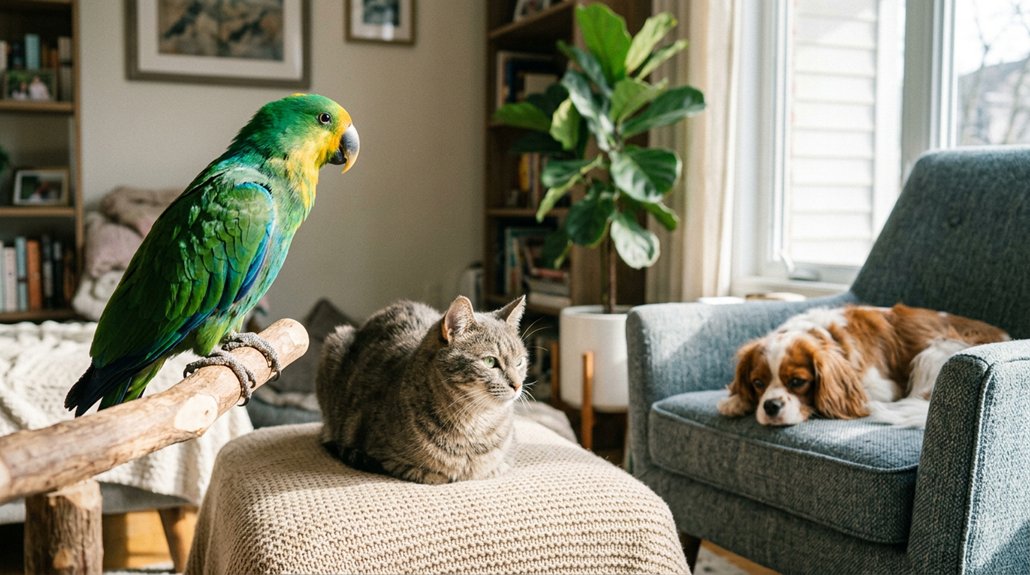
A pet bird’s compatibility with other animals usually comes down to a mix of species traits and individual history. You should prioritize temperament assessment, because calmer, less flighty birds usually cope better in controlled multi-pet homes. Early socialization matters: hand-raised birds with consistent, positive exposure to dogs or cats are typically less reactive than fearful birds. You’ll also see that lower predatory response and reduced noise sensitivity can lessen chasing, stalking, or stress responses in other pets. Species that are more independent often tolerate shared space better than highly bonded birds that become defensive or jealous. Even then, you need secure caging, supervision, gradual reward-based introductions, and environmental enrichment to reduce stress and prevent injury. Cats and dogs still pose serious risks, so compatibility never means unsupervised contact.
Best Pet Birds for Multi-Pet Homes
If you’re choosing a bird for a multi-pet home, cockatiels and budgerigars often adapt well when you keep their cages secure and supervise daily contact. Green-cheeked conures can also coexist with calm, trained dogs, while lovebirds may do better as bonded pairs or with constant companionship to reduce stress. In every case, you shouldn’t leave birds unsupervised with cats or dogs, and gradual introductions with positive reinforcement are essential for safe coexistence.
Safe Bird Pairing
When you’re choosing a bird for a multi-pet home, calm, social species are usually the safest starting point. Budgies and cockatiels are practical options because their smaller size makes supervision easier, while doves, pigeons, and pionus parrots are often less likely to trigger predatory responses from cats or dogs. You should still watch behavioral signals, such as freezing, flaring, or excessive vocalizing, because stress can escalate quickly. If you want housing alternatives, prioritize secure cages with locks and separate rooms when needed. Lovebirds and parrotlets can work, but they may need pairing or intensive socialization to stay stable around other pets. Don’t assume training removes risk; even polite cats and dogs can swat, pounce, or bite, causing severe injury or infection.
Calm Coexistence Tips
For multi-pet homes, calm, small birds such as budgerigars and cockatiels are often the most practical choices because their size and steady temperaments can reduce the chance of escalation during supervised contact. You should introduce any bird gradually, with controlled sessions, and keep it in a locked, sturdy cage when you’re not present. Cats and dogs remain predators, so even quiet species need strict separation and clear sight-line control. Doves, canaries, and Pionus parrots may be useful if you want lower reactivity, especially when they’re housed away from reach. Give social birds enough daily interaction, pairs if possible, plus environmental enrichment, so they don’t seek attention in ways that attract pets. Watch for stress signals such as feather fluffing, freezing, or rapid breathing, and end contact immediately if they appear.
Why Budgies Are Good First Birds
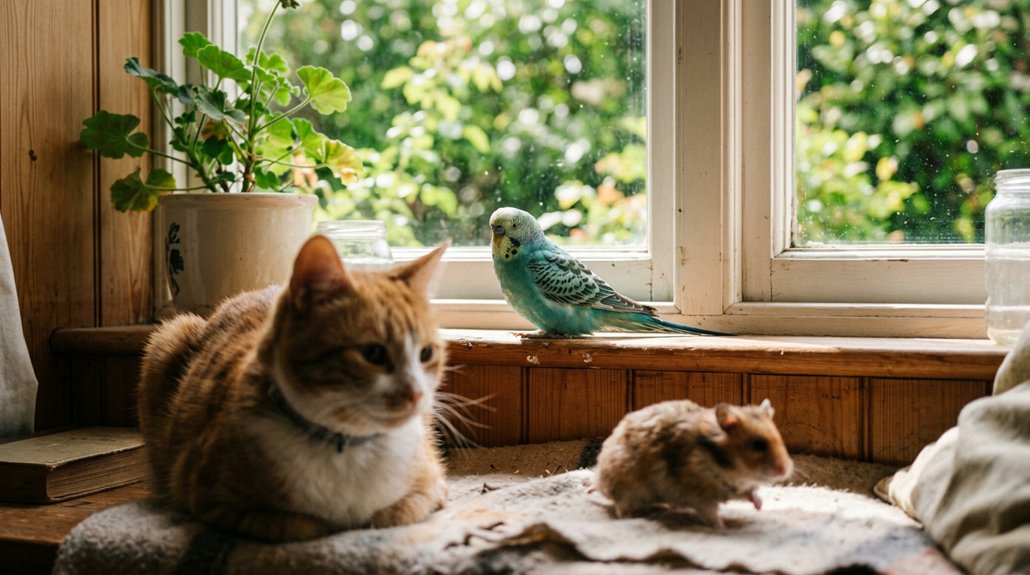
Budgies are often a strong choice for first-time bird owners because they’re small, manageable, and relatively easy to care for compared with larger parrots. You’ll usually be handling a bird that weighs about 1 ounce and measures 6–8 inches, so housing and routine care are straightforward. Their diet can stay simple: a pellet base with fresh vegetables, plus daily out-of-cage time and enrichment toys. Budgies’re social, and with consistent interaction, you may see vocal mimicry, especially in males. Hand-raised youngsters often adapt faster to handling and retraining, which can help you build trust sooner. They’re also relatively affordable and widely available, making ownership more accessible. Because they’re fragile, you’ll still need supervised contact around other pets and safe, low-stress housing.
Why Cockatiels Make Great Companion Birds
Cockatiels offer a practical balance of size, temperament, and longevity, making them excellent companion birds for many households. You get a medium-sized parrot, about 12 to 13 inches long and roughly 3 ounces, with a generally gentle, sociable disposition. Their 15- to 20-year lifespan means you’re choosing a long-term pet without extreme space demands. You can use crest communication to assess mood: a flattened crest often signals fear or irritation, while an upright crest may indicate startle or excitement. Cockatiels also respond well to whistle training and may mimic phones, alarms, and simple speech, especially males. With toys, daily out-of-cage interaction, and gradual introductions to other animals, they fit small homes well while staying mentally engaged and relatively manageable.
Are Lovebirds Good for Families With Other Pets?
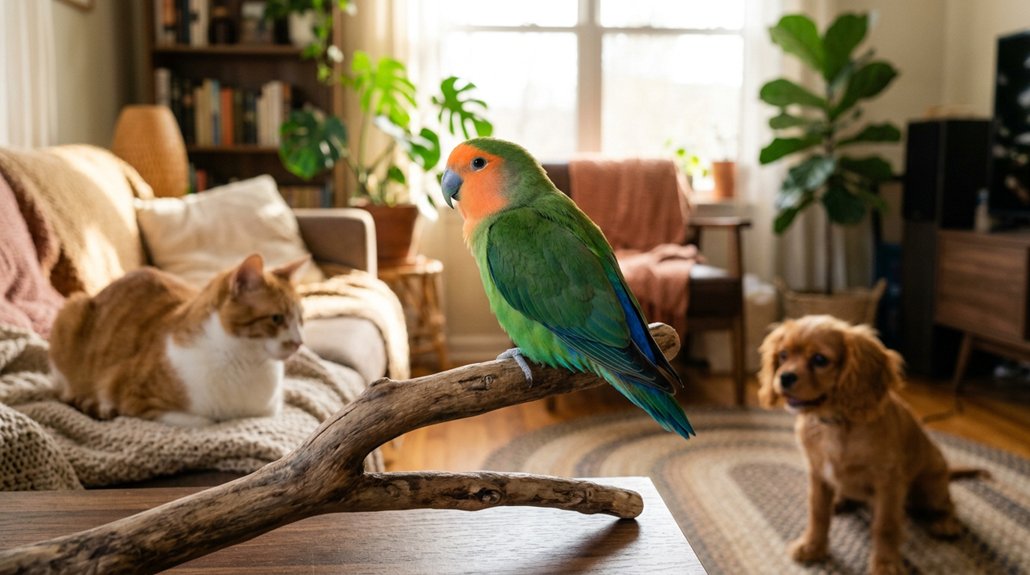
Lovebirds can be good family pets, but they’re a poor match for households with cats, dogs, or other predatory animals unless you can manage strict supervision. You should treat them as small prey birds: at 5–6 inches long and about 2 ounces, they can be seriously injured by a playful swat or sudden interest. Keep them in a locked cage out of reach, and only allow gradual, supervised introductions when the other pet is calm and rewarded for nonreactive behavior. Lovebirds often form strong pair bonds, so species-appropriate companionship, often another lovebird, reduces stress and risky curiosity. If you’re planning multi-species living, use quiet pets, gradual scent and visual desensitization, and consistent home enrichment. Human bonding can occur, but it shouldn’t replace safety. Never leave them together unsupervised.
Why Green-Cheeked Conures Are Social Pets
Green-cheeked conures are often a good fit for social households because they’re small enough to manage safely under supervision, yet interactive enough to enjoy regular contact with people and calm, well-introduced pets. You’ll usually notice strong social bonding with you, since these birds often seek frequent handling and routine interaction. Their quieter voices can also reduce household stress.
- Their 2–3 ounce size makes supervised contact more practical.
- They’re playful, so enrichment activities help prevent boredom.
- With gradual, monitored exposure, they can tolerate calm dogs or cats.
Because they may live 20–30 years, you’ll need long-term consistency in training, supervision, and daily engagement. That commitment helps maintain safe, stable relationships in your home.
How to Introduce a Bird to Cats and Dogs?
When introducing a bird to cats or dogs, you should move slowly and supervise every interaction, because a single swat, pounce, or bite can cause severe injury very quickly. Use silent introductions and scent swapping before face-to-face meetings, then begin brief sessions with the bird secured and the other pet leashed or held. Reward calm behavior immediately.
| Step | Purpose |
|---|---|
| Scent swap | Build familiarity |
| Short visual contact | Reduce reactivity |
| Calm reward | Reinforce neutrality |
Keep exposures predictable and repetitive. Offer the bird a favorite treat in tiny amounts while the cat or dog sees, smells, or hears the bird, and praise the other pet for stillness. Watch for flattened crest, hissing, raised fur, or stiff stalking; if they appear, stop and reset.
How to Keep Birds Safe Around Other Pets
Keeping birds safe around other pets starts with strict supervision and physical separation: never leave a bird out with cats, dogs, ferrets, or other predatory animals unsupervised, because a single swat, pounce, or bite can cause catastrophic injury. Use pet proofing strategies to secure the cage with locks, place it high, and keep it away from windows and doorways.
- Give the bird supervised out-of-cage time only, with barriers when you can’t monitor.
- Introduce other pets in short sessions, rewarding calm behavior and pairing the bird’s presence with treats.
- Watch for stalking, raised hackles, or dilated pupils, then separate immediately.
You should also provide covered perches and know your emergency response if contact occurs.
Where to Buy a Healthy Pet Bird
To set your bird up for success around other pets, start by buying from an avian-savvy source: USDA-licensed breeders, reputable specialty bird aviaries, independent bird stores, or avian rescues are generally safer choices than general pet chains. Ask for a buyer checklist: health records, a recent avian vet exam, and fecal test results. Prefer hand-raised birds with known age, diet, temperament, and exposure history. Verify clean facilities, quarantine practices, and written return policies. Local breeders should answer questions and provide references. | Check | What to see | |—|—| | Records | Vet exam, parasite test | | Bird | Alert, socialized, documented background | | Source | Clean housing, protocols, guidance | Adoption through avian rescues can also give you vetted species profiles, behavior notes, and medical screening.
How to Help Pets Live Calmly Together
You should supervise every out-of-cage interaction between your bird and any predatory pet, because a cat, dog, or ferret can injure it suddenly. Introduce them in short, controlled sessions and reward calm behavior with treats so your bird can form safe associations. Keep the cage locked, provide high secure perches, and use clear escape routes so your bird always has protected space.
Safe Supervision Practices
Safe supervision is essential whenever a bird is outside its cage around cats, dogs, ferrets, or other pets, because a single pounce or swat can cause severe injury. You should treat every supervised interaction as a monitored safety event, not free play. Keep cages secured with sturdy locks and position them beyond reach and visual barriers so predatory pets can’t stare or lunge.
- Stay within arm’s reach and watch for tension, stalking, or feather flattening.
- Use visual barriers and closed doors to control sightlines when your bird needs rest.
- Keep retreat options ready: a closed cage, high perch, or separate room.
Even familiar pets keep predator instincts, and teeth, claws, and saliva can cause trauma or infection, so you must intervene quickly.
Gradual Positive Meetups
Once supervision and separation are in place, gradual positive meetups can help a bird and a cat or dog learn to coexist more calmly. Begin with 5-10 minute supervised sessions: keep the bird safely caged, and keep the cat or dog leashed or held. Start at a distance that allows relaxed body language, normal breathing, and no stalking or intense focus. Use slow desensitization by repeating brief daily exposures to sight, smell, and sound. Pair every controlled meeting with reward pairing: give the bird a tiny favorite treat, and offer the other pet petting or praise for calm behavior. Increase proximity only when neither pet shows stress signs such as hissing, swatting, flattening, growling, or fixating. End each session calmly, and keep the process gradual even with familiar pets.
Secure Space Setup
A secure setup starts with housing the bird cage in a locked room or on a high, stable stand with predator-proof latches so cats or dogs can’t tip it or open it. You should use cage anchoring to prevent shifting, and maintain visual isolation with curtains or opaque panels.
- Place the cage 6–8 feet from pet beds and busy walkways.
- Create a separate bird-only zone for out-of-cage time with a screened play gym or closed door.
- Keep the cage enriched with varied perch heights, chew-safe toys, and sheltered hideaways.
You’ll need direct supervision whenever pets share a room. Keep dogs leashed and distract cats with treats or toys during introductions. Never leave birds and predatory pets unattended, even briefly. A controlled environment lowers stress and supports calm coexistence.
Frequently Asked Questions
What Is the Friendliest Bird for a Pet?
Cockatiels’re usually your friendliest pet bird, thanks to their gentle, social nature. You can also consider budgerigars or green-cheeked conures. Avoid relying on parrotlet playdates or canary vocalizations to assess friendliness alone.
What Is the 3 3 3 Rule for Birds?
The 3-3-3 rule means you’ll give your bird 3 days to de-stress, 3 weeks to adapt, and 3 months to settle—ironically, patience speeds things up. Use this training timeline for gradual introduction.
What Pet Birds Can Be Kept Together?
You can keep similarly sized, social birds together, like budgies, cockatiels, lovebirds, and finches, if you manage parrotlet pairings and finch colony dynamics carefully. You’ll need separate cages, gradual introductions, and close supervision.
What Birds Make Good Companions?
You’ll often find talkative cockatiels and bonded conures make excellent companions; cockatiels live 15–20 years, giving you long-term interaction. You can also consider budgerigars, lovebirds, or pionus parrots, depending on your space and attention.
Conclusion
If you choose a bird that’s naturally calm, social, and easy to manage, you can help your whole home settle into a safer rhythm. You’ve likely noticed that when you introduce pets slowly and supervise closely, trust often grows at the same pace. With budgies, cockatiels, or carefully selected lovebirds, you can reduce stress and build harmony. When you keep routines consistent, your bird and other pets can coexist more peacefully.