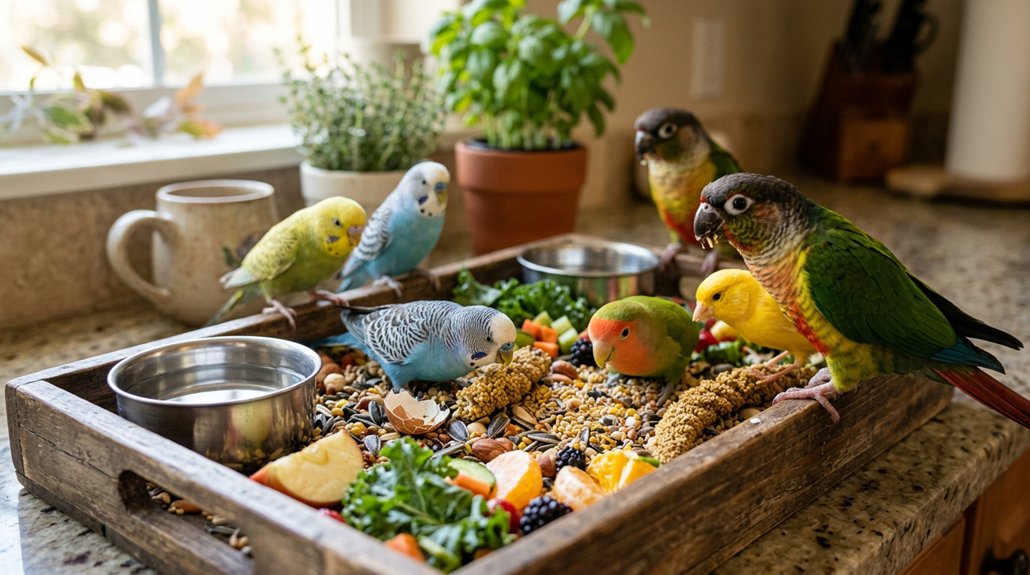
You should feed your pet bird mostly high-quality pellets, then add daily fresh vegetables, especially dark leafy greens, with small portions of fruit, grains, and legumes. Keep seeds, nuts, and treats limited, and never offer avocado, chocolate, caffeine, onion, garlic, or raw beans. Offer food free-choice for most birds, remove perishables after a few hours, and switch diets slowly. If your bird is picky, there’s a safe, stepwise way to improve acceptance and balance.
Key Takeaways
- Pet birds should eat mostly high-quality pellets, typically about 50–80% of the diet, depending on species and veterinary guidance.
- Fresh vegetables should be offered daily, especially dark leafy greens, orange vegetables, and small amounts of cruciferous produce.
- Fruit should be limited to about 5–10% of the diet, with safe options like berries, kiwi, papaya, and apple without seeds.
- Seeds and nuts should be treated as occasional rewards, not staples, because they are high in fat and can contribute to obesity.
- Cooked grains, legumes, and foraging enrichment can add variety, while fresh foods should be removed after a few hours.
What Pet Birds Eat
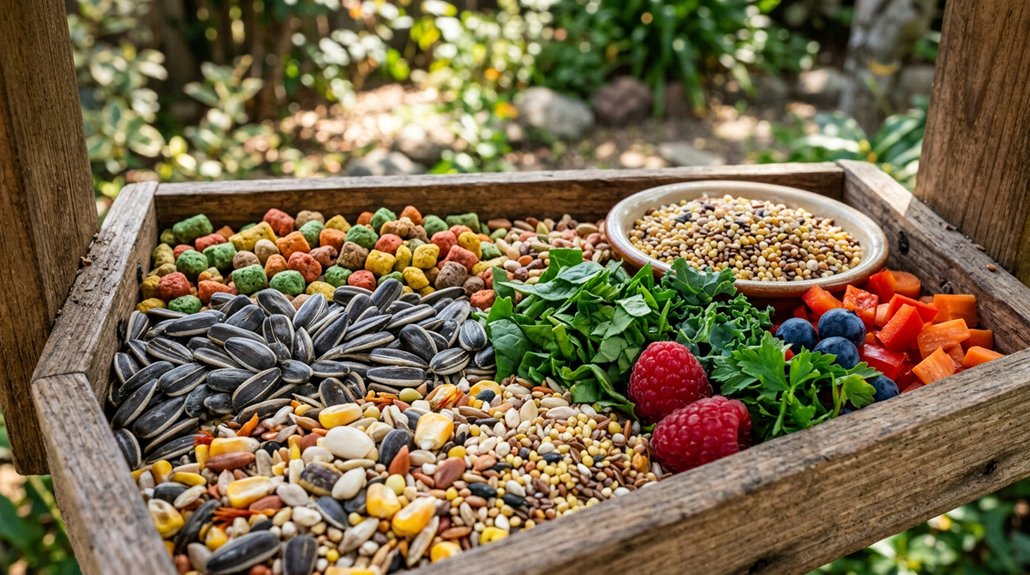
Pet birds should eat a balanced diet built around formulated pellets, which typically make up about 50–80% of daily intake depending on the species, because they provide essential vitamins, minerals, and amino acids that seed-only diets often lack. You should pair this with daily fresh vegetables, especially dark leafy greens, broccoli, and zucchini, to supply fiber, micronutrients, and habitat enrichment through foraging. Offer fruit sparingly, since sugar content limits how much should be given. Use seeds and nuts mainly as treats or training rewards, unless your bird’s species naturally tolerates more. Never feed avocado, chocolate, caffeine, raw beans, onion, garlic, or fruit pits. Watch behavior cues, and remove perishable foods after a few hours to prevent spoilage and gastrointestinal upset.
Pellets as the Daily Base Diet
You should use high-quality avian pellets as the daily dietary base, making up about 50–80% of your bird’s intake, because they provide a consistent balance of proteins, fats, vitamins, and minerals. Choose pellets without added sugars, artificial dyes, or unnecessary preservatives, and prefer reputable options such as Lafeber, Harrison’s, Roudybush, or Zupreem Naturals. When you switch your bird to pellets, do it gradually over weeks to months by mixing them with the current food while closely monitoring weight and droppings.
Pellets As Base Nutrition
Pellets should form the foundation of a pet bird’s daily diet because they’re formulated to be nutritionally complete and help prevent selective feeding, where a bird picks out only favored seeds and misses essential nutrients. You should target 50–80% of intake, or about 50–70% for parrots, then add fresh vegetables and limited fruit.
| Benefit | Why it matters | Clinical note |
|---|---|---|
| Consistent nutrients | Each bite contains vitamins, minerals, amino acids | Reduces deficiencies |
| Base diet control | Limits seed picking | Supports steady intake |
| Shift support | Mix pellets with seeds slowly | Watch weight and appetite |
| Pellet fermentation | Improves gut exposure during changeover | Use cautiously |
| Pellet enrichment | Encourages foraging and acceptance | Boosts adherence |
Use a gradual shift over weeks to months. Choose plain formulas without added sugars, dyes, or excess preservatives. Consult your avian veterinarian before supplements.
Choosing Quality Pellets
When choosing a pellet as the daily base diet, prioritize a complete avian formula that provides roughly 50–70% of a parrot’s intake, with some veterinarians recommending up to 60–80% depending on species and overall diet. You should verify ingredient transparency and manufacturing standards before buying.
- Select pellets without added sugars, artificial colors, or unnecessary preservatives.
- Confirm the formula meets AAFCO-equivalent avian nutrient profiles, including vitamins, minerals, essential amino acids, and proper calcium:D balance.
- Prefer reputable lines such as Lafeber, Harrison’s, Roudybush, Zupreem Naturals, or TOPS; varied shapes and sizes from one brand line can help acceptance.
Avoid filler-heavy products, because they dilute nutrition and can encourage selective eating. Choose consistently tested diets, and read labels closely.
Transitioning Birds To Pellets
Shifting a bird onto pellets should happen gradually, with the goal of making pellets about 60–80% of a parrot’s daily intake over weeks to months rather than forcing an abrupt switch. You should mix pellets with familiar foods, using a little seed or finely chopped produce, and offer varied shapes, colours, and sizes to support gradual desensitization. Replace only 10–20% of the seed bowl each week, and track body weight and stool quality to confirm intake stays adequate. Offer fresh pellets first thing in the morning, when hunger is highest, and remove uneaten moist foods after four hours. Foraging enrichment can improve acceptance. If needed, use warmed pellets, pellet-based chop, or a vet-guided plan, especially for young, molting, breeding, or ill birds.
Best Vegetables for Pet Birds
Dark leafy greens such as kale, collard greens, spinach, and dandelion greens are among the best vegetables for pet birds because they’re nutrient-dense sources of vitamins A and K, calcium, and fiber. You should rotate them with microgreen mixes and, if tolerated, small amounts of fermented vegetables for variety and gut exposure.
Dark leafy greens like kale and collards provide birds with vitamins, calcium, and fiber.
- Orange vegetables: Offer cooked sweet potato, carrots, and butternut squash for beta-carotene support.
- Cruciferous options: Use broccoli and Brussels sprouts raw or lightly steamed, but keep portions modest to reduce gas.
- Hydrating vegetables: Provide zucchini, cucumber, and bell peppers for moisture, crunch, and low calories.
Wash produce thoroughly, remove pits or seeds, chop into bird-sized pieces, and discard uneaten vegetables after four hours to limit bacterial growth.
Safe Fruits for Pet Birds
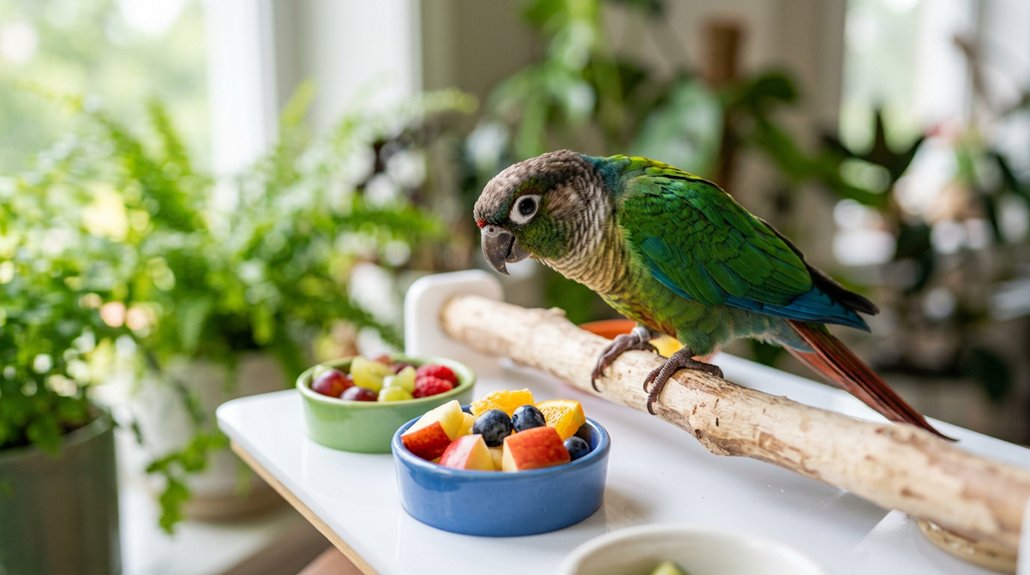
Safe fruits for pet birds should be offered sparingly, since fruit is naturally high in sugar and should usually make up only about 5–10% of the diet for most parrots, or up to 10–20% at most for training or treating. You should choose apple without seeds, banana, mango, papaya, melon, kiwi, and grapes, cut into small, bird-appropriate pieces. Favor berry varieties, kiwi, and papaya because they’re lower in sugar and higher in fiber. Wash all fruit well, remove pits and seeds, and never offer avocado, which contains persin and can be fatal. Rotate fruits to supply vitamin A, vitamin C, and potassium. Use chopped, grated, or whole foraging presentation, and remove uneaten portions after a few hours to prevent spoilage, bacterial growth, and weight gain.
Seeds, Nuts, and Treat Limits
Along with fruits, seeds and nuts can be part of a bird’s diet, but they need strict limits because they’re high in fat and easy to overfeed. You should treat them as limited treats, not staples: aim for about 10–20% of a healthy parrot’s intake, often near 10%, while pellets supply most daily nutrition.
Seeds and nuts can be treats, but keep them limited; pellets should provide most daily nutrition.
- Offer raw, unsalted nuts only a few times per week for training or rewards, and inspect them for rancidity.
- Use seeds sparingly as foraging enrichment by hiding them in toys; don’t free-feed bowls.
- Choose species-appropriate, low-fat options; finches and canaries may get small amounts of millet or sunflower.
Avoid relying on commercial birdseed mixes, since they aren’t complete diets for most pet birds.
Foods Pet Birds Should Never Eat
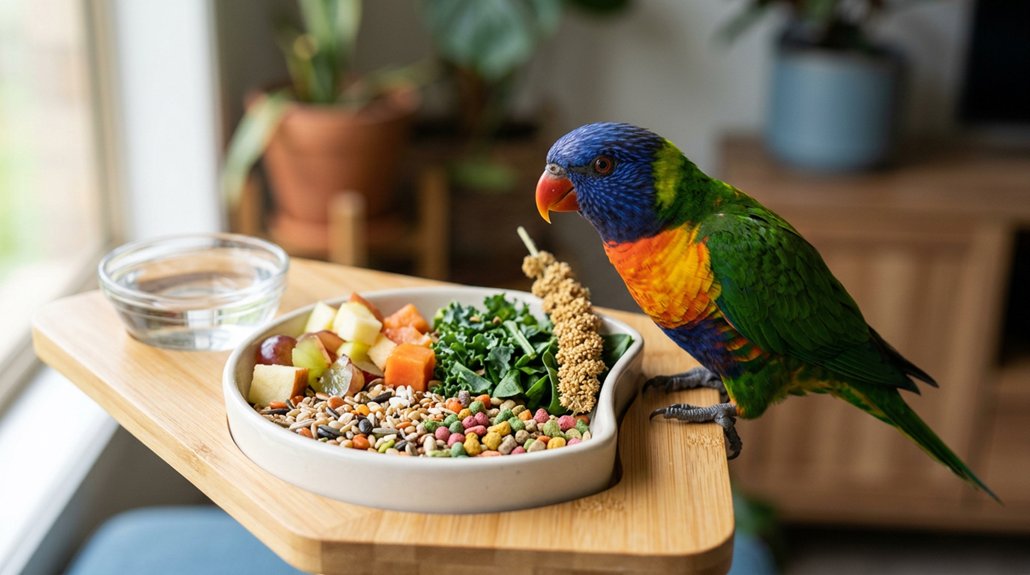
Some foods are dangerous enough that they should never be offered to pet birds, even in small amounts. Avocado contains persin, a potent toxin that can trigger respiratory distress, heart failure, and sudden death in many species. Chocolate and caffeinated products, including coffee, tea, and energy drinks, deliver theobromine and caffeine, which overstimulate the heart and nervous system. Never feed raw or undercooked beans, especially kidney beans; hemagglutinin and related toxins can cause severe gastrointestinal distress or death unless fully cooked. In your toxic household, keep apple seeds, cherry, peach, and almond pits away from birds because they contain cyanogenic compounds. Also avoid salty, sugary, or fatty processed snacks; these forbidden treats can drive obesity, kidney disease, and cardiac problems.
How Much and How Often to Feed
You should keep your bird’s main bowl about three-quarters full throughout the day, since many species nibble continuously rather than eating set meals. Aim for roughly 60–70% pellets, 20–30% fresh vegetables and cooked grains or legumes, and no more than 10% seeds, nuts, and fruit, because higher fat and seed intake raises obesity risk. Offer fresh produce daily, but remove perishable foods after about four hours, and monitor weight and intake closely whenever you adjust the feeding schedule.
Daily Food Portions
For most pet parrots, daily portions should be built around pellets, which should make up about 50–70% of the diet, with the remaining 30–50% coming from fresh vegetables and fruits plus small amounts of cooked grains and legumes. Use portion visualizations to judge intake: keep the bowl about three-quarters full, since birds graze repeatedly. Remove perishable produce after four hours to limit bacterial growth.
- Pellets: primary staple, offered daily.
- Produce: fresh vegetables first; fruit in smaller amounts.
- Treats: seeds and nuts sparingly, near 10% or less.
Weekly, you can include plain cooked brown rice, pasta, beans, or oats. Make seasonal adjustments for food availability and moisture content. Hand-fed chicks need species-specific formulas every 2–4 hours, then gradual weaning after about 7 weeks when they’re eating reliably.
Feeding Schedule Basics
Most pet birds do best with free-access feeding rather than set meal times, so keep the food bowl about three-quarters full each day and expect them to graze throughout the day. This reduces stress and supports natural foraging enrichment. Use the table below to guide meal timing and proportions.
| Food | Frequency | Target |
|---|---|---|
| Pellets | Daily | 50–70% of intake |
| Vegetables/fruits | Daily | Remainder, varied |
| Grains/legumes | Weekly or chop | Small portion |
You should monitor leftovers and body weight, then adjust portions if the bowl empties too fast or stays full. During pellet shift, raise pellet proportion gradually over weeks to months while tracking consumption and condition. Avoid rigid schedules unless your bird’s species or health needs demand it, because consistent access usually works best.
Fresh Food Timing
Fresh foods should be offered daily in small, controlled portions: keep the bowl about three-quarters full with the base diet, provide fresh pellets or pellet-based food every day, and add vegetables such as dark leafy greens, zucchini, and broccoli as part of the daily ration. You should use consistent meal timing so your bird can graze safely. Aim for pellets at 60–80% of intake, with fresh foods at 20–30%, and seeds or nuts as treats only.
- Remove uneaten vegetables and fruit after 3–4 hours for spoilage prevention.
- Offer cooked grains or legumes, like plain brown rice, pasta, or beans, about once weekly.
- Keep fruit limited to 10–20% of the diet, and shorten exposure if leftovers persist.
Monitor consumption daily and adjust portions promptly.
How to Transition a Bird to Pellets
If you’re shifting a bird to pellets, do it gradually over weeks to months rather than cutting seeds out abruptly, since parrots may need time to accept a new base diet. Aim for pellets to supply 60–80% of intake, or 50–70% if your avian vet advises. Use gradual enrichment and behavior shaping: mix small amounts of dye-free pellets into favored foods, or sprinkle them over seed so each bite includes pellets. Offer pellets first thing in the morning, and vary shapes, colors, or lightly moistened textures to improve acceptance. Replace only 10–20% of seed every 1–2 weeks. Monitor body weight and droppings closely, and contact an avian veterinarian if weight loss, lethargy, or refusal develops. Patience and consistency matter.
Feeding Tips for Picky Birds
Picky birds often respond better when you change how food is presented, not just what you offer. Use texture rotation: serve chopped, grated, steamed, and whole produce, and vary colors daily. Aim for 4–6 vegetables and 2–3 fruits, then keep pellets at 60–70% of the diet. During shifts, mix pellets with a small amount of favored seeds or treats so they don’t sort for preferred items.
- Offer new foods first thing in the morning, when appetite’s highest.
- Repeat small portions for weeks; acceptance can take months.
- Use foraging enrichment: chopped chop, toys, or hidden treats make eating a task.
Avoid seed-heavy mixes; limit seeds and nuts to 10–20%. Remove uneaten fresh foods after 3–4 hours to preserve hygiene and appetite.
Frequently Asked Questions
What Is the 3 3 3 Rule for Birds?
It’s a settling schedule: 3 days quiet, dim isolation; 3 weeks limited handling; 3 months no major changes. You’ll reduce stress, support avian enrichment and molting care, and let trust, routines, and health stabilize.
What Foods Are Toxic to Pet Birds?
You shouldn’t feed birds avocado, chocolate, caffeine, onions, garlic, fruit pits, salty, fatty, sugary, xylitol-sweetened, alcohol-containing, raw beans, or moldy foods; avocado toxicity and chocolate poisoning can cause respiratory failure, seizures, anemia, and death.
What Should Not Be Fed to Birds?
You shouldn’t feed birds avocado, chocolate, caffeine, raw beans, cassava, onions, garlic, salty, sugary, fatty foods, pits, moldy items, dairy, alcohol, xylitol, or seed mixes; vitamin supplements aren’t substitutes.
How Often Do Pet Birds Need to Eat?
You should feed your bird daily, often throughout the day; tiny beaks can’t wait long. Keep a consistent feeding schedule, maintain proper portion sizes, and offer fresh food and water every day, with chicks needing more frequent meals.
Conclusion
By feeding your bird a balanced diet, you support stronger immunity, better feather quality, and more stable behavior. In fact, studies suggest that parrots on seed-only diets are at markedly higher risk of nutritional deficiency, sometimes developing illness within months. You should make pellets the foundation, then add measured vegetables, limited fruit, and only small amounts of seeds or nuts. If you’re consistent, you’ll give your bird the best chance at a long, healthy life.