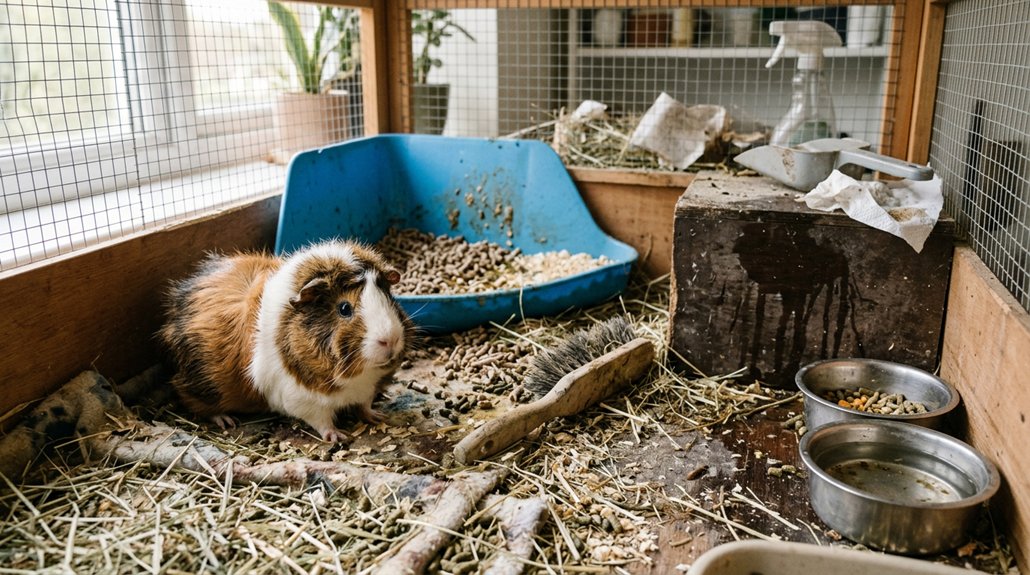
You’re likely making common mistakes like neglecting daily spot cleaning and using strong cleaners harmful to guinea pigs. Missing regular grooming and allowing bedding waste to accumulate can adversely affect their health. Avoid potent cleaning agents, and use natural solutions like water and vinegar. Establish consistent vacuuming for hay. These oversights risk hygiene and wellness. If you explore further, you’ll discover effective strategies to guarantee a healthy, pleasant environment for your guinea pigs.
Key Takeaways
- Skipping daily spot cleaning leads to waste buildup and health issues for guinea pigs.
- Using strong cleaning agents can leave harmful residues instead of choosing natural alternatives like vinegar solutions.
- Neglecting routine vacuuming of hay and bedding results in unhygienic conditions and odor buildup.
- Washing fleece liners without a laundry bag can cause clogs and damage to the washing machine.
- Overlooking frequent grooming, especially for long-haired breeds, contributes to dirt accumulation and potential health problems.
Common Cleaning Mistakes Guinea Pig Owners Make
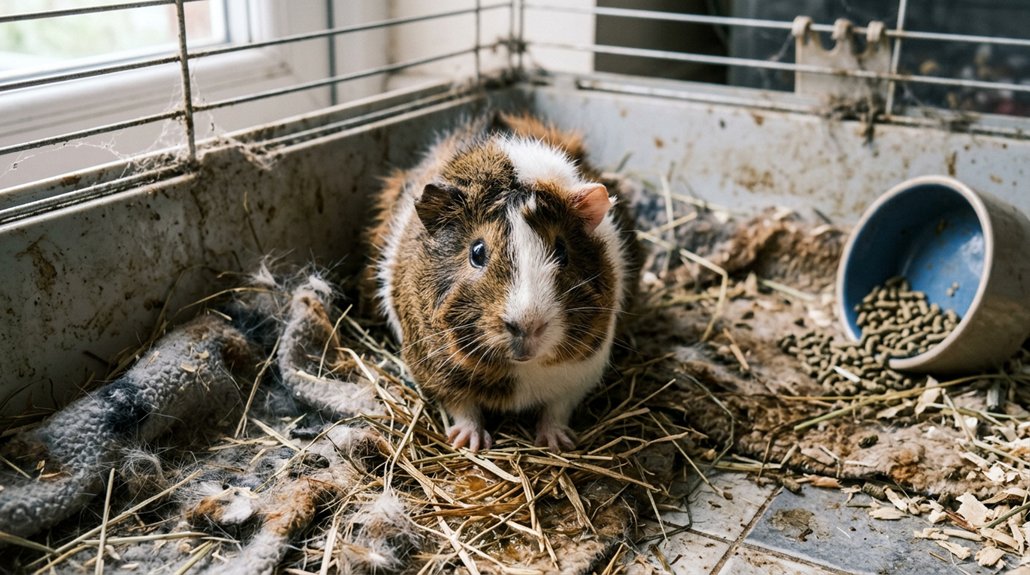
Guinea pig owners often make several common cleaning mistakes that can affect the well-being of their pets. One oversight is neglecting daily spot cleaning to manage their guinea pigs’ high fecal output, leading to waste buildup and odors. Proper guinea pig grooming begins with maintaining a tidy environment; this involves using laundry bags for fleece liners to prevent clogs, and implementing pee pads in specific cage locations to prolong liner life. Avoid potent cleaning agents that can harm your pet—opt for homemade, low-odor solutions instead. Additionally, not establishing a regular vacuuming routine results in accumulations of hay and bedding, complicating cleaning efforts. By addressing these issues, you’ll promote better hygiene and health for your guinea pigs.
How to Clean Your Guinea Pig’s Cage Safely
To efficiently maintain your guinea pig’s cage, incorporate fleece liners and pee pads for easier spot cleaning and quick bedding replacement. Use a homemade cleaning solution of 3 parts water to 1 part vinegar for safe disinfecting, as commercial cleaners can contain harmful chemicals. By implementing these strategies, you’ll guarantee a hygienic environment while protecting your guinea pig’s health.
Efficient Fleece Bedding Strategy
How can you effectively manage and maintain a clean environment for your guinea pigs? Fleece usage offers an economical and environmentally friendly bedding solution, but requires proper strategies to manage odors and maintain cleanliness. Begin by incorporating fleece pee pads to prolong liner life and simplify spot cleaning of damp areas. Effective odor management includes spot cleaning 1-2 times daily and conducting weekly thorough cage cleaning due to high waste output. Use a laundry bag when washing fleece liners to minimize loose hair accumulation. Storing clean liners in a dry place guarantees immediate availability for quick cage changes. Utilize multiple fleece liners to reduce costs and minimize environmental impact compared to disposable bedding. This efficient strategy promotes a healthier habitat for your guinea pigs.
Safe Homemade Cleaning Solutions
When maintaining a hygienic environment for your guinea pigs, consider using safe homemade cleaning solutions. One effective eco-friendly option is a mixture of three parts water and one part vinegar. This solution is not only budget-friendly but also leaves low odor levels, ensuring a safe atmosphere for your pets. For general cleaning, combine soap with hot water. This method sanitizes surfaces efficiently without harmful residues, making it safer than many commercial alternatives. Apply these cleaning techniques regularly, alongside spot cleaning 1-2 times daily, to preserve a sanitary cage and minimize unpleasant odors. By opting for DIY cleaners, you can save money and uphold your guinea pigs’ health and well-being with straightforward, effective practices.
Weekly Deep Clean: Essential Practices for a Healthy Habitat
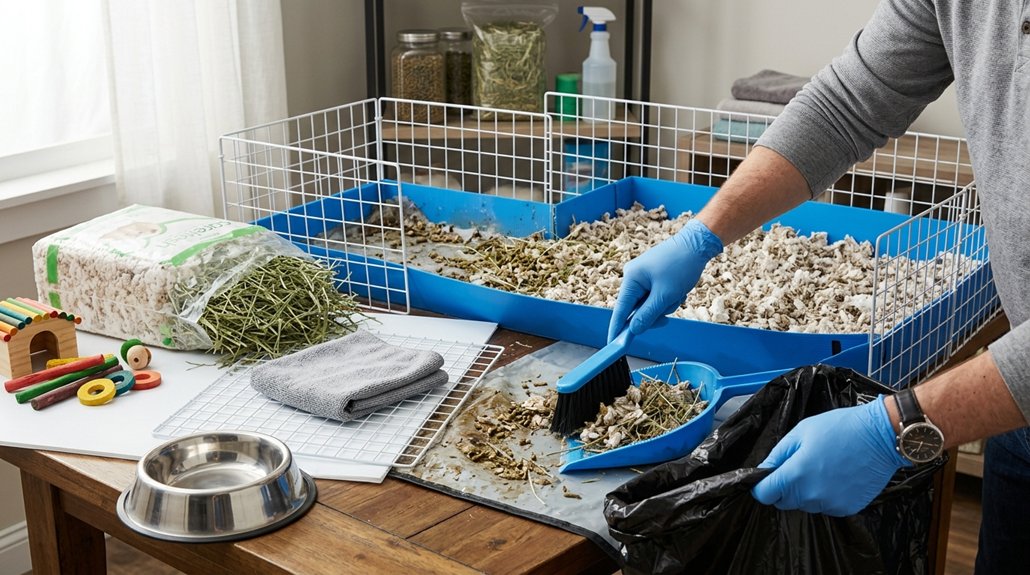
Though guinea pigs are resilient creatures, their health hinges considerably on the cleanliness of their habitat. Establish a meticulous cleaning schedule guaranteeing cage ventilation and cleanliness. Conduct a weekly deep clean to remove waste buildup, which prevents ammonia exposure from urine—a known health risk. Begin by eliminating all bedding and liners; launder fleece in a bag and air-dry to prolong use. Disinfect cage surfaces using a mixture of three parts water to one part vinegar. Focus on maintaining a hygienic environment with eco-friendly solutions. Clean water bottles with hot water and dry rice weekly to assure fresh drinking access. Daily emptying of used pee pads and spot cleaning further reduces odors, contributing to a healthier, fresher habitat.
Avoiding Common Bedding Errors in Guinea Pig Care
You’ll find that choosing fleece bedding over traditional materials like wood shavings noticeably reduces respiratory risks and improves odor control for your guinea pigs. It’s essential to select appropriately sized cage liners that maximize your pets’ space and simplify cleanup, preventing the accumulation of waste in confined areas. Incorporating fleece pee pads can extend the life of your liners and streamline maintenance, making daily spot cleaning more efficient.
Benefits of Fleece Bedding
Fleece bedding offers numerous benefits that can enhance guinea pig care, especially for owners seeking efficient and environmentally friendly solutions. Here are critical advantages:
- Fleece Benefits: Reduces cleaning time, as it’s reusable and easy to wash, aligning with environmentally friendly bedding preferences.
- Spot Cleaning Efficiency: Use of fleece liners paired with pee pads supports effective spot cleaning, making it swift to replace soiled areas without overhauling the entire setup.
- Bathroom Behaviors: Guinea pigs naturally use specific corners for their bathroom needs; fleece aids in concentrated cleaning, thereby maintaining a fresh habitat.
- Absorption and Odor Control: Offers superior absorption and controls odors, creating a cleaner and more comfortable environment compared to conventional bedding that may retain odors.
Implementing these strategies enhances both hygiene and pet comfort.
Selecting Suitable Cage Liners
Selecting appropriate cage liners is a critical component in maintaining the health and comfort of your guinea pigs. Many owners mistakenly choose wood shavings, but fleece liners offer a safer alternative, reducing respiratory risks. Proper laundry techniques are essential; regular washing prevents odor and maintains a hygienic environment, considering guinea pigs produce about 100 poops per day. Use fleece pee pads to extend the life of your liners and facilitate spot cleaning of soiled areas. Follow fleece selection tips to guarantee durability and effectiveness. Always store clean fleece liners in dry locations to prevent mildew. Opting for reusable fleece reduces long-term costs and environmental impact compared to disposable bedding. Prioritize these practices for superior guinea pig care.
Safe Cleaning Products for Your Guinea Pig
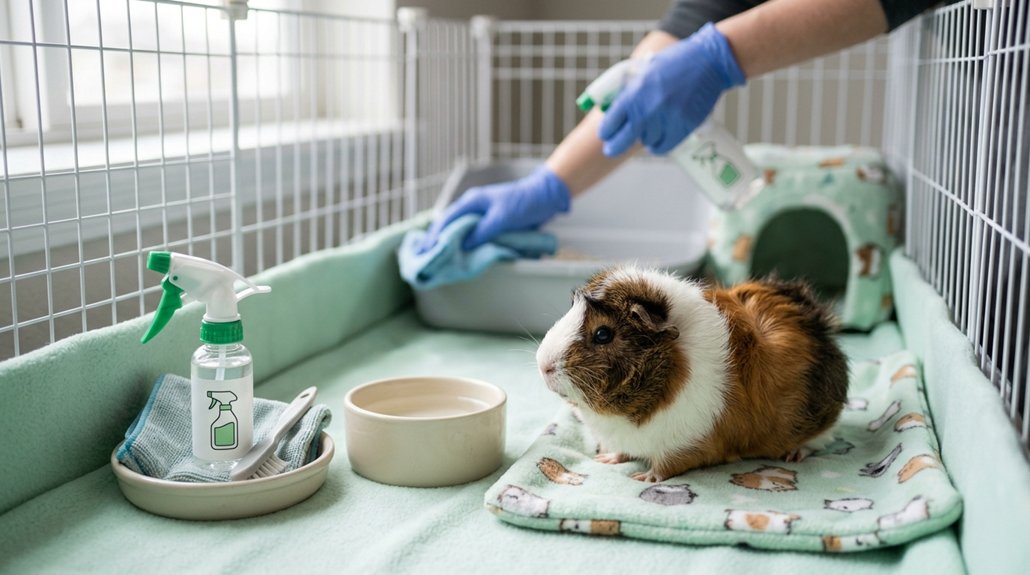
When choosing cleaning products for your guinea pig, it’s crucial to prioritize safety due to their sensitive respiratory systems. Opt for natural disinfectants, as these guarantee surface safety without harmful residues. Consider these options:
- Homemade Solutions: Mix three parts water with one part vinegar for an effective, low-odor cleaner.
- Soap and Hot Water: A combination of dish soap and hot water cleanses surfaces gently yet effectively, reducing respiratory risks.
- Avoid Harsh Chemicals: Steer clear of strong commercial cleaners that may leave dangerous residues.
- Thorough Rinsing: Always rinse cleaning tools well, removing any lingering soap to keep your guinea pig’s environment harmless.
Safeguard your pet’s habitat with these meticulous choices, curated for their well-being.
Benefits of Fleece Liners for Easy Cage Maintenance
If you’re looking for an eco-friendly cleaning solution, fleece liners offer a sustainable option that reduces waste. They simplify daily maintenance by absorbing moisture and controlling odors, limiting the need for frequent cage changes. As a cost-effective bedding choice, fleece liners can be washed and reused, saving you money in the long run while maintaining your guinea pig’s comfort.
Eco-Friendly Cleaning Solution
Embracing eco-friendly cleaning solutions like fleece liners can greatly enhance the maintenance of your guinea pig’s cage. By utilizing eco-friendly materials, you support sustainable practices and create a healthier environment for your pets. Fleece liners offer several practical benefits:
- Reusable: They can be washed multiple times, greatly decreasing long-term bedding costs and environmental waste compared to disposable options.
- Simplified Cleaning: Use in combination with pee pads for easy maintenance; only swap damp pads rather than changing complete bedding.
- Efficient Hair and Particle Capture: Trap loose hairs and particles during wash with a laundry bag, reducing clog potential in washing machines.
- Odor Reduction: Foster a fresher, cleaner environment with regular spot cleaning and air drying, promoting a hygienic living space.
Cost-Effective Bedding Option
Utilizing fleece liners for your guinea pig’s cage is not only a cost-effective option but also simplifies cage maintenance. These bedding alternatives allow for repeated use, considerably cutting long-term expenses compared to disposable materials. The fleece benefits extend beyond cost savings; they minimize waste, providing an environmentally conscious solution for conscientious pet owners. To extend their viability, incorporate pee pads and conduct daily spot cleaning. This practice not only prolongs the lifespan of the fleece but keeps your pet’s habitat fresher. Store clean fleece liners in a dry space to guarantee they remain free from contaminants, enhancing the overall hygiene of your guinea pig’s environment. With multiple fleece liners, quick changes become effortless, boosting maintenance efficiency.
Simplifies Daily Maintenance
For guinea pig owners seeking to simplify daily maintenance, fleece liners frequently provide an effective solution. Different fleece types offer soft surfaces, ensuring comfort and a hygienic environment. Unlike traditional bedding, which often demands frequent changes, these liners allow for easy cleaning, especially with strategic use of fleece pee pads placed in cage corners.
To streamline your routine:
- Spot clean 1-2 times daily; it helps reduce odors while maintaining cleanliness.
- Rotate bedding colors; not only enhances visual appeal but assists in tracking cleanliness for quick swaps.
- Align multiple liners to facilitate swift cage cleanings—simply swap one for another.
- Wash and reuse; these liners last longer, making them both cost-effective and eco-friendly compared to disposable bedding.
Effective Solutions for Odor Problems in Guinea Pig Cages
When endeavoring to address odor problems in guinea pig cages, consistent spot cleaning becomes essential; guinea pigs generate about 100 droppings daily, which, if left unmanaged, result in unpleasant smells. Optimizing guinea pig hygiene requires using fleece pee pads strategically, enhancing odor control by placing them in corners where your pets often urinate. Wash fleece liners in a laundry bag to capture hair and prevent residual odors in your washing machine. Try a vinegar-water solution (3:1 ratio) as an eco-friendly cleaner to combat persistent odors.
| Schedule | Task | Purpose |
|---|---|---|
| Daily | Spot clean droppings | Odor prevention |
| Weekly | Wash fleece liners | Maintain freshness |
| Weekly | Vinegar spray | Odor control |
| Monthly | Clean water bottles | Prevent mold buildup |
| As needed | Replace pee pads | Enhance odor control |
Regular water bottle cleaning limits mold, ensuring a fresher space.
Tailoring Guinea Pig Hygiene to Age and Gender
Proper guinea pig hygiene is essential, with specific adjustments made according to age and gender. Recognize that young male guinea pigs, due to their smaller bladders, require more frequent cleaning. Consider the following guidelines:
Adjust guinea pig hygiene practices by age and gender; young males need more frequent cleaning due to smaller bladders.
- Male Cleaning Frequency: Spot clean enclosures 1-2 times daily for young males, managing their substantial waste output to prevent hygiene issues.
- Gender Disparities: With male guinea pigs generally being cleaner, you might set lower cleaning frequencies compared to females.
- Catch Debris: For long-haired breeds, regardless of sex, increase grooming to eliminate dirt and prevent tangling in their coats.
- Cecal Pellets: Maintain clean environments enabling all guinea pigs to consume their crucial cecal pellets without obstruction or contamination.
Essential Tools for Efficient Guinea Pig Cleaning
Addressing specific cleaning needs according to age and gender is important, but having the right tools also greatly impacts efficiency in maintaining guinea pig hygiene. Prioritize effective cleaning routines with tools designed for this purpose. A car vacuum like MONOZEL is indispensable for clearing habitats. Utilize a fleece liner laundry bag to capture hair and hay during washes, streamlining the process. Implement fleece pee pads to extend fleece liners’ lifespan. Clean water bottles with hot water and dry rice to eliminate debris. Organize grooming tools for easy access beneath C&C cages.
| Tool | Purpose |
|---|---|
| Car vacuum | Remove hair, debris |
| Laundry bag | Collects hair in washing |
| Fleece pee pads | Prolong fleece lifespan |
| Hot water & dry rice | Clean water bottles |
| Organized storage | Access grooming tools |
These essentials enhance cleaning efficiency considerably.
Beyond Cleaning: Tips for a Fresh Guinea Pig Environment
If you aim to cultivate an environment that remains fresh and inviting for your guinea pigs, integrating efficient cleaning techniques can make all the difference. Begin with these steps to enhance habitat enrichment:
- Replace soiled fleece pee pads regularly to cut down on odors and extend their lifespan. This action simplifies nighttime cleaning routines.
- Use a laundry bag for fleece liner washing to capture loose hair and hay particles. This prevents a mess in your washing machine, streamlining laundry day.
- Adopt a DIY vinegar-water cleaning solution that’s safe and eco-friendly, reducing the use of harsh store-bought cleaners.
- Equip yourself with multiple fleece liners for rapid cage swaps, ensuring cleanliness and minimizing downtime.
Incorporate grooming tips and daily spot checks to further optimize their habitat.
Frequently Asked Questions
What Are the Three Biggest Expenses of Owning a Guinea Pig?
Your three biggest guinea pig care costs include fresh hay at $10-$30 monthly, veterinary care costs from $50-$100 for check-ups or more for emergencies, and bedding plus cleaning supplies, typically ranging $20-$40 monthly, ensuring healthy living conditions.
What Does Popcorning Mean in a Guinea Pig?
In guinea pig behavior, popcorning involves leaping and chirping, signaling joy and excitement. These popcorn moments, with bursts of energy and playfulness, indicate your pet’s happiness and well-being, fostering a positive bond between you and your guinea pig.
What Not to Do When Owning a Guinea Pig?
Don’t skimp on cage size or neglect hygiene. Avoid inadequate bedding, as it won’t absorb waste properly, causing unsanitary conditions. Clean daily to prevent odor and monitor water bottles for bacteria to guarantee your guinea pig’s health.
What Is the Number One Cause of Death in Guinea Pigs?
Untreated dental issues are the number one cause of death in guinea pigs. Prioritizing guinea pig care includes addressing key mortality factors like dental health, respiratory issues, and nutritional needs to prevent these common and avoidable fatalities.
Conclusion
Ensuring a clean habitat for your guinea pig is essential for their health. Did you know that over 60% of respiratory issues in guinea pigs are linked to poor cage maintenance? By avoiding common cleaning mistakes, using safe products, and adopting a regular cleaning schedule, you can greatly reduce health risks. Remember, a fresh environment isn’t just about cleanliness; it’s about providing a safe, comfortable space for your guinea pig to thrive. Prioritize their well-being with consistent care.