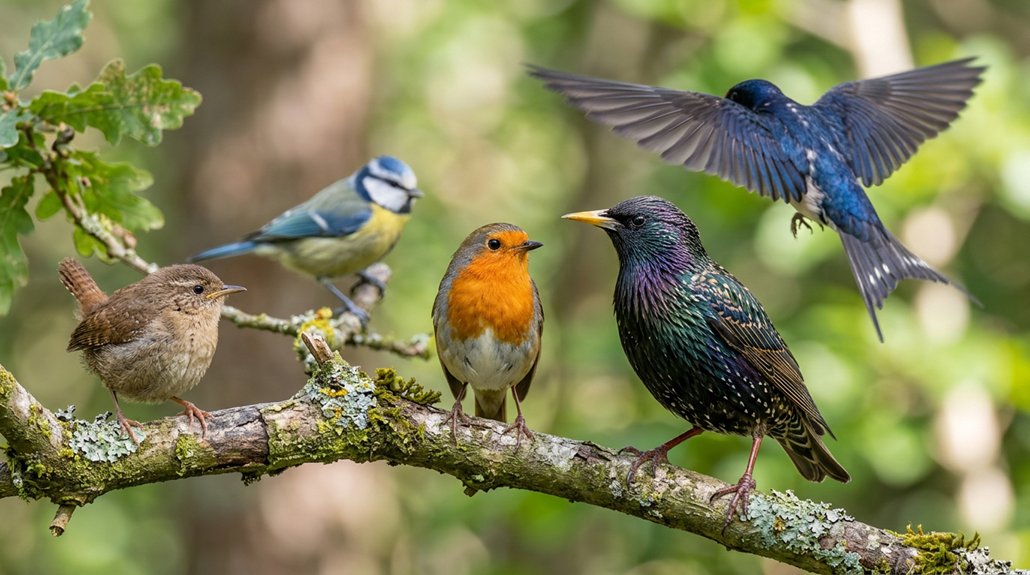
Bird lifespan varies widely by species, so you should choose with the timeline in mind. Larger birds usually live longer because they mature slowly, invest more in survival, and face lower adult mortality; parrots and seabirds can exceed 30 years, while many songbirds and hummingbirds average only 1–10. Captivity can extend life with good diet, housing, and veterinary care, but it also demands decades of commitment. The differences become clearer as you look closer.
Key Takeaways
- Larger bird species often live longer, with parrots, raptors, seabirds, and albatrosses commonly reaching decades.
- Small songbirds and hummingbirds usually live only 1–10 years in the wild, despite occasional longer records.
- Nesting style matters: cavity, cliff, and island nesters often survive better than ground-nesting birds exposed to predators.
- Captivity can greatly extend lifespan with good housing, nutrition, and veterinary care, but requires long-term commitment.
- Check banding-based age records, not appearance, because plumage and behavior rarely reveal a bird’s true age.
Bird Lifespan by Species: Why It Varies So Much
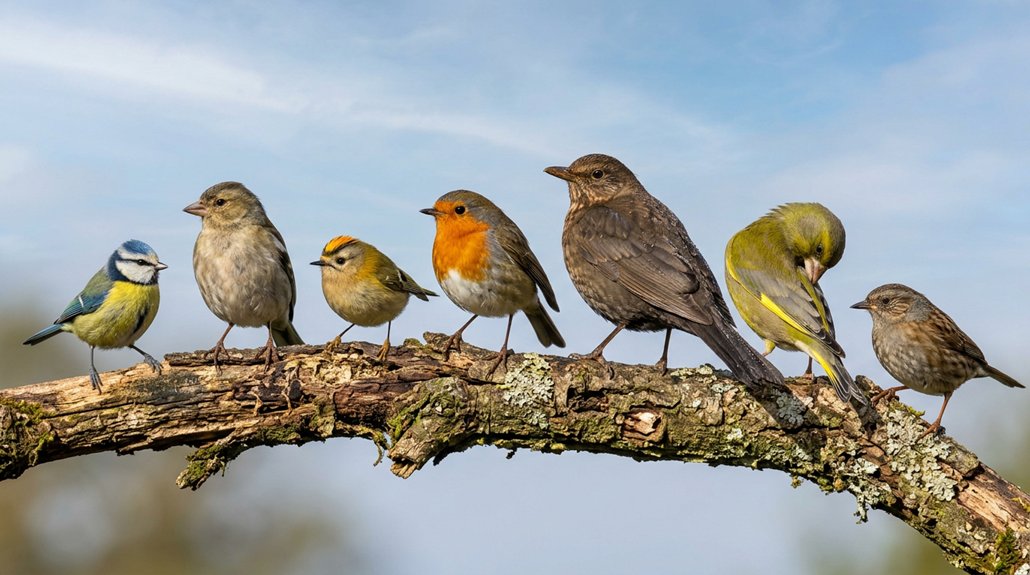
Bird lifespan varies so widely across species because body size, life history, and nesting ecology all shape survival prospects. You’ll usually see long-lived seabirds, parrots, and penguins outlast tiny passerines and hummingbirds, though averages in the wild’re often far below record ages. Species with slower metabolic rates and stronger cellular repair mechanisms typically survive decades, but they often raise fewer young and mature more slowly. Ground-nesting birds usually face heavier predation than canopy or cavity nesters, so their lives can be shorter. On islands, reduced threats can extend longevity, yet introduced predators may erase that advantage. Banding studies and captive records reveal extremes, such as a Common Raven reaching 69 years and a cockatoo 83, while many garden birds live only 1–3 years.
How Bird Size Affects Lifespan
Body size is one of the clearest predictors of how long a bird species tends to live. When you compare species, larger birds usually show slower metabolic scaling, lower annual turnover, and greater investment in maintenance, so they often outlive smaller birds. Many raptors and seabirds reach 20 to 50 years, while songbirds and hummingbirds often average under 10. Even so, birds beat mammals of similar size; a Broad-billed Hummingbird can approach 14 years, far beyond a House Mouse. Larger birds also mature more slowly, lay smaller clutches, and prioritize adult survival. Their greater flight endurance can support long lifespans, especially in territorial, nonmigratory species. Still, exceptions exist, and some small island or cavity species live unusually long.
Why Nesting Habits Change Survival Rates
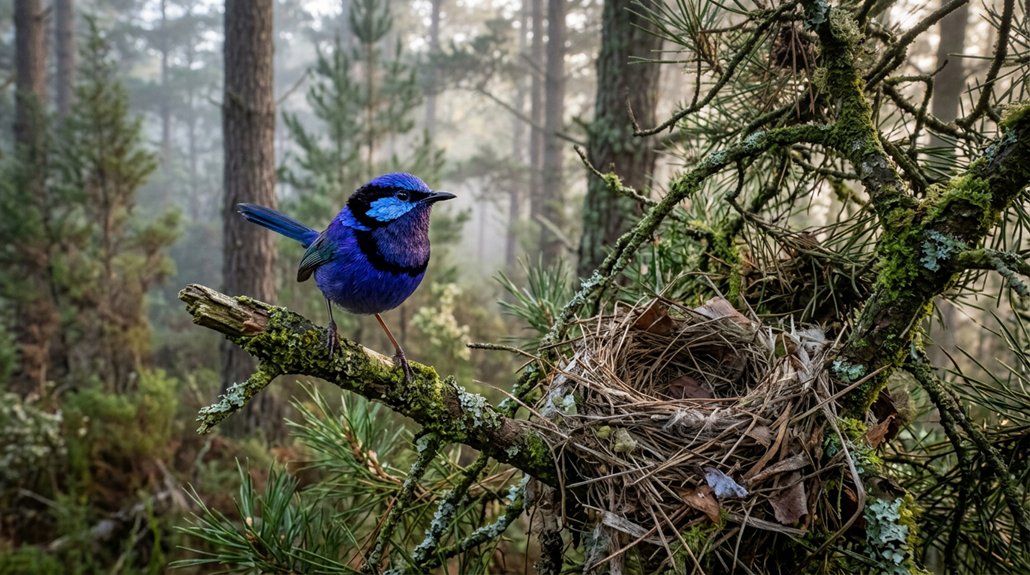
Nest placement can have a major effect on survival rates because it changes how much risk adults and chicks face from predators, weather, and physical disturbance. If you choose a ground-nesting species, you’ll often see shorter lifespans, since eggs and young are easier targets and trampling losses are higher. Birds that nest in cavities, dense canopy, or on cliffs usually gain better nest concealment and predator avoidance, which lowers failure rates and improves adult survival. You’ll also notice that island-nesting populations can live longer, where reduced predation and competition let more individuals reach old age. Species that raise fewer chicks and mature slowly, such as many raptors and corvids, tend to invest in adult survival, so their nesting strategy supports longevity rather than rapid reproduction.
How Captivity Changes Bird Lifespan
Even when nesting strategy strongly shapes survival in the wild, captivity can shift the equation much more dramatically by removing many of the main causes of death. You’ll often see longer lifespans because predators, starvation, severe weather, and much pathogen exposure are reduced. With controlled diets, avian veterinary care, and protected housing, some parrots may live far beyond wild averages, and seabirds can exceed expected years too. But captivity isn’t automatically protective: obesity, stress, feather plucking, and egg-binding can still shorten life. Records such as Cookie the Major Mitchell’s Cockatoo are impressive, yet they reflect husbandry, genetics, and record-keeping, not typical outcomes. If you’re choosing a long-lived bird, prioritize ethical sourcing, lifelong commitment, social and mental stimulation, and strong captive enrichment.
Why Some Birds Age Without Looking Old?
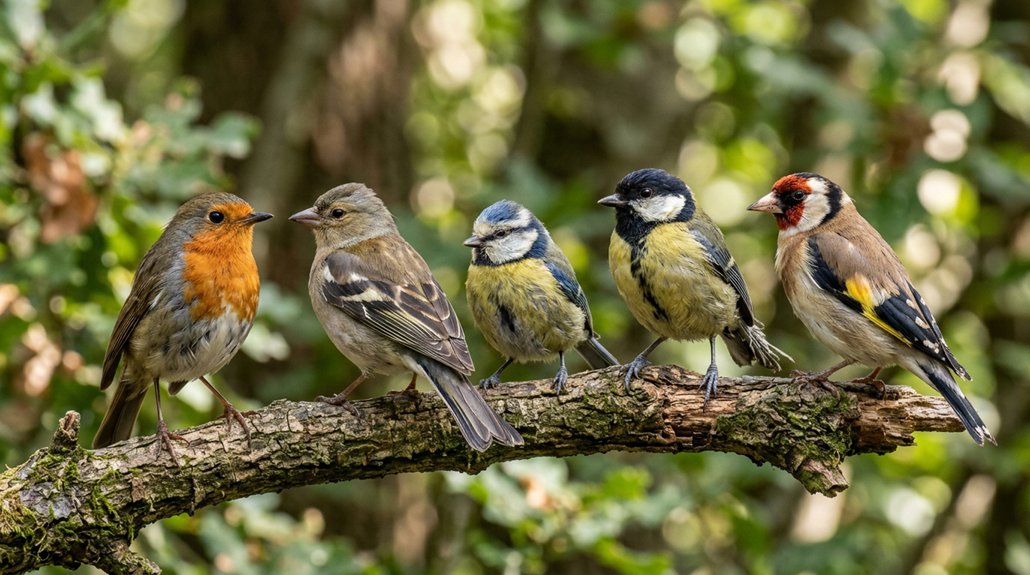
You’ll notice that many birds don’t show the usual external markers of aging, because adult plumage and routine feather replacement can mask wear, graying, or joint changes. That’s why you can’t reliably age most adults by appearance alone, and researchers often need hatch dates, banding, or recapture records to confirm age. The hidden biology of this pattern isn’t fully understood, but it likely reflects differences in oxygen handling and metabolic protein stability that limit visible tissue damage.
Hidden Signs Of Aging
Although birds can live many years, adults often show surprisingly few obvious signs of aging because mature plumage and routine feather replacement can conceal underlying decline. You won’t usually see graying, arthritis, or wear that clearly tracks age; feather microstructure and cellular biomarkers may shift first.
| Observation | Meaning |
|---|---|
| Sleek feathers | aging can be hidden |
| stable behavior | decline may be subtle |
| no visible rings | age isn’t obvious |
| documented banding | confirms true age |
| long monitoring | reveals lifespan trends |
Researchers thus depend on banding, known hatch dates, and long-term records, not appearance. In some species, oxygen-processing efficiency and metabolic proteins may blunt typical senescence signals, so you can’t judge survival or reproduction from looks alone.
Why Age Is Hard To See
Bird age is often difficult to read from appearance alone because adult plumage and body shape conceal many of the cues that signal senescence in mammals. You won’t usually see greying feathers, obvious arthritis, or worn “growth rings,” and many birds keep sleek plumage and vigorous movement long after maturity. That makes invisible aging a real challenge: juveniles are easy to identify, but older adults often look alike. In field studies, you can’t trust appearance; researchers need hatch dates, banding, or re-encounter records to verify age. The physiological mechanisms behind this apparent negligible senescence aren’t fully understood, though altered oxygen processing and protective metabolic proteins may reduce tissue damage. Because looks mislead, any claim of extreme age needs documented proof, especially in captive birds.
Which Bird Species Live the Longest?
When you compare bird species by longevity, you’ll see that seabirds and other large, slow-maturing birds usually rank highest, with albatrosses, terns, and penguins often reaching 30–50 years in the wild and some individuals, like Wisdom the Laysan Albatross, living far longer. You’ll also notice that land birds can be unexpectedly durable, as eagles and ravens may survive for decades, while many small songbirds remain short-lived despite rare, much older records. These patterns suggest that body size, delayed maturity, small clutch size, and safer nesting sites are key traits linked to longer species lifespans.
Longest-Lived Bird Species
The longest-lived bird species tend to cluster among large, slow-reproducing birds, where lifespan can stretch far beyond what their size alone might suggest. If you’re comparing extreme longevity, look first at parrots and seabirds. Cookie, a Major Mitchell’s Cockatoo, reached 83 years, and many macaws, cockatoos, and Amazons exceed 50 years, with some reports near 100. In the wild, Wisdom the Laysan Albatross is at least 75, and albatrosses, terns, and some penguins often live 30–50 years. Large corvids and raptors also age well: a Common Raven reached 69, an Osprey 32, and a Golden Eagle about 25. Even smaller species can surprise you, like a Barn Swallow at 16. Lifespan tracks aging biomarkers, body size, delayed maturity, and small clutches.
Wild Vs. Captive Lifespans
In the wild, lifespan is usually constrained by predation, food scarcity, disease, and harsh weather, so the longest-lived birds are often seabirds and other slow-reproducing species: albatrosses, terns, and penguins commonly reach 30–50 years, and Wisdom, a Laysan albatross, is still confirmed at at least 75 years as of 2025. By contrast, many songbirds average only 1–3 years. In captivity, you’ll usually see longer spans because food is steady, predators are absent, and veterinary care is available; Cookie, a Major Mitchell’s cockatoo, reached 83 years. Even small birds can exceed similar-sized mammals: a Broad-billed Hummingbird lived 14 years in the wild. Reported maxima also depend on banding and known hatch dates, so urban adaptation and seasonal migration can complicate comparisons.
Traits Behind Longevity
Bird longevity isn’t random; it tracks a mix of body size, life history, and nesting ecology that helps explain which species live the longest. You’ll usually see larger birds outlive small songbirds because slower metabolic strategies and delayed reproduction reduce wear. Long-lived species also tend to raise fewer chicks, mature later, and show resilient telomere dynamics.
| Trait | Pattern | Example |
|---|---|---|
| Large body | Longer lifespan | Albatross, 30–50 years |
| Slow life history | Fewer chicks | Laysan Albatross |
| Safer nesting | Higher survival | Cliff or island nesters |
Which Common Birds Have Short Lifespans?
Among common garden birds, short lifespans are the rule rather than the exception: many small passerines survive only 1–3 years as adults, and only about one in four European robins make it through their first year. If you watch these species, you’re seeing high juvenile mortality and strong predation pressure shape survival curves. Ringing studies show that averages are usually far below maximum records, which can reach a decade or more.
Short lifespans are the rule: many garden birds survive just 1–3 years, despite rare decade-long records.
- Small migratory songbirds, including warblers, often average 3–6 years.
- Ground-nesting and open-cup nesters seldom last long in exposed sites.
- Hummingbirds can surprise you, with averages near 6–8 years and rare wild records to 14.
Common Garden Birds and Their Lifespans
When you observe common garden birds, you’ll usually see short average lifespans in many small species, often just 1–3 years in the wild, because juvenile mortality is high. You’ll also notice strong species differences: warblers and other songbirds often average 3–6 years, while larger birds such as corvids can live for decades, with body size, clutch size, and nesting habit all linked to longevity. By offering energy-rich food, safer nesting sites, and protection from predators, window strikes, and light pollution, you can help improve survival and possibly extend local lifespans.
Common Garden Bird Lifespans
Many common garden birds live surprisingly short lives in the wild, often averaging just 1–3 years because juvenile mortality is so high; for example, only about one-quarter of robins survive to their first birthday. If you watch closely, you’ll see juvenile survival often hinges on food access, cover, and nesting materials. Ringing data, however, show that rare individuals can exceed these averages by a wide margin.
- Smaller birds usually have shorter lifespans than larger species.
- Ground-nesters tend to be less long-lived than tree- or cavity-nesters.
- Slower maturation and smaller clutches often correlate with longer survival.
You can support local birds by offering suet, sunflower hearts, native plants, and safe nesting sites. Reducing window strikes and cat predation can also improve survival.
Species Differences and Care
Although common garden songbirds often average only 1–3 years in the wild, species differences are striking: ringing records show that an individual robin reached 11 years 5 months, House Sparrows have reached about 13 years, Barn Swallows up to 16 years, European Starlings about 20 years, and body size tracks longevity even more strongly in larger birds, with corvids and raptors living far longer than small passerines or warblers.
| Species | Typical span | Record |
|---|---|---|
| Robin | 1–3 y | 11y5m |
| House Sparrow | 1–3 y | ~13 y |
| Barn Swallow | 1–3 y | 16 y |
| Starling | 1–3 y | ~20 y |
You’ll also see diet variation, migratory stress, clutch size, and maturation timing shape survival. Add shelter, safe nest boxes, predator protection, high-energy foods, and window-strike reduction, and you may help birds approach their potential.
How Lifespan Shapes Bird Care Choices
Lifespan strongly shapes what kind of bird care is practical, because a species that may live 6 years requires a very different commitment than one that can live 40 to 80+ years. You’ll need to match housing, diet, and veterinary routines to that time span. Longer-lived parrots usually need larger enclosures, seasonal enrichment, and steady out-of-cage exercise for decades. Short-lived species still need secure group housing and close monitoring.
- Balanced nutrition and annual avian exams can slow preventable decline.
- Quarantine new birds to reduce disease transmission and lifespan loss.
- Plan owner succession early, especially for species that may outlive you.
Because life history affects maturation, adult social stability matters more in long-lived birds, while juvenile tamability may matter more in younger, shorter-lived species.
Choosing Birds by Lifespan
When you’re choosing a bird, lifespan is one of the clearest ways to predict the scale of the commitment you’re making. If you want a shorter horizon, a parakeet may fit, with an average of about 6 years, though some reach 18. Cockatiels demand more owner commitment, averaging around 16 years and often living 20 to 30-plus years. Large parrots, including Amazons, macaws, and cockatoos, can live 40 to 80 years in captivity, so pet compatibility depends on whether you can support decades of housing, veterinary care, and possible rehoming. Wild garden birds usually live only 1 to 3 years, but their maximum records are higher. Longer-lived species also mature later and reproduce less, so stable adult care matters.
Frequently Asked Questions
What Is the 3-3-3 Rule for Birds?
The 3-3-3 rule means you’ll often see three behavioral stages in avian care: about 3 days to adjust, 3 weeks to settle, and 3 months to bond, though timing isn’t always exact.
What Is the 60/40 Rule for Birds?
You’d view the 60/40 rule as a lifespan guideline: about 60% of a bird’s life is early development, and 40% may require your long-term care, plus avian healthcare and habitat enrichment planning.
What Bird Species Has the Longest Life Expectancy?
The longest-lived bird you’ll meet is usually a parrot—Cookie, a Major Mitchell’s Cockatoo, reached 83 years in captivity. Yet if you’re tracking parrot longevity, seabird migration points to Wisdom, a Laysan Albatross, at 75+ years.
What Bird Has 4 Genders?
You’re likely thinking of the white-throated sparrow, which has four breeding phenotypes, not human genders. Its avian sex roles, mating systems, behavioral dimorphism, and genetic diversity stem from a chromosomal inversion supergene.
Conclusion
When you choose a bird, you’re also choosing a lifespan shaped by species, size, nesting behavior, and environment. Smaller birds often age quickly, while larger species may live for decades. In captivity, careful care can extend survival, but it doesn’t erase biology. You’ll notice that some birds never look old until late in life. As the adage goes, time flies, and with birds, that’s often literally true.