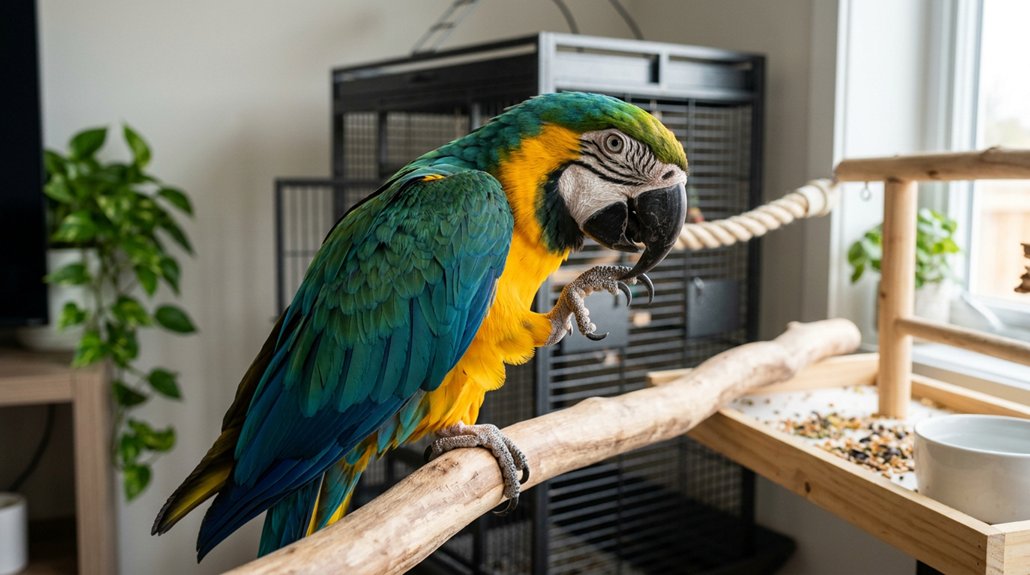
Before you get a pet bird, choose a species that fits your time, noise tolerance, and long-term commitment; budgies and cockatiels are easier starter birds, while larger parrots can live decades. You’ll need a safe cage, daily out-of-cage exercise, a pellet-based diet with fresh produce, and strict cleanup routines. Birds need regular training and socialization to reduce problem behaviors. You should also find an avian vet before adoption, because the right prep changes everything.
Key Takeaways
- Choose a species you can meet for decades; many parrots live 20–60+ years and need long-term commitment.
- Plan for cage space, safe placement, daily out-of-cage exercise, and a quiet sleep area.
- Feed a pellet-based diet with fresh vegetables, daily clean water, and strict hygiene to prevent illness.
- Expect noise, daily interaction, and training needs to prevent screaming, aggression, and feather-plucking.
- Find an avian veterinarian before adoption and budget for wellness exams, quarantine checks, and emergency care.
What to Know Before Getting a Pet Bird
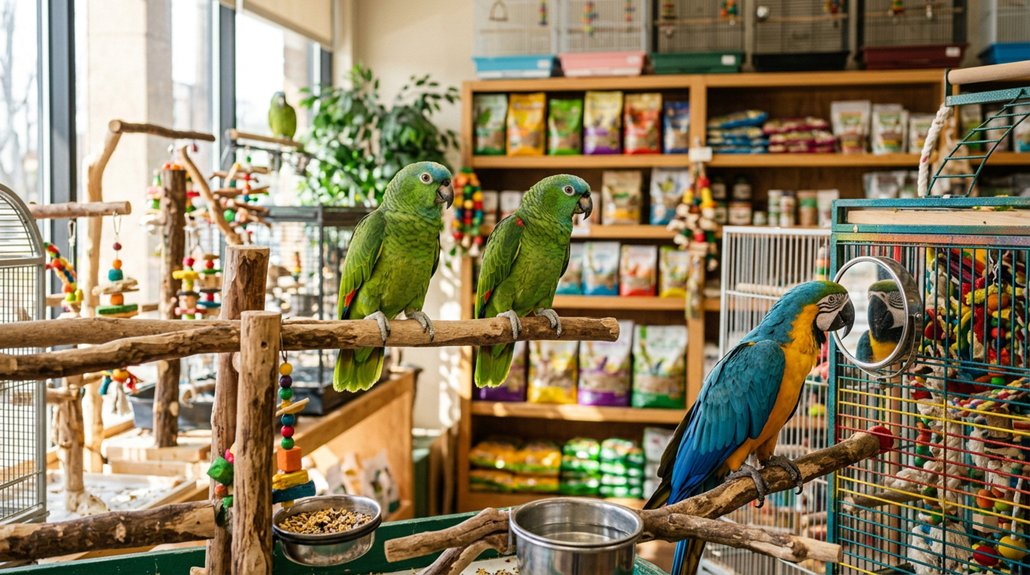
Before you bring a bird home, choose a species that fits your lifestyle: budgies and cockatiels are generally beginner-friendly, while amazons, greys, cockatoos, and macaws can live 40–80+ years and require much more training, time, and commitment. You’ll need daily out-of-cage exercise, mental stimulation, and social contact to reduce boredom, screaming, feather plucking, and aggression. Prepare a roomy cage with perches, toys, fresh water, and a balanced pellet-based diet with fruits and vegetables; make diet changes gradually. Eliminate Teflon fumes, scented candles, aerosol cleaners, and toxic plants, and maintain hygiene to lower zoonotic risk such as psittacosis. Arrange an avian veterinarian for a pre-purchase exam and annual checks, and follow quarantine guidance for new birds. Also review legal considerations and travel logistics before acquisition.
How to Choose the Right Bird Species
Choosing the right bird species starts with matching the bird’s lifespan, social needs, noise level, space requirements, and care complexity to your routine and long-term commitment. You should compare species realistically: parakeets may fit shorter commitments, cockatiels demand more years, and large parrots can require decades of care. Evaluate temperament compatibility by asking how much handling, training, and daily interaction you can provide. Hand-fed young budgies, cockatiels, parakeets, and Quakers usually tame more easily. Use breeder reputation as a practical filter; reputable sources improve the odds of healthy, well-socialized birds.
Choose a bird whose lifespan, temperament, and care needs truly fit your lifestyle.
- You can avoid regret.
- You can reduce stress.
- You can choose with confidence.
Also assess noise, veterinary access, and diet complexity; finches and canaries are simpler, while parrots need specialized care.
Bird Cage, Space, and Exercise Needs
A bird’s cage should be sized for safe wing extension and short flights, with larger enclosures preferred whenever possible; for small parrots such as budgies and cockatiels, a minimum internal size of about 24″ wide × 18″ deep × 24″ high is commonly recommended. You should add multiple perches with varied diameters and textures, placed to support movement and vertical enrichment without forcing constant toe flexion. You’ll also need several hours of supervised out-of-cage exercise each day, often 2–4+ hours, to reduce boredom and feather-plucking. If you keep more than one bird, provide separate cages or extra space for retreat. Position the cage above floor level, away from drafts, fumes, direct sun, and noise, and use a quiet sleep area. A travel carrier should be available.
What Pet Birds Eat and How to Clean Up
Feeding your bird starts with a species-appropriate base diet: many small parrots, including budgies and cockatiels, do well on a formulated pellet diet making up about 60–80% of intake, with daily fresh vegetables, small amounts of fruit, and seeds or nuts used sparingly as treats. You can supplement with seasonal produce and, if advised by an avian veterinarian, homemade pellets. Change food and water dishes daily with hot, soapy water or a dishwasher cycle, then rinse well.
A species-appropriate pellet base, fresh vegetables, and clean dishes daily help keep small parrots healthy.
- Clean trays reduce bacterial load.
- Prompt waste removal limits pests.
- Gloves protect you during cleanup.
Remove perishable foods within 2–4 hours, line the tray with paper, and replace it daily. Deep-clean perches, toys, and trays weekly with bird-safe disinfectant. For droppings, use a damp cloth or HEPA vacuum, avoid aerosols, and wash your hands after handling.
Bird Noise, Behavior, and Bonding
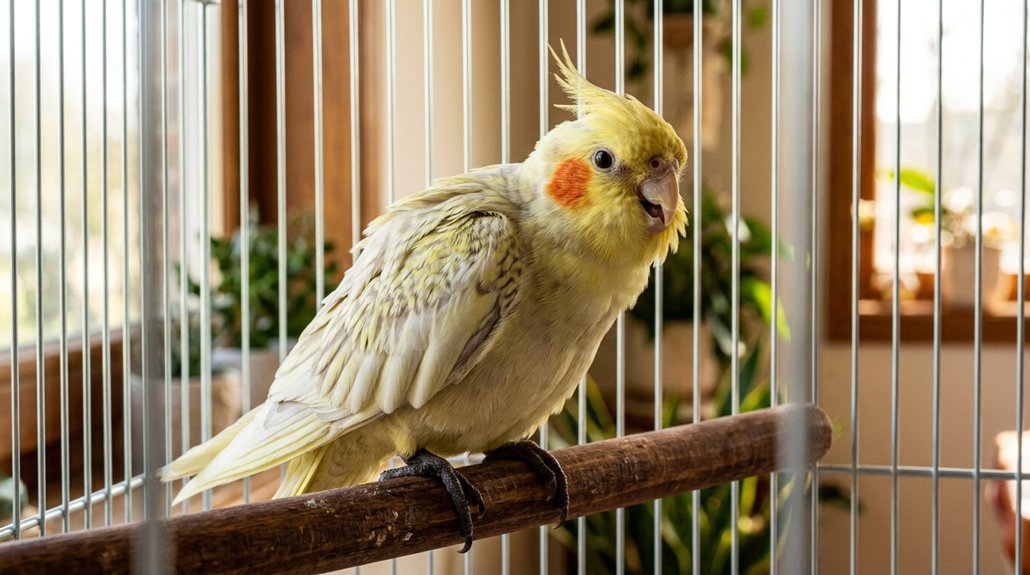
You’ll need to match the bird’s noise level to your home, since many species are naturally vocal and some, like larger parrots, can be loud at dawn, dusk, or during periods of stress. You’ll also need to provide daily interaction, because birds form strong social bonds and can develop screaming, feather plucking, or aggression when they’re bored, under-stimulated, or poorly socialized. If you choose a single bird, it may bond closely to you, but that bond usually means consistent handling, training, and long-term attention.
Noise Levels And Triggers
Bird noise varies substantially by species and is strongly influenced by behavior and context: finches and canaries are usually relatively quiet, budgerigars and cockatiels are moderately vocal, and larger parrots such as conures, amazons, cockatoos, and macaws can be very loud, with frequent shrieking and calls that may exceed 100 dB. You should consider soundproofing options and neighborhood ordinances before choosing a bird. Noise often peaks at dawn and dusk, unless you cover the cage or adjust lighting.
- You may hear sudden shrieks.
- Early mornings can feel disruptive.
- Persistent calling can signal stress.
Boredom, hunger, loneliness, threats, and hormonal cycles can increase vocalization. Individual temperament and sex matter; males of some species whistle and mimic more. Enrichment, routine, and training may reduce noise, but some birds won’t be quiet.
Bonding, Handling, And Social Needs
Although many companion birds form strong long-term bonds with one person, they still need daily one-on-one interaction, supervised out-of-cage time, and enrichment to stay behaviorally healthy; without these, they can develop screaming, feather-plucking, or aggression. You should use trust building routines with short, predictable sessions for step-up, target training, and gentle handling. If possible, start with a young, hand-fed bird, because early socialization often improves tolerance and confidence. Keep physical contact structured: excessive petting or shoulder time can trigger hormonal or mate-type behaviors, including regurgitation, egg laying, and aggression. In a single-bird home, you’ll need several hours of interaction and varied toys, plus an enrichment rotation, to replace flock contact. Even quieter species may call at dawn and dusk, so you’ll still need consistent training.
How Long Pet Birds Live
Pet bird lifespans vary widely by species, and the expected commitment should match the bird’s longevity. You’ll see major lifespan variability among common pets: budgerigars often live about 6 years, but can reach 18; cockatiels average 16 years and may reach their 20s or 30s; conures, Amazons, African greys, cockatoos, and macaws may live 20–60+ years, with rare individuals past 80. Non-parrots differ too: canaries average 8 years, finches 4–5, and doves or pigeons 5–15. Diet, housing, veterinary care, and hazard avoidance matter. Watch for aging signs such as reduced activity or feather quality changes.
- Long-term care can span decades.
- Outliving your plans is possible.
- Shorter-lived birds still need steady commitment.
Find an Avian Vet Before You Adopt
Before you adopt, locate an avian veterinarian in your area using the Association of Avian Veterinarians search tool or local rescues, since general small-animal vets may not have bird-specific training. You should schedule an initial wellness exam and quarantine check within 1–2 weeks of bringing your bird home, including a fecal parasite screen and Chlamydia psittaci test. Confirm that the clinic offers, or can refer for, species-specific care such as wing and feather trims, beak and nail care, radiology, and bloodwork.
Avian Vet Search
Locating an avian veterinarian should be one of your first steps when preparing to adopt a bird, and the Association of Avian Veterinarians (AAV) searchable directory can help you identify certified avian specialists in your area. Confirm the clinician treats your species, performs droppings analysis, bloodwork, and radiographs, and offers avian telemedicine or mobile consultations when needed. Ask about emergency coverage and 24/7 referral links for respiratory distress or toxic exposure. Verify infection-control and quarantine protocols for new birds, and whether the clinic provides nutrition guidance, wing, beak, and nail trimming, plus behavioral consultations.
- Less uncertainty during illness
- Faster access to specialized care
- Greater confidence before adoption
Wellness Exam Prep
Once you’ve identified an avian veterinarian through the Association of Avian Veterinarians (AAV) directory, schedule a pre-adoption consultation so you already have a vetted clinic and emergency contact in place. This clinic selection should support your pre adoption plan and help you understand exam timing, fees, and quarantine guidance. Arrange a thorough wellness visit within 1–2 weeks after adoption; it should include a physical exam, weight check, fecal parasite screen, and bloodwork for baseline diagnostics. Ask whether Chlamydia psittaci testing or other screenings are recommended, especially if you keep other birds. Bring seller, breeder, or rescue details, species, age, diet, and observed behavior. If requested, complete stool prep with a fresh sample. Budget $150–$400 for initial care, plus annual visits and possible referral costs.
Frequently Asked Questions
What Is the 3-3-3 Rule for Birds?
It’s a behavioral adjustment and bonding timeline: 3 days of stress, 3 weeks of testing routines, and 3 months to build trust. You’ll see gradual social stability, though timing can vary by bird.
What Is the 60 40 Rule for Birds?
Astonishingly, you’d use the 60/40 rule to balance behavioral enrichment and rest: about 60% of your bird’s time supports foraging, training, and interaction, while 40% protects quiet, sleep, and habitat design.
Can a Bird Be Left Alone for a Week?
No, you shouldn’t leave a bird alone for a week. You’ll need daily care, especially for aging birds. Arrange travel arrangements with an avian sitter or boarding to prevent dehydration, illness, and stress.
What Is the Friendliest Bird for a Pet?
Cockatiels are often the friendliest choice for you: affectionate, gentle, and trainable. With consistent training tips and social enrichment, they’re usually easier than they sound. Budgies can be friendly too, but cockatiels bond more reliably.
Conclusion
Before you bring a bird home, you should see the whole picture clearly. A pet bird is not a decoration; it is a living system of needs, noise, diet, space, and long-term care. If you choose the right species, prepare the right environment, and find an avian vet first, you’re more likely to build a stable bond. Think of that first cage not as a container, but as the threshold to a long-term commitment.