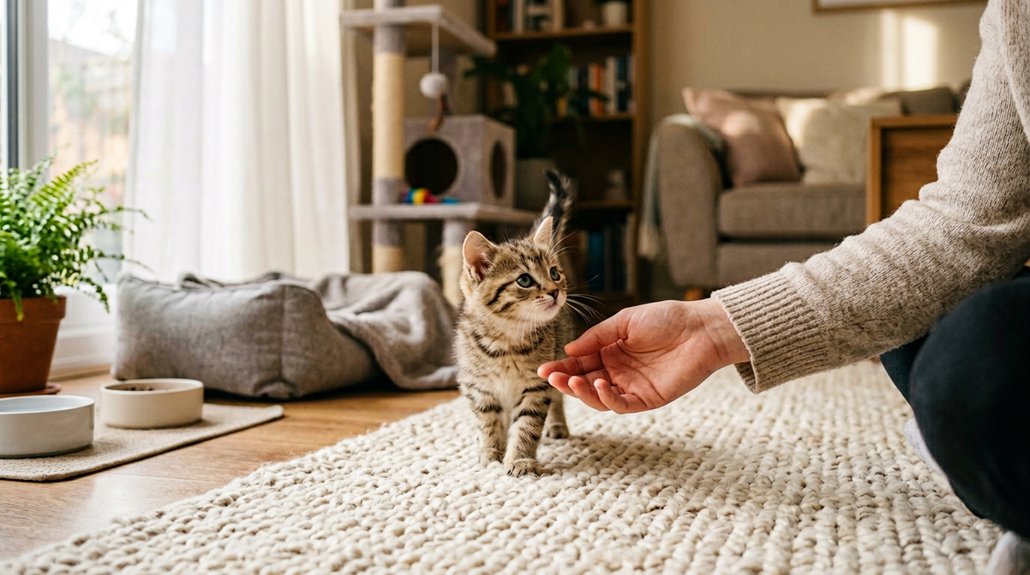
To build trust with a new kitten, create a cozy and safe environment with consistent routines and gentle handling. Recognize their behavior and emotions; use treats and praise for positive reinforcement. Play interactive games to strengthen your bond and gradually introduce new people and spaces with care. Pay attention to body language for signs of comfort or stress. Establishing trust takes patience and empathy—and there are more insights to help deepen this bond.
Key Takeaways
- Create a safe space with familiar comforts, providing the kitten a secure environment to build trust.
- Establish consistent daily routines for feeding and play to minimize anxiety and foster trust.
- Use positive reinforcement with treats and verbal praise to encourage desired behaviors promptly.
- Initiate interactive play sessions to engage the kitten’s instincts and reinforce bonding.
- Gradually introduce new people and spaces using familiar scents, ensuring escape routes for comfort.
Quick Steps to Start Trust-Building With Your Kitten
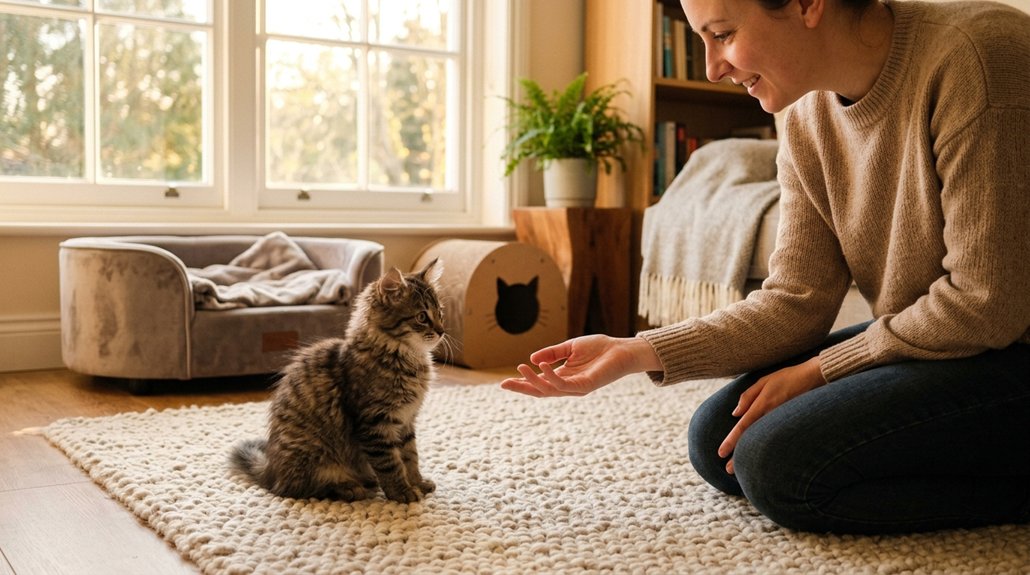
To start building trust with your new kitten, prioritize creating a safe haven where they can acclimate comfortably. Observing your kitten’s personality traits is essential; some may be naturally curious and adventurous, while others are shy and reserved. Recognizing these traits helps tailor trust-building activities. Engage them in interactive play sessions to stimulate their instincts and establish a connection. Use toys that mimic prey, allowing your kitten to express their hunting behaviors, which can be both entertaining and bonding. Consistent routines in feeding, play, and grooming are important for creating a sense of predictability. Always approach with gentle handling, supporting their body properly while noting their body language. Rewarding positive interactions with small treats reinforces trust incrementally.
Creating a Safe Environment for Your Kitten
When bringing a new kitten into your home, establishing a secure and nurturing environment is essential for their well-being and trust-building. Create a designated safe space with a cozy bed, food, water, and a litter box to provide kitten comfort and security. Choose a quiet area where your kitten can adjust without stress. Block potential hiding spots or escape routes—like gaps under appliances—to prevent them from feeling overwhelmed. Enhance their habitat with soft bedding, safe toys, and scratching posts to meet both physical and emotional needs. Regularly inspect for hazards such as toxic plants or exposed electrical cords, ensuring your home is a safe, inviting place for exploration. By doing so, you’ll foster a trusting relationship with your new feline friend.
Understanding Kitten Behavior and Emotions

Understanding a kitten’s behavior and emotions is like deciphering a delicate balance of trust and instinct. When kittens enter a new environment, kitten anxiety can often surface due to lack of socialization and unfamiliar surroundings. Recognizing their body language is essential for easing this anxiety. Look for signs of comfort like rubbing against you or slow blinking. These gestures show they’re beginning to trust you. On the other hand, flattened ears, a twitching tail, or sudden retreats are indicators of discomfort or overstimulation. To help them adjust, establish consistent routines for feeding and playtime. This predictability helps minimize anxiety. Gradual exposure to new experiences and gentle handling will boost their confidence, fostering a strong bond.
Using Positive Reinforcement With Treats
Using positive reinforcement with treats is a powerful way to strengthen your bond with your new kitten. Rewarding them with small, healthy treats during and immediately after desired behaviors not only encourages good habits but also helps them associate you with positive experiences. Experiment with different treat options to discover what excites your kitten most, ensuring that treat time becomes a cherished part of your interaction.
Reward-Based Training Techniques
To effectively employ reward-based training techniques with your new kitten, embrace the power of positive reinforcement to nurture a relationship of trust and cooperation. Start by using high-value treats that your kitten loves, enabling these rewards to captivate and inspire desired behaviors. Pair these treats with verbal praise and gentle petting, weaving a tapestry of positive associations. Incorporate clicker training to highlight your kitten’s cooperation precisely, ensuring they know exactly when they’re hitting the mark. Consistency is essential; maintain the same reward scheduling and commands during each session to solidify understanding and trust. Over time, shift from food treats to verbal praise, ensuring motivation remains high while reducing reliance on treats. This nurturing approach fosters a resilient bond with your kitten.
Strengthening Bonds With Treats
Building a strong bond with your new kitten involves more than just cuddles and play—every positive interaction can be an opportunity to reinforce trust and affection using treats. Strategic use of different treat types during these interactions helps create a positive association with your presence. Here’s how to strengthen your bond with treat timing:
- Play Sessions: Offer treats during playtime. It reinforces the fun and helps your kitten link treats with enjoyable experiences.
- New Treats: Gradually introduce new treats to maintain your kitten’s interest and engagement.
- Approach Rewards: Use treats when your kitten comes for petting, bolstering their courage.
- Moderation: Always provide treats in moderation to balance rewards and health effectively.
Building Trust Through Interactive Play
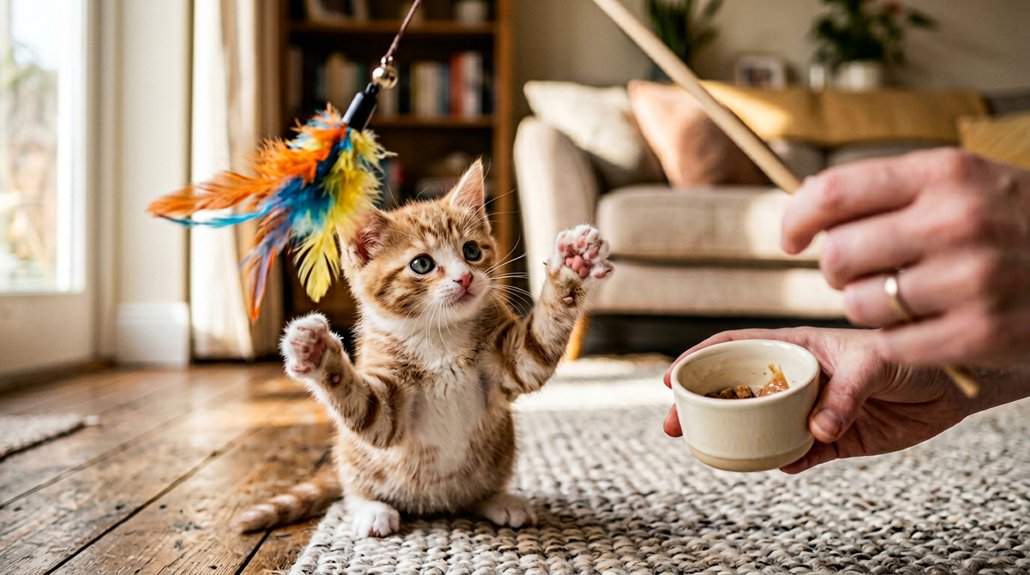
Initiating interactive play with your new kitten is a pivotal step in establishing trust and a lasting bond. Through interactive hunting games, like using feather wands or teaser toys, you tap into your kitten’s natural instincts. This playful exploration not only stimulates their curiosity but also encourages them to approach and engage with you. Scheduling regular play sessions creates a consistent bonding experience, fostering a sense of security in their new environment. Pay attention to your kitten’s play style and adapt to their comfort level, which can enhance the trust-building process. As they grow fearless and joyful during these sessions, they start associating human interaction with positive experiences, further solidifying that essential bond of trust between you and your furry friend.
Establishing a Routine for Security and Comfort
Creating a consistent daily routine for your kitten is essential for building trust and providing comfort in their new home. By establishing predictable feeding schedules and structured playtime sessions, you help your kitten feel secure and reduce anxiety. Remember, these regular activities not only foster stability but also strengthen the bond between you and your furry companion.
Consistent Daily Activities
Welcoming a new kitten into your home is a rewarding experience, but it also requires dedication to establish a consistent daily routine. Consistent daily activities guarantee your kitten feels secure and develops trust. Here’s how you can create an effective kitten routine:
- Playtime: Set aside specific times each day for interactive play sessions. This helps engage their natural instincts and strengthens your bond.
- Grooming: Incorporate gentle grooming into your routine to familiarize your kitten with handling and promote comfort.
- Socialization: Engage with your kitten positively during various daily activities, using gentle interactions and treats to bolster trust.
- Calm environment: Maintain a serene atmosphere. Consistent daily patterns help reduce anxiety and make your kitten feel at ease, enhancing their emotional well-being.
Predictable Feeding Schedule
While a playful kitten can brighten any home, establishing a predictable feeding schedule is vital for creating a secure and comforting environment. Consistent feeding frequency lets your kitten anticipate meal times, easing anxiety through familiar routines. It’s important to present meals in a quiet area, minimizing distractions and fostering a peaceful eating experience that strengthens your bond. Gradually adjust the feeding routine to help your kitten acclimate without feeling overwhelmed. Choose regular times each day for feeding—this consistent pattern helps them associate your presence with positive interactions, including nutritious meals. The reliable structure you’ll create not only safeguards their well-being but also provides the comfort needed to thrive in their new home, promoting eventual trust and companionship.
Structured Playtime Sessions
In addition to a predictable feeding schedule, structured playtime sessions are a key component in nurturing a sense of security and comfort for your new kitten. The playtime benefits are immense, helping to build trust and enrich your bond. Here’s how to enhance those moments:
- Consistency Matters: Schedule daily sessions to create a comforting routine, using engaging toys to boost your kitten’s natural hunting instincts.
- Diverse Play Styles: Incorporate different types of toys and play styles to keep the sessions exciting and tailored to your kitten’s preferences.
- Observe and Adapt: Watch their body language to guarantee they’re comfortable, adjusting intensity as needed.
- Build Confidence: Interactive play with engaging toys fosters self-assurance and mental stimulation, essential for their development.
You’ll nurture a happier, more confident kitten!
Gradual Introduction to New People and Spaces
Introducing your new kitten to unfamiliar people and spaces requires patience and a mindful approach to foster trust and security. Begin with effective socialization techniques, allowing new people to sit quietly nearby without immediate interaction. This gradual exposure helps your kitten adjust at their own pace. Create a cozy hiding spot filled with familiar scents and toys, providing a retreat if they’re overwhelmed. When introducing new rooms, let them explore freely and guarantee easy access to escape routes in case they become anxious. Use treats to form positive associations with new faces and environments, reinforcing a sense of safety and relaxation. Always monitor their body language, adapting your approach based on stress or comfort signals, cultivating a compassionate, trusting relationship.
Recognizing Signs of Trust and Progress
As your new kitten becomes more accustomed to their environment and the people around them, you’ll start observing behaviors that indicate budding trust and affection. Recognizing these trust indicators can solidify your bond and guarantee your kitten feels secure. Look for these essential signs in their body language:
Observe for trust behaviors to strengthen your bond and ensure your kitten feels secure.
- Rubbing Against You: When your kitten rubs against you, they’re leaving their scent—a clear sign of comfort and connection.
- Slow Blinking: This gentle gesture is like a kitty handshake, indicating they’re feeling safe.
- Kneading: Affectionately known as “making biscuits,” this action on your lap shows relaxation and affection.
- Purring and Belly Exposure: Purring during petting or exposing their belly when lounging nearby reflects ultimate trust.
Keep nurturing this precious relationship!
Frequently Asked Questions
How Long Does It Take for a New Kitten to Trust You?
A new kitten might trust you within days or take several weeks, depending on prior socialization and temperament. Use trust-building techniques like gentle handling and regular play to enhance kitten bonding. Patience is essential for effective trust development.
What Is the 3-3-3 Rule for Kittens?
The 3-3-3 rule for introducing kittens outlines their adjustment periods: three days to acclimate and de-stress, three weeks for socialization techniques to build trust, and three months for complete adaptation and confidence in their new environment.
What Is “I Love You” in Cat Language?
In cat language, “I love you” is whispered through slow blinks that say, “You’re special,” and a gentle symphony of purrs that signals comfort. As if reading a beloved book, you’ll feel their trust and affection.
Where Should a Kitten Sleep on the First Night?
On the first night, place your kitten in a quiet, confined space with sleeping arrangements including a cozy bed, comfort items like familiar-scented blankets or toys, food, water, and a litter box to guarantee their safety and relaxation.
Conclusion
Building trust with your new kitten is like planting a seed and watching it blossom into a beautiful flower. With patience and consistency, you’ll nurture a bond of love and security. Verify their environment feels safe, use positive reinforcement, engage in playful interactions, and introduce new experiences slowly. Recognize the signs of progress and cherish each small victory; this will guide you towards a lifelong relationship that’s both rewarding and deeply fulfilling.