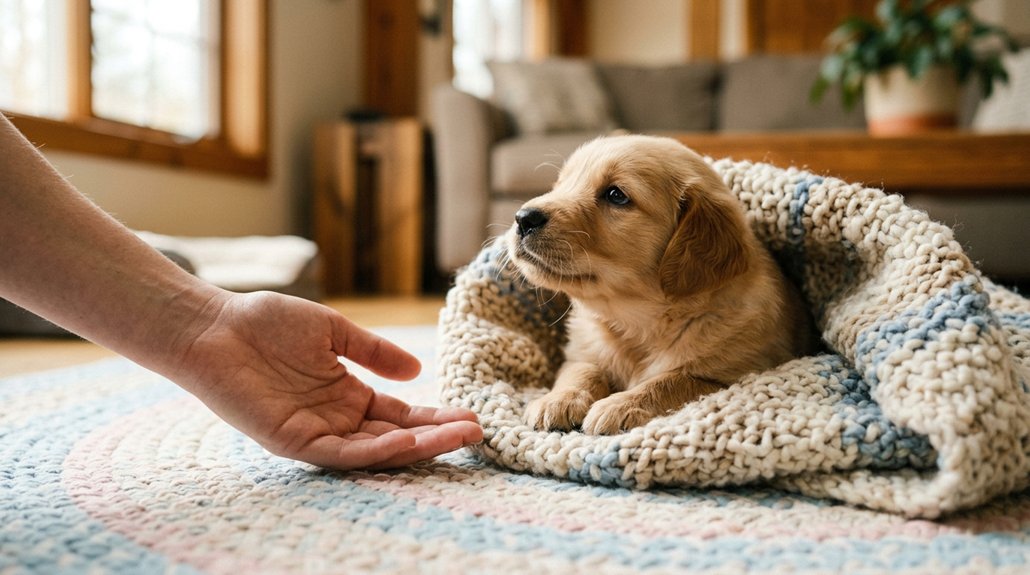
To build trust with your new puppy, create a safe, calming environment with familiar scents and a designated retreat space. Establish a consistent routine to provide predictability and security. Reward good behavior with treats and praise to encourage positive actions. Spend quality time playing and gently grooming to nurture your bond. Respect their personal space, letting them come to you. Understand their body language to guarantee comfort, and explore new experiences at their pace. Discover even more insights ahead.
Key Takeaways
- Create a safe space with comforting items where the puppy can retreat and feel secure.
- Establish a consistent daily routine to provide predictability and reduce stress for the puppy.
- Use positive reinforcement, like treats and praise, to reward good behavior and build confidence.
- Dedicate regular playtime and gentle interactions to foster trust and strengthen your bond.
- Respect the puppy’s space by allowing it to initiate contact and gradually introducing interactions.
Create a Safe Environment for Your Puppy
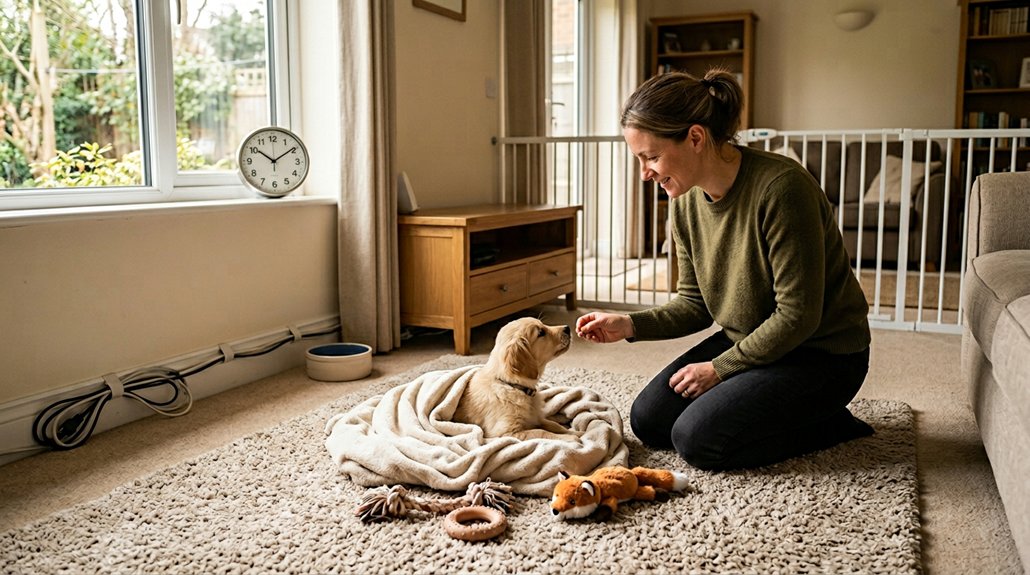
When bringing a new puppy into your home, ensuring they have a secure environment is key to building trust. Start by providing a designated safe space, like a crate or playpen, where they can retreat from household activity. Equip this area with comforting items such as blankets, toys, and familiar scents to make them feel at home. Limit exposure to overwhelming stimuli like loud noises, which can prevent anxiety during their initial adjustment phase. Gradual interactions within this safe space are essential. Allow your puppy to observe you regularly without pressure, and use gentle handling alongside positive reinforcement to build trust. These efforts will foster a sense of security and comfort, effectively laying the groundwork for your puppy’s future confidence.
Establish a Consistent Routine for Security
To build trust with your new puppy, establishing a consistent routine is essential. Predictable daily activities, like scheduled mealtimes and regular walks, enhance your puppy’s sense of security and help reduce anxiety. By maintaining consistency, you’ll not only make training easier but also strengthen the bond between you and your puppy.
Predictable Daily Activities Enhance
Establishing a consistent daily routine for your puppy lays the groundwork for a secure and predictable environment, which is vital for reducing anxiety during their adjustment phase. Incorporate playtime activities and training sessions at the same times each day to create a rhythm that fosters stability and comfort. This predictability helps your puppy better understand boundaries, minimizing unwanted behaviors that can stem from uncertainty. Engaging in regular handling and touch sessions not only reinforces calmness but also strengthens their trust in you. Consistency in these activities eases the shift into new environments by diminishing stress from unpredictability. Over time, predictable daily activities will nurture a profound bond, as shared experiences and routine interactions cultivate positive associations and deepen your connection.
Schedule Mealtimes and Walks
Integrating consistency into your puppy’s life goes beyond scheduled play and training sessions. Establish a routine with mealtime benefits by feeding them at designated times daily. This promotes healthy digestion and fosters good eating habits, creating a predictable structure puppies thrive on. Reliable walk integration is equally essential, as it aids potty training and builds familiarity with their surroundings. Choose a regular time for walks to reinforce their understanding of when and where they can relieve themselves. This defines their environment, supporting a secure adjustment to your home and family. By meeting their essential needs on this set schedule, you build trust, forming a solid bond with your puppy. They’ll come to rely on you and find security in your consistency.
Consistency Reduces Pet Anxiety
While your new puppy may initially feel unsettled in their new surroundings, establishing a consistent daily routine can markedly reduce anxiety. By setting regular times for feeding, potty breaks, and playtime, you create predictability that alleviates anxiety signals in your puppy. Puppies thrive when they know what to expect, which builds a sense of safety important for their development.
Consistency in handling and interactions during these routine times encourages trust and comfort. It’s vital to incorporate socialization strategies within these routines to further reduce anxiety, as they help puppies become familiar with different environments and people. Gradually introducing training commands during routine activities fosters confidence and cooperation. This structured approach not only aids in successful potty training but also strengthens your bond, ultimately easing your puppy’s adjustment.
Reward Your Puppy’s Good Behavior
One key to building trust with your new puppy is to reward their good behavior consistently. Utilizing treat variety keeps training sessions exciting, ensuring your puppy remains motivated. Engage them with training games, mixing in their favorite toys and special treats. This strategy creates a positive association with desired actions, reinforcing what’s expected of them.
Be sure to celebrate even small successes with immediate rewards like praise or playtime. This approach helps them connect specific behaviors with positive outcomes more effectively. Start with simple commands and gradually tackle more complex tasks, ensuring a secure and trusted learning environment where your puppy can thrive. Your consistent positive reinforcement builds their confidence and establishes a foundation of trust between you and your furry friend.
Dedicate Time to Strengthen Your Bond
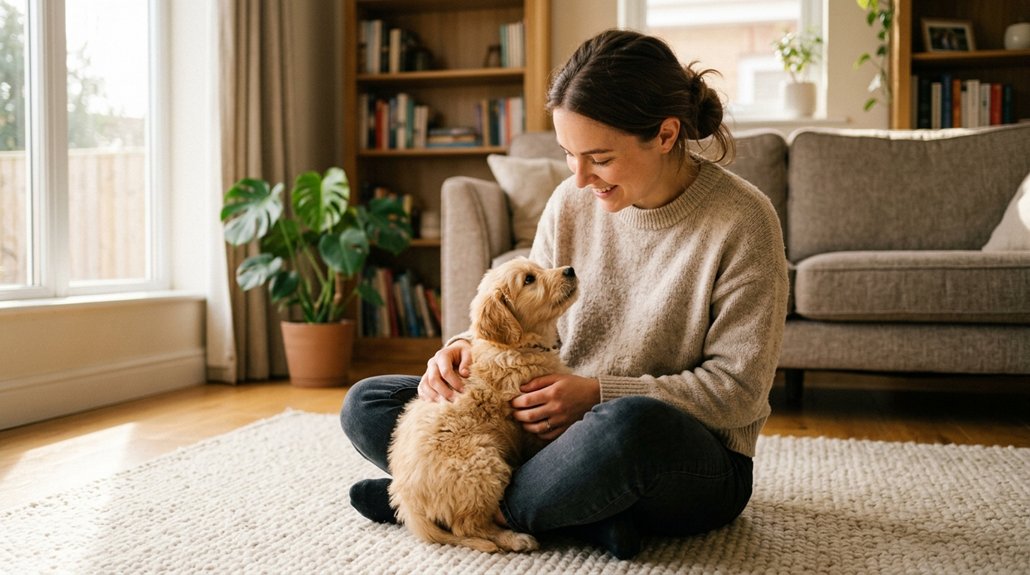
To strengthen your bond with a new puppy, invest time in regular play, walks, and gentle interactions that promote trust and security. By engaging in daily playtime activities and bonding games, you create a fun and positive environment that reinforces their emotional connection to you. Incorporate:
Invest time in regular play and gentle interactions to promote trust and strengthen your bond with your new puppy.
- Gentle grooming sessions to foster trust and prepare them for future handling.
- Consistent routines to provide predictability, helping them feel secure.
- Patience and presence, allowing them to gradually open up and build a deeper connection.
Spending quality time each day helps your puppy associate you with enjoyable experiences, enhancing their sense of safety and confidence. Your dedication and patience are key to nurturing this bond, leading to a fulfilling, trusting relationship over time.
Respect Their Space and Let Them Come to You
After dedicating time to bond with your puppy, it’s equally important to respect their space and let them come to you. Provide a designated safe space, like a crate or comfy bed, so your puppy introvert can retreat and feel secure. Using a gentle approach, allow them to initiate contact, facilitating trust and comfort in their new home. Pay attention to their body language; sitting sideways or kneeling creates a non-threatening atmosphere. Gradually introduce interactions to foster confidence.
| Observation | Action |
|---|---|
| Puppy retreats | Give them space |
| Puppy approaches | Offer gentle interaction |
| Puppy avoids eye contact | Sit or kneel quietly |
Respecting their solitude prevents stress and builds a trusting relationship over time.
Gently Groom to Build Comfort
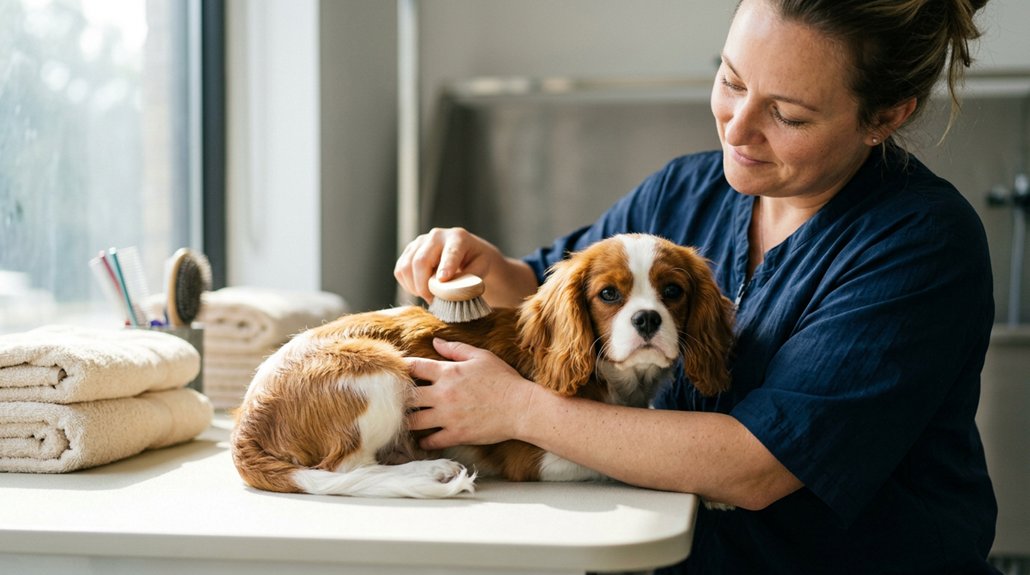
Establishing routine grooming practices will help your puppy feel secure and relaxed, promoting a positive experience through gentle touch. Start with short, frequent sessions to build familiarity and gradually increase duration as comfort grows. Use treats and praise to encourage positive habits, reinforcing the idea that grooming can be a pleasant and calming part of your puppy’s routine.
Establish Routine Grooming Practices
Grooming essentials, like brushes and combs, can become tools for nurturing trust with your new puppy. Introduce these grooming tools gradually to reduce anxiety. Let your puppy sniff and explore them. Establishing a consistent grooming routine not only eases anxiety but builds familiarity and trust.
Consider these steps to create a positive grooming experience:
- Start with treats and praise: Reward your puppy’s calm behavior to reinforce a positive association.
- Focus on less sensitive areas first: Gently groom areas like the back before tackling paws or ears.
- Be consistent: Regular, gentle sessions foster security and predictability.
Consistency and patience are key. By following these practices, you’ll create a calming environment where your puppy feels secure, building trust over time.
Promote Relaxation Through Touch
Creating a bond of trust and comfort with your puppy often starts with the power of touch. Regular, gentle grooming sessions not only help your puppy get used to touch, but also calm them through soothing techniques. Pay close attention to your puppy’s reactions to determine what they enjoy, whether it’s ear scratches or belly rubs. Use positive reinforcement by offering treats and praise during these times to strengthen your connection. Routine grooming provides relaxation and prepares them for smoother vet or grooming visits.
Here’s a quick guide to different soothing techniques:
| Technique | Observation | Action |
|---|---|---|
| Ear scratches | Calm response | Continue, provide treat |
| Belly rubs | Relaxed posture | Offer praise, gentle rub |
| Gentle brushing | Eases tension | Gradual exposure, reward |
This encourages trust and comfort, ensuring your puppy feels secure in your care.
Encourage Positive Grooming Habits
Although it might seem intimidating at first, developing positive grooming habits with your puppy is essential for lasting trust and mutual comfort. Gentle grooming techniques serve as effective trust building activities, fostering a bond through positive interactions. Start by slowly introducing grooming tools like brushes and nail clippers, ensuring your puppy links them to positive experiences rather than stress.
- Reward calm behavior with treats and praise during grooming, which encourages cooperation.
- Begin with brief sessions, gradually increasing duration to prevent overwhelming your puppy.
- Regular grooming maintains your puppy’s physical health and prepares them for future visits to the vet or groomer.
Ease Into New Experiences
When introducing your new puppy to the world, gradually exposing them to new experiences can prevent overwhelming feelings and promote unwavering confidence. Utilize socialization strategies that incorporate gentle introductions, breaking each experience into small, manageable steps. This approach allows your puppy to acclimate at their own pace, fostering a sense of security. Always offer positive reinforcement, like treats or praise, reinforcing their bravery and curiosity as they encounter new environments. Your consistent encouragement is vital, helping them view you as a trustworthy and supportive companion. It’s important to monitor their reactions, adjusting your approach if needed to guarantee a positive encounter. By respecting their individual pace and offering gentle guidance, you’ll help your puppy build enduring trust and confidence.
Understand Your Puppy’s Body Language
Reading your puppy’s body language is essential for understanding their emotions and ensuring a strong relationship. To interpret their feelings accurately, focus on tail wagging signals and posture cues. A wagging tail often reveals excitement, yet a tucked tail can indicate fear or submission. Here’s how to interpret these cues effectively:
- Posture cues: An upright stance with ears perked signals curiosity or confidence, while a lowered posture suggests anxiety.
- Stress indicators: Look for yawning or lip licking; these can reveal discomfort, prompting you to enhance your approach.
- Invitation to play: Recognize a loose body and play bow as friendly gestures encouraging interaction, unlike a stiff stance, which can show tension.
Regular observation builds trust and communication, fortifying your bond over time.
Frequently Asked Questions
How Long Does It Take for a New Puppy to Trust You?
Building bonds with a new puppy typically takes around three months. Establishing routines helps expedite this process. Remember, consistency and patience are key. With time, you’ll see your puppy grow comfortable and trust will naturally develop.
What Is the 7 7 7 Rule for Puppies?
The 7-7-7 rule for puppies involves a progressive timeframe: seven days for adjusting, seven weeks for learning routines, and seven months for settling. Focus on puppy bonding and trust-building techniques to enhance this essential adaptation period.
What Is the 3-3-3 Rule With Puppies?
The 3-3-3 rule explains how puppies adapt over three days, weeks, and months. During this period, focus on puppy bonding and trust-building by creating a routine, providing comfort, and showing consistent patience and affection.
What Is a Red Flag Behavior in Puppies?
A puppy’s fearful reactions, like they’re facing a pack of wolves, are concerning. Aggressive tendencies, socialization issues, and training struggles signal red flags. Monitor their attachment styles, playfulness levels, and communication signals to guarantee balanced health and adjustment.
Conclusion
Building trust with your new puppy is like weaving a delicate tapestry, where each thread of care and patience strengthens your bond. By creating a safe haven, maintaining routine, and rewarding good behavior, you’re crafting a masterpiece of mutual respect. Dedicate time to blossom your connection and let their curiosity guide you. With gentle grooming and understanding their signals, you’ll foster a relationship that’s as harmonious as a symphony, filled with love and trust. You’re on a rewarding journey together.