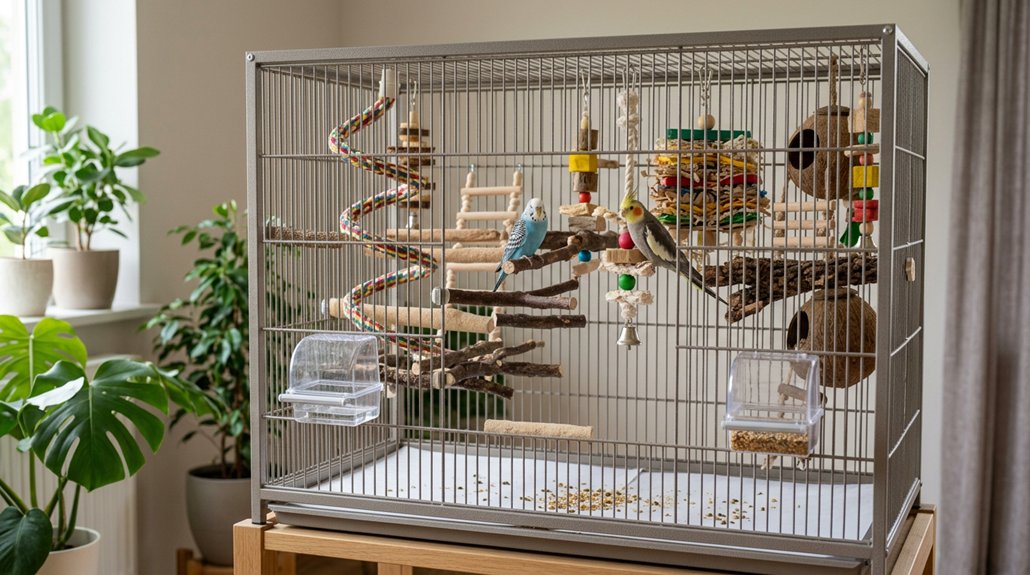
For small and medium pet birds, choose a cage that is at least 1.5–2 times the bird’s wingspan, with usable space left after perches and dishes are added. Use a rectangular cage with horizontal bars and safe spacing matched to size. Pick stainless steel or intact powder-coated metal only. Add 3–6 varied perches, place bowls mid-height, and keep the cage at eye level in a quiet, draft-free area. More details can improve comfort and safety.
Key Takeaways
- Choose a rectangular cage with horizontal bars and 1/2-inch or smaller spacing for small birds; 3/4–1 inch suits many medium birds.
- Size the cage by wingspan: allow 1.5–2 times wing span, with extra room after adding perches, bowls, and toys.
- Use stainless steel or intact powder-coated metal, and avoid galvanized, painted, or flaking finishes that can expose toxins.
- Add 3–6 varied perches, keep food and water bowls mid-height and apart, and rotate enrichment toys regularly.
- Place the cage in a bright, quiet spot, clean it daily, and provide 10–12 hours of uninterrupted sleep each night.
Choose the Right Bird Cage Size
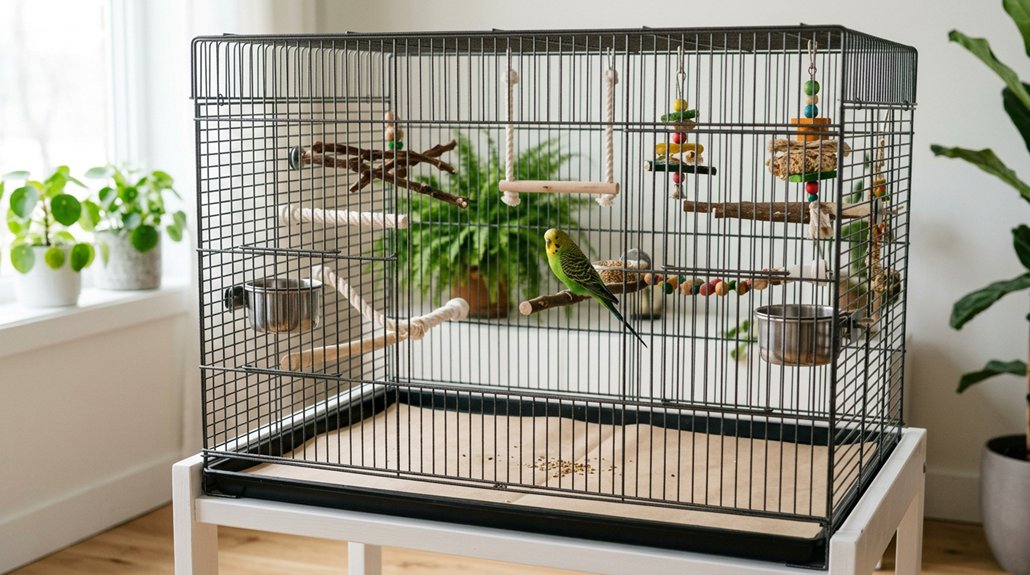
Choosing the right cage size starts with your bird’s wingspan: the cage should be at least 1.5–2 times the bird’s wing span in width so it can fully extend its wings and flap without striking the bars. You should also preserve room clearance after adding perches, dishes, and toys, because usable space—not listed dimensions alone—determines whether your bird can move safely. For a 20-inch wing span, a 30–40-inch wide cage is appropriate. Small birds usually need about 27″ W × 24″ D; budgies, lovebirds, and parrotlets often do best in 27″ W × 24″ D × 24″ H, with a 36-inch flight cage if possible. Mid-size parrots need about 36″ W × 30″ D, while large species need substantially larger enclosures.
Pick a Safe Cage Shape and Bar Spacing
A rectangular cage with horizontal bars is the safest basic shape for most pet birds because it supports climbing and reduces the risk of wings or legs getting caught in converging bars, which is more likely in round or domed cages. You should avoid round cages because their geometry can create hazardous pinch points. Match vertical spacing to your bird’s size: ≤1/2 inch for finches, small parakeets, and budgies; 3/4–1 inch for African greys, cockatoos, and Amazons; 1–1 1/4 inches for larger macaws, with thicker bars. Bar diameter also matters, since overly wide gaps can trap toes or heads, while bars that’re too narrow can impair gripping. Choose a cage with a large front door and secure latches.
Use Bird-Safe Cage Materials
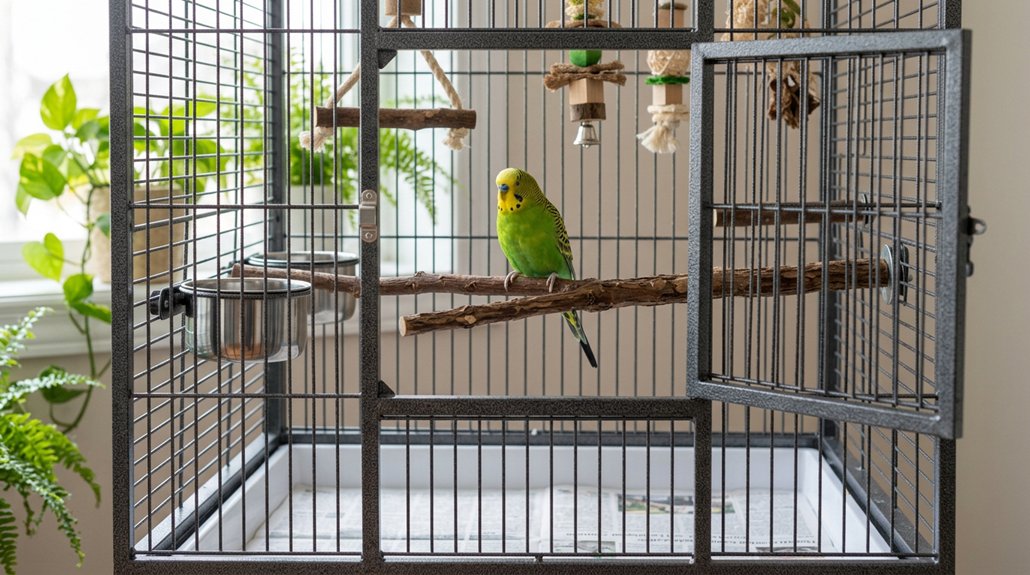
Once you’ve selected a safe cage shape and spacing, the material matters just as much: choose stainless steel or high-quality powder-coated metal, and avoid galvanized cages, painted or plated finishes that can flake, and any cage with unknown coating or visible chipping that could expose lead or zinc.
| Material | Clinical note |
|---|---|
| Stainless steel | Nontoxic, rust-resistant, and durable even if scratched. |
| Powder-coated metal | Acceptable only when the finish is intact and reputable. |
| Galvanized or flaking finishes | Present coating hazards and shouldn’t be used. |
You should inspect bars for smooth welds, rounded corners, and no sharp edges or gaps. For stainless maintenance, clean surfaces routinely and replace damaged parts promptly. Choose removable stainless dishes and trays; avoid acrylic pieces that scratch and harbor bacteria. Keep spare components from reputable manufacturers so you can maintain a safe, low-risk enclosure.
Set Up Perches and Enrichment
Arrange perches and enrichment to support movement, foot health, and behavioral activity: provide 3–6 perches of varying diameters, including natural wood such as manzanita or cholla plus a few textured or rope perches, so the feet use different muscle groups and nails wear more evenly. You should place them at different heights, with at least one secure back perch for rest, and avoid positioning any directly above food or water. Keep clear flight lanes and use horizontal bars or ladder-style layouts to promote climbing and short flights; your cage should let wings extend without contacting the bars. Rotate foraging toys, shredders, and puzzle feeders weekly, and leave 25–30% out of reach to preserve novelty. Skip sandpaper perches; use natural perches, chewable branches, cuttlebone, or a mineral block instead. Sensory toys help prevent boredom.
Place Food and Water Dishes
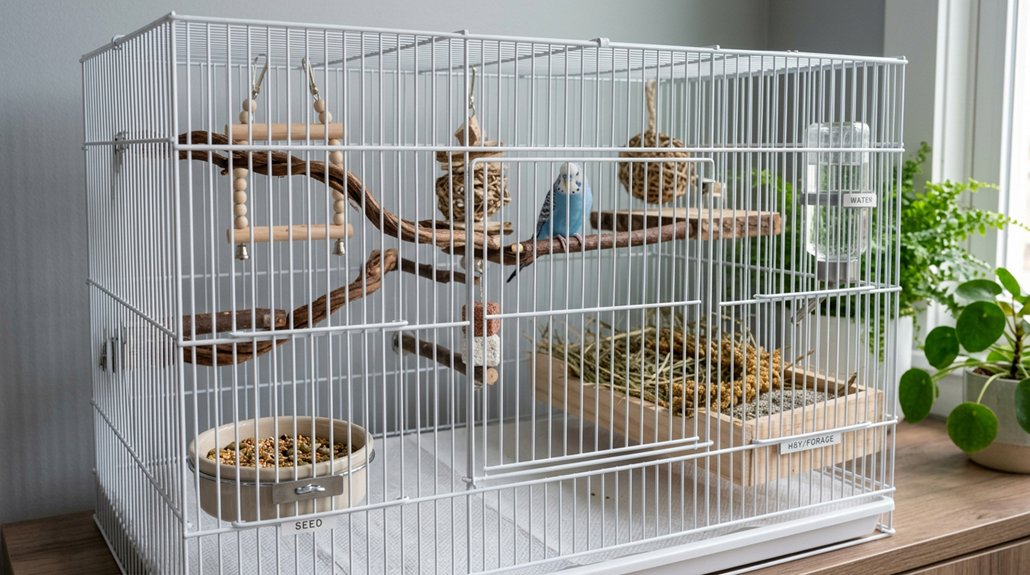
Mount food and water dishes on the cage sides at about mid-height, where they’re less likely to be contaminated by droppings from perches above. You should use secure, removable bowls and make height adjustments so birds can feed comfortably without brushing bars or toys. Provide separate stations for food and fresh water, several inches apart, to limit contamination and competition in multi-bird cages. Stainless steel or ceramic dishes are preferred because they’re bacteria-resistant and dishwasher-safe. Replace water daily and wash bowls thoroughly at least once daily.
| Item | Placement | Rationale |
|---|---|---|
| Food bowl | Mid-height | Lower contamination |
| Water bowl | Separate, nearby | Reduce cross-contamination |
| Decorative feeders | Optional | Must still clean easily |
Add a drip-free splash guard behind bowls when needed, and avoid mounting under shredding toys.
Find the Best Spot for the Cage
Position the cage at or slightly above eye level in a bright, quiet room so your bird can observe household activity without being placed in the center of constant commotion. Choose a site with natural lighting, but avoid direct midday sun, drafty windows, exterior doors, radiators, kitchens, open flames, and nonstick cookware fumes. Keep the cage clear of other pets, toxic houseplants, and tight traffic paths. Provide a few feet of open space around it so your bird can stretch, flap, and move safely without contacting walls or furniture. Mount a thermometer at cage level to track ambient temperature. For calming neighbor interaction and rest, place a perch toward the rear and consider a partial cover on one side for a secure retreat.
Keep the Cage Clean and Comfortable
You should clean food and water dishes daily with hot water, and replace the liner or tray paper each day to limit bacterial and fungal contamination. Use removable trays, grate inserts, and a washable mat to make spot-cleaning efficient, then perform a weekly wipe-down of perches and the cage apron plus a monthly deep-clean with a bird-safe disinfectant. To support a safe sleep environment, keep cleaning products bird-safe, ventilate the area well, and move your bird to another room during disinfecting.
Daily Cleanup Routine
Each day, replace food and water with fresh supplies, rinse and refill dishes, and wipe the outside of bowls to help limit bacterial growth. This routine supports daily disinfecting and odor control by reducing residue and moisture. Use this checklist:
| Task | Purpose |
|---|---|
| Remove droppings | Limits ammonia buildup |
| Replace tray liner | Improves odor control |
| Wipe surfaces | Removes grime |
Each morning, clear visible droppings and refresh the paper liner, or wash the removable tray. As needed, clean perches, toys, and bar fronts with a bird-safe cleaner or 1:10 diluted vinegar solution. Empty the apron or grate area where fallout collects, and sweep or use a cage mat beneath the cage. Finally, check latches, remove damaged items, and rotate clean enrichment so your bird’s environment stays sanitary and secure.
Safe Sleep Environment
For a safe sleep environment, your bird should get 10–12 hours of uninterrupted rest each night, so cover the cage with a breathable, light-blocking cover or place it in a quiet, dark room away from household traffic. Avoid night lighting, and if ambient sound is unavoidable, use white noise machines to mask sudden disturbances.
- Place one perch near the back for a sheltered sleeping site.
- Add another perch at a different height to reduce foot fatigue.
- Clean food and water dishes daily; replace the liner daily.
- Deep-clean monthly with a bird-safe cleaner, and rinse thoroughly.
Keep the cage away from kitchens, direct sun, drafts, and aerosol cleaners to limit toxic exposure and help prevent respiratory and skin irritation.
Frequently Asked Questions
What Is the 3 3 3 Rule for Birds?
The 3-3-3 rule means you’ll give a new bird 3 days to settle, 3 weeks to explore, and 3 months to build trust. It reflects typical behavioral patterns and a gradual training timeline.
Do Birds Prefer Tall or Wide Cages?
You’ll usually find birds prefer wide cages, since horizontal room supports wing extension, short flights, and climbing. Taller cages can help some species, but you should prioritize perch placement and visibility access to keep flight lanes open.
What Sounds Do Parrots Hate?
Parrots hate sudden bangs, high-pitched alarms, repetitive mechanical noises, hissing, growling, and nighttime disruptions; your bird’s auditory sensitivity drives noise aversion, so you should minimize unpredictable sounds and protect 10–12 hours of quiet sleep.
How Do You Discipline a Parrot?
You discipline a parrot with positive reinforcement and consistent routines: reward wanted behavior immediately, redirect biting or screaming to a toy or cue, ignore safe attention-seeking, and avoid yelling, which’ll increase fear and aggression.
Conclusion
To sum up, choosing the right cage setup for your small or medium bird is not just a preference; it is a welfare requirement. When you match cage size, shape, spacing, materials, enrichment, placement, and hygiene to your bird’s needs, you reduce stress and support healthier behavior. Think of the cage as your bird’s foundation: if it’s stable, everything else can flourish. Careful setup isn’t extra—it’s essential to your bird’s daily well-being.