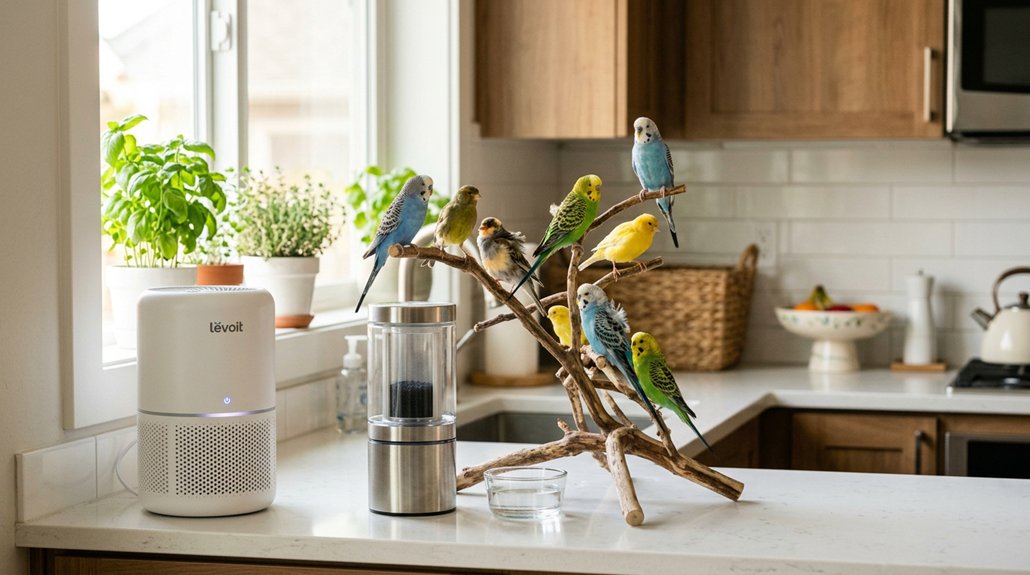
You control bird odor and mess best by removing waste, moisture, and dander every day. Change cage liners daily, spot-clean droppings and wet food immediately, and wash dishes in hot, unscented soapy water, then dry them fully. Sweep or vacuum seed hulls and feathers from the cage area, and avoid scented sprays, candles, and incense. Use a HEPA purifier and bird-safe cleaners for deep cleans. A few setup changes can make upkeep even easier.
Key Takeaways
- Change cage liners daily and replace them immediately if wet, soiled, or moldy.
- Wash food and water dishes every day with hot, unscented soapy water, then dry them completely.
- Remove wet or uneaten fresh food after each meal to prevent mold and bacterial growth.
- Use washable mats or liners under the cage to catch seed, hulls, and droppings for easier cleanup.
- Sweep or vacuum the surrounding area daily and use a HEPA air purifier for dander and odor control.
Clean Bird Cages Daily
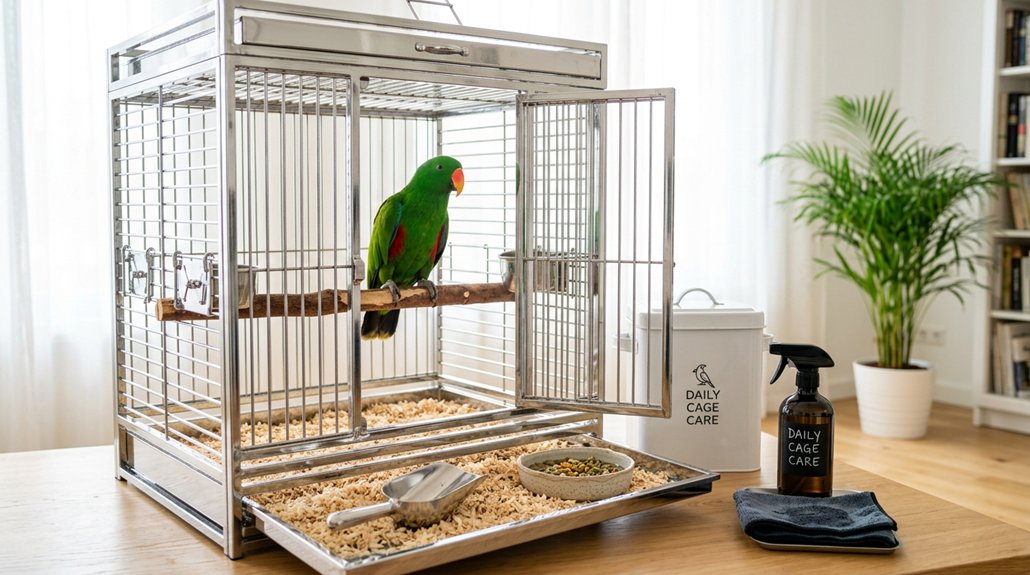
Cleaning the bird cage daily is essential for controlling odor and reducing microbial growth. You should replace the cage liner or remove the top layer of a stacked system every day so droppings and food residue don’t accumulate. Wash food and water dishes in hot, unscented soapy water, then dry them completely before return. Remove wet or perishable food after mealtime, and spot-clean soiled perches, toys, and seed pans to limit moisture-driven odor. Your cage layout should allow efficient access for this routine. During daily enrichment, inspect surfaces for contamination. Sweep or vacuum the mat and surrounding floor daily to collect feathers, hulls, and debris. Wipe bars, trays, and removable parts weekly with a bird-safe, fragrance-free cleaner or dilute vinegar to prevent stubborn buildup.
Change Bird Cage Liners Before Odors Build
You should change the cage liner daily to prevent droppings and wet food from fermenting and producing odor. If the liner becomes wet, soiled, or moldy, replace it immediately because moisture can accelerate bacterial growth within 24–48 hours. Use plain paper liners and keep the cage base dry to minimize odor formation and surface contamination.
Daily Liner Changes
Daily, the cage liner should be changed before droppings and wet food begin to decompose and generate odor. You should use plain newspaper or unprinted paper liners for liner placement, because clay litters and scented papers can release dust or irritants that affect avian airways. If you use stacked liners, remove the top layer each day. Replace any liner immediately if it’s wet or visibly soiled, since moisture supports mold and bacterial growth that intensify “birdy” smells. Keep spare liners beside the cage so the task stays routine; odor tracking becomes easier when liner changes are done at the same time each day. In about 18 days, this habit can become automatic. Pair liner changes with spot-cleaning of perches and dishes to reduce organic debris.
Prevent Moisture Buildup
Moisture control is the next step in limiting cage odor, because wet liners accelerate bacterial and mold growth. You should change paper liners daily, or lift off the top layer in a stacked system, before droppings and food residue sour.
- Replace liners immediately after spills, wet spots, or soaked seed hulls; bacteria can double overnight.
- Use absorbent, low-dust paper, such as newspaper or plain kraft paper.
- Keep dishes and perishable food off the liner when possible, and remove uneaten fresh food promptly.
- During absences, leave pre-cut liners, instructions, humidity monitors, and desiccant packets for sitters.
In warm, humid conditions, you’ll need more frequent spot checks to prevent saturation and odor buildup.
Rinse Dishes And Food Bowls Every Day
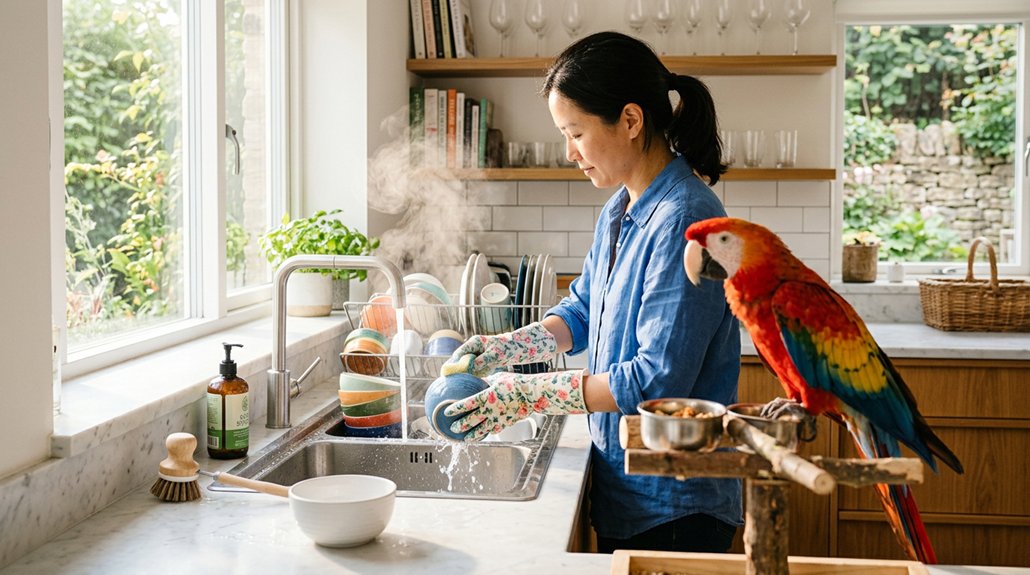
You should wash seed and water dishes every day in hot, soapy water to remove oils, droppings, and bacterial residue that contribute to odor. You should also remove any wet or uneaten fresh food after each meal, since it can ferment and generate smell. After rinsing, dry each bowl thoroughly before returning it to the cage to reduce moisture-related microbial growth.
Daily Dish Washing
Rinse and wash seed dishes, fresh food bowls, and water bottles every day in hot, soapy water with unscented dish soap to remove oils and food residue that can support bacterial growth and odor. This routine supports bacterial prevention and reduces contamination risk.
- Dry every dish completely before you return it to the cage; residual moisture can promote mold and microbial growth.
- Use dish rotation for plastic or porous bowls, and inspect them for scratches, pitting, or biofilm buildup.
- Replace worn dishes promptly to maintain sanitation and limit odor retention.
- Keep one dedicated scrub brush for bird dishes, and sanitize it weekly with a bird-safe disinfectant.
You’ll maintain a cleaner feeding area and improve overall hygiene.
Remove Wet Food
Wet and fresh foods shouldn’t stay in the cage for long, because fruits, vegetables, soaked pellets, and cooked items can begin supporting mold and bacterial growth within 30 to 60 minutes, which also increases odor. You should remove uneaten portions promptly to support spoilage prevention and limit microbial load. If you offer soaked foods, use soaked portion management by replacing small servings every 2 to 4 hours instead of leaving large amounts available all day. For seed-eating birds, empty and rinse seed cups daily, and discard hulls or uneaten seeds before they sour or attract pests. Choose stainless steel or ceramic dishes when possible, since they’re non-porous and easier to clean. Wash bowls and water dishes daily in hot, soapy, unscented water, then dry them completely before returning them to the cage.
Sweep Up Seed, Feathers, And Dander
Daily removal of seed, feathers, and dander reduces odor production and limits airborne particulates. You should place washable floor protection under the cage, and align it with perching placement to catch 80–90% of spilled seed and hulls.
- Sweep or vacuum the surrounding floor daily for 2–5 minutes; this prevents buildup.
- Use a handheld HEPA vacuum or broom and dustpan; standard vacuums can re-aerosolize fine debris.
- Replace paper liners or their top layer each day to stop compacted waste from generating odor.
- Spot-clean scatter zones and areas under perches immediately after meals or shredding.
This routine supports noise reduction by reducing the need for prolonged cleaning, and it complements air purifiers by lowering the particulate load they must capture.
Skip Scented Sprays, Candles, And Incense
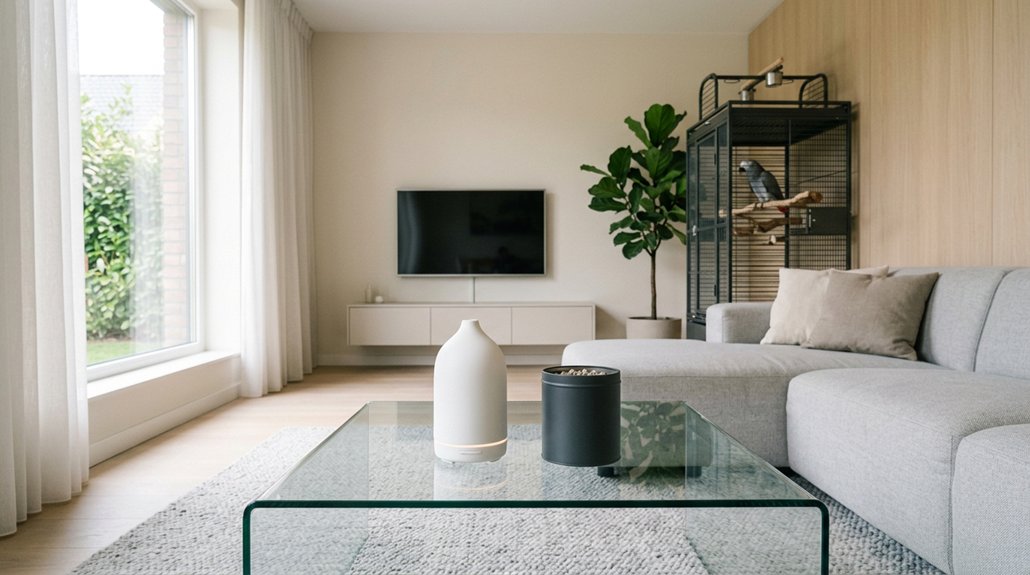
Skip scented sprays, candles, plug-in air fresheners, and incense in any room where a bird spends time, because these products release volatile compounds and fragrance particles that can inflame the respiratory tract and may be toxic to avian species. Birds absorb airborne contaminants quickly, so even low exposure raises respiratory risks. To avoid fragrances, use bird-safe, odor-neutralizing cleaners and treat the source of waste, not the smell.
| Product | Effect on birds |
|---|---|
| Spray | Irritant |
| Candle | Toxic off-gassing |
| Plug-in | Chronic exposure |
| Incense | Inhalation hazard |
| Fragrance | Allergy-like signs |
Scented wax and oils can also linger on fabrics, so they don’t solve odor control. Clean thoroughly instead; masking smells can hide hygiene problems and worsen avian respiratory health.
Improve Airflow Around The Bird Cage
Improve airflow around the cage by placing it near a window or another cross-ventilation path so indoor air is exchanged regularly, but keep the bird out of direct drafts and avoid temperature swings greater than 10–15°F (5–8°C). Your window placement should support steady air exchange, not turbulence. Use air purifier sizing matched to the room’s square footage; a HEPA unit can reduce dander and odor-causing particles without fragrances or ozone.
Place the cage near gentle cross-ventilation, and use a properly sized HEPA purifier to reduce dander and odors.
- Open windows briefly several times daily when outdoor air is clean.
- Keep the cage off closets, basements, and other enclosed rooms.
- Run a low-speed oscillating fan only when the bird’s inside, and place it safely away.
- Make certain at least one exterior wall has circulation.
Choose Bird-Safe Products For Deep Cleans
When you deep-clean a bird’s environment, choose products that neutralize odor and bacteria without introducing respiratory hazards. Prefer vet-recommended, bird-safe cleaners such as Oxyfresh Cage & Crate Cleaner; its Oxygene® system, like enzyme cleaners, targets odor without bleach, ammonia, or fragrance, and it doesn’t require rinsing. | Product | Use |
| — | — |
|---|---|
| Oxyfresh cleaner | Cage surfaces |
| Unscented soap | Disassembled parts |
| Hot water | Soaking |
| Bird-safe neutralizer | Fabrics/toys |
| Unscented detergent | Washing textiles |
Avoid Lysol wipes, air fresheners, bleach, and scented candles; volatile compounds can inflame airways or poison birds. For deep cleans, soak dishes, perches, and stainless-steel parts, rinse thoroughly, and air-dry fully. Never rely on professional fumigation, PTFE appliances, or heat tools near birds; fumes can off-gas and contaminate the air.
Set Up The Cage For Faster Cleanup
A well-designed cage setup can reduce contamination and shorten daily cleaning time. Position the cage with elevated placement on a washable mat or tray, ideally rubber-backed vinyl or linoleum extending 2–3 feet around it, so scattered seeds and droppings’re captured for rapid sweep-up.
- Use layered disposable paper liners, replacing the top sheet daily, or install cut-to-fit stainless drop trays to limit moisture retention.
- Mount food and water dishes outside the bars or on removable holders; wash them daily in hot, unscented, soapy water.
- Create a designated mess zone under perches, toys, and foraging stations with heavier-duty paper.
- Select stainless steel, ceramic-coated perches, and washable fabric toys; organize cleaning with color coded gear for efficient handling.
Quick Bird Cage Odor Fixes For Busy Days
Even with a well-organized cage, odor can build quickly on busy days, so the fastest controls are consistent source removal and air management. You should change the liner daily and clear wet food or droppings immediately to limit ammonia and mold. Wash dishes in hot, unscented soapy water, then dry them fully before reuse. Spot-clean perches, toys, and high-traffic areas once daily; leave deeper scrubbing to a weekly bird-safe, fragrance-free cleaner. Use a washable mat under the cage, and vacuum or sweep nearby debris to reduce dander and seed scatter. If ventilation allows, open windows and run a portable air filter with HEPA filtration. Odor absorbing sachets can help nearby spaces, but they don’t replace cleaning. Avoid scented sprays and candles.
Frequently Asked Questions
How to Make a House Smell Good With Pet Birds?
Use air purifiers and skip citrus diffusers, since fragrance can irritate birds. You’ll keep the house fresher by changing liners daily, removing waste promptly, cleaning dishes, improving ventilation, and using bird-safe odor neutralizers on surfaces.
What Is the 3 3 3 Rule for Birds?
You use 3 minutes, 3 times daily, for spot-cleaning and fresh food/water checks, then a 3-step evening reset. It supports behavioral training and cage rotation, limiting waste, moisture, odor, and bacterial buildup.
How to Keep Birds From Being Messy?
You can reduce mess by limiting your bird to a washable no-fly zone, using paper liners, performing daily cage maintenance, offering shallow food dishes, and practicing toy rotation to contain dander, hulls, and droppings efficiently.
What Scents Do Birds Hate to Smell?
Birds detest dense deodorants, disinfectant aerosols, and strong perfumes; citrus aversion is common, too. You’ll notice coughing, retreating, or wing-fluffing. Avoid incense, smoke, bleach, ammonia, and essential-oil vapors to protect their sensitive respiratory systems.
Conclusion
By cleaning the cage daily, you reduce microbial growth and limit odor formation. If you change liners before waste accumulates, rinse bowls each day, and sweep seed, feathers, and dander, you lower environmental contamination. Avoid scented sprays, candles, and incense, which can irritate avian respiratory systems. Improve airflow, use bird-safe cleaners, and design the cage for swift sanitation. With steady, systematic care, you can keep your bird’s space safer, cleaner, and fresher.