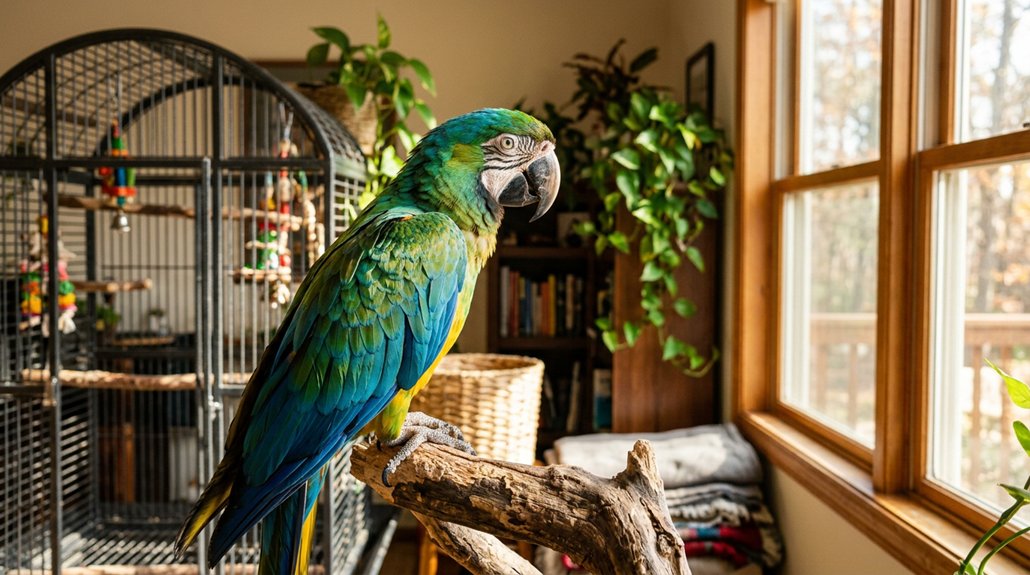
Birds can be good pets if you can meet their daily needs and long-term commitment. You may enjoy the companionship of budgerigars or cockatiels, but they need several hours of social contact, a proper cage, a balanced diet, and regular cleaning. You should also expect noise, bites, mess, and costly avian vet care. Larger parrots can be especially demanding for families. Choosing the right species and setup makes a big difference, and the details matter.
Key Takeaways
- Birds can be affectionate, interactive companions, especially budgerigars and cockatiels.
- They need several hours of daily attention, out-of-cage time, and enrichment.
- Birds can bite, be noisy, and create significant mess in the home.
- Their diets, housing, and health care require specialized knowledge and regular vet visits.
- Some species live for decades, so bird ownership is a long-term commitment.
Are Birds Good Pets for Families?
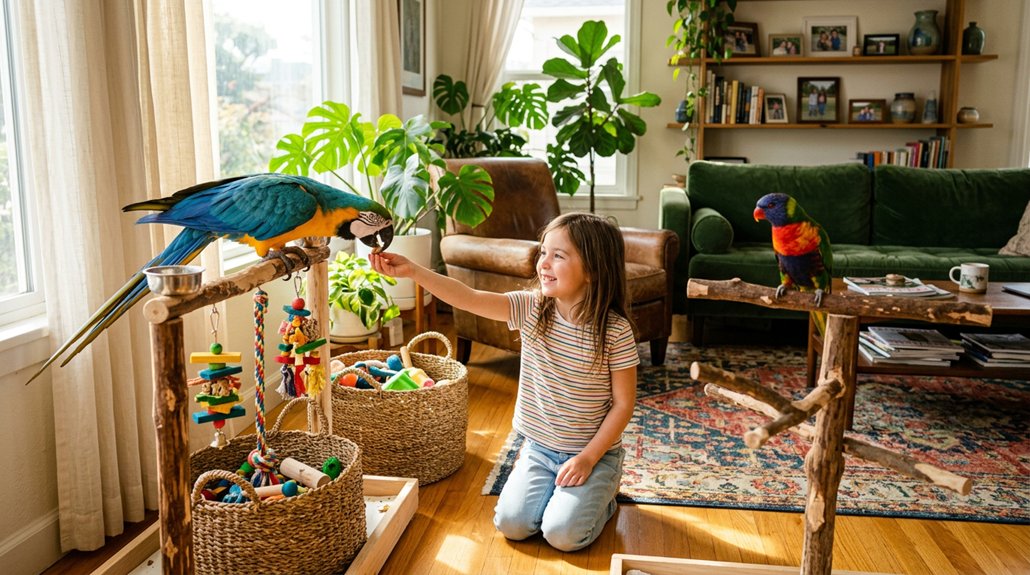
Are birds good pets for families? You can, if you match species to your household and accept the care demands. Budgies and cockatiels often bond well with people and can offer interactive companionship, but larger parrots may be too demanding and bite-prone for young children. For child safety, supervise all contact and teach calm handling. You’ll also need daily social interaction, out-of-cage time, and species-appropriate toys to reduce boredom, feather plucking, and excessive screaming. Your noise tolerance matters, because some birds are loud. Housing must fit the species, and you should confirm cage size with an avian vet or breeder. Expect ongoing costs, and remember that some birds live for decades, so this is a long-term commitment.
What Makes a Bird a Good Family Pet?
A bird can be a good family pet when its species, care needs, and lifespan fit your household. You may do well with budgerigars, cockatiels, finches, or canaries if you want an animal that can show bonding behaviors and, in some species, learn tricks or mimic speech. You should also consider commitment: budgies may live 5-10 years, cockatiels 15-25, and some parrots 40+ years. A suitable pet also needs species-appropriate housing, daily out-of-cage time, and enrichment strategies to reduce boredom and stress. You’ll need to provide balanced food, routine cleaning, and mental stimulation. Because avian veterinary care is specialized and can be costly, you should plan for annual exams and prompt treatment when illness or injury occurs.
What Bird Care Really Looks Like
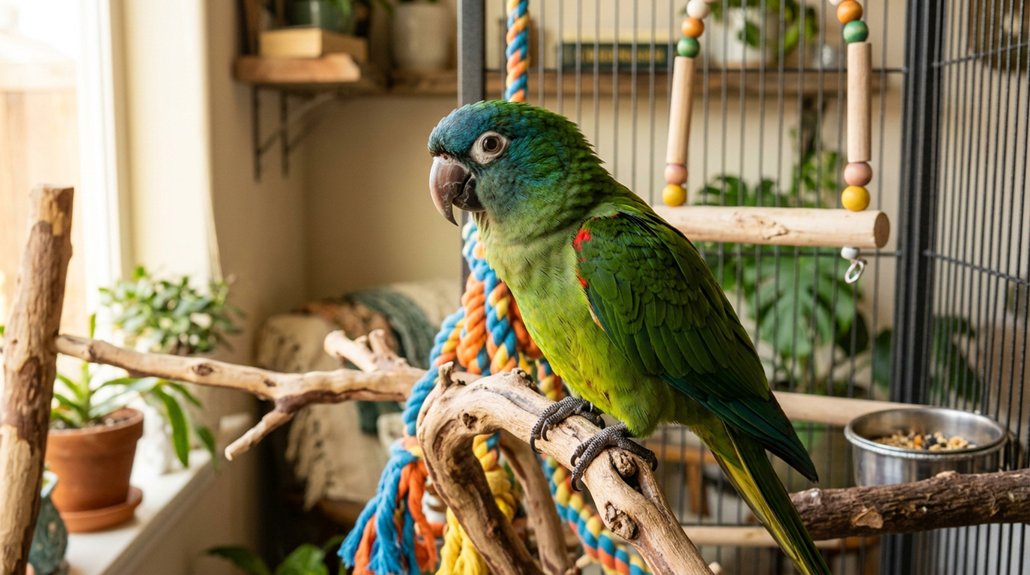
What bird care really looks like is more intensive than many first-time owners expect. You’ll need to provide several hours of out-of-cage time and social contact each day to support daily enrichment and reduce boredom-related behaviors. Your cage should fit the species, with enough room for movement, perches, foraging toys, and safe chewing items. Budgies need at least about 18 x 18 x 24 inches; cockatiels and larger parrots need more space. Species nutrition also matters: seed alone isn’t adequate. You should offer pellets, fresh vegetables, fruit, and limited seeds or nuts, with appropriate calcium and vitamin balance. Daily dish cleaning, fresh water, weekly deep-cleans, and observation for subtle illness signs are essential. Annual avian veterinary care is recommended.
Bird Pet Problems: Bites, Mess, and Vet Costs
Bird ownership can bite back in three predictable ways: painful nips, constant mess, and higher-than-expected veterinary costs. You may see behavioral issues, especially if you ignore warnings or handle birds roughly. Large parrots can break skin; small parakeets can still startle children. Noise levels can be high, and legal restrictions may apply in some areas.
| Problem | Typical effect | Control |
|---|---|---|
| Bites | Pain, blood | Training |
| Mess | Droppings, dust | Daily cleaning |
| Vet care | Several hundred dollars | Savings |
You’ll need spot-cleaning, weekly deep cleaning, and attention to allergen concerns. Emergency care can be urgent and expensive, and delayed treatment worsens outcomes because birds hide illness. Preventive diets, enrichment, large cages, supervised time, and checkups reduce risk, but they demand steady effort and money.
How to Pick the Right Bird
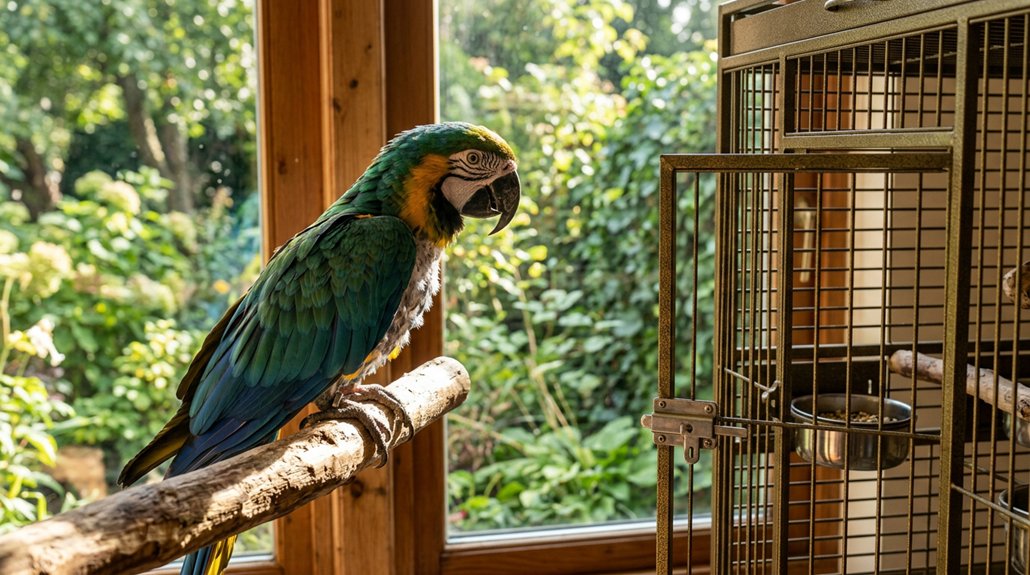
Choosing the right bird starts with matching the species to your home, time, and experience. You should size the cage to the bird: budgies and cockatiels need at least 30–36 inches of width, while conures and amazons need much more space for perches, toys, and cage enrichment. Think about lifespan; a budgie may live 5–10 years, but a macaw can need decades of care. Choose species that fit your noise tolerance and schedule, because parrots need daily out-of-cage contact. Favor captive-bred birds such as budgies, cockatiels, and canaries, since veterinary care is often easier. Check legal restrictions before buying, and review breeding considerations if you want a pair. Also confirm dietary variety and temperament so the bird fits your household.
Frequently Asked Questions
Do Birds Get Attached to Their Owners?
Yes, many birds do get attached to you. Bonding behaviors like following, vocalizing, and seeking contact are common, and imprinting effects can strengthen attachment. Species, socialization, and daily interaction shape how intensely they bond.
Can Birds Be Happy as Pets?
Yes—like a bright ember in a well-kept hearth, you can help birds be happy pets with mental stimulation, social enrichment, proper space, balanced diet, daily interaction, and veterinary care; without these, they’re likely to struggle.
What Is the 3 3 3 Rule for Birds?
The 3-3-3 rule says you give your bird 3 days to settle, 3 weeks to build trust, and 3 months to bond; use training schedules and cage enrichment, and adjust for species.
Conclusion
So, are birds good pets? They can be, if you’re ready for their needs. You should expect daily care, noise, mess, and regular vet visits, along with training and social time. If you choose the right species and match it to your lifestyle, you’re more likely to have a healthy bond. If you’re looking for a low-effort pet, a bird isn’t the whole answer. Do your homework first, so you’re not in over your head.