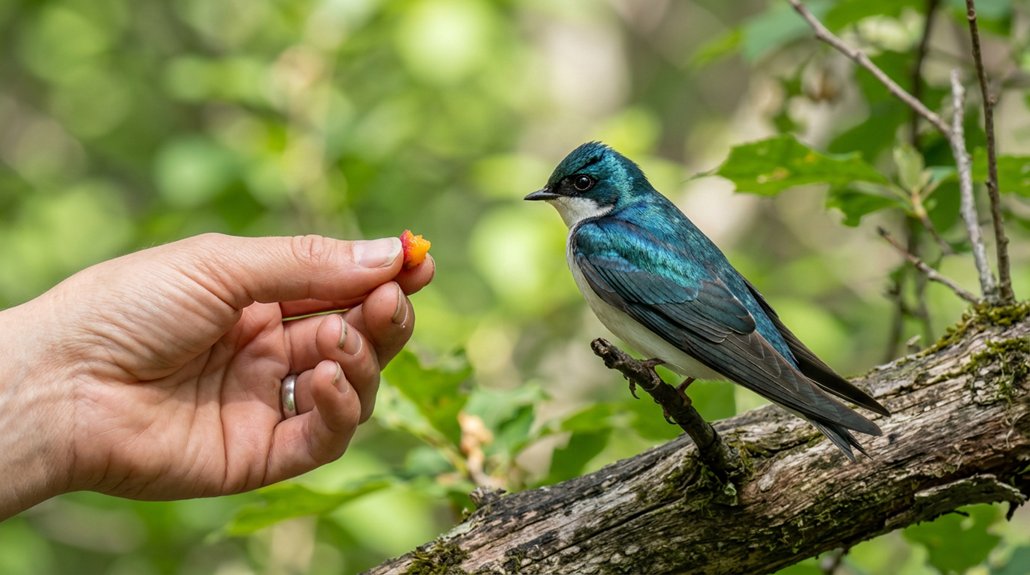
You use positive reinforcement with birds by rewarding the exact behavior you want right away, usually with a tiny high-value treat and a clear marker like a click or word. Start with very small steps, then shape closer versions of the goal. Keep sessions short, frequent, and calm, and use rewards your bird truly values. Watch body language closely, because steady progress comes when you adjust timing, criteria, and motivation. There’s more to refine as you go.
Key Takeaways
- Reward the bird immediately after the desired behavior with a clicker or consistent marker to build a clear association.
- Use tiny, high-value treats like pine nuts or pomegranate seeds, especially before mealtime when motivation is strong.
- Break training into small steps and reinforce each approximation, such as approaching, touching, then stepping up.
- Keep sessions short, frequent, and low-stress, and watch for signs of fear or retreat.
- Add cues only after the behavior is reliable, then fade rewards gradually while reinforcing occasional uncued responses.
What Is Positive Reinforcement Bird Training?
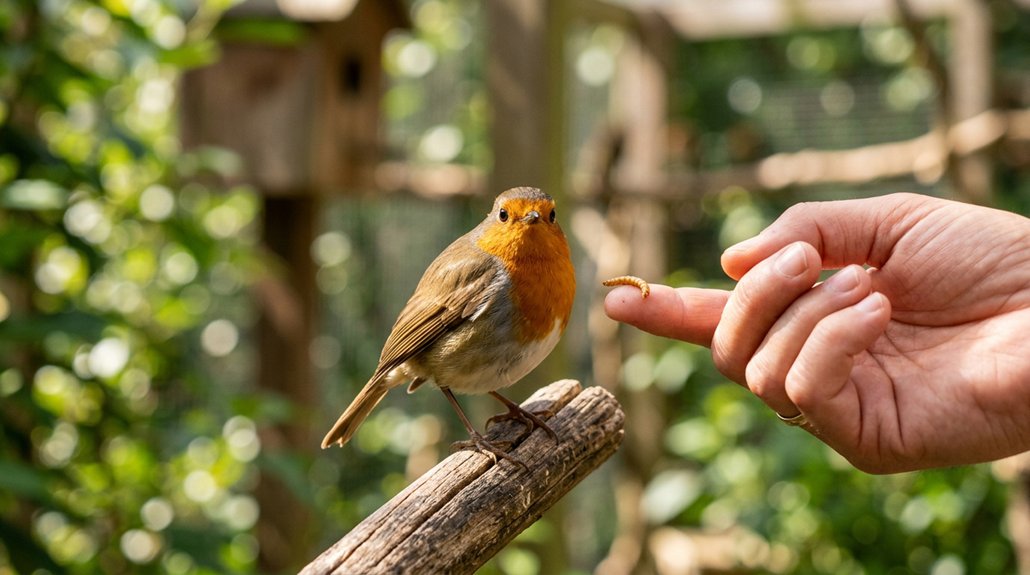
Positive reinforcement bird training is a method in which you give a valued reward—often a favorite food such as pine nuts, pomegranate seeds, or another special treat—immediately after the bird performs a desired behavior, making that behavior more likely to happen again. You use clear timing, often with a clicker or consistent word, so the bird can connect the action to the reward. You’ll usually teach in tiny steps, rewarding each approximation as you shape skills like stepping up or targeting. Short, frequent sessions near mealtime help maintain observable motivation without food deprivation. You should watch body language closely, adjust pace to comfort, and stay within ethical boundaries by avoiding punishment or aversives. This careful approach can build durable behavior, trust, and better welfare.
How to Pick Rewards Birds Truly Value
To find what birds truly value, you should test a few small, high-quality options—such as pine nuts, pomegranate seeds, walnut in shell, or tiny pieces of cooked sweet potato—and note which one they choose first and eat with the most enthusiasm. Use pea- to rice-sized bits so you can repeat pine nut testing several times in a short 2–3 minute session without quick satiation. Watch whether the bird eats while you approach, or flies off with food; that tells you how well the reward reinforces in your presence. Keep the best treats out of the regular diet so they stay special. For harder tasks, save top-tier rewards. Over time, social pairing with gentle attention, scratching, or brief play can make nonfood rewards effective too.
How to Shape Bird Behavior Step by Step
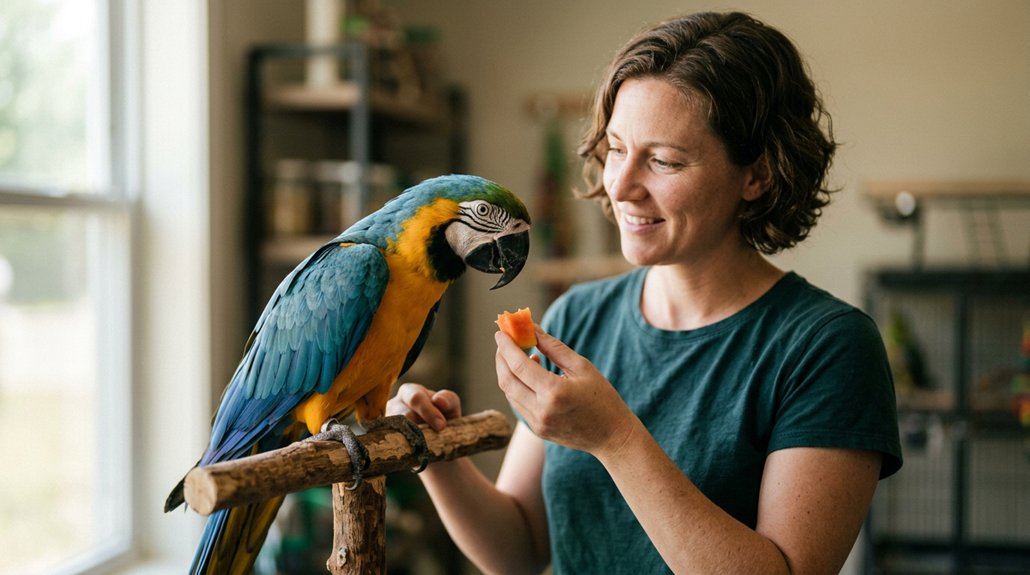
Shape bird behavior by defining the final goal clearly, then breaking it into very small, successive approximations—for example, approach, perch edge, touch target, then step up—and don’t move on until each step is performed consistently. Use tiny trials with tiny food pieces so you can repeat many approach attempts in short sessions, and reward each correct response within one second to strengthen the association.
| Step | What you observe |
|---|---|
| Approach | Bird moves closer calmly |
| Perch edge | Bird stays relaxed and stable |
| Step up | Bird completes behavior reliably |
You can capture spontaneous success, then shape it later. Watch body language for stress: flaring, retreat, or frozen posture mean you should slow down. Keep sessions predictable, brief, and recorded, and end on a reinforced success so confidence grows.
How to Use Cues, Clickers, and Target Sticks
Once a behavior is being offered reliably, you can make your training more precise with a clear bridge and a target. Use a consistent clicker or single-word marker the instant the bird does the desired action, so it can link that moment with food. Before shaping anything complex, pair the click with a high-value treat in several short sessions until it understands the marker through auditory discrimination. Then use a target stick for visual targeting: reward any approach, then ask for touch, beak contact, and a brief hold before raising criteria. Introduce verbal and hand cues only after the behavior’s stable. Keep trials short, fast-paced, and reinforced with tiny food pieces, and record each session so you advance only after consistent mastery. Gradually fade the bridge by rewarding occasional uncued responses.
Common Bird Training Problems and Fixes
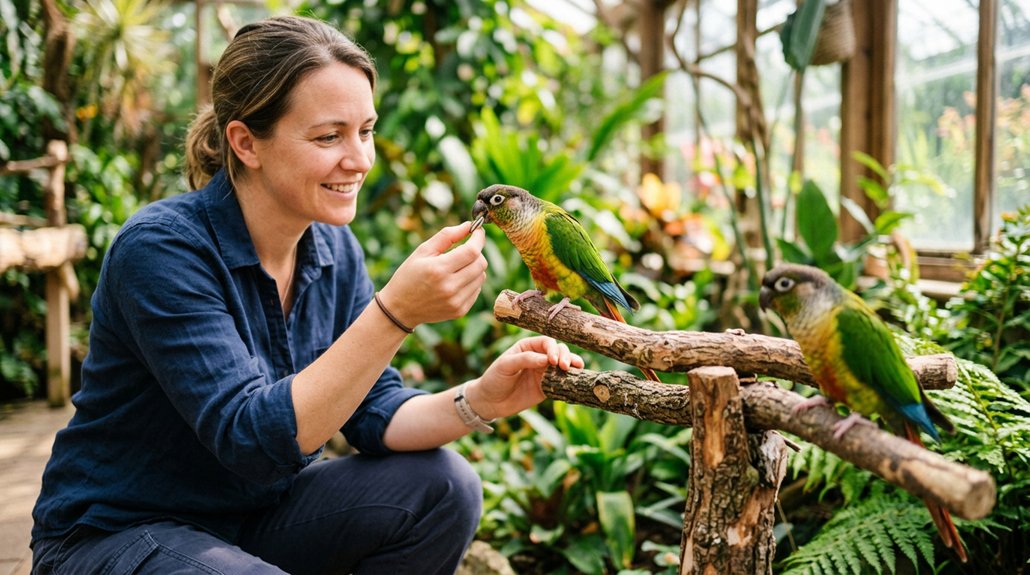
When training stalls, the fix is usually in the setup, not the bird. If your bird flies off with food or avoids you, use much smaller treats and deliver them faster to raise trial frequency and reduce escape time. If it retreats from an extended hand or perch, shape tiny steps: orient, head turn, then one step closer, with mastery at each stage. Fearful or biting birds do better in a familiar enclosure or quiet room, with highly preferred treats reserved for training and sessions kept to 5-20 minutes. For screaming, use attention extinction: don’t reinforce it, and pay for a quiet alternative cue instead. Track trials, food size, timing, and motivation; adjust when performance drops or avoidance escalation appears.
Frequently Asked Questions
What Is the 3 3 3 Rule for Birds?
It’s a settling timeline: 3 days to recover in the cage, 3 weeks to learn household routines, and 3 months for full training. You’ll watch behavioral cues and adjust training milestones patiently.
What Is the 60/40 Rule for Birds?
The 60/40 rule means you’ll keep your training balance at about 60% rewards and 40% neutral responses. You’ll watch reward timing closely, logging sessions so you can adjust carefully as your bird’s behavior changes.
How Do You Say “I Love You to Your Bird”?
You say it with calm consistency: offer soft whistles, gentle preening, and favorite treats when your bird is relaxed. You’ll learn what it likes, then reward closeness, so you’re building trust, not just affection.
How to Mentally Stimulate a Bird?
You can light up your bird’s mind like a puzzle box by offering foraging puzzles, scent enrichment, brief varied training, hidden treats, and rotating toys; you’ll keep curiosity high, prevent fatigue, and encourage problem-solving.
Conclusion
With patience, you can watch your bird learn like a small bright spark lighting up a quiet room. By choosing rewards your bird truly values, shaping behavior in tiny steps, and pairing cues with clear markers like a clicker or target stick, you build trust as well as skill. When setbacks appear, observe carefully and adjust. Positive reinforcement isn’t just training—it’s a calm, scientific conversation your bird can understand and enjoy.