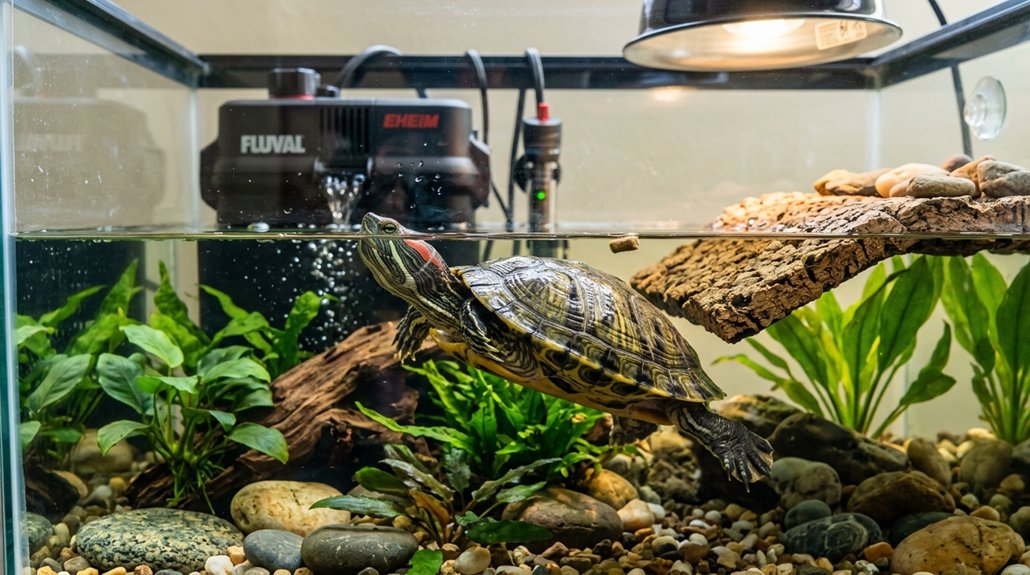
To care for red-eared sliders, provide a tank of at least 40 gallons with proper filtration and water depth double the shell length. Offer a balanced diet reflecting their omnivorous nature: juveniles need more protein, adults require more vegetables. Guarantee regular maintenance with water changes and monitor water quality. Maximize habitat with a basking area, UVB lighting, and temperature control. Watch for health changes like decreased appetite or lethargy. There’s more to discover about their ideal care.
Key Takeaways
- Ensure a minimum 40-gallon tank for adult sliders, increasing size as needed.
- Include a heat lamp for basking; maintain temperatures between 95-104°F with UVB lighting.
- Juvenile diet requires 50% protein daily; adults need 25% protein and 75% vegetables.
- Weekly water changes of 25-50% are essential, alongside a robust filtration system.
- Regularly monitor water quality for ammonia, nitrite, and nitrate to prevent health issues.
Red-Eared Slider Habitat Essentials
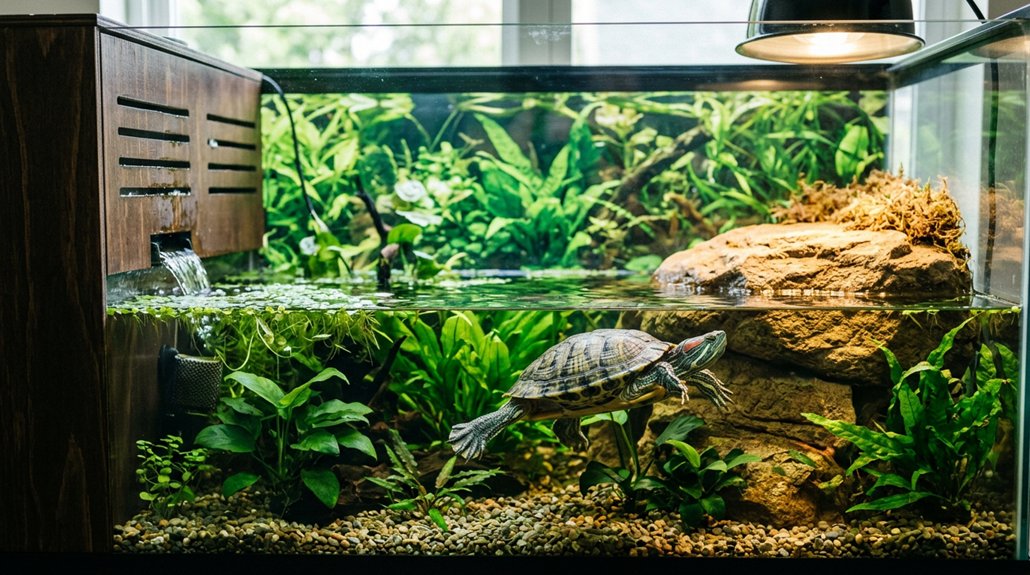
For ideal red-eared slider care, understanding their habitat essentials is essential. Start with the tank size—at least 40 gallons for adult sliders. As they grow, increase the tank size, allocating approximately 10 gallons per inch of shell length. This guarantees ample space for swimming and reduces stress. Water quality requires attention to maintain their health. A depth twice the shell length is needed, facilitating easy swimming and safety. Install a robust filtration system to efficiently manage waste, coupled with weekly water changes (25-50%) to keep water conditions satisfactory. Incorporate a basking area equipped with a heat lamp, maintaining temperatures between 95-104°F, plus UVB lighting on a 12-hour cycle. Each component is crucial for creating a thriving environment.
Balanced Diet for Red-Eared Sliders
When it comes to providing a balanced diet for red-eared sliders, a careful consideration of their omnivorous nature is crucial. For balanced nutrition, guarantee diet variety and proper protein sources. Juveniles thrive on a 50% protein, 50% vegetable mix, while adults require 25% protein and 75% vegetables. Inadequate nutrition can lead to deficiencies. Here’s a dietary breakdown:
| Feeding Stage | Protein Sources |
|---|---|
| Juvenile diet | Offered daily: crickets, shrimp |
| Adult feeding | 1-2 times/week: earthworms |
| Vegetable Options | Daily: kale, collard greens |
| Calcium Supplementation | Cuttlebone for shells |
Calcium supplementation, like cuttlebone, is crucial for shell integrity. Guarantee vegetables and proteins are given in proper ratios. Regularly evaluate your slider’s diet for deficiencies, optimizing their longevity.
Keeping Your Red-Eared Slider’s Tank Clean
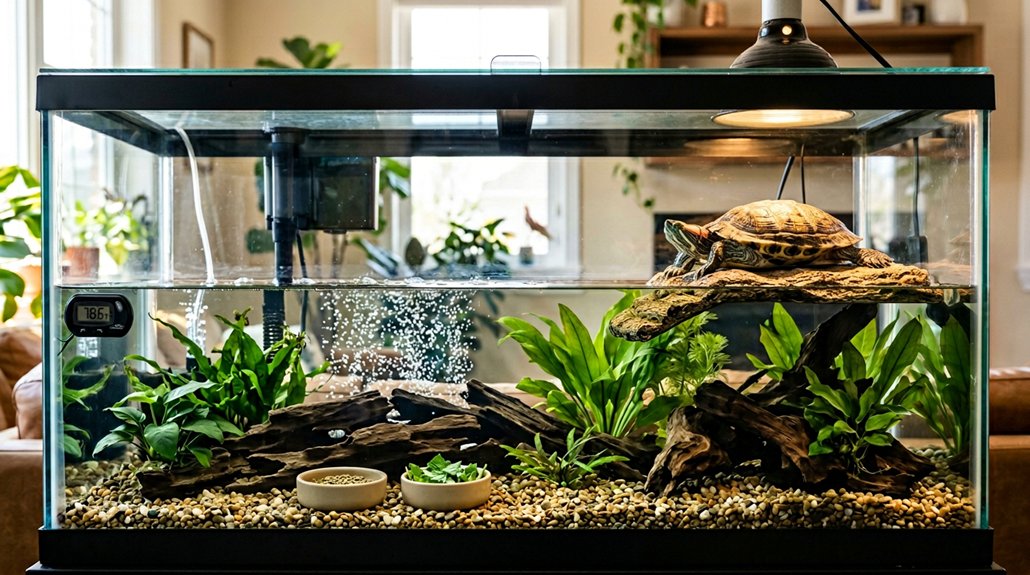
A clean tank is foundational to your red-eared slider’s overall health and complements the balanced diet you provide. Regular tank cleaning is essential to prevent toxic waste buildup and support a thriving environment. Begin by performing weekly water changes of 30%, which help maintain healthy water parameters. Integrating a high-quality filtration system is important—ensure it processes 2-3 times the tank’s volume for effective waste management. Testing water consistently is crucial; aim for 0 ppm ammonia and nitrite, and nitrate levels below 20 ppm.
- Clean substrate and decorations with treated water to avoid chemical contamination.
- Monitor filtration media, replacing it as necessary.
- Disinfect the tank environment during water changes.
- Employ robust filtration systems to prevent disease and infestations.
Key Supplies for Red-Eared Sliders
Equipping a red-eared slider’s habitat with the appropriate supplies is fundamental to ensuring their well-being and longevity. Start by selecting a spacious aquarium or tub with a minimum of 20 gallons per inch of shell length, ensuring it includes a secure screened lid. To meet lighting requirements, install a UV-B lighting fixture like the Zoo Med T5 HO ReptiSun 5.0 for essential UVB exposure. Include a basking bulb to create a basking area, maintaining temperatures of 95-104°F for effective thermoregulation. A robust filtration system, processing 2-3 times the tank’s water volume, is essential to prevent toxic waste buildup. Complement these with water testing kits, appropriate substrate, and a heater to stabilize water temperatures at 74-76°F.
How to Keep Your Red-Eared Slider Healthy and When to See a Vet?
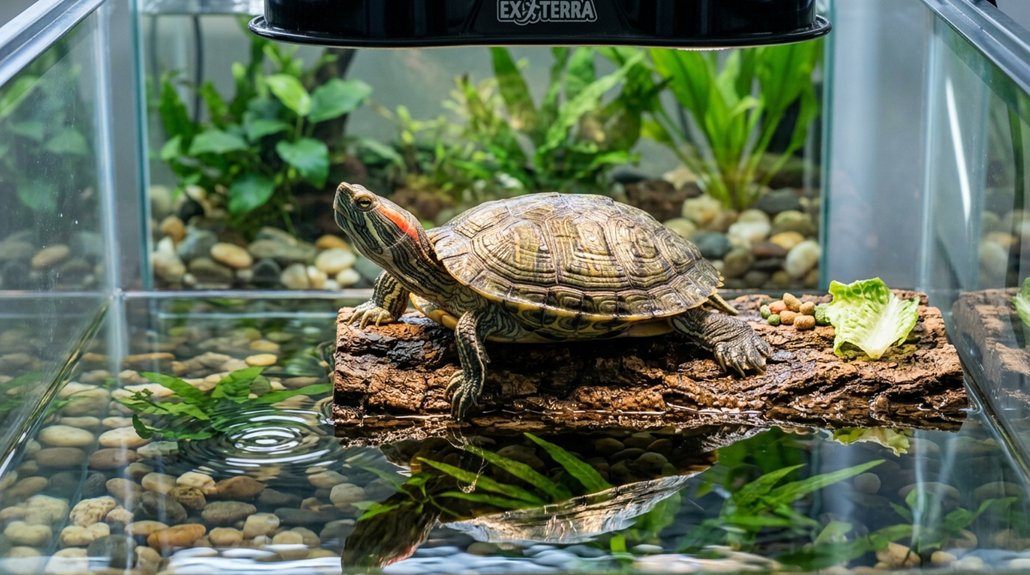
Although caring for a red-eared slider requires diligence, following specific guidelines guarantees your turtle remains healthy and vibrant. Regular behavior monitoring is vital. Watch for decreased appetite, lethargy, or abnormal swimming as indicators of potential illness. Maintain ideal water quality, keeping ammonia and nitrite levels at 0 ppm and nitrate below 20 ppm to prevent health issues. Hydration signs, like a soft shell or lack of buoyancy, are essential. These can suggest dehydration and need immediate veterinary care. It’s important to schedule regular vet check-ups to catch respiratory infections or shell rot early.
- Behavior Monitoring: Look for abnormal behaviors to catch illnesses early.
- Water Quality: Maintain specific parameters to prevent diseases.
- Hydration Signs: Essential to detect dehydration issues.
- Regular Vet Visits: Preventative measures for long-term health.
Frequently Asked Questions
How Often Should Red-Eared Sliders Be Handled?
You shouldn’t handle red-eared sliders too often; they find frequent interaction stressful. Ideal handling frequency is limited to essential maintenance or health checks. Always make certain your hands are clean to prevent introducing bacteria to their environment.
Can Red-Eared Sliders Live With Other Turtle Species?
Red-eared sliders can sometimes coexist with other turtle species, but it’s essential to evaluate tank mates carefully. Assess species compatibility by comparing behavior, size, and environmental needs to prevent aggression and guarantee harmonious living conditions.
Do Red-Eared Sliders Need UVB Lighting in Their Habitat?
Yes, they do. While natural sunlight’s fantastic, a UVB lighting setup indoors is essential. UVB benefits include proper calcium metabolism and shell health, juxtaposing the stark consequences of deficiency. Analyze their lighting needs for ideal care.
How Do You Sex a Red-Eared Slider Turtle?
You can sex a red-eared slider by examining physical attributes like tail length and claw size—males have longer tails and claws. Consider behavioral differences during mating; males often exhibit fluttering movements to court females.
What Are Signs of Stress in Red-Eared Sliders?
Think of stress as a dark cloud over your slider. You’ll notice behavioral changes like lethargic movements, shell discoloration, decreased appetite, and heavy breathing. Analyzing these symptoms provides a clearer picture of your turtle’s well-being.
Conclusion
Caring for red-eared sliders requires attention to detail, from habitat setup to diet and maintenance. Did you know that a well-kept slider can live over 30 years in captivity? This longevity requires a stable environment, proper nutrition, and regular tank cleaning. Essential supplies like UVB lighting and calcium supplements are key for their health. Always monitor for signs of illness and consult a vet as needed. By creating an ideal habitat, you’re ensuring a long, healthy life for your turtle.