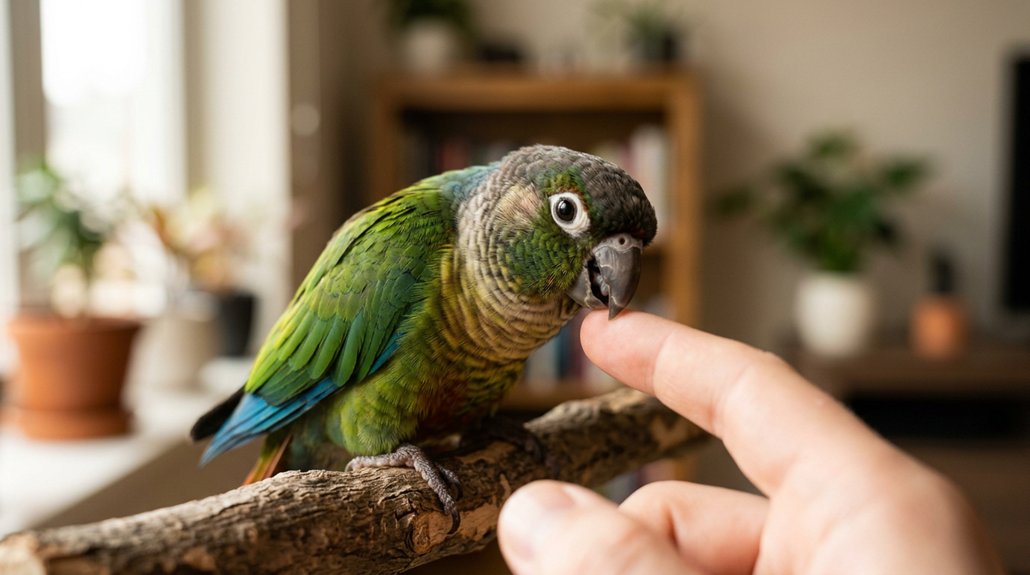
Your bird is biting because it feels scared, overstimulated, territorial, in pain, or it has learned that biting makes you back off. Watch for eye pinning, fluffed feathers, lunging, hissing, and tense posture, then stop the interaction and give it space. Use calm, short training sessions, positive reinforcement, and safer step-up practice with a perch or dowel. If the biting is sudden, persistent, or comes with other illness signs, an avian vet should check it—there’s more below.
Key Takeaways
- Birds often bite from fear, stress, pain, territoriality, or hormonal changes, so sudden aggression may need an avian vet check.
- Watch for warning signs like eye pinning, fluffed feathers, hissing, lunging, or tense posture before a bite happens.
- Reduce bites by avoiding sudden reaches, cage intrusions, loud noise, boredom, and handling during breeding season.
- During a bite risk, freeze, withdraw slowly, stay neutral, and briefly end the interaction without loud reactions.
- Teach step-up and target training with short, frequent positive-reinforcement sessions, treats, and a bite log to track triggers.
Why Your Bird Is Biting
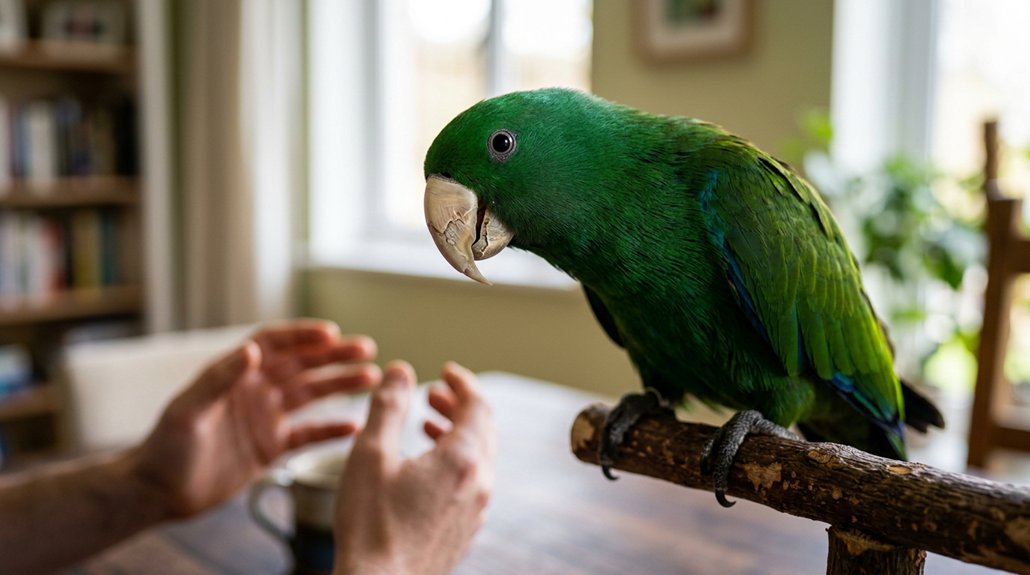
A bird’s bite is usually not random—it’s a functional response to fear, threat, or a need to control space, and it may help the bird escape, defend territory, or stop handling it doesn’t want. When you interpret biting this way, you can better identify the cause instead of taking it personally. Hormonal shifts, especially during breeding, can intensify territorial biting, and stress during mate selection may do the same. Learned behavior matters too: if a bite makes you back off, your bird may repeat it. Pain or illness can also trigger sudden changes, so an abrupt increase needs an avian veterinary exam. Even normal foraging behavior can become defensive when a bird feels pressured. Your goal is to reduce the trigger, not punish the bite.
Warning Signs Your Bird May Bite
You can often spot an imminent bite when your bird’s eyes pin rapidly, showing sudden over-arousal. If you also see fluffed feathers, a stiff body, or a forward lunge, your bird’s warning level is rising fast. At that point, give space and pause interaction before the behavior escalates.
Rapid Eye Pinning
Rapid eye pinning—quick dilation and contraction of the pupil—is a common, measurable sign that a bird is highly aroused and may bite within seconds. You may see it with head bobbing, raised neck feathers, or other species specific signals, and that combination raises bite risk. Different birds pin differently; cockatiels, conures, and amazons often show it clearly, so learning your bird’s pattern improves prediction. If you notice pinning, freeze, then slowly withdraw your hand and give a brief time-out. Don’t push for contact. Repeated or intense episodes deserve a review of triggers such as fear, territoriality, hormones, boredom, or redirected aggression. A behavior plan using positive reinforcement, training desensitization, or a professional consult can reduce future bites and help your bird feel safer.
Fluffed Feathers And Lunging
Fluffed feathers paired with a forward lean or a lunge often signal that your bird is feeling defensive, overexcited, or threatened, and a bite may follow within seconds. You’ll often see this during a preening interruption, perch displacement, or when you reach into the cage near food. Watch for eye pinning, hissing, raised neck feathers, or repeated short lunges; these signs mean arousal is climbing.
- Stare, feathers puffed, then a single lunge toward your hand
- Quick lunges, vocal agitation, and a tense body near the food dish
- Cage entry, hormonal season, or perch change followed by defensive puffing
If you note the exact sequence, you can spot triggers early and avoid the situation before it escalates.
What Makes Your Bird Bite at Home?
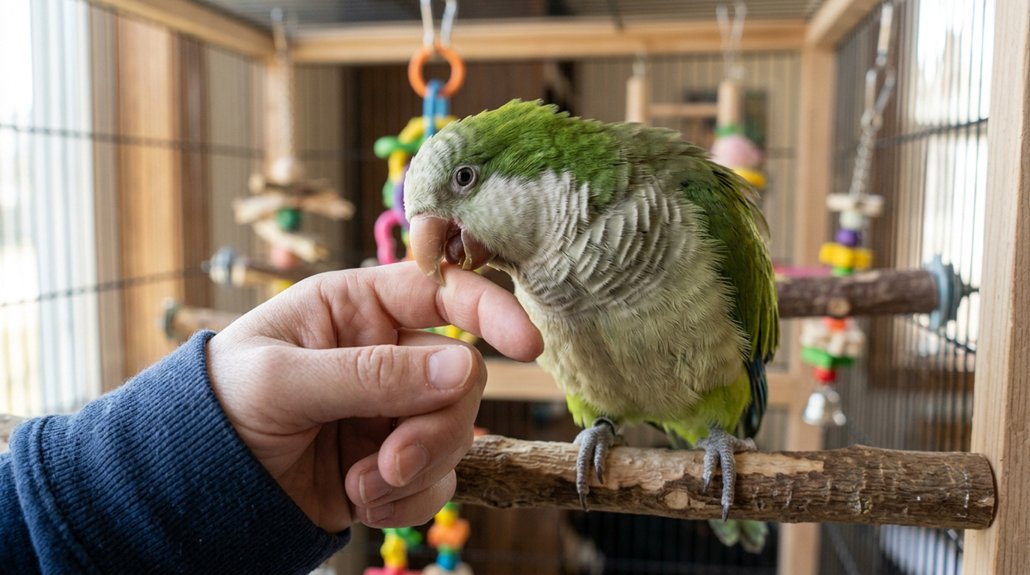
At home, your bird may bite because it feels frightened, protective of its space, frustrated, or in pain, and those triggers often show up as eye pinning, lunging, or sudden guarding of a cage or perch. If you learn to read these warning signals early, you can respond before a defensive bite happens. Safer handling habits, more enrichment, and a vet check for any out-of-character change can help reduce biting.
Common Bite Triggers
Birds often bite at home when they feel threatened, startled, or unable to control what is happening around them. You’ll see this after sudden reaches, cage entries, or pressure around favorite perches and nest sites. Hormonal seasons can heighten territorial behavior, especially in spring or breeding cycles. Frustration matters too: a bored bird with little environmental enrichment may bite for attention or relief. Early socialization can help, but it doesn’t remove all risk. Household noise or conflict can also trigger redirected aggression, so the nearest hand may get the bite.
- Reaching into the cage to change dishes
- Approaching a favored perch during mating season
- A startled bird reacting to loud commotion
Reading Warning Signals
When your bird is about to bite at home, the warning signs are often visible first: rapid eye pinning, a tense body posture with leaning forward or flattened wings, raised neck or head feathers, and sudden vocal changes such as hissing or loud calls. You may also notice shifting eye color and subtle posture changes before the strike. These cues show agitation, territorial defense, or frustration.
| Warning sign | Meaning |
|---|---|
| Eye pinning | High arousal |
| Flattened wings | Defensive intent |
| Hissing or loud calls | Stress escalation |
| Repetitive pacing | Frustration build-up |
If you see these patterns, note the time, place, and what happened right before it. A bite log helps you identify repeat triggers. Stay observant, because your bird’s body often warns you before its beak does.
Safer Handling Habits
Safer handling starts with preventing the situations that trigger a bite in the first place. Use slow introductions and a gentle approach when you move toward your bird, especially near food or a favorite perch. Keep your hand at least 6 inches away, and watch for eye pinning or forward lunges before you reach in. When you need to clean the cage or change dishes, reduce direct hand contact by using a wooden dowel or T-perch for step-ups, and offer treats inside the cage.
- Approach from the side, not quickly through bars.
- Give 10–12 hours of sleep and limit handling during breeding season.
- If a bite happens, stay calm, withdraw, and leave for 5 minutes.
Why Birds Bite in the Cage
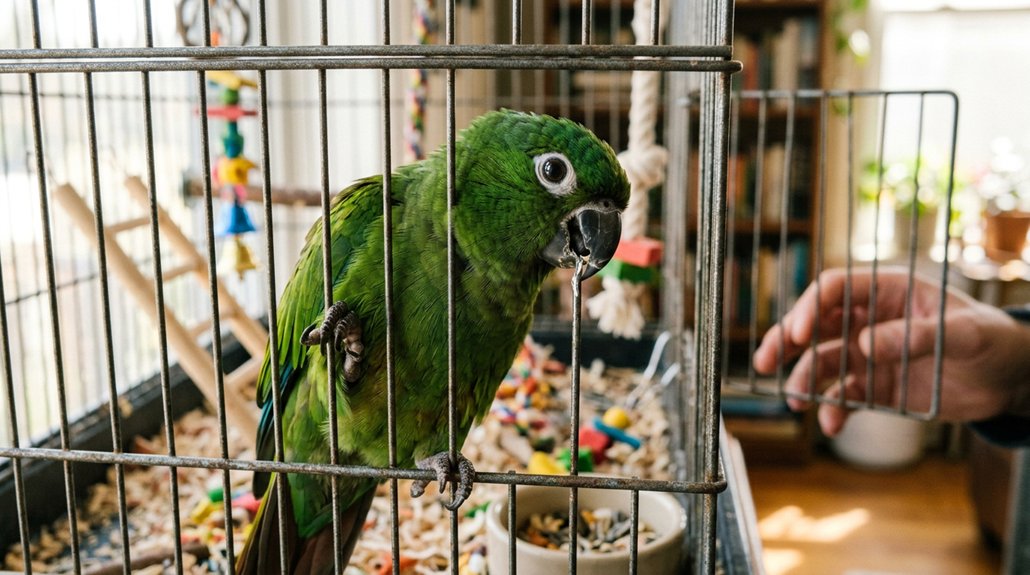
Inside the cage, biting often reflects territorial behavior: your bird may be guarding the cage itself, a favored perch, a toy, or a nest-like setup, especially during breeding or other hormonal periods. You may also see warning signs first: eye pinning, fluffed neck feathers, lunging, or quick head movements before contact. If the bite seems sudden, consider displaced aggression; a bird upset by another bird, a person, loud noise, or other neighbor stressors may redirect that tension to your hand. Some birds learn that biting makes you withdraw, so the behavior gets reinforced. Careful notes can reveal patterns. Improve cage enrichment, keep interactions calm, and offer treats on an outside perch or with a wooden stick so your bird doesn’t feel cornered.
How to Stop Bird Biting in the Moment
If a bite happens, stay calm and end the interaction right away by slowly putting your bird down or turning away and walking off for 2–5 minutes, so the bite doesn’t earn attention. This brief pause is immediate distraction and behavioral redirection. If the bite lands on your hand, don’t yank or react loudly; hold still, say a neutral “no,” then withdraw slowly.
- Offer a thick towel or wooden perch as a protected step-up target.
- Reward the safe choice immediately with a preferred treat.
- Stop handling if biting continues, and later resume short, reward-based sessions.
If you notice eye pinning, feather raising, or lunging, end the interaction before contact. This keeps you safe and helps your bird learn that calm behavior, not biting, gets access and reinforcement.
Reading Bird Body Language
Reading your bird’s body language is the earliest and most reliable way to prevent a bite. Watch for rapid eye pinning or flashing, especially when it repeats; that’s often a sign of rising arousal. If your bird leans forward, lunges, or holds a stiff frame with raised head and neck feathers, it’s likely feeling territorial or aggressive. Sudden fluffing, hissing, or louder calls can signal fear. Respect avoidance cues: head turned away, backing up, or moving off the perch means it wants space. Pay attention to subtle postures, eye contact, wing droop, and tail flick, because small shifts often appear before stronger warning signs. Keep notes on time, setting, and what happened right before the response so you can identify triggers and reduce risk.
How to Teach Step-Up Without Bites
Teach step-up gradually so your bird learns that your hand predicts safety, not pressure. Begin targeted desensitization by offering a highly preferred treat from the tip of your closed fist for several days. Then use hand shape conditioning with a wooden dowel or T-perch before fingers. Reward one foot, then both feet, and only ask for a hand step when each stage is reliable. If your bird snaps or refuses, stop, leave for 2–5 minutes, and restart at the last successful point. Train when calm, well-rested, and before hormonal peaks. Record each session to track progress.
- Closed fist with treat
- One foot, then both
- Dowel before fingers
Use Positive Reinforcement to Replace Biting
Use positive reinforcement to show your bird what to do instead of biting, and reward that choice immediately with a high-value, species-appropriate treat such as a sunflower heart, nut piece, or small fruit bit within 0.5–2 seconds. Teach an alternative, such as a clicker-trained step-up onto a perch or target stick, and reinforce every success for several sessions until it’s reliable. If a bite would’ve happened, calmly withdraw, ignore your bird for 30 seconds to 5 minutes, then re-present the cue and reward the non-biting response. Keep sessions short, 3–5 minutes, 2–4 times daily, and use target training, food shaping, desensitization pairing, and play based rewards to build calm responses to hands and handling. Track triggers, rewards, and success rates in a biting log so you can adjust based on measurable progress.
When to Get Help From a Bird Vet
If your bird’s biting doesn’t improve with positive reinforcement, or it gets worse suddenly, it’s time to involve an avian veterinarian. Sudden aggression can signal pain, infection, hormonal imbalance, or a neurological problem, and you shouldn’t wait for it to pass. Seek a veterinary referral if bites target one area, such as the wings, back, or beak, or if you notice illness signs. Bring medical documentation, including a biting log and video clips, to support diagnosis.
- Fluffed feathers, appetite loss, or weight loss
- Changes in droppings, lethargy, or breathing trouble
- Biting tied to touch, handling, or environmental changes
If behavior stays persistent despite consistent training and enrichment, your vet can rule out hidden medical causes or refer you to a behavior specialist.
Frequently Asked Questions
How to Make a Bird Stop Biting?
Stop biting by reading your bird’s body language, then calmly ending interaction before escalation. Use Positive reinforcement for step-up training, avoid triggers, and give brief time-outs after bites. If biting starts suddenly, your vet should assess pain.
What Is the 3 3 3 Rule for Birds?
It’s a 3-part adjustment guide: 3 days of stress, 3 weeks of settling, and up to 3 months of full trust. You’ll use a training timeline with gradual exposure, because many birds need patience.
Why Is My Bird Biting All of a Sudden?
Your bird’s sudden biting often reflects stress, fear, hormonal changes, or learned behavior; sudden illness or pain can also trigger it. You should watch for appetite, droppings, and energy changes, and consult an avian vet.
How to Punish a Bird for Biting?
You shouldn’t punish your bird for biting; instead, calmly walk away for several minutes. For example, if your conure lunges, note body language cues and add environmental enrichment, then reward gentle step-up behavior.
Conclusion
When your bird bites, it is often a flare signal, not a flaw. By watching body language, respecting cage boundaries, and reinforcing calm behavior, you can quiet the storm before it starts. Step by step, you teach trust to grow like roots, steady and unseen. If biting persists, or pain, illness, or fear may be hiding beneath it, don’t wait—your bird vet can help you uncover the cause and restore balance.