
To stop your puppy from biting and nipping, first understand this behavior is natural but can be managed. Use bite inhibition techniques by mimicking a yelp and pausing play when bites occur. Redirect with chew toys and guarantee routines include scheduled play and rest. Recognize signs of normal versus aggressive biting, and employ positive reinforcement. If issues persist, professional guidance may be needed. Explore deeper strategies for effective solutions and a harmonious pet-parent relationship.
Key Takeaways
- Implement bite inhibition training by mimicking a hurt playmate’s yelp and immediately pausing playtime.
- Redirect biting with appropriate chew toys and engaging alternatives like tug toys or fetch.
- Establish a consistent routine with scheduled play, training, and ample sleep to prevent fatigue-related biting.
- Use distraction techniques, offering treats or briefly using a lightweight leash to redirect biting.
- Seek professional help for persistent biting with signs of aggression or if behavior persists beyond 6 months.
How to Quickly Manage Puppy Biting
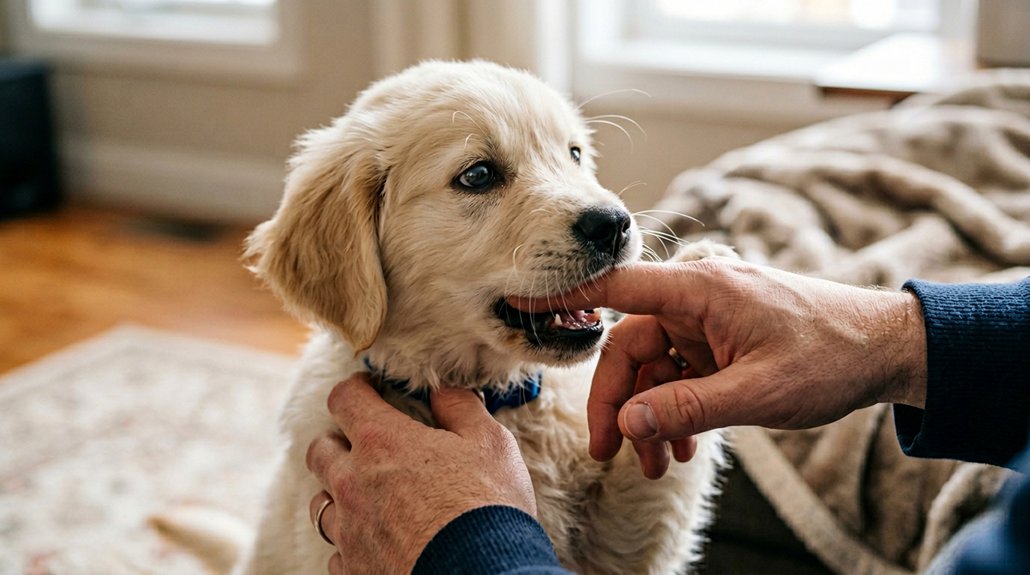
If you’re searching for quick solutions to manage puppy biting, understanding and addressing the behavior is key. Effective bite discipline starts with bite inhibition training. When your puppy bites, respond with a high-pitched yelp, mimicking a hurt playmate, teaching them control techniques for better mouthing force. It’s also essential to redirect their biting with appropriate chew toys and non-contact play techniques like fetch or tug-of-war. Consistency in daily routine, including naps and training, prevents overstimulation, a common biting trigger. If biting occurs, calmly freeze, allowing your puppy to think, then offer instant praise upon release. For safer play, use a lightweight leash for redirection, and enforce strict boundaries with time-outs to reinforce healthy bite discipline.
Why Do Puppies Bite: Developmental Insights?
You’ll notice your puppy biting as a natural way to explore their world, fueled by curiosity and developmental needs. Teething stages can lead to increased biting, as they seek relief from gum discomfort during this critical phase. Additionally, their playful energy often results in mouthing and nipping, as they learn to interact with their surroundings and manage their instincts.
Natural Exploration Methods
Imagine watching as your new puppy explores the world around it, driven by a natural instinct that closely resembles that of a human infant. This stage, known as sensory exploration, is essential for your puppy’s development. Puppies naturally use their mouths to investigate new objects, which often leads to mouthing and biting. This behavior is particularly prevalent during the teething phase, when their need for natural chewing increases due to gum tenderness. Understanding that this behavior is as instinctive as a teething baby gnawing on a toy can help manage your expectations. While biting may peak between 12 to 20 weeks, it typically reduces as they mature. Gaining insights into these developmental stages allows you to nurture healthy exploration habits.
Playful Energy Release
Puppies bite as part of their natural play behavior, a playful energy release that’s integral to their development. Mouthing and nipping are ways they explore their surroundings and engage in social interaction. During intense play sessions, your puppy might get carried away, not realizing the limits of appropriate behavior. Understanding this helps you redirect their exuberant energy into safe outlets. Quick movements can trigger playful nipping—think of it as their instinctive chase response.
To help manage this behavior:
- Introduce playful distractions with durable toys.
- Provide energy outlets through interactive games.
- Stay calm and patient, setting consistent boundaries.
- Encourage soft play with rewards for gentle behavior.
Teething Development Stages
While engaging in playful activities can curb a puppy’s instinctive nipping, understanding their developmental phase is equally important. Puppies typically enter the teething timeline around 3 to 4 months old, when their deciduous teeth start to fall out. This period can bring significant puppy discomfort, leading to increased biting and mouthing behaviors as they relieve tender gums. Expect their permanent teeth to fully emerge by 6 to 7 months, with the first adult incisors appearing between 3 to 5 months. As puppies explore their environment orally, it’s essential to supervise chewing habits, ensuring they don’t latch onto inappropriate items. Understanding this biting phase, lasting three to six months, will better equip you to manage and patiently guide your puppy through it.
Teach Your Puppy Bite Inhibition
Mastering the art of bite inhibition is essential for developing a well-mannered puppy. It’s vital to understand your puppy’s play styles, temperament, and socialization skills. When your puppy bites too hard, use a high-pitched yelp to mimic a hurt playmate. This teaches control over mouth pressure. Immediately stop play and give a time-out, showing biting ends fun. Gradually adjust the rules as your puppy learns, using positive reinforcement with praise to promote gentle mouthing. Redirect biting by offering chew toys, defining what’s acceptable to chew. Consistent practice helps in developing appropriate interactions with humans and other animals.
Master bite inhibition by redirecting your puppy’s hard bites with a yelp, time-outs, and chew toys.
- Use a high-pitched yelp to signal biting is too strong.
- Stop play if biting occurs to reinforce learning.
- Praise gentle mouthing to encourage good behavior.
- Redirect to chew toys for acceptable alternatives.
Set a Routine to Minimize Puppy Biting
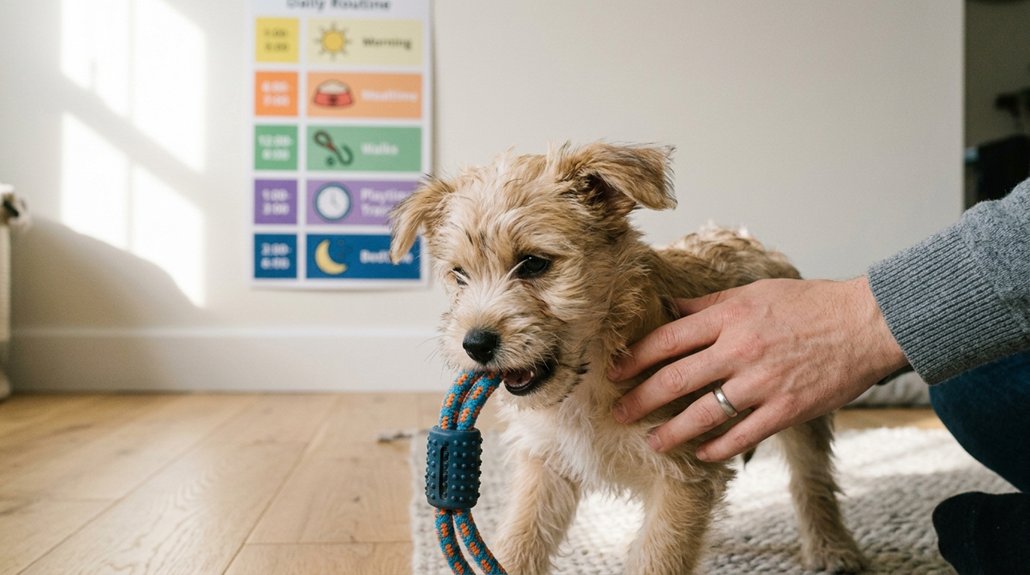
To help minimize your puppy’s biting behavior, establish a consistent daily routine that includes set times for play, training, and rest. Make certain your puppy gets adequate sleep by implementing a predictable schedule, as fatigue often leads to more mouthing. Incorporate short, engaging training sessions to promote focus and provide appropriate chew toys to reinforce good habits.
Consistent Daily Activities
Creating a consistent daily routine for your puppy is key to minimizing biting behaviors, as it helps manage their energy levels and keep them focused. A well-structured plan guarantees a balanced mix of play, training, and rest, reducing overstimulation and unwanted mouthing. By integrating activity balance into your puppy’s day, you’re more likely to prevent these behaviors before they escalate.
- Include regular playtime: Engage your pup with interactive games to channel energy positively.
- Schedule short training sessions: These reinforce bite inhibition and promote mental engagement.
- Offer age-appropriate chew toys: Redirect them from biting fingers and feet to acceptable outlets.
- Enrich their environment: Provide a variety of toys and games to prevent boredom-induced biting.
Establishing these elements within a reliable daily structure will foster a happier, calmer puppy.
Predictable Sleep Schedule
After establishing a routine of daily activities, ensuring your puppy gets adequate rest is just as important in reducing biting behaviors. A predictable sleep schedule helps regulate your puppy’s energy levels, preventing overtiredness that often leads to impulsive nipping. Puppies need about 18 to 20 hours of sleep each day, making frequent naps essential. Monitoring sleep cues like yawning or wandering off allows you to provide a quiet rest space, intervening before biting begins. By incorporating regular playtimes and rest periods, you’re nurturing your puppy’s ability to manage energy, fostering calmness. This predictable routine not only mitigates excessive energy bursts but also enhances focus, making your puppy more responsive and peaceful during play, reducing their reliance on biting.
Structured Training Sessions
While nurturing a puppy can be a joyous experience, dealing with incessant nipping requires structured training sessions. Establishing a routine with scheduled times for training, play, and rest can reduce excess energy, minimizing biting incidents. Short, focused sessions of 5-10 minutes throughout the day are effective. Teach commands and proper bite inhibition, using positive reinforcement like treats or praise for desirable behaviors. Structured playtime, with a leash for control, helps redirect mouthing to toys. Carefully observe your puppy’s behavior during these sessions and tweak the structure as needed, including breaks to prevent overstimulation. Designate specific times that cater to your puppy’s energy levels, ensuring ample mental and physical stimulation.
- Scheduled daily routine
- Short, focused sessions
- Leash-controlled playtime
- Behavior observation
Techniques to Redirect Puppy Mouthing
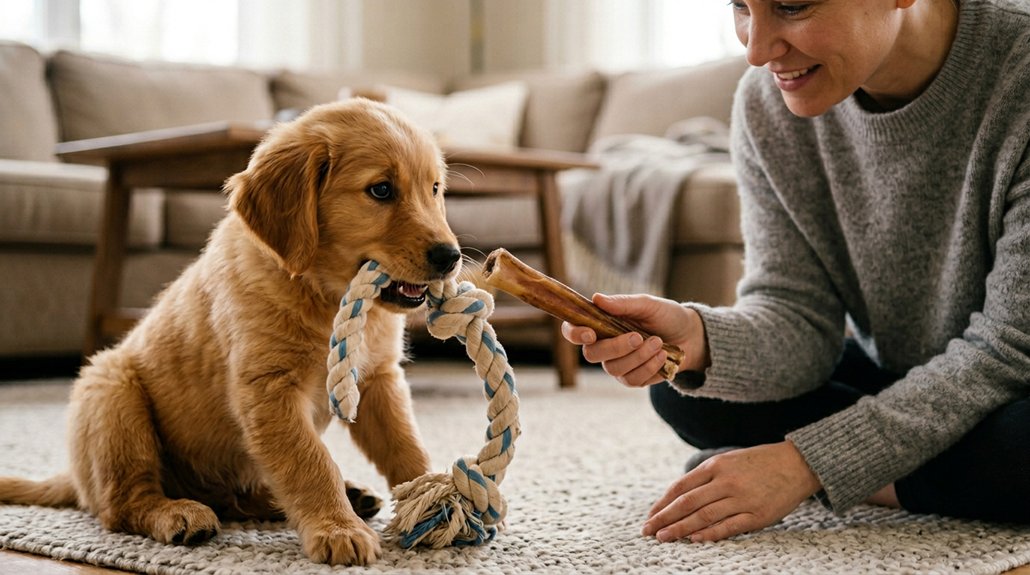
Redirect your puppy’s nipping tendencies with engaging alternatives that guarantee they learn the right habits early on. Focus on effective redirection techniques by consistently offering appropriate chew toys or sturdy bones whenever your puppy begins to nip. This helps them associate biting with acceptable items and not your fingers or furniture. To further discourage nipping, make a high-pitched sound to mimic a hurt playmate, teaching bite inhibition. Always have a tug toy handy, which provides an excellent outlet for their energy and diverts their focus from your hands and feet. Use distraction techniques such as treats or non-contact games like fetch. Be sure to reinforce positive behavior by praising and rewarding them when they opt for toys over mouthing.
Using Play to Reduce Puppy Biting
Incorporating structured play into your puppy’s routine serves as an effective strategy to manage their biting tendencies. By using thoughtful puppy playtime strategies, you can redirect their energy towards appropriate toys instead of your hands or feet. Choose engaging activities like fetch and tug-of-war to harness your puppy’s playful instincts. High-pitched sounds when bitten mimic littermate feedback, teaching them bite inhibition. Select a variety of chew toys to maintain focus on suitable objects. Integrate brief training sessions with positive reinforcement to promote self-control and proper play behavior. Keep excitement levels in check by establishing a consistent routine of playtime, downtime, and training, effectively reducing biting frequency.
- Choose appropriate toys to focus energy
- Use fetch and tug-of-war games
- Mimic feedback with high-pitched sounds
- Integrate short training during play
Is Your Puppy’s Biting Normal or Not?
How can you determine if your puppy’s biting is normal? Recognizing normal biting starts with understanding it’s mostly playful and often decreases by 5-6 months. You might notice soft mouthing, typical for puppies 8 to 20 weeks old. However, if the bites become intense or are accompanied by tense body language, this could indicate aggressive biting. It’s essential to observe the context in which biting occurs. Here’s a quick guide to help you discern the difference:
| Behavior Type | Characteristics | Action Needed |
|---|---|---|
| Normal Biting | Soft mouthing, playful | Use redirection, positive reinforcement |
| Aggressive Biting | Intense, fear-driven | Seek professional advice |
| Monitoring Changes | Sudden intensity or aggression | Address underlying issues |
| Play Context | Relaxed, wagging tail | Continue current approach |
| Frustration Biting | Growling, tense posture | Evaluate stimuli, adjust environment |
Avoid These Common Mistakes With Puppy Biting
While training a puppy to curb biting habits, it’s common to make mistakes that could unintentionally reinforce the behavior you’re trying to eliminate. During puppy playtime, remember to offer proper feedback to guide your puppy’s behavior. Avoid pulling away from bites, as it encourages chasing instincts and increases biting. If you’re getting low to the ground while playing, it might prompt face biting, mistaking your face as a playful target. Also, refrain from using your hands during play, which can teach your puppy that skin is a permissible biting target. Finally, controlling energetic play, especially during “zoomies,” is essential to reducing biting and mouthing.
- Don’t pull away when bitten
- Avoid getting low during play
- Refrain from using hands as toys
- Manage high-energy play carefully
When to Get Professional Help
If your puppy’s biting behavior is causing concern, knowing when to get professional help can make a significant difference. Consistent biting that breaks the skin or signs of puppy aggression like intense staring, growling, or stiffening in non-playful situations should not be overlooked. Persistent biting beyond the playful puppy stage of three to six months may indicate a need for professional training options. Furthermore, biting driven by fear or frustration—evidenced by avoiding interaction or defensive posturing—requires expert evaluation. If your pup displays changes in appetite or has difficulty chewing, a veterinarian’s assessment is essential, as health issues could be the root cause. Professional guidance guarantees effective strategies for safe socialization and long-term behavior management.
Frequently Asked Questions
What Age Do Puppies Stop Nipping and Biting?
Puppies typically stop nipping and biting by around 5 to 6 months. Understanding puppy development and identifying biting triggers like excitement or fatigue can help manage this behavior empathetically. If biting persists, consider professional guidance.
How Should I Discipline My Puppy for Biting?
When disciplining your puppy for biting, focus on positive reinforcement by rewarding non-biting behavior. Identify biting triggers and redirect them with chew toys. Stay consistent and patient, as gentle guidance fosters a trusting, respectful relationship.
What Is the 7 7 7 Rule for Puppies?
The 7 7 7 Rule suggests weekly-age puppies get 7 minutes of daily training. It’s a great puppy teething solution, fostering impulse control during playful interactions, and guarantees structured, consistent learning for positive behaviors through empathy and expertise.
What Is a Red Flag Puppy’s Behavior?
If your puppy’s behavior goes haywire with sudden aggression, often you’re seeing red flags. Nipping causes distress when snapping or growling happens. Consider effective biting solutions like professional help to manage behavioral issues empathetically.
Conclusion
Imagine nurturing a small sapling to grow into a strong, graceful tree. Just as you guide its branches, you must shape your puppy’s behavior with love and patience. While their nips may now seem ferocious, remember, it’s part of their budding journey. With consistency, kindness, and structured guidance, you’ll transform those playful nibbles into gentle affection. And like those who tend gardens, sometimes you may need expert advice to guarantee your pup blooms beautifully.