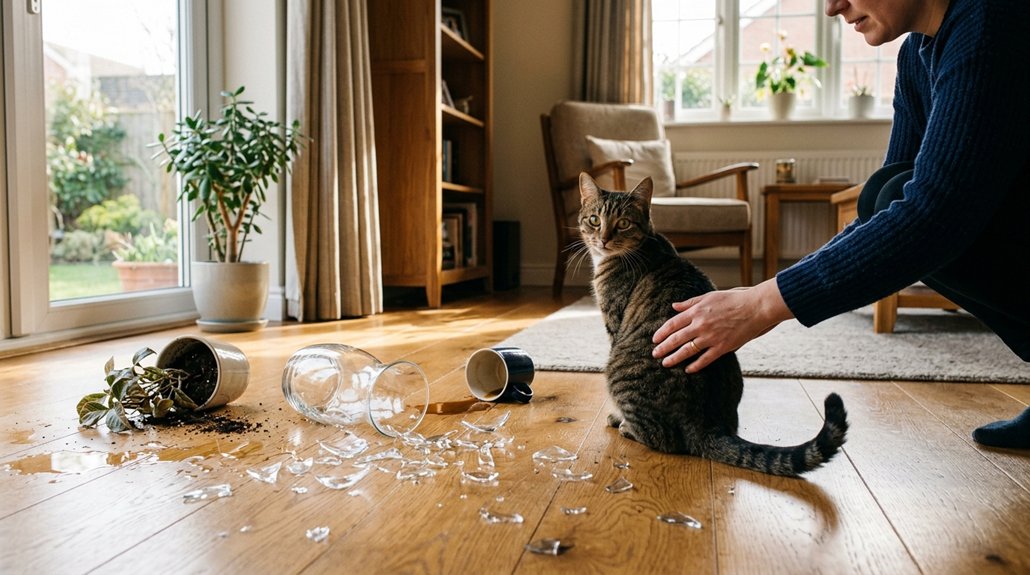
Cats often knock things over due to their natural curiosity and hunting instincts, coupled with their playful and attention-seeking behaviors. To prevent this, create a cat-friendly environment by offering engaging toys, vertical spaces, and interactive play areas to keep them stimulated. Remove tempting or fragile items from accessible areas and use positive reinforcement to encourage desired behaviors. With strategic adjustments and understanding, you can foster a balanced and harmonious household where your cat thrives. Discover ways to enhance your living space further.
Key Takeaways
- Cats knock things over due to curiosity and instinctual behaviors, such as exploring and understanding their environment.
- Boredom and attention-seeking may lead cats to intentionally disrupt objects to get human attention.
- Fragile valuables should be kept out of reach, and off-limits zones can be established with barriers.
- Providing interactive toys and scheduled playtime can redirect energy and reduce destructive behavior.
- Creating a cat-friendly environment with climbing structures and designated play areas minimizes risks and satisfies exploratory instincts.
Reasons Cats Knock Over Objects
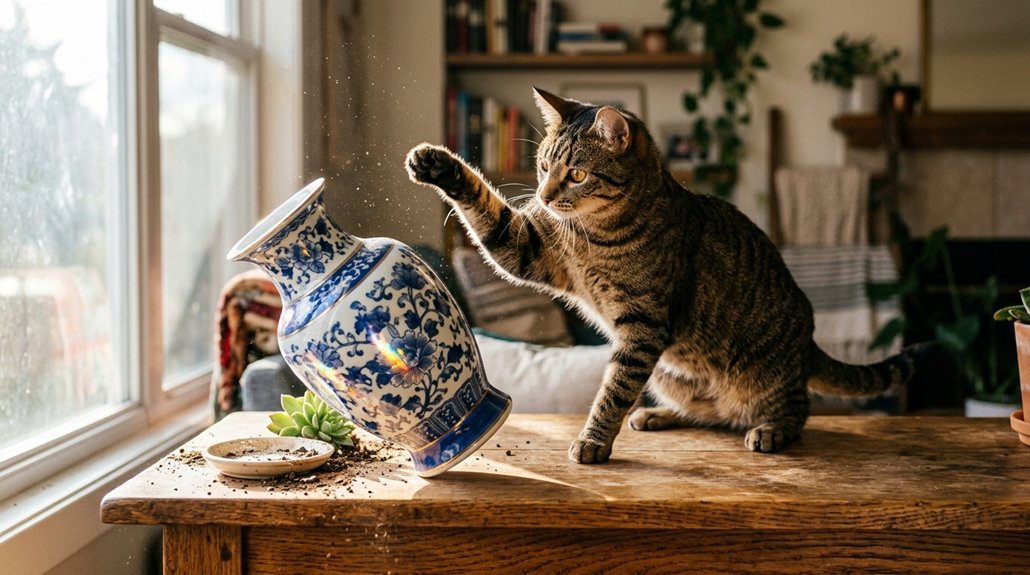
Cats often surprise and sometimes perplex us with their tendency to knock things over. This behavior isn’t random—it’s a blend of curiosity exploration and instinctual behavior. When a cat nudges an object, it’s often inquisitively exploring its environment, trying to understand how an object behaves. This act is closely tied to their instinctual behavior, resembling the playful batting linked to hunting prey. For some cats, knocking things over is an entertaining activity that also serves as a means of attention-seeking; they may have learned that it elicits a response from you. Additionally, boredom pushes them to find stimulation through environmental interaction. Exceptions include accidental knocks due to their physical navigation. Understanding these behaviors helps you connect more deeply with your feline companion.
Strategies to Prevent Cats Knocking Items Over
Understanding the intrinsic motivations behind a cat’s tendency to knock things over is merely the first step in addressing this behavior. To mitigate accidental damage, focus on redirecting cat behavior away from undesirable actions. Engage your cat with interactive toys like puzzle feeders or chasing circuits, channeling their hunting instincts and reducing boredom-driven antics. Removing tempting items from accessible areas serves as a practical step; safely storing breakable objects minimizes potential accidents. Regular play sessions provide essential physical and mental stimulation, curtailing disruptive tendencies. In addition, employ positive reinforcement by rewarding appropriate behavior, steering your cat’s attention from attention-seeking knocking. Through these strategies, you can effectively decrease the likelihood of your cat engaging in behavior that might result in unwanted consequences.
Creating a Cat-Friendly Environment
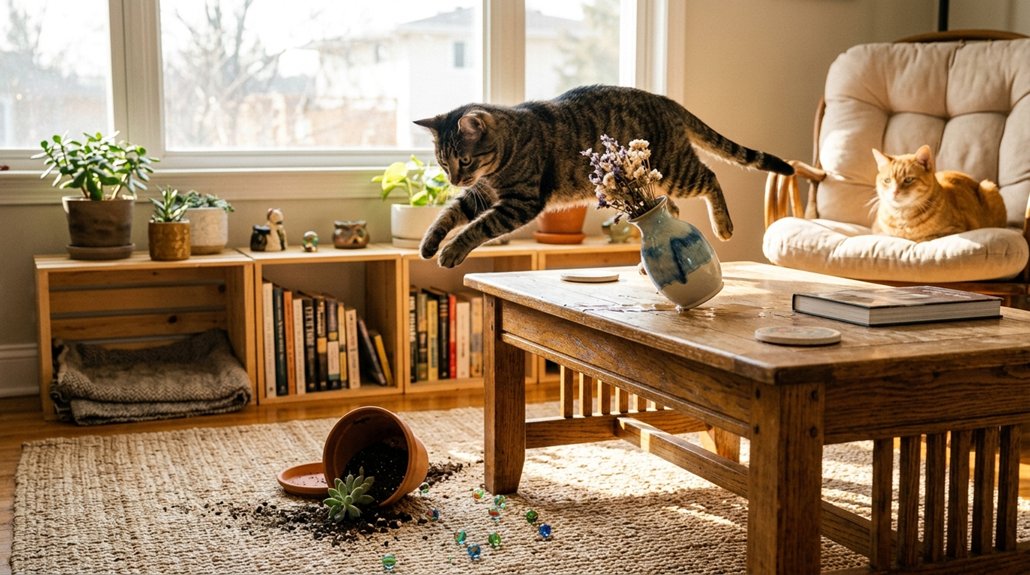
To create a cat-friendly environment, you can design engaging climbing structures, which cater to your cat’s instinctive desire to explore heights while keeping your possessions secure. Incorporate interactive play zones with a variety of toys to stimulate your cat both physically and mentally, reducing the boredom that often leads to knocking things over. Additionally, providing safe exploration areas where your cat can investigate comfortably without risking damage to household items contributes greatly to their overall well-being.
Safe Exploration Areas
While it might seem like a challenge to prevent your cat from knocking things over, creating safe exploration areas within your home can effectively redirect their curiosity. By establishing safe zones, you can address cat behavior and satisfy their innate need to explore. Consider these steps:
- Designate Safe Zones: Incorporate climbing structures and scratching posts to support natural instincts without risking accidents.
- Incorporate Soft Materials: Use soft rugs or mats to create comfortable zones free from fragile items, ensuring cats can explore without causing damage.
- Engage with Toys: Place interactive feeders and puzzle toys within these areas to keep your cat’s attention focused and away from household objects.
- Utilize Vertical Space: Invest in shelves or wall-mounted cat trees, encouraging exploration and keeping your treasures out of reach.
Interactive Play Zones
Creating interactive play zones is an effective way to foster a stimulating and safe environment for your feline companion. By designating special areas filled with engaging toys, you cater to your cat’s curiosity and encourage physical activity. Consider incorporating feather wands and laser pointers, which captivate their attention and simulate predatory behavior.
To maintain interest, implement a toy rotation system. Regularly swapping toys keeps the environment dynamic, motivating your cat to explore different aspects of each play style. Offering a diversity of toys—from those that promote batting at small balls, to puzzles that challenge their problem-solving skills—ensures varied mental engagement. By creating these enriching play spaces, you reduce the likelihood of your cat knocking things over while satisfying their natural instincts.
Engaging Climbing Structures
Cats find joy in heightened places, and by providing engaging climbing structures, you’re catering to their intrinsic climbing instincts. Installing options like tall cat trees, shelves, or wall-mounted ledges fosters vertical exploration, essential for cats’ climbing behavior. Such elevated spaces not only fulfill their natural desires but also guard your counters from chaos by giving designated play zones. Beyond preventing mishaps, these structures offer multiple benefits:
- Mitigate Boredom: Satisfy curiosity and reduce disruptive knocking over.
- Physical Exercise: Support health through active movement and climbing.
- Confidence Building: Allow safe discovery, boosting self-assurance.
- Engagement: Integrate scratching posts, tunnels for mental stimulation.
Altogether, a well-thought-out climbing environment enhances your cat’s well-being and reduces unwanted actions.
Using Positive Reinforcement
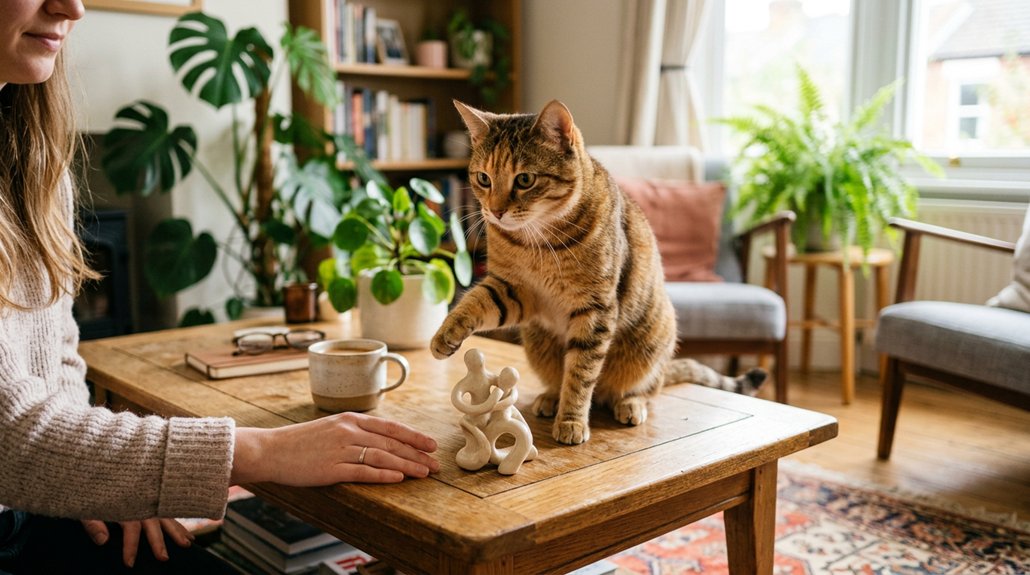
To effectively reshape your cat’s behavior, positive reinforcement is a proven method that encourages them to opt for toys instead of knocking objects over. Implementing reward strategies within your behavioral training regimen is essential. Reward your cat with treats, praise, or affection immediately after they choose to engage with a toy. Consistency in this practice establishes a reliable response, reinforcing positive actions.
| Reward Type | Timing | Outcome |
|---|---|---|
| Treats | Immediate | Strengthens behavior |
| Praise | Immediate | Encourages repetition |
| Affection | Immediate | Builds trust |
Engaging Cats With Toys and Play
Regularly engaging your cat with a diverse selection of toys and play activities is essential for keeping them mentally stimulated and physically active. Interactive toys like puzzle feeders and circuit tracks can greatly reduce their tendency to knock things over out of sheer boredom. Additionally, rotating these toys prevents familiarity and maintains their curiosity.
To further enhance their playtime experience:
- Schedule regular play sessions: Mimic natural hunting behaviors by encouraging chasing and pouncing.
- Utilize unpredictable toys: Noise-making or erratically moving toys trigger exciting predatory instincts.
- Introduce feather wands or laser pointers: These interactive toys encourage both physical exertion and mental engagement.
- Observe your cat’s preferences: Tailor the toy selection to their tastes, ensuring they remain intrigued and active.
This multifaceted approach helps channel a cat’s energy positively.
Securing Your Home From Curious Cats
Although cats are naturally curious and playful, it’s crucial to secure your home to prevent accidents or damage. Implementing effective cat proofing techniques can safeguard both your belongings and your feline friend. Store fragile items out of reach or inside secure cabinets. For plant protection, use decorative rocks or wire covers as barriers. Hanging baskets or elevated shelving are ideal for keeping items beyond a cat’s playful grasp.
| Technique | Purpose |
|---|---|
| Museum putty | Stabilize items on shelves |
| Decorative rocks/wire | Deter cats from plants |
| Pet gates | Create cat-free zones |
Incorporating item stability solutions, such as museum putty, guarantees objects remain anchored. Pet gates help designate specific areas off-limits, reducing potential mishaps. These strategies support a harmonious living environment.
Frequently Asked Questions
How to Stop Cats From Knocking Objects Over?
To stop cats from knocking objects over, redirect their behavior by providing alternatives. Offer interactive toys, climbing structures, and safe spaces. Implement positive reinforcement to encourage desired actions, ensuring fragile items are stored safely out of reach.
What Is the 3-3-3 Rule for Cats?
The 3-3-3 rule describes a cat’s adaptation process, highlighting feline instincts and behavior development. You’ll notice initial stress, growing comfort over three weeks, and full personality display by three months, revealing your pet’s unique traits.
What Is “I Love You” in Cat Language?
In feline communication, “I love you” translates to slow blinking, purring, head-butting, kneading, and a softly quivering vertical tail. Observing these cat behaviors lets you understand their affection and build a stronger bond with your pet.
Why Does My Cat Purposely Knock Things Over?
Curiosity killed the cat—and your vase. Your kitty’s playful behavior stems from feline curiosity. Cats experiment with objects due to hunting instincts or boredom. They’re exploring, not rebelling. Provide more stimulation to reduce this instinctual behavior efficiently.
Conclusion
So, you’ve discovered that your feline’s chaotic antics are simply a quest for attention, much like their ancestors’ wild hunts for survival. By crafting a cat-friendly haven and employing positive reinforcement, you’re not only salvaging your possessions but also nurturing your cat’s primal instincts. Ironically, as you secure your home against their curiosity, you’re actually opening up new worlds for them. In the end, you’re both playing the game of survival—yours being the survival of your decor.