
Choosing between high-energy and low-energy dogs depends on your lifestyle. High-energy breeds, like Border Collies, need 1-2 hours of daily activity and thrive with active owners. In contrast, low-energy breeds, such as French Bulldogs, are content with gentle, short walks. Nutrition and training should be tailored to their activity levels for the best well-being. Assess your activity levels to guarantee compatibility and plan for the long term. Continue exploring to find which breed matches your needs perfectly.
Key Takeaways
- Choose high-energy dogs if you lead an active lifestyle and can provide 1-2 hours of daily exercise.
- Low-energy dogs are ideal for relaxed environments and minimal exercise routines with short walks.
- High-energy dogs need frequent interactive play and extensive physical engagement to prevent behavioral issues.
- Low-energy dogs thrive on calm companionship and require gentle, leisurely activities for well-being.
- Match training and nutrition intensity to your dog’s energy level for effective results and health maintenance.
Finding the Perfect Match: Choose Based on Energy Level

How do you decide which energy level fits best with your lifestyle? Start by examining dog breed profiles and understanding their activity levels. High-energy breeds like Border Collies thrive with regular trips to dog parks and demand intensive exercise. If your lifestyle includes running or hiking, such breeds may suit you. Conversely, low-energy breeds like French Bulldogs enjoy short walks and indoor cuddles, perfect for a relaxed lifestyle. Consider adoption by evaluating exercise needs and whether you can meet them consistently. Owner responsibilities include guaranteeing lifestyle compatibility and avoiding behavioral or health issues linked to mismatched energy levels. Acknowledge that adopting a dog is a long-term commitment, requiring you to gauge energy demands accurately to guarantee a harmonious living arrangement.
Dog Energy Levels Explained: What Future Owners Need to Know
When considering a future furry companion, understanding dog energy levels is paramount for prospective owners. A thorough dog breeds comparison will help you find the right match. Here’s what to know:
- Breeds and Exercise Needs: High-energy breeds like Border Collies need 1-2 hours of activity daily. Low-energy breeds, such as Basset Hounds, require minimal exercise.
- Energy Assessment Techniques: Evaluate potential pets by observing them during calm periods to understand individual energy dynamics. Assess your own lifestyle to guarantee compatibility.
- Implications of Mismatched Energy Levels: Incompatible energy levels between you and your dog can lead to behavioral issues. Consequently, it’s essential to match their needs with your activity level for harmony and satisfaction.
Characteristics of High-Energy Dogs: What to Expect
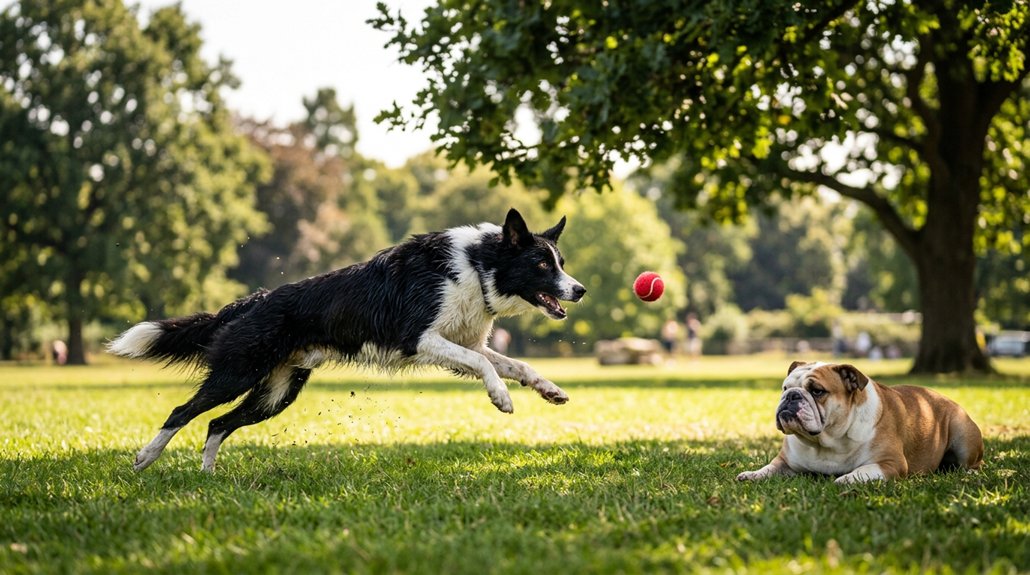
Due to their innate drive and curiosity, high-energy dogs like Border Collies and Australian Shepherds demand significant commitment in time and effort from their owners. These breeds thrive on extensive physical activity, requiring 1 to 2 hours of exercise daily. They excel in competitive dog sports due to their intelligence and agility. Without proper engagement, they can become restless, displaying behaviors like excessive barking or chewing. Their playtime preferences include interactive toys and games that stimulate their minds. Regular socialization is essential to meet their socialization needs, helping prevent undesired behavioral issues. Here’s a snapshot of high-energy breeds:
| Aspect | Description |
|---|---|
| Exercise Needs | 1-2 hours daily |
| Intelligence | High, suited for complex tricks |
| Restlessness Signs | Barking, chewing, digging |
| Playtime Preferences | Interactive toys, puzzles |
| Socialization Needs | Regular interaction to avoid behavior issues |
Key Traits and Benefits of Low-Energy Dogs
While high-energy dogs thrive on relentless activity, low-energy dogs like Basset Hounds and Shih Tzus offer a calmer companionship, ideal for those who prefer a relaxed pace. These breeds are known for their gentle companionship and appeal to individuals and families in search of low-maintenance care. Key traits include:
- Relaxed Nature: Low-energy dogs excel in less active households, enjoying leisurely walks and minimal play. Their adaptable temperament suits various living environments.
- Minimal Training Requirements: They typically require little training effort, exhibiting naturally good behavior conducive to smoother integration into your home.
- Affectionate Bonds: Thriving on companionship rather than vigorous exercise, these dogs enjoy close, loving relationships without the need for constant activity.
Understanding a dog’s personality before adoption is essential, particularly with mixed breeds showing more even-tempered traits.
How to Match Your Lifestyle With the Right Dog Energy Level

Matching your lifestyle with the right dog energy level requires careful assessment of your daily activities and available time for exercise. Dog ownership demands understanding the exercise frequency each breed necessitates. High-energy dogs like Border Collies need substantial physical activity and mental stimulation to prevent destructive behaviors. If your routine already includes frequent outdoor activities, such breeds may complement your lifestyle. Conversely, low-energy breeds such as Shih Tzus are better suited for owners with limited exercise time, thriving on leisurely walks. Evaluate potential dogs by observing their energy levels in a relaxed environment; multiple visits guarantee a true understanding of their nature. Structured routines and adequate stimulation, particularly for high-energy dogs, enhance bonds while reducing behavioral issues, facilitating harmonious dog ownership.
Tailored Nutrition Tips for High vs. Low Energy Dogs
To optimize the health and performance of your dog, understanding their energy level and its dietary implications is essential. Tailoring nutrition appropriately can make a substantial difference:
Understanding your dog’s energy level is crucial for optimizing health through tailored nutrition.
- High-Energy Dogs: These require high-quality protein and healthy fats. They’re often given more frequent meals to sustain stamina. Consider adding dietary supplements for joint and heart health, particularly if they have rigorous exercise routines. Consulting a veterinarian guarantees nutritional needs align with their active metabolism.
- Low-Energy Dogs: Feed lower-calorie diets with controlled portions to prevent obesity. Adjust dietary intake based on their reduced activity levels. Fewer, well-spaced meals can be beneficial for maintaining a healthy weight.
- General Tips: Monitor food consumption attentively and adjust diets to match activity fluctuations, confirming all essential nutrients are balanced.
Effective Training Techniques for Every Dog Energy Level
When training dogs, it’s essential to tailor intensity to match their energy levels to guarantee effective learning. High-energy breeds benefit from intensive routines with challenging exercises, while low-energy dogs excel in calm, short sessions featuring positive reinforcement. Incorporating mental stimulation alongside appropriate exercise routines fosters engagement and positive behavior across all energy levels.
Tailoring Training Intensity
While every dog requires training tailored to their energy level, the approach you choose can greatly impact its effectiveness. Consider these guidelines:
- High-Energy Dogs: Opt for a higher training frequency with longer session durations, around 30 to 60 minutes. Incorporate agility, obedience, and sports to channel their vigor.
- Low-Energy Dogs: Favor a lower training frequency with shorter session durations, typically 10 to 15 minutes. Focus on calm and gentle reinforcement to guarantee they aren’t overwhelmed.
- Mix and Match: For high-energy breeds, vary the routines by combining physical exercises with obedience tasks to maintain interest and provide structure. This method caters to their need for stimulation without compromising discipline.
Mental Stimulation Strategies
Understanding the need for mental stimulation is essential for effectively training dogs regardless of their energy levels. High-energy dogs thrive on mental enrichment through advanced obedience and competitive activities like agility. Incorporating interactive toys and puzzle games can keep their minds occupied beyond physical exertion. Low-energy dogs, in contrast, benefit from simpler forms of stimulation. Trick training or gentle scent activities challenge their minds without overwhelming them.
| Mental Enrichment | High-Energy Dogs | Low-Energy Dogs |
|---|---|---|
| Puzzle Games | Complex, Interactive Toys | Simple, Easy-to-Follow |
| Scent Activities | Engaging, Varied Scents | Subtle, Light Scent Tasks |
| Trick Training | Advanced Obedience Routines | Basic Commands, Slow Pace |
Regular daily sessions guarantee all dogs remain balanced and content.
Effective Exercise Routines
- High-energy dogs need vigorous routines.
- Medium-energy breeds require moderate playful activities.
- Low-energy breeds benefit from gentle exercises.
Customized exercise regimens, like the use of dog walkers, fulfill your dog’s physical and mental needs efficiently.
Making Your Decision: Pros and Cons of High vs. Low-Energy Dogs
Deciding between a high-energy and a low-energy dog requires careful consideration of lifestyle demands. High Energy Breeds, such as Border Collies and Siberian Huskies, are excellent choices for those who thrive on physical activity and mental challenges. They need significant exercise and stimulation, fitting active routines. Low Energy Breeds, like Basset Hounds and Shih Tzus, are more adaptable to relaxed environments, needing fewer activity levels and excelling in calmer companionship roles. Matching a dog’s energy level with your lifestyle is essential to guarantee a harmonious relationship. Consider the key differences:
| Attribute | High Energy Breeds | Low Energy Breeds |
|---|---|---|
| Exercise Needs | Extensive daily exercise and stimulation | Short walks, minimal play |
| Ideal Environment | Active households | Relaxed settings, smaller living spaces |
| Bonding Activities | Dog sports, agility training | Affectionate lounging |
| Suitable Owners | Active individuals | Seniors, less active families |
Frequently Asked Questions
What Is the 3-3-3 Rule With Dogs?
The 3-3-3 rule helps you understand your dog’s adjustment and shift period: three days feeling overwhelmed, three weeks becoming comfortable, and three months fully settled. Patience during these phases guarantees a successful bonding and integration process.
What Are the 4 Signs Your Dog Thinks of You as a Parent?
Nearly 74% of dog owners report strong bonds with their pets. Your dog displays bonding activities through attachment behaviors, parental instincts, and trust signals, such as seeking attention, playful interactions, protective instincts, and following you around.
How to Tell if a Dog Is High Energy?
Notice if your dog displays behavior cues like persistent playfulness or restlessness. High-energy breeds require significant exercise and exhibit strong breed characteristics such as enthusiasm and continuous movement, indicating their elevated energy levels and exercise needs.
How Do You Say “I Love You” in Dog Speak?
To say “I love you” in dog speak, observe canine communication and dog emotions. Use affectionate gestures: maintain relaxed eye contact, offer playtime, respond to vocalizations, and reciprocate cuddling, signaling you understand and cherish their emotional cues.
Conclusion
Imagine walking through a serene park, a calm, low-energy dog trotting gently beside you, or perhaps envision a bustling hike, a high-energy dog joyfully bounding ahead. In choosing a dog, matching its energy to your lifestyle is essential. Consider your daily routine and space to determine which companion fits best. High-energy dogs thrive on adventure and activity, while low-energy dogs offer peaceful companionship. Your choice shapes a harmonious partnership tailored to both your needs and theirs.