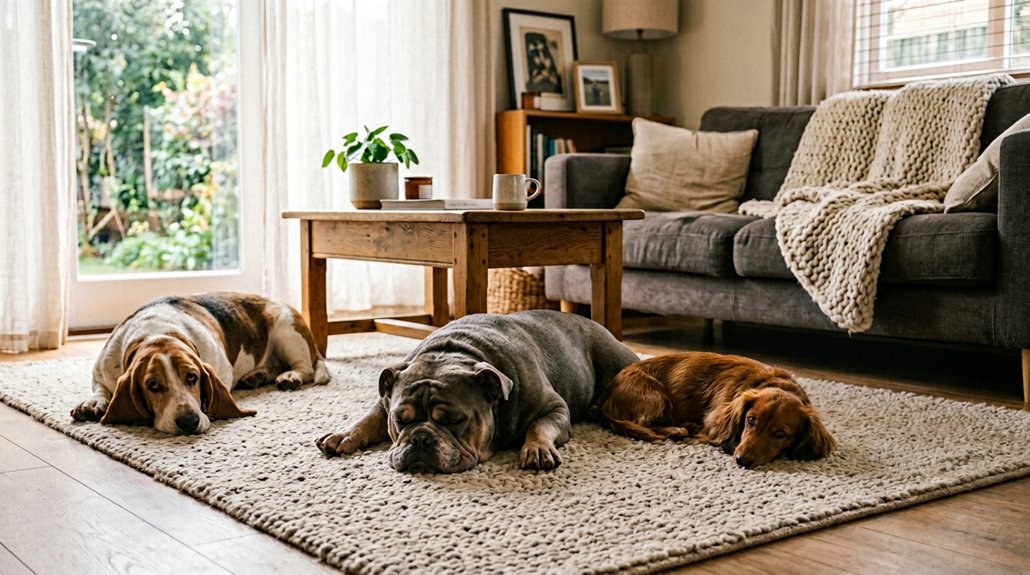
For a relaxed lifestyle with low-energy dog breeds, consider companions like Shih Tzus or Basset Hounds, which thrive in small spaces with minimal exercise. These breeds provide calming companionship, enhancing emotional well-being and reducing anxiety. Regular grooming and veterinary assessments maintain their health, while attention to temperature sensitivities guarantees comfort. A structured care routine supports both physical and mental wellness. To discover how these breeds can seamlessly integrate into your life, there’s more to explore ahead.
Key Takeaways
- Low-energy dog breeds like Shih Tzu and Basset Hound thrive in small spaces, ideal for apartment living.
- Relaxed temperaments and minimal exercise needs characterize breeds suitable for tranquil lifestyles.
- Sociable traits ensure compatibility with children and other pets, enhancing family harmony.
- Regular grooming is essential, especially for breeds with dense coats like Shih Tzu.
- Routine veterinary assessments are vital to maintaining the health of low-energy dog breeds.
Introduction to Low-Energy Dog Breeds
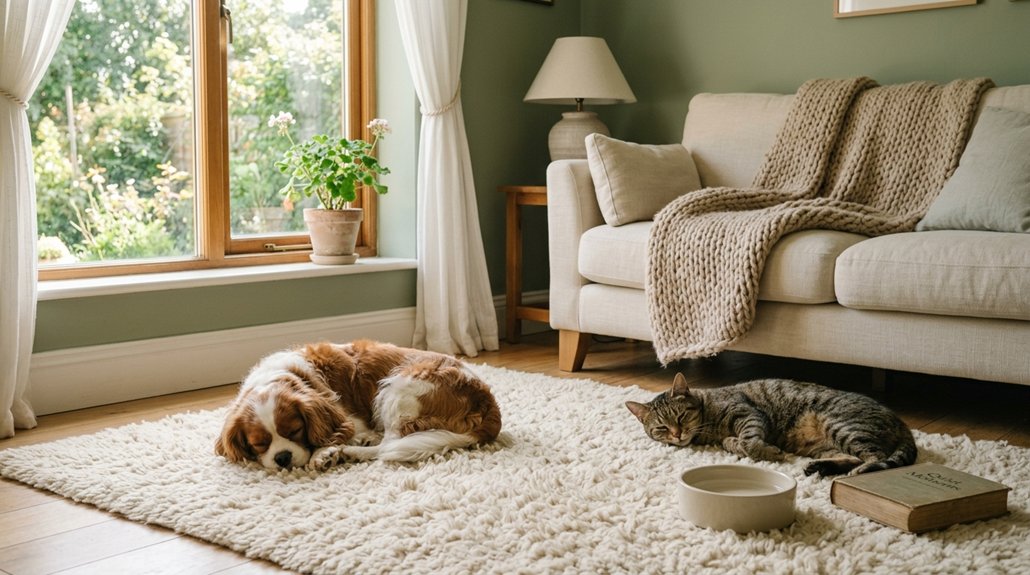
When considering a canine companion with low-exercise requirements, understanding the characteristics of low-energy dog breeds is vital. These breeds are distinguished by relaxed temperaments, minimal exercise needs, and a predisposition for lifestyle compatibility with laid-back individuals or families. Exemplified by breeds such as Basset Hounds and Shih Tzus, they thrive with short walks and indoor play, making them suitable for smaller living spaces, including apartments. Their gentle, affectionate behavior enhances familial bonds and owners’ emotional wellness. Despite lower activity demands, regular grooming is important, especially for breeds with dense coats requiring maintenance. Importantly, breeds like English Bulldogs and Cavalier King Charles Spaniels exhibit sociable characteristics, compatible with households containing children and other pets, fostering harmonious interspecies interactions.
Benefits of Low-Energy Dogs for Relaxed Lifestyles
When considering low-energy dog breeds, you’re likely to appreciate their contribution to enhanced emotional wellbeing through consistent companionship and lower stress levels. These breeds adapt well to confined spaces, such as apartments, without compromising their comfort or contentment. Additionally, by maintaining a tranquil atmosphere, they help promote family harmony, offering a cohesive living environment.
Enhanced Emotional Wellbeing
Although life can often be hectic, low-energy dog breeds provide a unique source of tranquility that enhances emotional well-being. These breeds, such as Basset Hounds and Cavalier King Charles Spaniels, cultivate emotional connections that offer companionship, reducing loneliness and anxiety. Additionally, the calming presence of breeds like Greyhounds and Newfoundlands induces a soothing home environment, facilitating stress relief and lowering cortisol levels. The affectionate nature inherent to these dogs encourages social bonding, thereby underpinning robust interpersonal relationships and fostering a supportive familial atmosphere. Furthermore, with breeds such as the Shih Tzu and English Bulldog requiring minimal exercise, owners enjoy gentle companionship without physical exertion, enhancing overall emotional health. Your emotional stability is further supported by the gentle demeanor of Bernese Mountain Dogs, promoting a sense of security.
Suitable for Smaller Spaces
Selecting the ideal canine companion involves evaluating living space constraints alongside emotional benefits. Low-energy dog breeds, such as Shih Tzus and Basset Hounds, align well with the space requirements of apartment living. Their minimal exercise needs and compact breed characteristics make them perfectly suited for confined environments.
| Breed | Space Requirements | Breed Characteristics |
|---|---|---|
| Shih Tzu | Minimal outdoor access | Compact, adaptable |
| Basset Hound | Limited exercise needs | Low-energy, comforting presence |
| English Bulldog | Thrives in close quarters | Calm, quiet demeanor |
| Cavalier King Charles | Limited space adaptability | Gentle, easily bonds with owners |
This breed diversity allows you to select a dog that fits your lifestyle, accommodating restricted space while maintaining emotional connectivity. Ensuring breed compatibility enhances relaxation without sacrificing companionship quality.
Promotes Family Harmony
Tranquility characterizes households with low-energy dog breeds, facilitating an atmosphere conducive to family harmony. Breeds like Basset Hounds and English Bulldogs cultivate a calming environment, ideal for bonding activities. Their minimal exercise needs, favoring short walks and indoor play, integrate seamlessly into peaceful routines. These dogs offer accessible companionship regardless of your family’s activity level.
Cavalier King Charles Spaniels and Great Pyrenees enhance emotional bonds with their affectionate dispositions, fostering a supportive setting for both children and adults. The gentle demeanor of breeds like the Newfoundland and Shih Tzu encourages patience and stability, alleviating familial stress and anxiety. These breeds adapt well to various living situations, including apartments, ensuring a stable, harmonious home environment while providing consistent emotional support.
Caring for Low-Energy Dogs: General Tips
Many low-energy dogs benefit from a structured care routine tailored to their unique needs. Integrating exercise alternatives, such as regular short walks of 20-30 minutes, guarantees physical health while also providing necessary mental stimulation. This helps prevent conditions like boredom and obesity. Engaging your dog with interactive toys or indoor play further supports mental engagement and entertainment needs. Regular grooming, especially for breeds with longer coats, is vital to prevent matting and maintain hygiene. Monitoring your dog’s diet is essential, as low-energy breeds can be prone to weight gain; it’s prudent to consult with your veterinarian for dietary recommendations. Finally, establish a comfortable home environment with cozy resting spots and gentle routines to complement your pet’s relaxed lifestyle.
Meet the Low-Energy Breeds
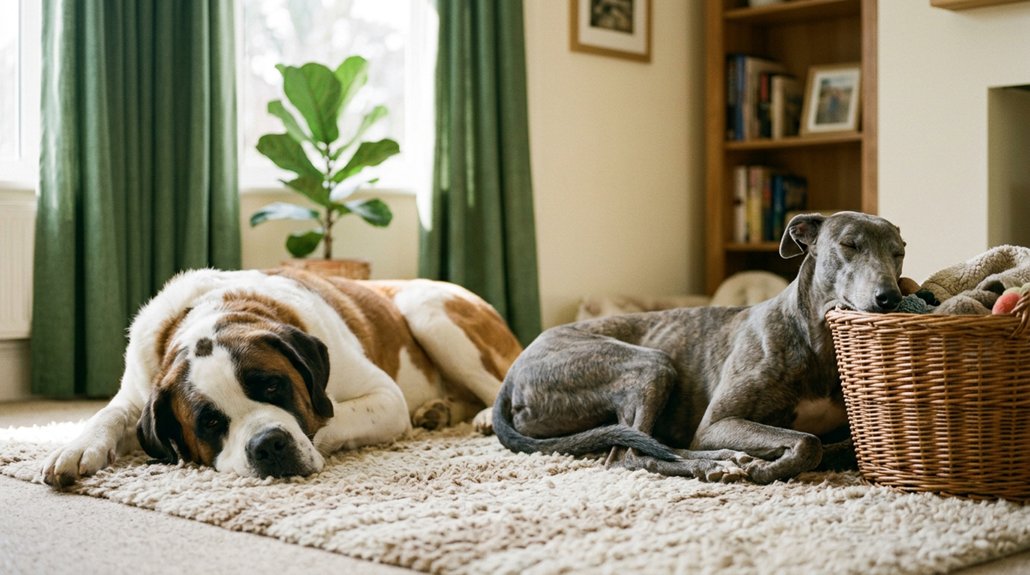
If you’re looking for a canine companion that requires minimal exercise, low-energy breeds offer an excellent choice. Breed characteristics such as inactivity and docile dog temperament are predominant in breeds like the Basset Hound and English Bulldog. These dogs exhibit a friendly disposition with limited daily movement requirements, making them suitable for leisurely lifestyles. Similarly, the Shih Tzu and Cavalier King Charles Spaniel flourish in tranquil environments, requiring merely short walks and limited indoor activities for ideal health. The Greyhound and Bernese Mountain Dog show a preference for domestic relaxation, adequately integrated into family-oriented settings. Adaptable to varied living scenarios, dogs like the Great Pyrenees and Chow Chow demand moderate activity levels, aligning well with less active or apartment-based dwellers. Regular grooming guarantees their health maintenance despite lower activity intensity.
Enhancing Family Life With a Low-Energy Dog
When considering the integration of a low-energy dog into a familial setting, it’s pivotal to assess their potential impact on domestic routines and emotional stability. Low-energy breeds, such as the Basset Hound or English Bulldog, provide a calming effect, which enhances emotional well-being. Their minimal exercise demands align well with busy lifestyles, allowing for seamless family activities. Dogs like the Cavalier King Charles Spaniel exhibit affectionate nature, strengthening bonding experiences and fostering psychological security. In addition, breeds like the Great Dane demonstrate significant tolerance with children, promoting safe, positive interactions. Opting for such low-energy companions supports harmonious living, enabling families to engage in pet ownership without succumbing to the rigorous exercise demands typical of higher-energy breeds.
How to Choose and Care for Your Laid-Back Pooch
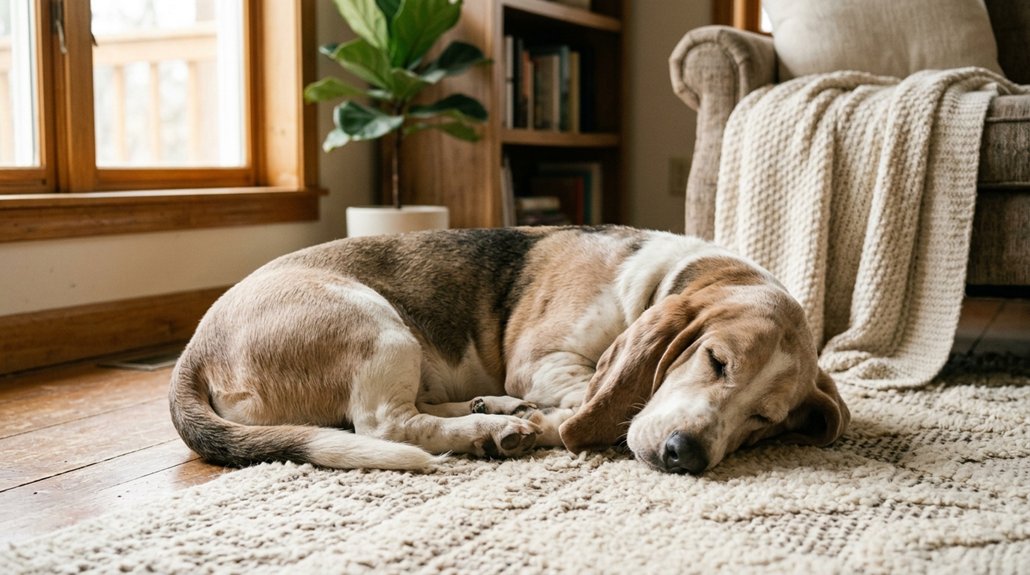
When selecting a low-energy dog breed, guarantee compatibility with your living situation, as adaptability to space constraints directly affects their well-being. Prioritize breeds requiring minimal exercise and manage grooming tasks, as species-specific coat and health care are essential. Additionally, establish a serene home environment, particularly crucial for breeds sensitive to environmental stressors such as the Shih Tzu and English Bulldog.
Matching Lifestyle Needs
Selecting a low-energy dog breed requires careful consideration of your living circumstances, as certain breeds are better suited for specific environments. Evaluating breed compatibility and lifestyle preferences is imperative. For instance, a Basset Hound thrives in quieter homes, showing high adaptability to relaxed atmospheres. If residing in an apartment, opt for breeds like Cavalier King Charles Spaniel, known for their affectionate nature and compatibility with family members. Consider activity levels and temperature sensitivities; English Bulldogs prefer cooler climates for short strolls, while Greyhounds enjoy brief walks. Remember, low-energy dogs still demand intermittent exercise and mental stimulation, with breeds such as the Newfoundland necessitating moderate physical activity. By matching your environment and lifestyle needs, you’ll cultivate a harmonious companionship with your laid-back pooch.
Grooming and Health Tips
Choosing a low-energy dog breed requires meticulous attention to grooming and health requirements, ensuring your pet’s well-being and comfort. Effective grooming techniques are essential: breeds like Shih Tzus require frequent brushing for mat prevention, while breeds with intricate ear structures, such as Basset Hounds, benefit from regular ear cleaning to curb infection risks. Health maintenance necessitates routine veterinary assessments, particularly for breeds like the English Bulldog, which often contend with specific physiological ailments like respiratory challenges. Though low in energy, breeds such as the Cavalier King Charles Spaniel still demand succinct exercise routines to mitigate obesity. Understanding the breed’s physical characteristics, like the Chow Chow’s double coat, informs appropriate grooming practices vital for thermoregulation and hygiene in varying climates.
Maintaining Relaxed Environment
Although low-energy dog breeds are often perceived as low-maintenance, understanding their specific environmental and care needs is critical for suitable well-being. When configuring a habitat for these breeds, consider environment enrichment and dog friendly furniture to facilitate their serene nature. This includes soft bedding and interactive toys to stimulate their minds and furnish comfort. Selection must account for moderate exercise requirements, evident in breeds like the Basset Hound and English Bulldog, benefiting from short walks and a tranquil setup.
“`markdown
| Breed | Activity Level | Ideal Habitats |
|---|---|---|
| Basset Hound | Low | Calm, short walks |
| English Bulldog | Low | Soft bedding, quiet space |
| Cavalier King | Moderate | Regular grooming, comfort |
| Greyhound | Low to Moderate | Lounging areas, gentle play |
| Bernese Mountain | Low | Gentle exercise, cool areas |
“`
Maintain grooming routines and acknowledge breed-specific health needs for suitable relaxation.
Frequently Asked Questions
What Is the Calmest Low-Energy Dog Breed?
You’d find the English Bulldog is likely the calmest low-energy breed. They’re gentle companions with serene personalities, exhibiting docility and minimal exercise needs, aligning with relaxed household dynamics, fostering an atmosphere of tranquility and scientific peace.
What Is the 7 7 7 Rule for Dogs?
The 7 7 7 rule helps you understand that each seven dog years aligns with 50 human years. It guides you in adjusting your dog’s exercise intensity and energy levels, considering age-related changes to guarantee appropriate care.
What Annoys Dogs the Most?
A substantial 43% of dogs experience anxiety due to loud noises, classifying this as a significant canine frustration. Ensuring consistent routines and minimizing stressors helps manage dog behavior and reduces their overall anxiety levels.
What Is the Calmest, Friendliest Dog Breed?
The Bernese Mountain Dog tops the list as calmest and friendliest. You’ll find them to be gentle giants, offering affectionate companionship. Their temperate disposition, paired with easy adaptability, makes them ideal for peaceful family environments.
Conclusion
Incorporating a low-energy dog into your lifestyle can markedly reduce household stress. Studies indicate that about 24% of pet owners report lower anxiety levels due to their pets’ calming presence. By selecting a breed that aligns with your laid-back lifestyle, you’re not only ensuring their well-being but also enhancing your own quality of life. Remember, understanding your dog’s exercise and dietary needs is essential in cultivating a harmonious and healthy home environment.