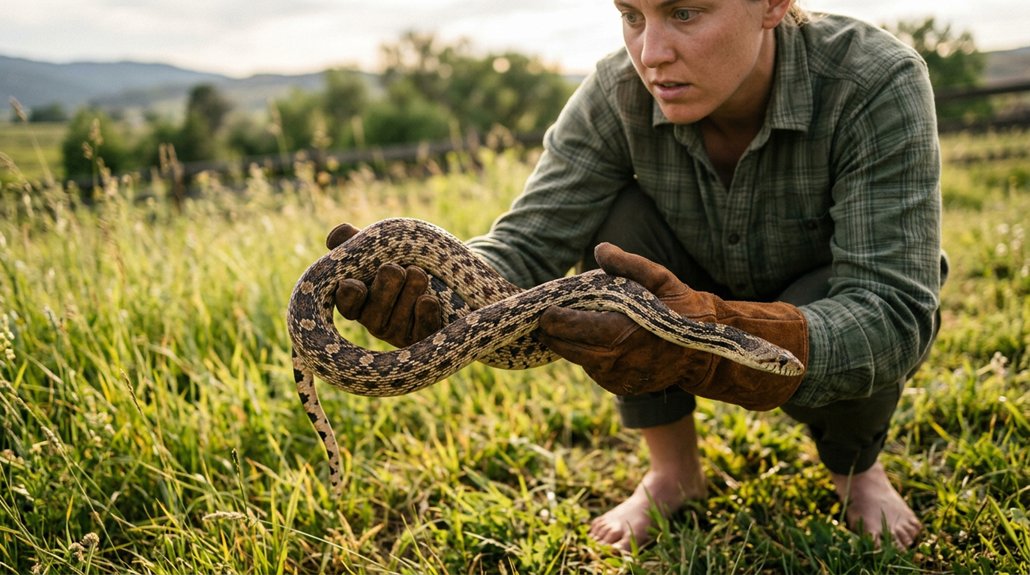
To safely handle a snake as a beginner, approach the enclosure slowly and use a snake hook to avoid startling it. Wash your hands before and after handling, and support its body without restricting movement. Opt for species like corn snakes due to their accommodating nature. Guarantee the environment is calm, maintaining temperatures between 70–75°F. Avoid handling during shedding or right after feeding. With patience, you’ll discover more techniques to build trust and create a peaceful bond.
Key Takeaways
- Approach the snake enclosure slowly to prevent startling the snake.
- Use a snake hook for initial contact to gently tap the snake’s body.
- Support the snake’s body, allowing it freedom to move naturally.
- Wash your hands before and after handling the snake to reduce bacteria transfer.
- Avoid handling the snake during shedding or immediately after feeding.
How to Handle Snakes Safely: Beginner’s Guide
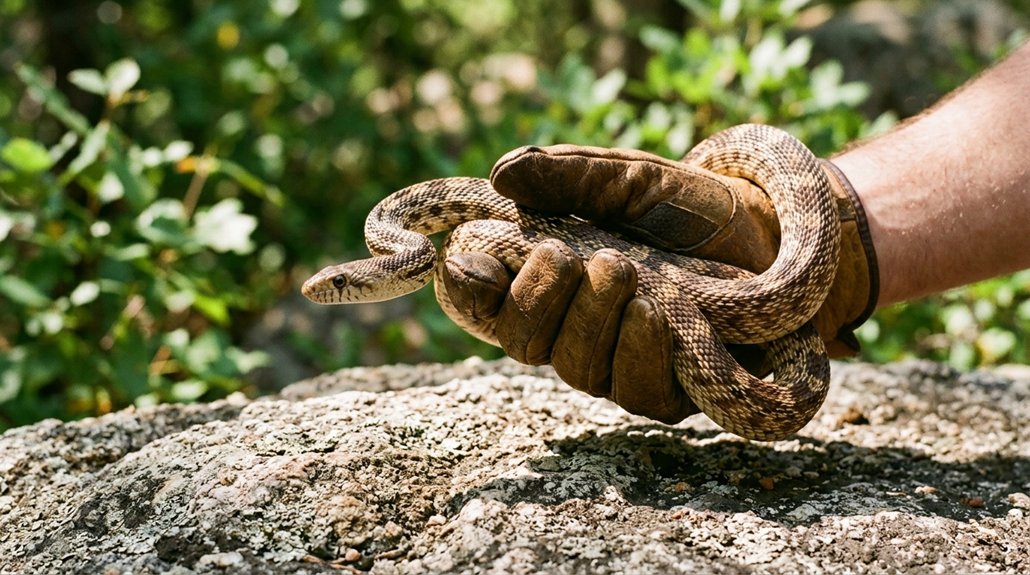
When beginning your journey in handling snakes, it is crucial to understand the fundamental techniques to guarantee both your safety and the snake’s well-being. Observing snake behavior is critical; approach their enclosure slowly, and use a snake hook to lightly tap their body. This handling etiquette helps prevent startling the snake by not reaching from above. Wash your hands before and after handling to minimize bacteria transfer. Properly support the snake’s body, allowing it to move freely over your hands to avoid stress. Steer clear of handling during shedding or after it has eaten. Create a calm environment, devoid of distractions and hazards, to promote a positive experience. By respecting these practices, you’ll foster a safe interaction with your snake.
Choosing the Best Snake Species for New Owners
When selecting a snake species as a new owner, prioritize temperament characteristics, as they influence handling ease. Corn snakes are ideal due to their accommodating nature, while royal pythons require careful environmental considerations for their sensitivity. Although hognose and king snakes may show defensive behaviors initially, consistent interaction can ease these tendencies, making them manageable over time.
Best Temperamental Choices
For those new to the world of snake ownership, selecting a species with a suitable temperament is crucial for a positive experience. Corn snakes are an ideal choice due to their gentle nature and ease of handling, making them engaging companions. Royal pythons, known for their calm behavior, enjoy curling up in your hands, though being mindful of their sensitivity to environments is essential. Hognose snakes initially show defensive behaviors, but with patience, they adapt to handling, improving your understanding of snake care. King snakes and milk snakes may use musk as defense, but consistent handling can increase comfort levels. Keep in mind, individual personalities vary; spending time with different species helps you find one aligning with your handling preferences and comfort levels.
Environment’s Role in Behavior
Understanding the role of the environment is vital when selecting the best snake species for new owners, as it directly influences a snake’s behavior. Maintaining proper habitat conditions, particularly temperature, is essential. Ideal temperatures range from 70–75°F, which can greatly impact a snake’s disposition. If temperatures are inconsistent or unsuitable, it can lead to stress-related behaviors, making handling more challenging. Stress reduction is achieved by minimizing stimuli like loud noises or the presence of other pets, fostering a serene environment. Selecting species with calm temperaments, such as corn snakes or royal pythons, and providing a supportive environment will enhance their sociability. For beginners, understanding these factors guarantees a smoother introduction to snake care and handling, fostering a mutual trust.
Beginner-Friendly Snake Species
Choosing a beginner-friendly snake species is essential for new snake owners seeking a rewarding and manageable pet-keeping experience. Understanding snake characteristics such as temperament and handling tolerance is vital. Corn snakes are renowned for their calm nature, making them a popular choice. Meanwhile, royal pythons are known for their manageable size and prefer curling up comfortably during handling. Hognose snakes might start with defensive displays but can adapt over time with patience.
Here’s a quick comparison to guide you:
| Snake Type | Characteristics | Beginner Tips |
|---|---|---|
| Corn Snake | Calm temperament | Handle regularly |
| Royal Python | Easy to manage | Provide gentle handling |
| Hognose Snake | Defensive initially | Build trust with patience |
For any species, understanding their unique traits guarantees a positive experience.
How to Create a Calm Environment for Handling
To foster a calm environment for handling snakes, it’s crucial to maintain a suitable temperature range in the area, ideally between 70–75°F, as temperature stability contributes greatly to the snake’s comfort. Stress reduction starts by creating an organized space. Remove clutter to minimize distractions, as an orderly environment can considerably lower anxiety levels in snakes. Clear unnecessary items and move other pets to another room to keep the setting tranquil. Observe your snake’s body language for potential signs of distress or ease, adjusting your approach accordingly. Note that handling during shedding periods is inadvisable due to increased stress and potential aggression. By being attentive and conscientious in your setup, you’ll guarantee the handling experience is comfortable for both you and your snake.
Simple Steps for Picking Up Your Snake
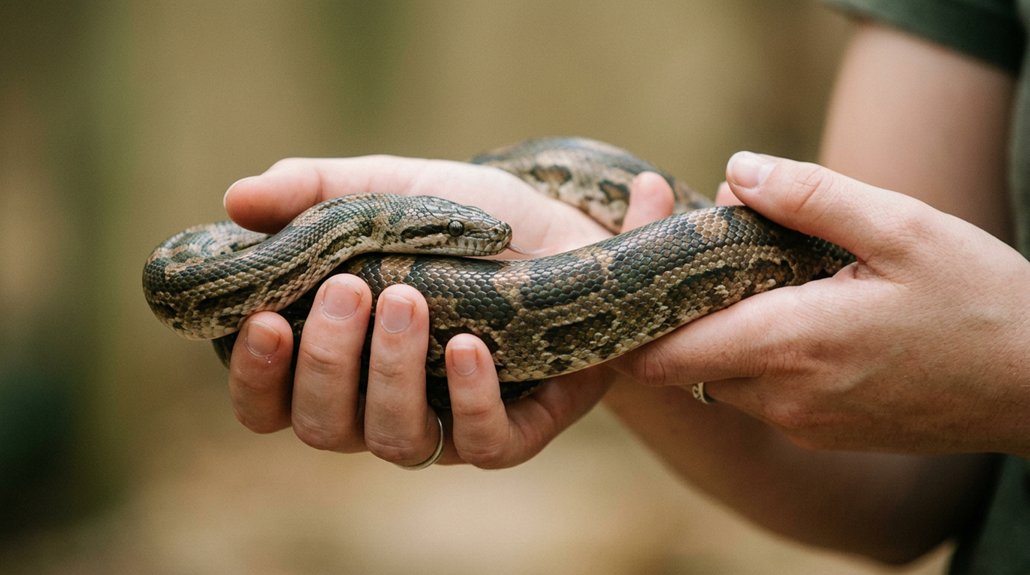
When you’re ready to pick up your snake, approach its enclosure with slow, calm movements to prevent startling it. Use a snake hook to gently alert the snake to your presence, reducing the likelihood of surprising it. As you lift the snake, make certain your method includes reaching from the side or rear while supporting its body adequately to allow it to move freely in your hands.
Approach With Calm Movements
- Approach slowly: Moving too quickly can startle your snake, so it’s best to move with intention.
- Use a snake hook: Gently tap the snake’s body to announce your presence, helping reduce stress levels.
- Reach from the side: Approach from the side or rear to avoid triggering a defensive response from your snake.
- Stay seated: If you’re new to handling, sitting down can help both you and the snake feel more secure.
These techniques will foster a safer, more comfortable interaction.
Proper Body Support Techniques
Although handling snakes can be intimidating for beginners, proper body support techniques can make the process safer and more comfortable for both you and the snake. Start by approaching the enclosure slowly and calmly. Use a snake hook to gently tap the snake’s body, signaling your presence. When you’re ready to pick it up, reach from the side or rear to avoid startling it. This handling technique greatly reduces stress responses. For proper body support, especially in larger species, lift the snake in the middle to maintain balance and stability. Allow the snake to move freely over your hands instead of gripping it tightly, which prevents injuries and fosters a calm demeanor. Maintaining these techniques guarantees a positive experience for both you and your snake.
Common Handling Mistakes to Avoid
Many snake enthusiasts make several critical errors when handling their reptiles, which can lead to stress or even injury for both snake and handler. Understanding the common mistakes and handling triggers is essential for safe interaction. Here’s a list of errors to avoid:
- Mimicking Predator Behavior: Reaching down from above your snake can mimic predator behavior, triggering fear and aggression. Always approach from the side.
- Handling After Feeding: Avoid handling snakes immediately post-feeding. Wait at least 48 hours to minimize stress and prevent defensive behaviors.
- Ignoring Stress Signals: If a snake displays stress or illness indicators, don’t handle it. Handling may aggravate these conditions, raising bite risk.
- Applying Excessive Pressure: Always hold gently, avoiding tight grips. This prevents injury and guarantees the snake feels secure.
How to Win Your Snake’s Trust
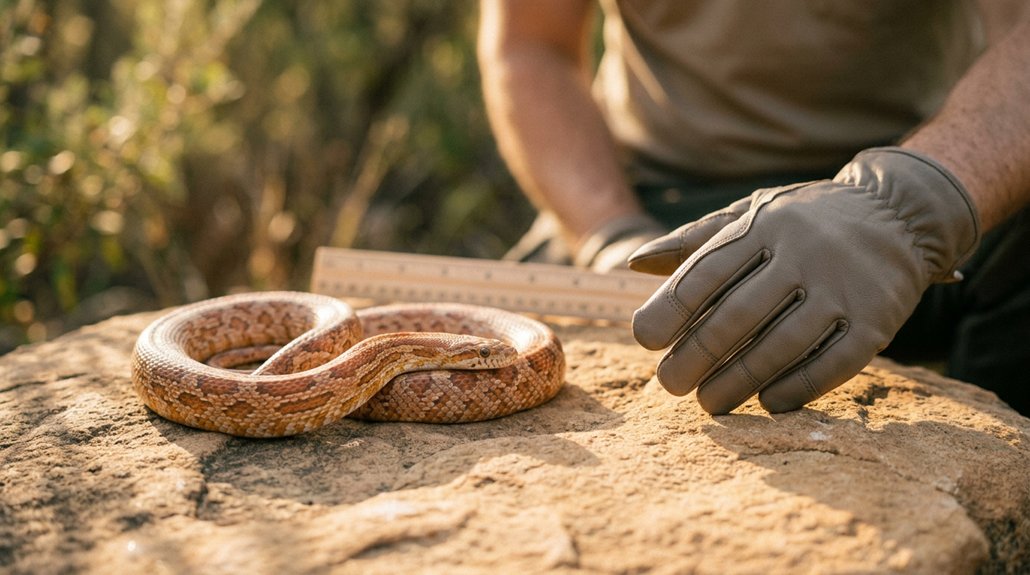
Building trust with your snake is essential for a harmonious relationship, and it’s important to understand the specific environmental and behavioral considerations involved. Trust building strategies begin with creating a calm environment; maintain temperatures between 70–75°F to reduce stress. Avoid handling during shedding periods, as this can heighten aggression and inhibit trust. Approach with gentle, smooth movements, allowing the snake to acclimate to your presence without fear-inducing disturbances. Start with short handling sessions, then gradually increase handling frequency as the snake adjusts to your scent and style. Speak softly, reinforcing a sense of security. Consistent, positive interactions guarantee your snake perceives you as a non-threat, fostering trust over time. Follow these steps, and you’ll forge a tranquil bond.
Frequently Asked Questions
How to Handle Your Snake for the First Time?
For your snake’s first handling, approach slowly and tap with a hook to announce your presence. Master handling techniques by supporting its mid-section, watching snake behavior for distress. Avoid overhead movements, and maintain a calm environment throughout.
Is It Better to Grab a Snake by the Tail or Head?
Imagine handling a live wire; it’s neither good to grip the tail nor head of a snake. A head grip risks injury, while tail advantages vanish during erratic moves. Mid-body control guarantees stability and safety.
Will a Snake Chase Me if I Run?
A snake typically won’t chase you if you run. Running myths exaggerate snake behavior; most snakes prioritize escaping. They lack stamina for pursuit and prefer avoiding confrontation. Remaining calm and understanding their behavior reduces aggressive encounters.
What Smell Does a Snake Hate?
Snakes hate strong scents like cinnamon, vinegar, and clove oil, triggering their fear responses. You could use these snake repellent scents to keep them away, but don’t overdo it, or you’ll stress them unnecessarily.
Conclusion
Successfully handling snakes involves a series of steps that start with selecting a suitable species and setting up a serene space. As you proceed, practice patience and precision. Avoid abrupt actions to maintain your snake’s steady temperament. By carefully crafting connections, you’re cultivating trust and creating a cooperative companion. Remember, regular gentle routines build bonds. By mastering these methods, you’ll transform from an anxious amateur to an accomplished snake handler, ensuring safety and satisfaction for both you and your scaly sidekick.