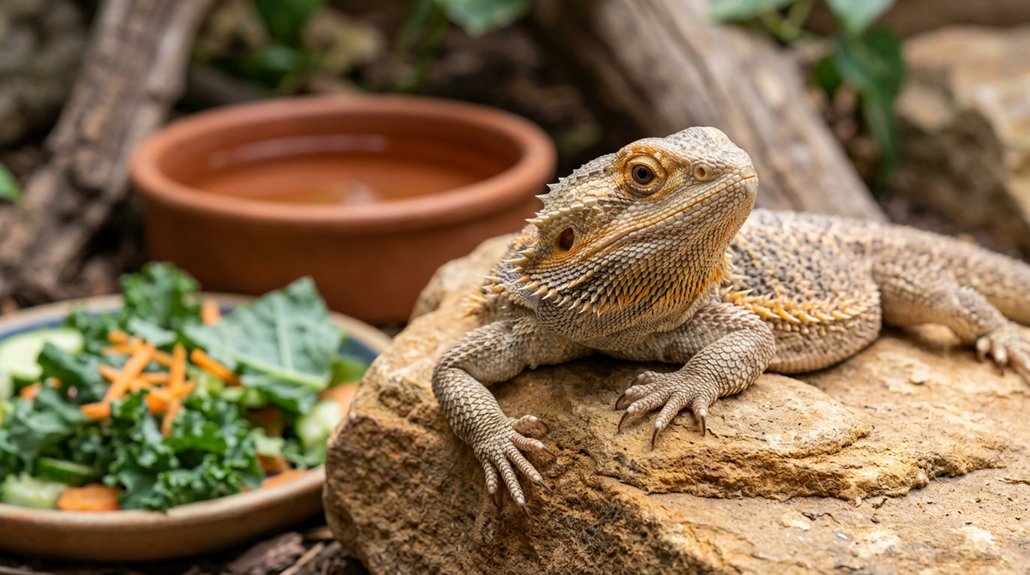
Caring for a bearded dragon involves providing a 40-gallon habitat with a temperature gradient: 95-105°F for basking, 75-85°F cooler zone. Use reptile carpet or ceramic tiles as substrates. Guarantee full-spectrum UVB lighting and maintain humidity at 30-50%. Diet varies by age: adults need 70% vegetables. Regular veterinary care is essential for health monitoring. Gentle handling fosters trust. Understanding temperature, diet, and health needs guarantees a healthy dragon, and there’s more to explore for ideal care.
Key Takeaways
- Ensure a minimum 40-gallon enclosure with a temperature gradient for effective thermoregulation and comfort.
- Provide high-output UVB lighting and a diet rich in calcium for overall health and bone strength.
- Use a mix of insects and vegetables tailored to the dragon’s age; adults need mostly vegetables.
- Foster trust through gradual, gentle handling; watch for stress signals like beard puffing.
- Monitor health through regular vet visits and by observing behavior, appetite, and stool consistency.
Choosing the Right Habitat for Your Bearded Dragon
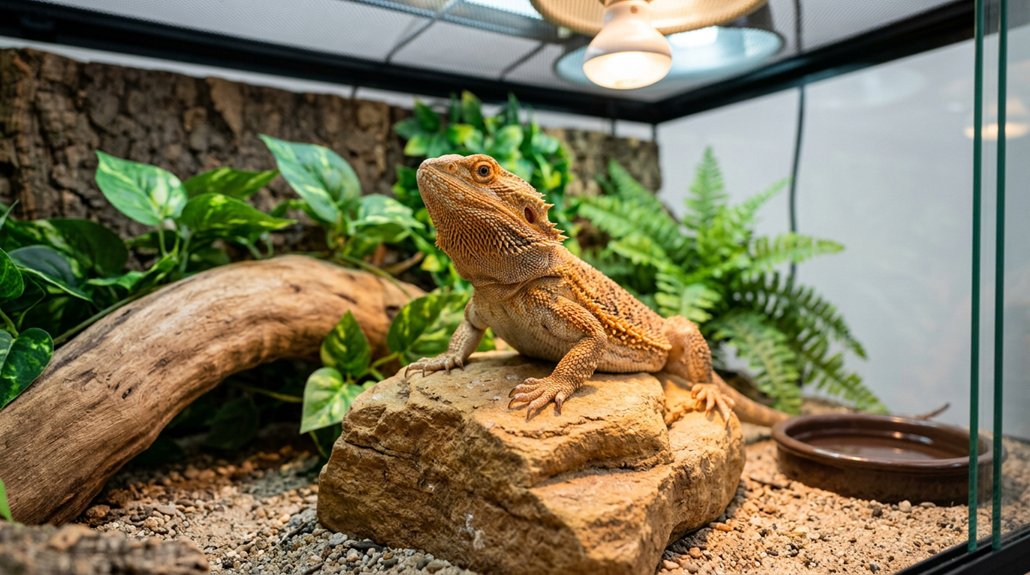
When setting up a habitat for your bearded dragon, ensuring it’s both spacious and appropriate for their needs is essential for their health and well-being. A minimum of 40 gallons is recommended for adults, yet larger spaces encourage natural exploratory behavior. For habitat decoration, select safe substrates like reptile carpet or ceramic tiles and enhance the environment with enclosure accessories such as branches, hides, and basking platforms. These not only stimulate your dragon’s curiosity but also create an ideal temperature gradient. Position a basking area at 95°F to 110°F on one side, with a cooler zone of 75°F to 85°F on the other, ensuring proper thermal regulation. Secure the enclosure, provide adequate ventilation, and install a full-spectrum UVB light for essential health benefits.
Handling and Bonding With Your Bearded Dragon
Among reptile enthusiasts, bearded dragons are renowned for their manageable behavior, making them excellent companions for beginners and families alike. To foster a strong bond, employ gentle bonding techniques by supporting your dragon with both hands, allowing them to feel secure. Start with brief handling sessions and gradually increase duration, fostering trust over time. Be vigilant for stress signals, such as beard puffing or color darkening, which suggest your dragon might need a pause. Regular interaction not only strengthens your bond but also familiarizes them with routine health checks. Consistency in handling fosters a calm, stress-free environment for your bearded dragon, ensuring that they’re not just accustomed, but genuinely receptive to human interaction. This approach promotes a harmonious relationship.
Setting Up Ideal Temperature and Lighting Conditions
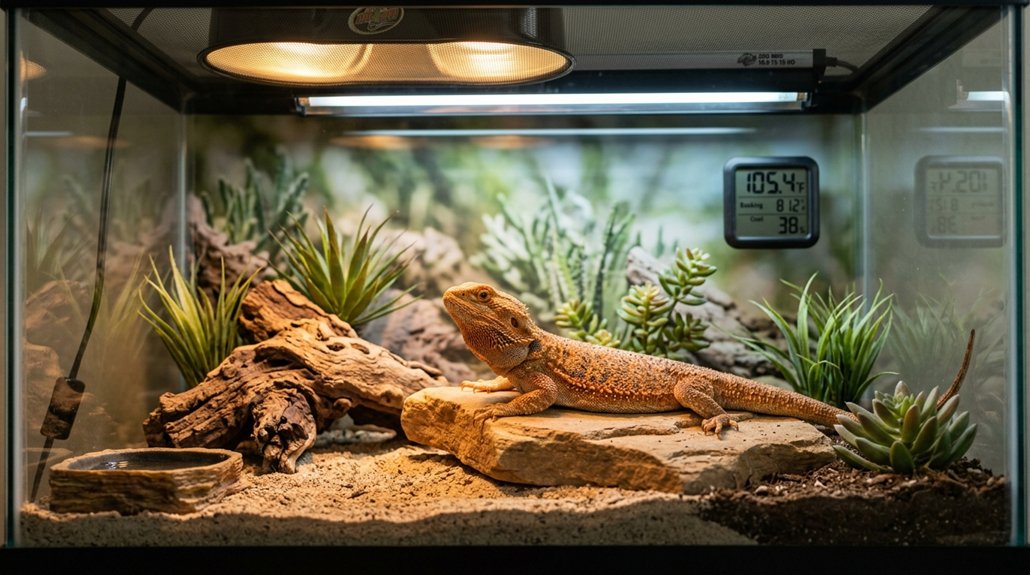
To maintain ideal health for your bearded dragon, create a temperature gradient with a basking area at 95-105°F and a cooler zone between 75-85°F to promote effective thermoregulation. Use a high-output UVB lighting fixture, essential for proper calcium absorption, and plan to replace the bulb every 6-12 months, as UVB output declines over time. Simulate a natural environment by setting a 12-hour day/night cycle with timers, ensuring your dragon’s circadian rhythms remain balanced.
Temperature Gradient Basics
Setting up an ideal temperature gradient is essential in guaranteeing a healthy environment for your bearded dragon. By maintaining the basking area between 95°F and 110°F, you’re catering to your dragon’s basking preferences, promoting effective temperature regulation. On the opposite end, make certain the cool side stays between 75°F and 85°F, allowing your reptile the ability to thermoregulate. To achieve this balance, strategically place heat sources and consistently monitor with reliable thermometers, adjusting as necessary. At night, temperatures shouldn’t dip below 68°F to prevent cold stress; ceramic heaters can be utilized for maintaining vital warmth. Constant vigilance of these temperature zones guarantees your bearded dragon’s comfort and health, creating an excellent habitat conducive to their well-being.
Essential UVB Lighting
UVB lighting plays a significant role in the health of bearded dragons, as it’s important for vitamin D3 synthesis, which enables effective calcium absorption and prevents metabolic bone disease (MBD). Make sure your enclosure features a high-output linear UVB fixture. This setup helps maximize UVB exposure essential for health. Remember, UVB bulb longevity diminishes over time, requiring regular replacements for sustained efficacy.
Establish a basking zone setup where temperatures reach 95-105°F. The cooler side should maintain 75-85°F, creating a crucial thermal gradient. Employ a 12-hour light/dark cycle with automatic timers to provide consistent UVB and basking light exposure. Monitor humidity, keeping it between 30-50%.
- UVB bulb longevity
- Basking zone setup
- Thermal gradient
- 12-hour light/dark cycle
- Humidity levels
Crafting a Balanced Diet for Every Age
When adjusting your bearded dragon’s diet, it’s vital to tailor the balance of insects and plant matter based on their age to guarantee proper growth and health. Young dragons need a higher percentage of protein-rich insects, whereas adults require more leafy greens. Essential supplements, like calcium dusting, should be provided regularly to prevent deficiencies and support hydration, avoiding toxic foods like avocado or citrus to keep your dragon thriving.
Age-Appropriate Dietary Needs
Although bearded dragons are relatively hardy reptiles, understanding their age-appropriate dietary needs is vital for promoting ideal health throughout their lifespan. Adapting feeding schedules according to age will optimize their growth and general well-being. Babies require a diet of 70% protein-rich insects and 30% vegetables, suiting their dietary preferences for rapid growth. As they mature into juveniles, shift to a 50/50 mix of insects and vegetables. Adults thrive on a diet primarily of vegetables, with only 20-30% insects. Leafy greens and occasional fruits bolster their fiber and hydration. Make sure feeder insects are dusted with calcium powder to prevent metabolic bone disease. Additionally, monitor insect size for safety.
- Feeding schedules tailored to age
- Protein-rich insects for babies
- Balanced diet for juveniles
- Veggie-centric diet for adults
- Calcium supplementation significant
Insect and Plant Balance
Understanding the balance between insects and plant material is essential for maintaining the health of bearded dragons at all stages of life. Younglings (0-6 months) thrive on a diet with 60-80% insect variety, providing essential protein for growth. Appropriate insects include dubia roaches, crickets, and black soldier fly larvae. As they progress to juveniles (6-12 months), balance shifts to 50% insects and 50% plant selection, ensuring adequate nutrition from both sources. By adulthood (1 year and older), focus on a plant selection of 70-80%, primarily with nutrient-rich greens like collard greens and mustard greens, and only 20-30% insects. This ratio is vital as adult dragons need more vitamins and minerals from vegetables to maintain a healthy lifestyle.
Essential Supplements and Hydration
While crafting a balanced diet for bearded dragons, understanding the nuances of essential supplements and hydration is crucial at every developmental stage. Calcium supplementation varies by age: juveniles need calcium without D3 several times weekly, while adults require it less frequently. Regularly dust feeder insects with a vitamin-mineral supplement to address nutritional deficiencies. Hydration importance cannot be overstated. Provide fresh water daily and maintain humidity between 30-50%.
- Juvenile diet: 60-80% insects
- Adult diet: 70-80% vegetables, 20-30% insects
- Essentials: collard greens, mustard greens, grated carrots
- Vitamin-mineral supplement dusting: 3 to 5 times weekly
- Maintain ideal ambient humidity: 30-50%
This structured approach supports a healthy, well-rounded omnivorous diet tailored for each age group.
Recognizing Common Health Issues in Dragons
When caring for a bearded dragon, identifying common health issues early is important to their well-being. Verify they’re receiving ideal UVB exposure and a balanced diet to follow MBD prevention strategies. Symptoms like lethargy and weakened bones indicate potential Metabolic Bone Disease. Watch for respiratory infection signs, such as wheezing or nasal discharge, often caused by cool or humid environments.
Impaction treatment methods involve recognizing key symptoms like lethargy and appetite loss; seeking immediate veterinary attention is necessary. Regularly evaluate your dragon’s stool; unusual color or consistency serves as stool observation indicators of health issues needing professional diagnosis. Additionally, monitoring weight changes and identifying any unusual behavior or distress signs are significant practices for early detection and intervention of health problems.
Maintaining Cleanliness and Safety in Dragon Habitat
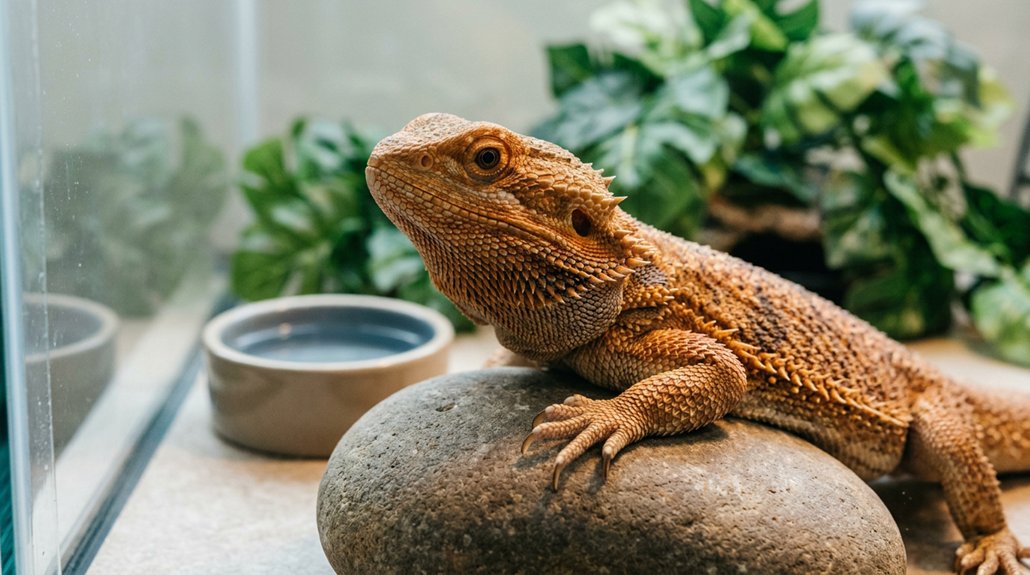
Ensuring the cleanliness and safety of your bearded dragon’s habitat is vital to their health. A robust cleaning schedule is essential for maintaining a hygienic environment. Perform daily spot cleaning to remove waste and uneaten food, thereby preventing odors and bacterial growth. Monthly deep cleanings, including washing all furnishings, are important. When changing substrates, prioritize substrate safety; opt for reptile carpet, tile, or paper towels over loose substrates like sand to avoid impaction risks. Use non-toxic cleaning agents to eliminate hazardous residues. Providing a clean, shallow water dish daily aids hydration and habitat cleanliness.
- Daily spot cleaning to remove waste
- Monthly deep cleaning for all furnishings
- Use non-toxic cleaners to avoid hazardous residues
- Replace soiled substrates promptly
- Fresh water daily in a shallow dish
Understanding Dragon Behavioral Changes: Shedding and Brumation
Maintaining a clean habitat isn’t the only factor contributing to your bearded dragon’s well-being; understanding their behavioral changes is equally important. Recognizing shedding signs is key. Young dragons shed frequently in large pieces, while a dull skin appearance signals readiness to shed. Refrain from pulling any stuck skin, as it can damage new skin layers.
Brumation behavior mirrors hibernation, typically appearing in late fall to early spring. During this time, your dragon will exhibit reduced activity and appetite, requiring careful attention to their weight. Healthy dragons should maintain a steady weight without health issues. Creating a suitable environment, such as a digging box or substrate, aids females in avoiding complications, particularly if egg-laying occurs without a male’s presence.
Visiting the Vet: What’s Essential for Your Bearded Dragon?
Why is visiting the vet essential for your bearded dragon? It’s vital to establish a relationship with a reptile veterinarian before bringing home your dragon. This guarantees you’re prepared for any health needs or emergency care your pet might require. Begin by scheduling a general health exam to establish a baseline for your dragon’s future health.
Regular vet visits are pivotal for:
Regular vet visits play a crucial role in monitoring and maintaining your bearded dragon’s health over its lifetime.
- Pre vet preparation: Ensures you have all necessary information and records.
- Baseline health exams: Identifies initial health status and vaccinations needed.
- Fecal examinations: Detect parasites, especially if feeding wild-caught insects.
- Monitoring health symptoms: Keeps track of weight, appetite, and droppings for abnormalities.
- Maintaining health records: Facilitates diagnosis and treatment over your dragon’s life.
Regular vet care guarantees the long-term well-being of your bearded dragon.
Troubleshooting Dragon Care Basics
While regular vet visits lay a foundation for your bearded dragon’s health, daily care is critical for preventing common issues. Watch out for dietary misconceptions that might disrupt their health. Hatchlings need a protein-rich diet, but adults require 70-80% vegetables, which corrects misunderstandings about nutritional needs. Dust insects with calcium 3-5 times weekly to prevent deficiencies. Additionally, debunk hydration myths: humidity between 30-50% supports hydration and prevents respiratory issues, as excessive dampness can harm them. Ascertain a suitable enclosure of at least 40 gallons with proper temperature gradients to foster effective thermoregulation. Utilize high-output UVB lighting for 10-12 hours to aid calcium absorption. Consistent monitoring and adjustments of your dragon’s environment and diet will enhance their well-being.
Frequently Asked Questions
Are Bearded Dragons Easy to Take Care of for Beginners?
Yes, you’ll find bearded dragons easy to care for. Their diet shifts from insects to mainly vegetables, simplifying feeding. Just guarantee their habitat meets temperature and UVB lighting requirements to support health and thermoregulation.
What Is a Funny Name for a Pet Dragon?
Why not consider “Puff” from the mythical dragon tale? This name’s rhythmic versatility and nod to legendary dragon lore captivates. It creatively blends humor and heritage, making it an amusing yet insightful choice for your pet dragon.
What’s the Friendliest Reptile?
You’ll find bearded dragons, with their gentle and sociable personality traits, as one of the friendliest reptile options. They tolerate handling well and interact through body language, making them ideal companions for families and reptile enthusiasts.
Can a Bearded Dragon Go 2 Days Without Eating?
Yes, a bearded dragon can survive a 2-day fasting period due to its natural reptile feeding habits. Make sure your dragon stays hydrated, and monitor its behavior and weight closely to catch potential health issues.
Conclusion
Caring for your bearded dragon is a journey of discovery, where patience and attentiveness are your allies. You’ll find that a well-balanced diet caters to their simple pleasures, while recognizing subtle changes averts minor hiccups. As temperature and light dance in harmony, your dragon flourishes. Let’s not forget the importance of maintaining their home in pristine condition. With diligence and care, any puzzling behaviors and silent ailments become shared moments, enriching the bond between dragon and human.