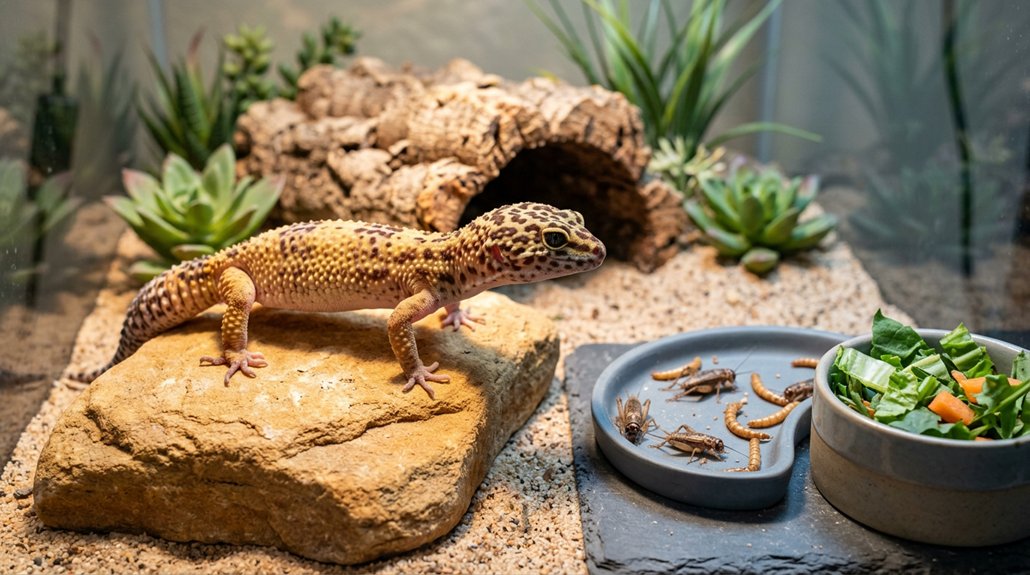
You should feed your leopard gecko live insects such as crickets, mealworms, and dubia roaches, rotating at least three types to guarantee nutritional diversity. Juveniles need daily feedings, while adults eat every other day. Keep portions small, with insects no wider than the gecko’s eyes. Dust insects with calcium powder and use vitamins periodically. Fresh water is essential, and monitoring weight helps refine schedules. Explore further to enhance your gecko’s health and dietary satisfaction.
Key Takeaways
- Feed leopard geckos live insects like crickets, mealworms, and dubia roaches for proper nutrition.
- Rotate at least three different insect types to ensure dietary diversity.
- Juvenile geckos require daily feedings, while adults need feeding every other day.
- Dust feeder insects with calcium powder to maintain a healthy calcium-phosphorus balance.
- Provide a shallow water dish with fresh, clean water available at all times.
Know the Basics of Leopard Gecko Diets
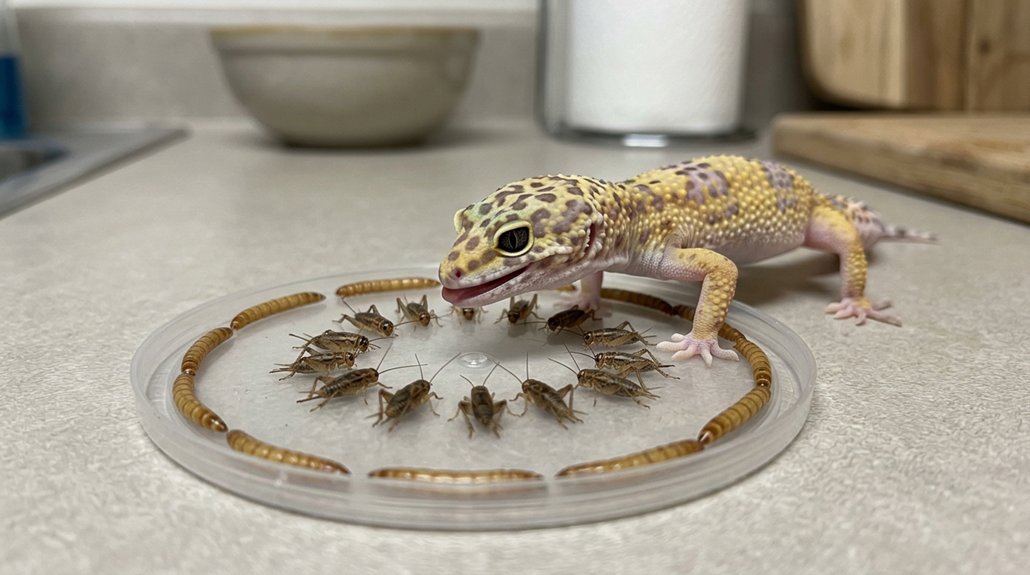
Understanding the dietary needs of leopard geckos is essential for maintaining their health and well-being. These insectivores rely on a diet comprising live insects such as crickets, mealworms, and dubia roaches. To guarantee their nutrition is diverse, you should include at least three types of feeder insects in rotation, promoting insect diversity crucial for their diet. Feeding frequency is another critical factor; you’ll generally provide meals every 1-3 days, depending on the gecko’s age and health status.
Prior to feeding, gut-load the insects for 24-48 hours to boost their nutritional value. Dust them with calcium powder to prevent metabolic bone disease, adding multivitamins occasionally. Avoid dried insects or wild-caught bugs; they should only eat captive-raised live prey for safety and ideal nutrition.
Setting a Feeding Schedule for Your Gecko
Two key aspects of setting an effective feeding schedule for your leopard gecko are frequency and portion size, essential for promoting ideal health. Juvenile geckos require a daily feeding frequency, whereas adults thrive on an every-other-day schedule. This cadence supports adequate growth and energy levels. For meal timing, providing variety by rotating three types of feeder insects guarantees optimal nutrition. Always align your feeding frequency with the gecko’s age and nutritional needs.
It’s important to adhere to precise meal timing, confirming meals don’t exceed the width between the gecko’s eyes to promote safe eating habits. Dust insects with calcium powder 2-3 times weekly and add a multivitamin biweekly. Regular weight monitoring allows for necessary feeding schedule adjustments, supporting overall health.
Determining Proper Food Portions
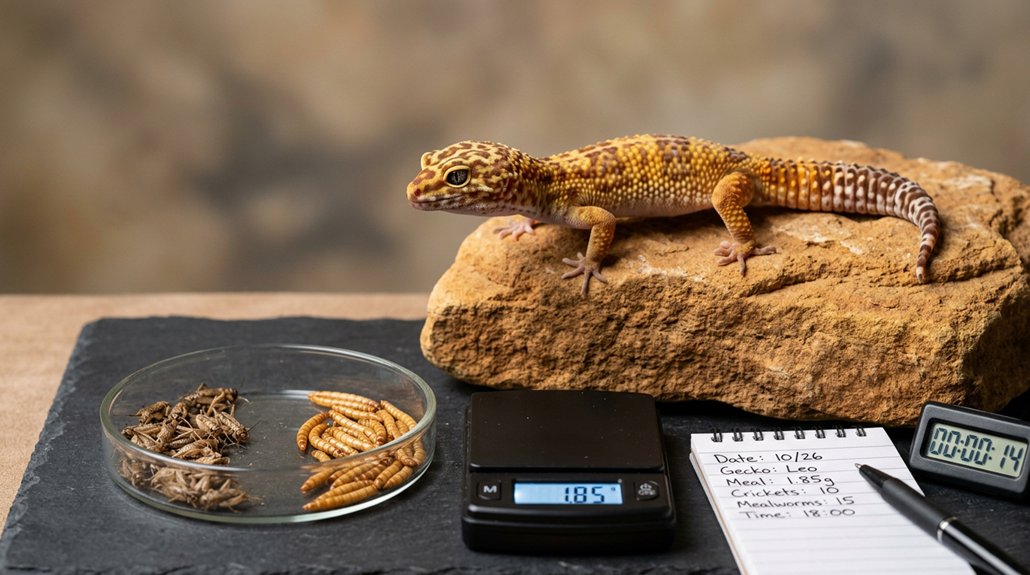
While feeding your leopard gecko, guaranteeing the appropriate portion sizes is essential for their health and well-being. Pay attention to the size of the feeder insects, making sure they don’t exceed the gecko’s eye width. This aids in avoiding choking hazards and promotes effective digestion. Adjust their portion size based on their weight and appetite, which requires regular weight monitoring to prevent obesity and ascertain ideal nutrition.
| Age Group | Insect Quantity |
|---|---|
| Hatchlings | 6-10 insects |
| Juveniles | 6-10 insects |
| Adults | 4-5 insects |
Tailor feeding frequency to age: juveniles daily, adults every other day. Monitor weight to guarantee they neither overeat nor become undernourished. Such precision facilitates healthy growth and a balanced diet.
Supplement Your Gecko’s Diet With Essential Nutrients
To enhance your leopard gecko’s diet with essential nutrients, it’s imperative to incorporate necessary supplements efficiently. Calcium supplementation is vital for maintaining a proper calcium-phosphorus balance, essential for healthy bones. Dust all feeder insects with a high-quality calcium powder before feeding. If your gecko lacks UVB lighting, provide dietary D3 often to aid calcium metabolism and prevent deficiencies. Additionally, use a multivitamin like Zoo Med Reptivite without D3 every two weeks to support nutritional balance, especially in growing or breeding females. Choose supplements such as Arcadia CalciumPro Mg or Repashy Calcium Plus LoD for peak health. Monitor your gecko’s consumption patterns and adjust supplement frequency to guarantee balanced nutrition without over-supplementation.
Gut Loading Insects for Leopard Geckos
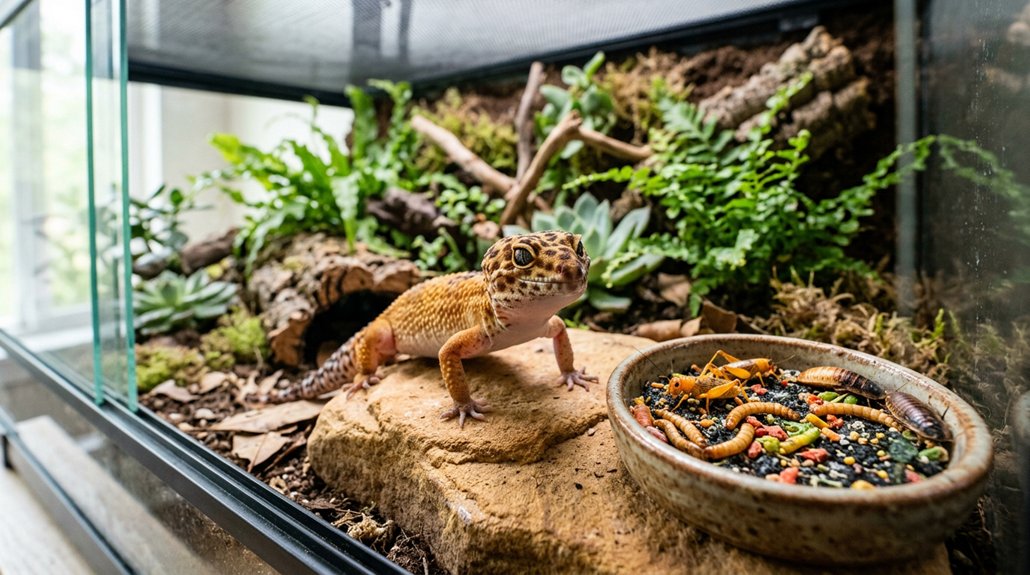
Gut loading is integral to ideal leopard gecko nutrition. It involves feeding insects nutrient rich foods 24-48 hours before introducing them to your pet. Using specific gut loading techniques, like Repashy SuperLoad or Arcadia InsectFuel, optimizes the nutritional content for your gecko. Instead of relying on vegetable scraps, choose leafy greens and commercially formulated diets for enhanced vitamins and minerals. Offering insects a balanced mix guarantees they’re packed with the right nutrients.
Here’s a simple guide for effective gut loading:
| Nutrient Source | Purpose |
|---|---|
| Repashy SuperLoad | Extensive diet |
| Arcadia InsectFuel | Optimizes nutrition |
| Leafy Greens | Provides essential vitamins |
| Formulated Diets | Guarantees complete nutrition |
Avoiding Toxic Foods for Leopard Geckos
Guaranteeing ideal nutrition for your leopard gecko doesn’t stop at gut loading insects. Maneuvering toxic food risks is vital for maintaining their wellbeing. Avoid feeding wild-caught insects; they may carry pesticides, parasites, or harmful toxins. Specific foods like lightning bugs, fireflies, avocado, and citrus fruits pose lethal or digestive threats and should be unequivocally excluded. Processed pet foods, not designed for reptiles, often lack essential nutrients and shouldn’t be part of their diet. Ascertain no pesticides linger on any food items to prevent severe health complications. Focus exclusively on safe food options, comprising live insects raised under controlled, chemical-free conditions. By meticulously managing their diet, you guarantee your gecko thrives in a well-rounded, nutritious environment.
Water and Hydration Tips for Leopard Geckos
For ideal hydration, guarantee your leopard gecko has constant access to fresh, clean water in a shallow dish, minimizing drowning risk and enhancing accessibility. Daily maintenance is vital, requiring you to replace the water regularly to uphold cleanliness and encourage proper consumption. Although these geckos can extract some moisture from their prey, providing a dedicated water source remains necessary for preventing dehydration-related health issues.
Fresh Water Availability
A crucial aspect of maintaining your leopard gecko’s health is guaranteeing its access to fresh water at all times. Consistently monitor water temperature and availability. Proper hydration prevents issues like lethargy and dry skin. Replenish the water daily, using a shallow dish; this mitigates drowning risks. Including a rock in the dish aids crickets’ escape, maintaining a cleaner environment. Consider gel water crystals as a supplemental hydration source.
| Factor | Importance |
|---|---|
| Water Temperature | Prevents extreme cold or overheating |
| Regular Replenishment | Guarantees cleanliness and freshness |
| Hydration Signs | Indicates potential health concerns |
Persistent dehydration can lead to serious health issues. Evaluate your gecko’s skin elasticity and activity levels for hydration signs. Implement these measures to keep your pet well-hydrated and thriving.
Shallow Dish Importance
While it might seem inconsequential, utilizing a shallow dish for your leopard gecko’s water is essential in promoting safe drinking habits. A shallow water dish minimizes the risk of drowning, permitting the gecko to drink comfortably and securely. Verify that the dish is wide and stable, preventing spills while granting easy access for the gecko. Incorporating a large rock or similarly stable object within the water dish allows crickets to escape, fostering natural hunting behavior as geckos can engage with prey. Consistent daily replenishment of fresh, clean water is vital for sustaining the gecko’s hydration habits and supporting its digestive health. Regularly inspect and maintain the dish to preserve water quality and encourage consistent drinking, safeguarding your gecko’s overall well-being.
Daily Water Maintenance
Guaranteeing your leopard gecko has consistent access to water involves more than just filling a dish; it’s a balanced practice of vigilance and care. The dish must be shallow to prevent drowning and filled with fresh, clean water daily. By maintaining a suitable water temperature, you enhance your gecko’s hydration and health. Consider these hydration strategies: place a large rock in the dish, allowing crickets to escape and geckos to hunt. Gel water crystals can provide additional moisture.
To maintain hydration:
| Hydration Strategy | Purpose |
|---|---|
| Fresh daily water | Prevents contaminants, guarantees hydration |
| Large rock in water dish | Crickets escape, avoids gecko drowning risks |
| Gel water crystals | Safe, alternative moisture source |
| Monitor water dish | Guarantees stability, prevents spills |
Regular monitoring of water quality is essential.
Help! My Gecko Isn’t Eating: Troubleshooting Tips
If your leopard gecko isn’t eating, examine several potential factors to address the issue. First, assess stress indicators by observing any lethargy or behavioral changes. These could signal illness, necessitating veterinary care. Make sure the enclosure’s temperature is ideal; cold stress affects appetite. Evaluate feeding preferences—offer live insects that are fresh, since stale food is often rejected. Maintain a regular feeding schedule; irregularity can create uncertainty, leading to food refusal. Additionally, gut-load feeder insects with nutritious foods to boost their appeal and nutritional value. If problems persist, consult a vet to rule out underlying health issues. Attention to environmental factors and food quality can often restore your gecko’s natural feeding behavior.
Frequently Asked Questions
Can a Leopard Gecko Go 4 Days Without Food?
Yes, your leopard gecko can fast for 4 days without food. During fasting, their nutritional needs are sustained by fat reserves in their tail. However, always monitor for dehydration and guarantee fresh water is available.
Do Geckos Scream at Night?
In the stillness of night, a leopard gecko’s vocal symphony might sound like screams. These night sounds often indicate stress or communication, especially under dim moonlight. Monitoring their environment reduces such startling behaviors in your nocturnal companion.
Should I Turn My Geckos Heat Lamp off at Night?
Yes, you should turn the gecko’s heat lamp off at night to support its natural heat regulation and promote normal nighttime behavior. This temperature drop is essential for mimicking their habitat and ensuring their circadian rhythms remain balanced.
Can Geckos Hear You?
Yes, your leopard gecko can hear you. Their hearing isn’t as advanced as mammals, but they detect sound vibrations. Hearing aids their survival instincts in gecko communication, allowing them to recognize feeding cues and environmental sounds.
Conclusion
You’ve navigated the intricate labyrinth of a leopard gecko’s dietary needs. But imagine this: your gecko, poised and vibrant, depends on your next move. Will you balance their diet with precision, ensuring each insect and supplement serves its purpose? The rhythmic routine, your guiding star, as you reveal the secret to their health. Every meal, a meticulous symphony of nutrition, and each choice, echoing through their well-being. What will your next act in this delicate dance be?