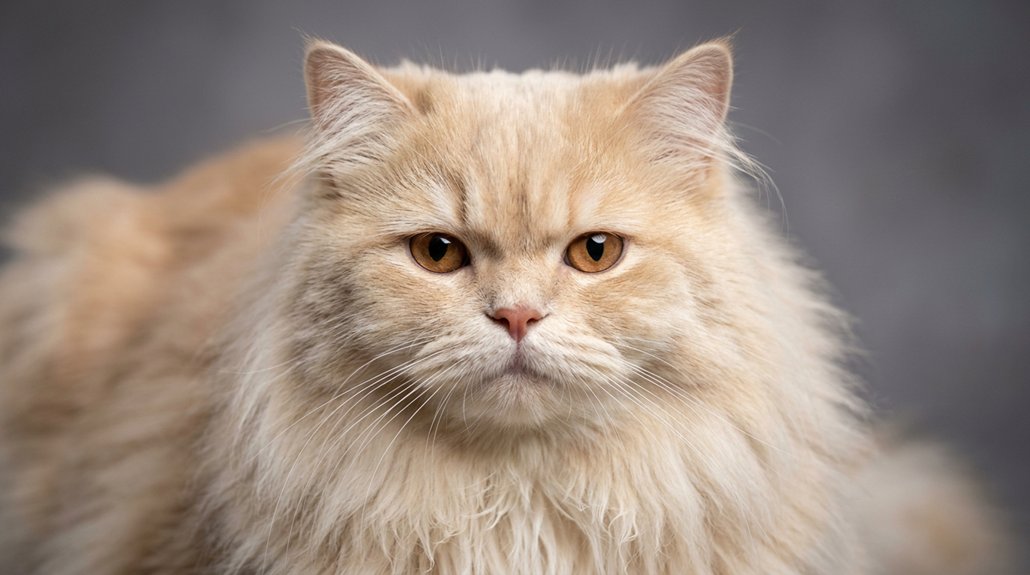
You’re looking at breeds like Persians, Himalayans, and Maine Coons when it comes to cats with the highest grooming demands. These long-haired cats need daily attention to prevent matting, tangling, and skin issues. Essential tools include slicker brushes and wide-toothed combs. Regular grooming not only maintains their coat health but also provides opportunities to detect skin problems early. If you’re considering these breeds, you’ll find more effective strategies and tools for their care beyond this introduction.
Key Takeaways
- Persian cats require daily grooming due to their dense and mat-prone fur.
- Himalayan cats need regular grooming to maintain their thick coats and prevent matting.
- Maine Coons must be groomed daily to manage their thick and long fur.
- Birman cats benefit from daily brushing to prevent matting and reduce shedding.
- Ragdolls require grooming several times a week for optimal coat health.
Understanding the Unique Grooming Needs of Long-Haired Cats
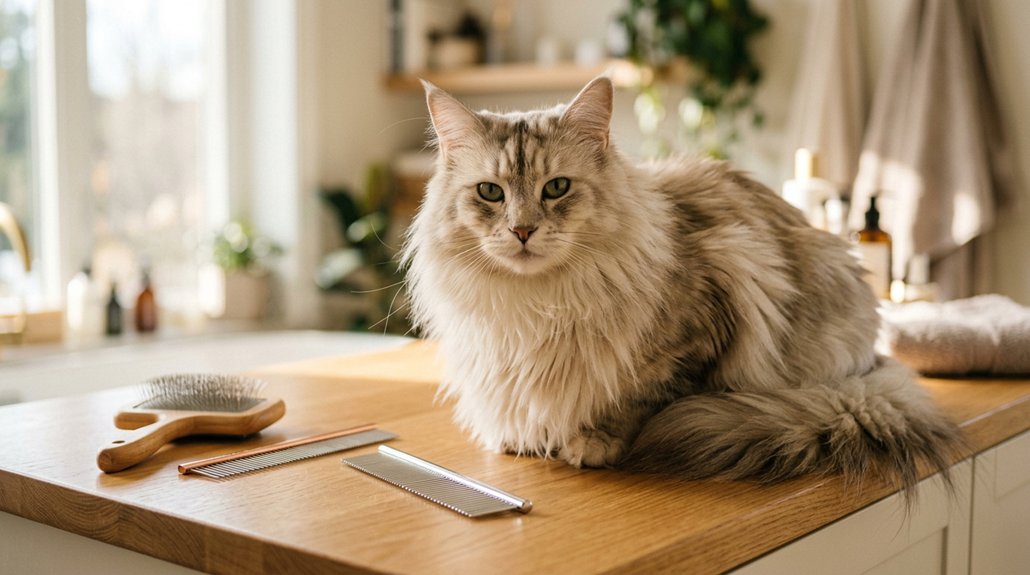
While long-haired cat breeds like the Birman, Himalayan, and Persian possess undeniably beautiful coats, they demand a level of grooming that goes beyond the ordinary. Their coat texture, often silky and dense, mandates a grooming frequency that’s daily to prevent matting and tangling. Regular brushing is vital; it reduces shedding and removes debris, contributing to coat health. You’ll find slicker brushes and grooming gloves are indispensable tools in managing these needs effectively. Proper grooming doesn’t just focus on aesthetics—it’s essential in avoiding skin issues associated with neglect. This routine not only maintains physical well-being but also strengthens the bond between you and your feline. Understanding these unique requirements guarantees your cat remains both healthy and impeccably groomed.
Persian Cats: Daily Care Strategies for Luxurious Coats
Having explored the distinct grooming needs of long-haired cats, it’s clear that Persian cats, with their splendidly plush coats, require particular care strategies. Daily grooming schedules are vital for preventing mats and tangles in their dense fur. Utilize a slicker brush designed specifically for long-haired breeds to guarantee effective coat maintenance. This daily routine not only keeps their luxurious coat healthy but also minimizes shedding, a significant benefit for allergy-prone households. Pay special attention to the Persian’s unique flat face; regular cleaning around the eyes and nose is imperative to avoid staining. Consistent grooming fosters a strong bond between you and your Persian, making the experience beneficial and enjoyable, ensuring their coat remains as magnificent as ever.
Himalayan Cats: Essential Grooming to Prevent Tangles
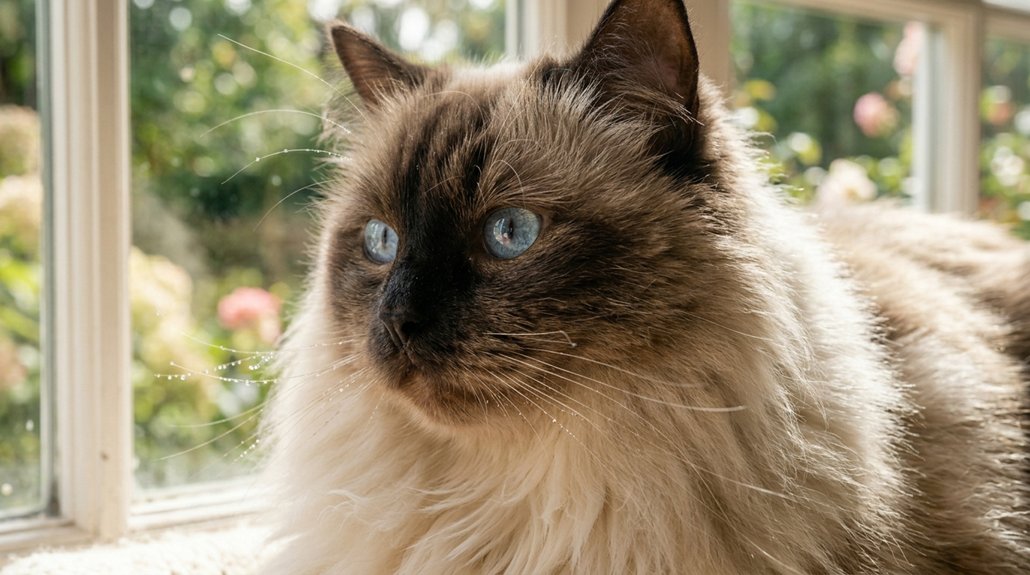
Himalayan cats, with their long, lavish fur, demand daily grooming to maintain their beautiful coats and prevent troublesome tangles. Their thick coat is particularly prone to mats if the grooming frequency isn’t adhered to. Consistent fur care is essential to keep their luscious coat free of debris and dirt, which can dull the fur and lead to skin issues. By incorporating daily brushing into your routine, you guarantee a shinier, healthier appearance while fostering a deeper bond with your feline friend. This process isn’t merely about aesthetics; it’s critical for the overall hygiene of your Himalayan. Regular grooming also allows you to spot potential skin problems early, assuring prompt attention and care. Don’t underestimate the power of a dedicated grooming regimen.
Birman Cats: Keeping Their Silky Fur Healthy
To maintain a Birman cat’s luxurious coat, understand the necessity of daily brushing to prevent matting, which can lead to skin irritation and discomfort. This grooming habit doesn’t just guarantee the health of the coat; it reduces shedding and keeps your living space tidier. In addition, the grooming process can strengthen the bond with your Birman, as this affectionate breed thrives on the attention and care.
Daily Brushing Importance
For Birman cats, daily brushing is essential to maintain their silky fur in pristine condition. The grooming frequency of daily care guarantees that dirt and debris are effectively removed, promoting hygiene and peak coat health. Employ specific brushing techniques such as starting at the head and working towards the tail with gentle strokes to avoid distress.
| Benefit | Explanation |
|---|---|
| Tangle Prevention | Prevents painful matting by keeping fur smooth and free of knots |
| Hygiene Maintenance | Removes dirt and debris, promoting a cleaner, healthier coat |
| Bonding Opportunity | Strengthens the bond between you and your Birman, enhancing trust |
This meticulous routine minimizes shedding, making your home cleaner while nurturing a strong human-cat relationship. By brushing daily, you’re not just maintaining fur quality but enhancing your Birman’s overall well-being.
Preventing Matting Issues
How can you assure that your Birman cat’s silky fur remains free from unsightly mats and tangles? Focus on daily mat maintenance as part of your cat’s fur care regimen. Birman cats need daily brushing using a slicker brush to effectively remove loose hair and prevent matting. This regular grooming practice not only eliminates dirt and debris but also maintains the fur’s characteristically soft texture. Consistent fur care is essential due to the breed’s long-haired coat, which can quickly develop mats without attentive upkeep. Mats aren’t just unsightly—they’re uncomfortable for your cat and can lead to skin issues if neglected. By using the right grooming tools and techniques, you assure your Birman’s coat remains healthy and beautiful.
Building Owner-Cat Bond
Maintaining your Birman cat’s silky fur involves more than just preventing mats; it strengthens the bond you share with your pet. By implementing specific grooming techniques, you create opportunities for bonding activities that enhance trust and affection. Spend quality time with your Birman using these methods:
- Daily Brushing – Use a soft-bristle brush to gently detangle, promoting a healthier and shinier coat while preventing matting.
- Positive Reinforcement – Offer treats and praise during grooming sessions to make them enjoyable and rewarding for both of you.
- Routine Establishment – Engage in grooming at the same time each day to create consistency, fostering a routine your cat will look forward to.
These practices not only guarantee a healthy coat but also nurture a deep, lasting owner-cat bond.
Maine Coon Cats: Techniques for Majestic Mane Management
While Maine Coon cats are known for their majestic appearance, their thick, long fur demands meticulous care. Effective Maine Coon grooming involves daily sessions to maintain smoothness and prevent mats, critical during seasonal shedding. Use a wide-toothed comb or slicker brush, which efficiently tackles tangles and spreads natural oils, guaranteeing peak coat maintenance. This routine is not just about aesthetics; regular maintenance helps identify potential skin issues or parasites early, safeguarding your Maine Coon’s health.
Moreover, these sessions do double duty by minimizing shedding and promoting a healthy, shiny coat. Beyond physical benefits, grooming strengthens the bond between you and your Maine Coon, deepening their affectionate nature and sociability. Consistent care guarantees your feline companion remains both magnificent and comfortable.
Ragdoll Cats: Tips for Managing Their Semi-Long Fur
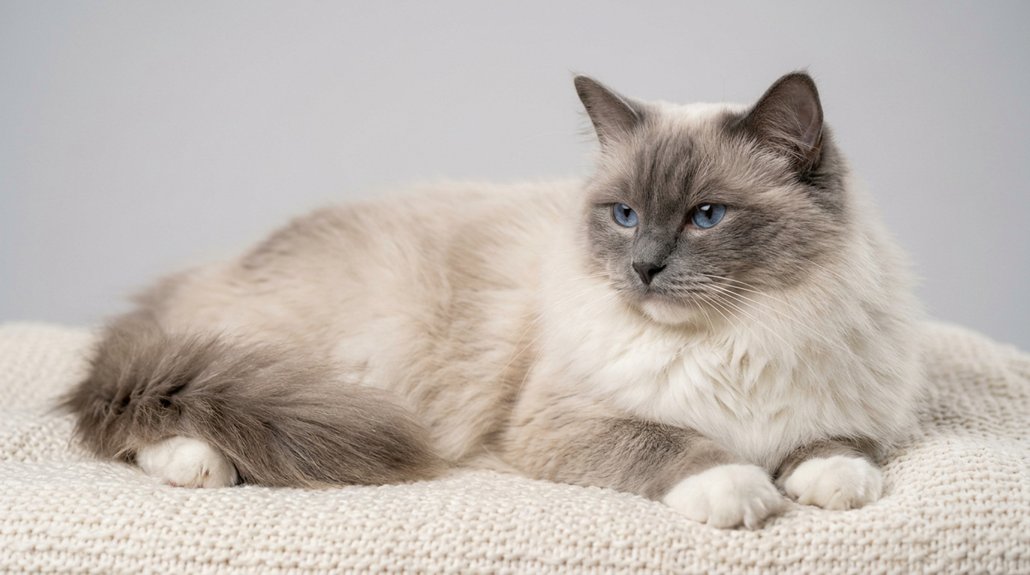
Although Ragdoll cats possess a calm and gentle nature, their semi-long fur demands regular attention to remain tangle-free and healthy. Ragdoll grooming requires a few sessions each week to effectively manage their unique coat. Regular brushing minimizes shedding, especially during seasonal changes when Ragdoll coats may become dense. Here’s a streamlined approach:
Ragdoll cats need regular grooming sessions to keep their semi-long fur tangle-free and healthy.
- Brush Frequency: Schedule grooming a few times a week to maintain coat health and prevent mats.
- Tools Selection: Utilize a slicker brush during sessions as it’s ideal for removing loose fur and maintaining the Ragdoll coat’s condition.
- Eye Care: Pay attention to tear staining by gently brushing near the eyes to keep their striking blue eyes clear and reduce potential irritations.
Engage them gently; they’ll enjoy the bonding experience.
Must-Have Grooming Tools for Long-Haired Cat Breeds
Ragdolls set the stage with their semi-long fur, reminding us that long-haired breeds demand precise grooming tools to look their best. Slicker brushes are indispensable, effectively removing loose fur and preventing mats with daily grooming. Enhance your brushing techniques by incorporating pin brushes to separate and smooth fur. They also distribute natural oils, contributing to a healthier coat. For cats detesting traditional brushes, grooming gloves provide a gentler touch, mimicking petting while removing loose hair. Maintain a regular grooming frequency using a wide-toothed comb to detangle knots, focusing on sensitive areas like the underbelly and behind the ears. High-quality hypoallergenic shampoos keep their coats clean and irritation-free, ensuring health and shine with minimal skin reactions.
Should You Groom Your Cat at Home or Hire a Pro?
Considering whether to groom your cat at home or seek professional help depends greatly on both your confidence and your cat’s needs. If your cat requires high grooming frequency due to its breed, like Persians or Himalayans, or if it displays challenging cat behavior during grooming, a professional may be necessary. They have the expertise to handle tangles, matting, and behavioral issues.
However, regular at-home grooming provides numerous benefits:
- Develop a stronger bond through regular brushing and care.
- Reduce hygiene issues by incorporating activities like nail trimming and ear cleaning.
- Save on costs by minimizing professional appointments if you’re equipped with proper tools and techniques.
Balancing home care with professional grooming guarantees a healthier, happier pet.
Frequently Asked Questions
What Cat Breed Needs the Most Grooming?
You’re looking at Persian Cats as the breed needing the most grooming. Their dense coat requires daily attention to avoid matting. Maine Coons, Ragdoll grooming, and Siberian Cats also demand regular upkeep, but Persians top the list.
What Is the 3-3-3 Rule of Cats?
The 3-3-3 rule refers to a cat’s adjustment period: three days for initial acclimation, three weeks for new cat behavior to emerge, and three months for them to fully settle, forming bonds and feeling at home.
How Do Cats Say I Love You With Their Eyes?
Cats say “I love you” with their eyes through cat eye communication by slowly blinking, known as cat kisses. This feline body language shows trust and affection, indicating security and comfort in your presence while reinforcing the emotional bond.
What Annoys Cats the Most?
You’re likely to notice cats feel most annoyed by loud noises and sudden movements, which juxtapose their desire for a calm, predictable routine. Unfamiliar smells also disrupt their world, challenging their comfort and territorial instincts.
Conclusion
Coincidentally, the very tools and techniques that handle the luxurious coats of Persian, Himalayan, and Birman cats also aid in the majestic maintenance of Maine Coons and Ragdolls. As you decide whether to groom at home or hire a professional, consider each breed’s specific needs and your own comfort level. Mastering the art of grooming transforms necessity into a bonding experience, ensuring your long-haired cat not only looks splendid but also remains healthy and content.